A solar auto darkening welding lens saves you from charging a battery, but only if it fits your helmet and darkens reliably. This listing (ASIN B0BN1B3T74) describes a clear viewing window, a sensitivity-adjustable arc sensor, UV/IR protection and solar-powered operation. Dimensions, shade range, certification and warranty are not clearly stated in the details we could find, so use this page as a checklist before you buy.
Quick take
Best for: Welders with a compatible helmet or goggle frame who want a solar-assisted lens with adjustable sensitivity.
Main limit: Size, shade range, certification and warranty need confirming on the listing first.
Key Specifications (Per the Listing)
| Specification | Detail |
|---|---|
| Product type | Auto darkening welding lens |
| Listing identifier | ASIN B0BN1B3T74 |
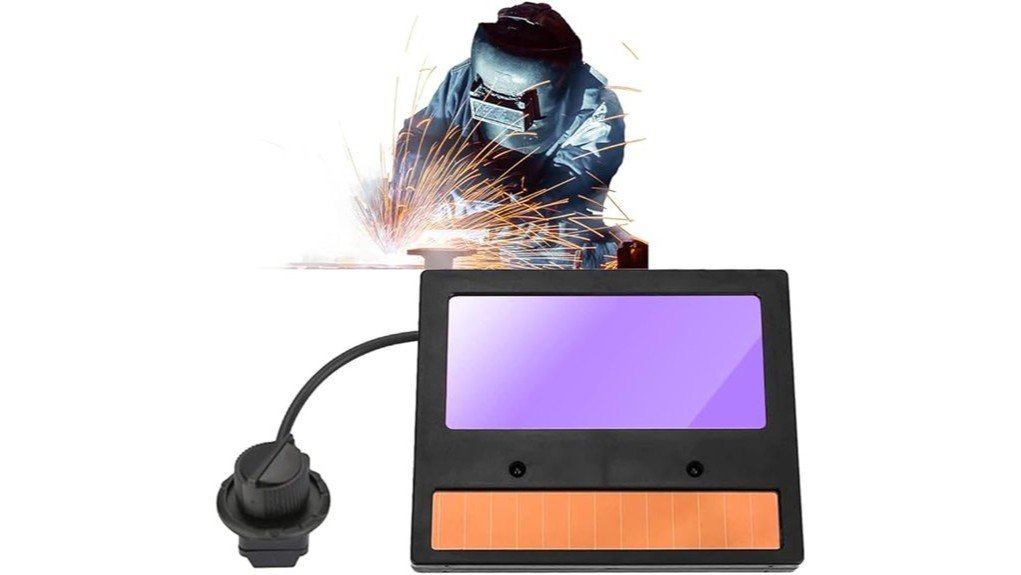
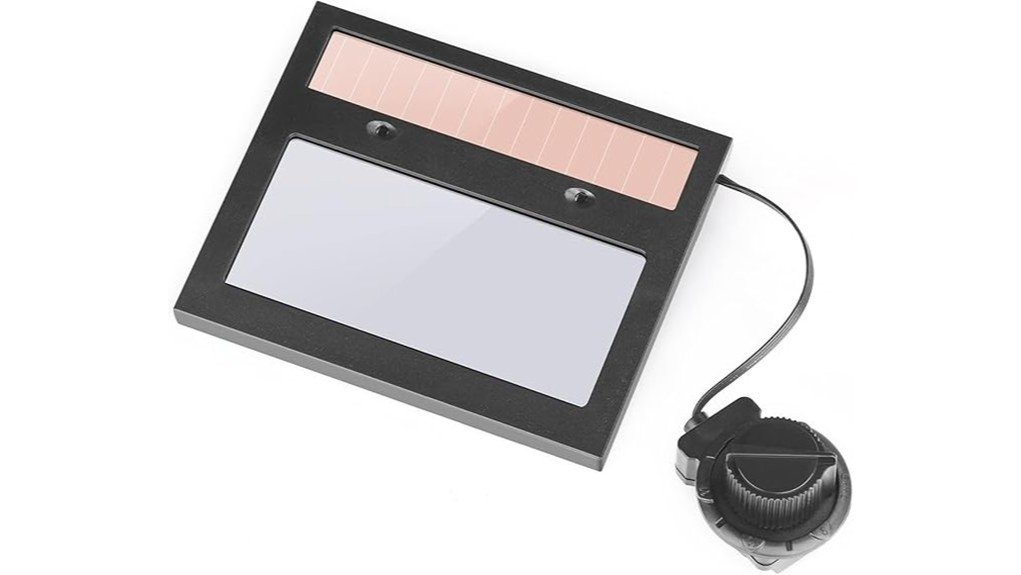
| Design | Clear viewing window with automatic darkening filter |
| Sensor | Arc sensor with adjustable sensitivity |
| Listed switching speed | 1/25,000 second light-to-dark |
| Protection | Filters arc light and shields against UV and IR radiation |
| Power | Solar-powered design |
| Compatibility | Listed for most welding helmets and goggles (confirm size) |
| Not confirmed | Dimensions, shade range, certification marking, warranty |
Figures are taken from the product listing and have not been tested by us.
How a Solar Auto Darkening Welding Lens Works
An arc sensor detects the bright light of the weld and tells the lens to switch from a light state to a dark state. Solar cells supply power in normal shop light, which is why you do not charge it in the usual way. Sensitivity lets you tune how easily the lens triggers, which matters in bright ambient light or on low-amp welds.
Our guide on how an auto-darkening welding helmet works covers the same technology in more depth.
Fit and Compatibility Checklist
- Measure the lens window in your helmet or goggles.
- Compare it with the dimensions on the listing, or ask the seller if none are shown.
- Check the retaining frame or clips will hold a lens of this thickness.
- Confirm the shade range suits your process.
- Look for a safety marking on the lens or listing.
If you cannot answer the last two, choose a lens with documented shade and certification instead.
Setting It Up and Testing It
Install the lens following the manual. Set sensitivity low at first, then strike an arc on scrap in your normal work position. Raise sensitivity if the lens is slow to darken, particularly on low-amp work. Lower it if the lens flickers from room light. Stop welding if it ever fails to darken at once.
Keep the sensor and window clean. See how to clean and maintain a welding helmet lens.
When a Full Helmet Is the Better Choice
A replacement lens only fixes the viewing window. If you need a larger view, grind mode, external shade knobs or documented certification, a complete helmet is the safer buy. See auto-darkening versus fixed-shade welding helmets.
Pros and Limitations
Pros
- Solar-assisted design means less battery management
- Adjustable sensitivity for different light conditions
- Clear viewing window and fast switching are listed
- UV/IR protection is listed
Limitations
- Dimensions, shade range and certification are not clearly stated
- Fit is not universal
- Build quality and impact rating cannot be judged from the listing
- Listed switching speed is a seller figure, not our test result
Related reading: how an auto-darkening welding helmet works, how to care for an auto-darkening welding helmet and the welding helmet shade guide.
Frequently Asked Questions
Does the solar-powered lens need batteries or charging?
The listing describes a solar-powered design, so you should not need to charge it. Some solar lenses also carry a small backup cell, so check the product details and manual for the exact power arrangement.
Will it fit my helmet or goggles?
Fit is not universal. The listing says it works with most helmets and goggles, but dimensions are not confirmed in the details we could find. Measure your lens opening and compare it with the listed size before ordering.
Can it be used for TIG and MIG welding?
The listing points to MIG and TIG use. Low-amp TIG can need higher sensitivity, and shade needs vary by process and amperage, so use our shade guide and test the lens on scrap first.
Is the shade range adjustable?
The shade range is not clearly stated in the details we could find. Adjustable sensitivity is listed, but confirm on the listing whether the shade itself is fixed or adjustable.
What should I check about safety markings and warranty?
Look for a recognized marking such as ANSI Z87.1 on the lens or listing, and read the seller warranty and return terms. Neither is confirmed in the information we could check.
The Bottom Line
This solar lens may suit you if your helmet takes it and you want adjustable sensitivity without charging. Because key details are unconfirmed, check size, shade range and safety marking on the live listing before you order, and test the lens on scrap before real work.