Disclosure: As an Amazon Associate, we earn from qualifying purchases. If you click a link on this page and make a purchase, we may receive a small commission at no extra cost to you.
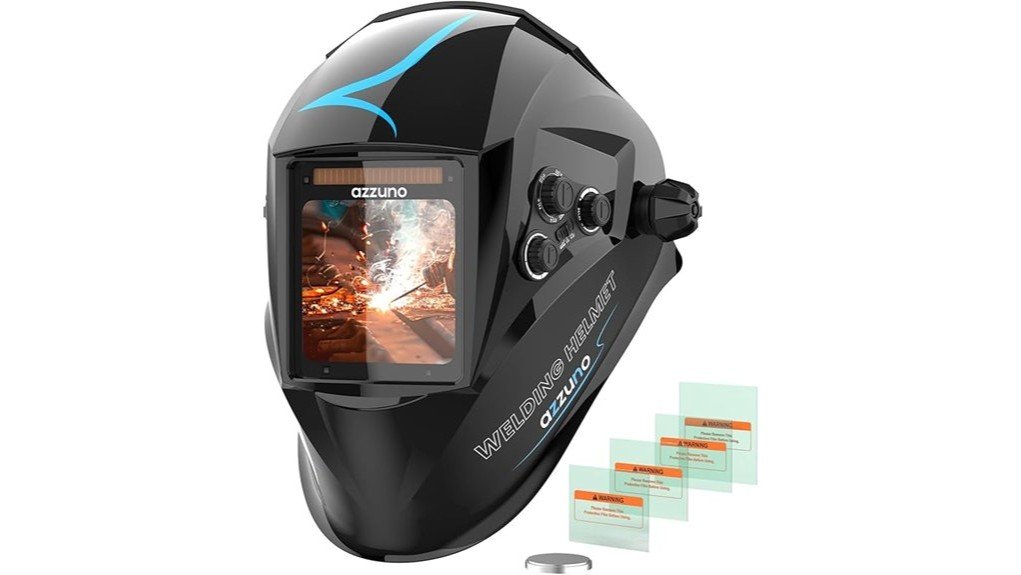
Choosing a welding helmet is not just about finding something that darkens when the arc starts. You need clear visibility, steady eye protection, a comfortable fit, and controls that match the type of welding or grinding you do most often. The AZZUNO Welding Helmet is built around a true color lens, 1/1/1/1 optical clarity, adjustable shade settings, and four arc sensors. This review helps you decide whether its comfort, auto-darkening performance, and practical feature set make sense for your welding setup, while also pointing out the limits you should check before buying.
Quick Verdict
Rating: 8.4/10
Best For: DIY welders, garage users, and professionals who want a lightweight auto-darkening helmet with clear lens performance.
Bottom Line: The AZZUNO Welding Helmet is worth considering if you want true color visibility, 1/1/1/1 optical clarity, and shade settings that cover grinding and common welding work. The main tradeoff is that some listing-level details, such as exact shell material and full warranty terms, should be checked on the product page before purchase.
| Specification | Detail |
|---|---|
| Brand | AZZUNO |
| Product Type | Auto-darkening welding helmet |
| Lens Type | True color lens |
| Optical Clarity | 1/1/1/1 optical clarity |
| Shade Range | Shade 4 for grinding, shade 9-13 for welding |
| Arc Sensors | Four premium arc sensors |
| Power | Dual power charging system |
| Battery Life | Article-supported average of around 2,000 hours |
| Weight | 1.83 pounds |
| Fit | Adjustable headgear for different head sizes |
| Common Uses | MIG, TIG, grinding, and outdoor welding tasks |
| Included Information | User manual is described as included |
Key Takeaways
- The AZZUNO Welding Helmet is best for welders who want clear lens performance, auto-darkening protection, and a lighter fit for longer sessions.
- The true color lens and 1/1/1/1 optical clarity help you see the puddle, joint line, and work area with better detail than a dull, green-tinted view.
- The shade range covers shade 4 for grinding and shade 9-13 for welding, which makes it useful for setup, prep, MIG, and TIG work.
- Four premium arc sensors help the helmet detect arc light quickly, which is important when you tack, reposition, and restart often.
- The 1.83-pound weight and adjustable headgear are useful if neck strain and pressure points bother you during longer projects.
What Is the AZZUNO Welding Helmet?
The AZZUNO Welding Helmet is an auto-darkening welding helmet made for welders who want face and eye protection without flipping a fixed-shade helmet up and down all day. It uses a true color lens, adjustable shade controls, and four arc sensors to help you move between prep work and welding with fewer interruptions.
The main appeal is the balance between visibility and protection. The 1/1/1/1 optical clarity rating is the standout spec in the supplied product details, because it points to a lens designed for clearer viewing, less distortion, and better color accuracy. That matters when you are trying to place a tack weld, follow a joint, or check the edge of a panel before pulling the trigger.
This helmet is a practical fit for garage welding, auto body projects, light fabrication, TIG practice, MIG work, and grinding tasks. It is not a substitute for reading the product manual or matching the shade to your amperage, but it gives you the main controls most welders expect from a modern auto-darkening helmet.
Who Should Buy It?
Best For
- Welders who want a true color lens with 1/1/1/1 optical clarity.
- DIY and garage users who switch between grinding, MIG, and TIG work.
- Anyone who wants adjustable headgear and a lighter helmet for longer sessions.
Skip If
- You need verified certification details before buying and cannot confirm them on the listing or manual.
- You prefer a fixed-shade passive helmet with no battery or electronic controls.
- You need a helmet with a specific shell material, exact viewing area, or industrial standard listed up front.
Before You Buy: Confirm the current listing details, certification markings, replacement lens availability, and warranty terms before ordering. The supplied article supports the main lens, shade, sensor, weight, and battery-life claims, but it does not provide every listing-level specification.
Key Features of the AZZUNO Welding Helmet
True Color Lens and 1/1/1/1 Optical Clarity
The true color lens is one of the strongest reasons to consider this helmet. A clearer lens can help you see the joint, the edge of the workpiece, and the puddle with less color distortion. That is useful when you are welding thin material, trying to stay on a seam, or checking your bead shape after a pass.
The article-supported 1/1/1/1 optical clarity rating also matters because it speaks to viewing quality. In simple terms, it means the lens is designed to give you a more consistent view across clarity, distortion, shade consistency, and angle performance. For a buyer, that can mean less eye strain and better control during detailed work.
Adjustable Shade Range
The AZZUNO helmet gives you a shade 4 grinding mode and a shade 9-13 welding range. That range makes the helmet more flexible than a single fixed-shade setup. You can use the lighter setting for grinding and prep, then move to a darker shade for arc welding.
This is especially helpful if your projects include both setup work and welding passes. Instead of changing headgear or removing your helmet between tasks, you can keep the helmet on and adjust it for the job. You should still match the shade to the welding process, amperage, and your comfort level.
Four Premium Arc Sensors
The auto-darkening system uses four premium arc sensors. More sensors can improve arc detection when your hand, torch angle, workpiece, or body position blocks part of the lens. That is useful when you are tack welding, working around awkward joints, or welding in tighter spaces.
The benefit is simple: the helmet is designed to switch from light to dark when the sensors detect the arc. That quick transition helps protect your eyes and lets you keep both hands focused on your work instead of flipping the hood down manually before each weld.
Dual Power Charging System
The article also notes a dual power charging system, which supports longer use between interruptions. Battery reliability is important in an auto-darkening helmet because you do not want the filter to become inconsistent during a project.
The FAQ details describe an average battery performance of around 2,000 hours. That is a helpful figure for everyday use, but you should still check the manual for battery handling, storage, and replacement instructions. A helmet that sits unused for long periods should be checked before striking an arc.
Pro Tip: Before your first weld of the day, test the auto-darkening function and adjust the shade in a safe area. Do not wait until you are already welding to find out the sensitivity, delay, or shade setting does not match your setup.
Performance and User Experience
The AZZUNO Welding Helmet is built for the kind of stop-and-start work that happens in real shops and garages. When you are tacking, checking fitment, grinding a small area, and then welding again, the auto-darkening system can save time and reduce frustration.
The true color lens helps most when your work requires accuracy. On thin sheet metal, small brackets, or TIG practice beads, being able to see the edge clearly can make a real difference. Better visibility does not replace skill, but it can make it easier to stay consistent.
The adjustable shade settings are also a buyer-useful feature because MIG and TIG work can call for different viewing comfort. A fixed shade may be too dark for some low-amperage work or too light for hotter work. With a shade 9-13 welding range, you have room to adjust within the supported range instead of forcing one setting for every task.
Comfort and Fit Analysis
Comfort matters more than many buyers expect. A helmet that feels fine for five minutes can become annoying during a long repair, fabrication project, or practice session. The AZZUNO Welding Helmet weighs 1.83 pounds, which keeps it in a practical range for longer use.
The adjustable headgear helps you dial in the fit for your head size. A secure fit matters because a loose helmet can shift when you bend, kneel, or look down at the joint. A tight helmet can create pressure on your forehead or the back of your head.
Good weight distribution also helps reduce neck fatigue. This is useful if you spend long periods in one position, such as welding on a bench, working under a vehicle, or making repeated tack welds on a panel. You should still take breaks and adjust the headgear if you notice hot spots or pressure.
How It Performs in Real Use
For MIG Welding
For MIG work, the shade 9-13 range gives you useful flexibility. You can choose a darker shade for brighter arcs and adjust lighter when the work allows it. The true color lens can help you track the wire position and joint line, which is useful on small brackets, repairs, and general shop projects.
For TIG Welding
TIG welding rewards control, and visibility is a big part of that control. The 1/1/1/1 optical clarity and true color lens are useful when you need to watch the puddle, filler rod, and tungsten position closely. The helmet is especially appealing if you practice TIG on smaller parts where detail matters.
For Grinding and Prep Work
The shade 4 grinding setting is useful before and after welding. You can clean a joint, smooth a tack, or inspect an edge without switching to separate face protection for every short task. You should still follow safe grinding practices and use the helmet only as directed by the manual.
For Outdoor Welding
The article describes the helmet as suitable for outdoor welding with UV protection. Outdoor work can involve changing light, glare, and awkward positions, so the adjustable shade settings and four arc sensors are useful. Before starting, test the lens response in your actual work area and make sure sunlight does not interfere with your preferred settings.
Setup Tips Before First Use
Start by reading the user manual that comes with the helmet. Set the headgear so the helmet sits securely without pressing too hard on your forehead or the back of your head. Then check the viewing area, lens cover, and controls before you weld.
Use shade 4 only for grinding or other supported non-welding tasks. For welding, begin within the shade 9-13 range and adjust based on the process, amperage, arc brightness, and your visibility. If the arc feels too bright, go darker. If you cannot see the weld zone clearly and the setting is still safe for your process, adjust carefully.
Keep the lens cover clean because dirt, spatter, and scratches can make even a clear lens harder to use. Store the helmet where it will not be crushed, dropped, or exposed to unnecessary dust and moisture. If the lens response seems inconsistent, stop and inspect the helmet before continuing.
Compatibility and Safety
The supplied article supports use with TIG, MIG, grinding, and outdoor welding. That gives the helmet a broad role in a small shop or garage. It does not mean every welding process, amperage range, or worksite requirement is automatically covered.
For safety-critical work, check the helmet label, manual, and current listing for any certification details and usage limits. Welding helmets should protect against intense arc light, UV exposure, sparks, and spatter, but you still need proper gloves, clothing, ventilation, and process-specific safety habits.
Do not use a damaged helmet. Cracks, broken lens covers, weak headgear, or an unreliable auto-darkening filter can reduce protection. If the helmet does not darken correctly during testing, do not weld with it until the issue is fixed.
Pros and Cons
Pros
- True color lens helps improve detail and color accuracy while you work.
- 1/1/1/1 optical clarity is a strong visibility feature for careful welding.
- Shade 4 and shade 9-13 settings support grinding, MIG, and TIG use.
- Four arc sensors help the helmet detect the welding arc from more angles.
- 1.83-pound weight and adjustable headgear support better comfort during longer sessions.
Cons
- Exact shell material and full certification details are not included in the supplied article.
- Auto-darkening helmets require battery and control checks before use.
- Shade and sensitivity settings may require trial and error for your process and workspace.
Is It Worth the Price?
The AZZUNO Welding Helmet looks like a strong value for the price if you care most about clear visibility, adjustable shade control, and comfort. The true color lens, 1/1/1/1 optical clarity, and four arc sensors give it the main features many buyers want in an auto-darkening welding helmet.
It is a smart buy for everyday use if you weld in a garage, work on hobby fabrication, handle auto body repairs, or need one helmet for both grinding and welding. You get the most value from it if you will actually use the adjustable settings instead of leaving the helmet on one shade for every task.
It may not be the best fit if you need a helmet with fully verified industrial certification details, a specific viewing area size, or a known shell material before purchase. In that case, compare the listing and manual carefully before you decide.
How It Compares to Alternatives
Compared with basic passive welding helmets, the AZZUNO model gives you auto-darkening convenience, shade adjustment, and true color viewing. A passive helmet may be simpler and cheaper, but it will not offer the same quick shift between setup, arc start, and inspection.
Compared with higher-priced helmets from brands such as Lincoln Electric, 3M Speedglas, or YESWELDER, the AZZUNO helmet makes the most sense if you want clear lens specs and practical features without stepping into a more expensive professional tier. If you need brand-specific replacement parts, advanced controls, or jobsite-required certifications, compare those details before buying.
Frequently Asked Questions
Is the AZZUNO Welding Helmet suitable for beginners?
Yes, it can work well for beginners because it has adjustable headgear, auto-darkening performance, and shade settings that cover common welding tasks. New welders should still read the manual, test the lens, and learn which shade is safe for their welding process.
What shade settings does it offer?
The article-supported range is shade 4 for grinding and shade 9-13 for welding. That gives you room to adjust the view for prep work, MIG welding, TIG welding, and different arc brightness levels.
How long does the battery last on average?
The supplied article describes average battery performance of around 2,000 hours. Battery life can still depend on storage, use, settings, and maintenance, so check the manual and test the helmet before welding.
Can the helmet be used for outdoor welding?
The article describes the helmet as suitable for outdoor welding and notes UV protection. For best results, test the auto-darkening response in your actual outdoor lighting and adjust the shade before starting your weld.
Is it comfortable for longer welding sessions?
The helmet weighs 1.83 pounds and has adjustable headgear, both of which help with comfort during longer sessions. Fit still matters, so adjust the headgear until the helmet feels secure without creating pressure points.
Does it come with a user manual?
Yes, the supplied article says the product includes a user manual. Read it before use so you understand the shade controls, power system, safety warnings, and basic care steps.
Who should skip this welding helmet?
Skip it if you need fully confirmed certification details, a specific viewing area size, or exact shell material before buying. You may also prefer a passive helmet if you do not want batteries, sensors, or electronic shade controls.
What is the warranty policy for this product?
The supplied article mentions a 30-day return guarantee. Because warranty and return terms can vary by seller and listing, confirm the current policy on the product page before you order.
The Bottom Line
The AZZUNO Welding Helmet is recommended with caveats for welders who want true color visibility, 1/1/1/1 optical clarity, four arc sensors, and a lightweight fit for everyday welding and grinding tasks. It is best for DIY, garage, MIG, and TIG users who value visibility and comfort, but you should skip it if you need verified certification details or exact shell material before buying.