Disclosure: As an Amazon Associate, we earn from qualifying purchases. If you click a link on this page and make a purchase, we may receive a small commission at no extra cost to you.
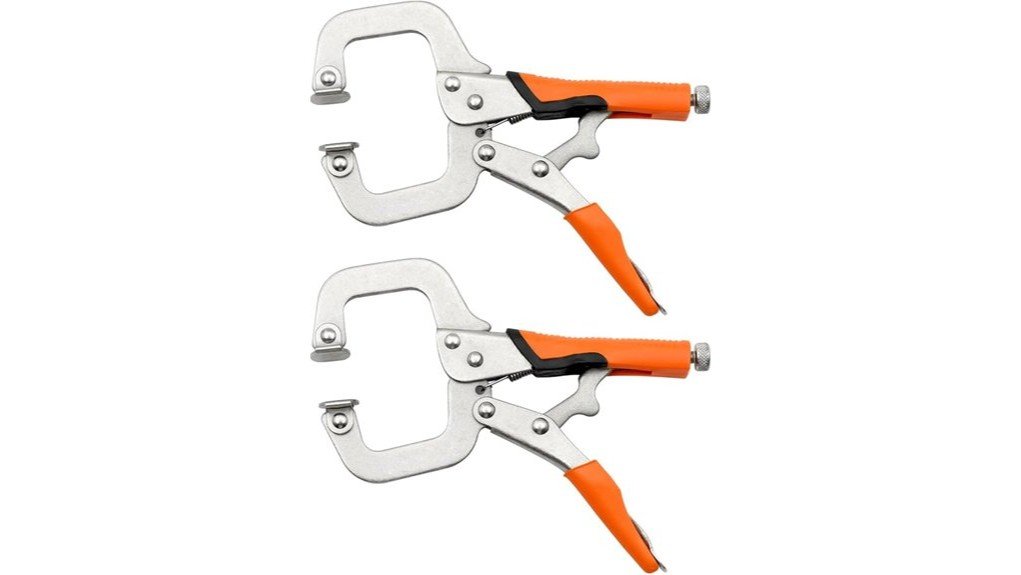
Holding two pieces firmly while you weld, drill, assemble, or repair them can be frustrating when an ordinary clamp is too slow or awkward to position. The WBJKZJD 6-Inch C Clamp Heavy Duty Locking Pliers combine a locking-plier mechanism with swivel clamp pads and an adjustable pressure screw, giving you a compact way to secure workpieces. The 1.57-inch jaw depth makes this model better suited to smaller assemblies and accessible edges than thick or deeply recessed work. In this review, you will see where these locking clamps make sense, what their limitations are, and what to check before buying.
Quick Verdict
Rating: 8/10 editorial score
Best For: DIY woodworking, pocket-hole assembly, light fabrication, welding setup, and general shop clamping.
Bottom Line: These 6-inch locking C clamps offer useful pressure adjustment, metal swivel pads, and a compact high-carbon-steel frame. Their main limitation is the 1.57-inch jaw depth and capacity, so you should measure your workpiece before ordering.
| Specification | Detail |
|---|---|
| Brand | WBJKZJD |
| Model | 012TL02-WB-CC |
| Product Type | Locking C-clamp pliers with swivel pads |
| Size | 6 inches |
| Package | 2 clamps |
| Material | High-carbon steel |
| Finish | Nickel-plated coating |
| Jaw Depth | 1.57 inches |
| Grip Capacity | Up to 1.57 inches according to the matching product listing |
| Clamp Faces | Metal swivel pads |
| Adjustment | Rear screw adjusts jaw fit and clamping pressure |
| Color | Orange |
| Best Uses | Woodworking, welding setup, pocket-hole joinery, repair work, and general shop clamping |
What Is the WBJKZJD 6-Inch C Clamp?
The WBJKZJD 012TL02-WB-CC is a 6-inch locking C-clamp tool designed to hold two surfaces together without requiring you to keep squeezing the handles. You set the approximate opening with the adjustment screw, squeeze the handles until the pliers lock, and use the release mechanism when the job is finished.
The matching product information describes high-carbon-steel construction with a nickel-plated finish and metal swivel pads. The swivel faces can change angle as they contact the workpiece, which helps spread pressure more evenly than a small fixed contact point. This design can be useful when you are aligning boards, holding parts for tack welding, or keeping pieces flush while drilling or fastening.
Key Takeaways
- The 6-inch design uses a 1.57-inch jaw depth and is intended for relatively compact clamping jobs.
- High-carbon-steel construction provides the rigid frame expected from a locking hand clamp.
- A nickel-plated finish adds corrosion resistance, although you should still keep the tool clean and dry.
- Metal swivel pads help the clamp faces sit more evenly against flat, tapered, or slightly irregular surfaces.
- The rear adjustment screw lets you change the opening and pressure before locking the handles.
- The matching product listing describes a 2-pack, which is useful when you need to secure more than one point of an assembly.
Who Should Buy It?
Best For
- DIYers who need compact locking clamps for woodworking and repairs.
- Welders or fabricators who need temporary holding pressure on smaller parts.
- Pocket-hole and cabinet projects where you need to hold surfaces flush during assembly.
Skip If
- Your workpiece requires more than about 1.57 inches of jaw depth or grip capacity.
- You need a long-reach clamp for parts positioned far from an edge.
- You need documented professional-duty clamping-force specifications or a confirmed manufacturer warranty.
Before You Buy: Do not judge compatibility from the overall 6-inch tool length alone. The important working measurement is the approximately 1.57-inch jaw depth and stated grip capacity. Measure the material and the distance from the edge to your intended clamping point first.
Key Features and Benefits
High-Carbon-Steel Construction
The matching WBJKZJD listing identifies high-carbon steel as the main material. For you, the important benefit is rigidity. A clamp frame needs to resist flexing while pressure is applied, especially when you are holding two pieces in alignment before fastening or welding.
The nickel-plated surface is intended to improve resistance to rust and corrosion. It does not make the tool weatherproof, so you should still wipe away moisture and store the pliers in a dry toolbox or cabinet.
Metal Swivel Pads
The swivel pads are one of the more useful parts of this design. Instead of forcing a fixed clamp face against the work at one angle, each pad can move to sit more naturally against the contacted surface. That can spread force across a larger area and may reduce concentrated marks on wood or finished material.
You should still use scrap wood, a thin protective pad, or another suitable barrier when clamping a finish that can dent or scratch easily. Metal pads can still leave marks if you apply too much force.
Adjustable Pressure Screw
The adjustment screw at the end of the handle controls how the jaws fit around the material and influences the amount of locking pressure. This makes the tool more adaptable than a clamp with a single fixed opening.
Correct adjustment matters. If the screw is set too loose, the clamp may not hold the pieces securely. If it is set too tight, locking the handles can require unnecessary force and may damage softer material.
Compact 6-Inch Format
A compact clamp is convenient when larger C clamps or bar clamps interfere with nearby parts. The tradeoff is reach. With a stated jaw depth of 1.57 inches, this model is mainly useful when the clamping location is reasonably close to the edge of the workpiece.
Pro Tip: Adjust the screw while the jaws are positioned around your material, then test the lock with moderate hand pressure. You want a secure hold without forcing the handles closed as hard as possible.
Performance and Efficiency
The main advantage of locking C-clamp pliers is speed after the opening has been adjusted. Once the screw is set for a repeated material thickness, you can position the jaws, squeeze them closed, and release them without turning a traditional C-clamp screw through its full range each time.
The 1.57-inch jaw depth determines where the tool performs best. It should work well for accessible edges, smaller assemblies, face alignment, and similar jobs. It is less appropriate when you need to reach several inches into a panel or clamp very thick stock.
The swivel pads also help when two contacted surfaces are not perfectly parallel. They can change angle as they contact the material, which is useful for slightly tapered or irregular parts. You should still confirm that both pads are seated securely before drilling, fastening, or welding.
Applications and Use Cases
These locking pliers can serve several jobs in a workshop because they combine a C-shaped frame with a locking mechanism. The tool is especially practical when you want both hands free after the clamp has been secured.
Woodworking and Cabinet Assembly
You can use the clamps to hold two boards flush while drilling pilot holes, installing screws, or checking alignment. The swivel faces provide broader contact than narrow plier jaws, but you should protect soft or finished wood when visible marks would be a problem.
Pocket-Hole Joinery
Face-style clamps are commonly used to prevent two pieces from shifting while pocket-hole screws are driven. This WBJKZJD model can fill that role when its reach and opening fit your material. Confirm the boards are aligned before applying full locking pressure.
Welding and Light Fabrication
For fabrication work, the clamp can hold smaller metal pieces while you establish alignment or place tack welds. Keep the handles and your hands away from hot metal, sparks, and the active welding area. A holding clamp should not be treated as an electrical welding ground unless the manufacturer specifically approves it for that purpose.
Maintenance and General Repairs
The locking design can also help hold brackets, sheet material, small frames, or repair parts while you drill or fasten them. The compact size is useful where a long bar clamp would take up too much room.
How It Performs in Real Use
For Repetitive Clamping
When several pieces have similar thickness, the adjustable screw can stay close to the same setting. That reduces how much adjustment you need between clamps and can make repetitive assembly faster.
For Delicate Wood Surfaces
The swivel pads spread pressure better than narrow jaws, but they are still metal. On finished furniture parts, veneered panels, or soft wood, adding a protective scrap block between the pad and the workpiece is the safer approach.
For Small Welding Jobs
The carbon-steel frame and locking action make the tool suitable for holding smaller pieces in position. The limited jaw depth remains the key restriction, especially when the joint sits farther from the material edge.
For Irregular Parts
Swiveling faces can adapt better to slight angles than completely fixed pads. Rounded stock is more challenging because the contact points can shift. For pipe or strongly curved material, a clamp specifically designed around round stock may provide a more secure grip.
How to Use It Correctly
- Check the fit first. Make sure the workpiece falls within the clamp’s available reach and opening.
- Open the jaws. Turn the rear adjustment screw until the clamp fits easily around the material.
- Seat both swivel pads. Confirm that the pads contact stable surfaces instead of edges that could slip.
- Set the pressure. Turn the screw until the handles can lock with firm but reasonable hand pressure.
- Check alignment again. Clamping pressure can move a workpiece slightly, especially during woodworking assembly.
- Release carefully. Support the work if needed before operating the release mechanism so parts do not move unexpectedly.
A common mistake is tightening the adjustment screw far beyond what the job requires. More pressure is not automatically better. Excessive force can dent wood, distort thin metal, or make the locking mechanism unnecessarily difficult to release.
Compatibility and Safety
The 6-inch overall size does not mean the jaws can reach six inches into a workpiece. The matching product information states a 1.57-inch jaw depth, so this is primarily an edge-access clamp.
Before drilling, cutting, grinding, or welding, verify that the clamp is fully locked and that both contact pads are stable. Never rely on a hand clamp to support a suspended load or a workpiece that could cause injury if it falls.
For welding, remember that the clamp itself can become hot through contact with heated metal. Wear appropriate protective equipment and follow the safety instructions for your welding equipment and work environment.
Cleaning and Maintenance
After use, wipe dust, metal particles, adhesive residue, and moisture from the pliers. Pay extra attention to the pivot, release mechanism, adjustment screw, and swivel-pad joints because debris in these areas can make operation less smooth.
If the moving joints begin to feel stiff, use a small amount of suitable tool lubricant and wipe away excess. Store the clamp dry. Although the nickel-plated coating provides added corrosion resistance, keeping moisture away from the tool will help preserve the finish and moving components.
Pros and Cons
Pros
- High-carbon-steel construction provides a rigid clamping frame.
- Nickel-plated finish adds corrosion resistance.
- Metal swivel pads help distribute contact pressure.
- Adjustment screw lets you tailor the fit and locking pressure.
- Two-clamp package is useful when an assembly needs support at more than one point.
Cons
- The 1.57-inch jaw depth limits reach on larger panels and deep assemblies.
- Metal swivel pads can still mark delicate surfaces if you apply excessive pressure.
- Specific manufacturer warranty terms for the linked Amazon ASIN could not be confirmed.
Is It Worth the Price?
Without relying on a temporary sale price, the best way to judge value is by the tool’s construction, package count, and fit for your projects. You get two compact locking C clamps with high-carbon-steel frames, swivel pads, and adjustable pressure, so the set can be useful if you often need to secure two points at once.
It is worth considering if your work regularly involves small woodworking assemblies, pocket-hole joints, light fabrication, or general repairs. It is not the best fit if your projects regularly require deep reach, substantially thicker material, or a clamp with clearly documented professional-duty force ratings.
How It Compares to Alternatives
The IRWIN VISE-GRIP Fast Release 6SP is a more established alternative if you value features such as a one-handed triggerless release and documented manufacturer warranty support. It is worth comparing when long-term brand support matters more than getting a simple multi-clamp set.
For woodworking and pocket-hole joinery, Kreg’s Classic Face Clamp range is more purpose-focused. Kreg offers face clamps designed specifically to hold surfaces flush during pocket-hole assembly. The WBJKZJD set makes more sense when you want a general-purpose locking C-clamp format that can move between woodworking, maintenance, and light metalworking tasks.
Frequently Asked Questions
What is the jaw depth of these locking C clamps?
The matching product information specifies a jaw depth of 1.57 inches and describes grip capacity up to 1.57 inches. Measure your workpiece before buying because the overall 6-inch tool length does not represent its usable clamping depth.
Are these C-clamp locking pliers suitable for welding?
The product is marketed for woodworking and welding applications, and the locking mechanism can help hold smaller metal parts in position. Keep the tool clear of unnecessary heat and sparks, and do not use it as an electrical welding ground unless the manufacturer specifically approves that use.
Will the swivel pads prevent marks on wood?
The swivel pads help distribute pressure across the contact area, which can reduce concentrated surface damage. They are still metal, so use a scrap block or suitable protective pad when clamping soft, veneered, painted, or finished wood.
Can you use these clamps on rounded surfaces?
The swivel pads can adapt to slight angles and some irregular shapes, but round stock can be harder to hold securely because the contact points may shift. For frequent pipe or round-stock work, a clamp with jaws specifically shaped for curved material may be a better option.
How do you adjust the clamping pressure?
Use the adjustment screw at the end of the handle to set the approximate opening and pressure. Adjust it until the handles lock with firm, controlled pressure rather than forcing them closed as tightly as possible.
How should you maintain the locking pliers?
Wipe away dust, metal particles, residue, and moisture after use, then keep the clamp dry during storage. If the pivots or screw become stiff, apply a small amount of suitable tool lubricant to the moving parts and remove any excess.
What warranty comes with the WBJKZJD C clamps?
A specific manufacturer warranty period for the linked Amazon ASIN could not be verified, so you should not assume a one-year or lifetime warranty. Check the current Amazon listing and seller terms before ordering if warranty coverage is important to you.
The Bottom Line
The WBJKZJD 6-Inch C Clamp Heavy Duty Locking Pliers are a practical choice when you need compact, adjustable clamps for woodworking, pocket-hole assembly, light fabrication, welding setup, or routine repairs. Their strongest features are the high-carbon-steel construction, swivel pads, adjustable locking pressure, and two-clamp package, while the 1.57-inch jaw depth is the main limitation. Choose them when that reach fits your projects, but consider a larger or more specialized clamp when you routinely work with thicker material, deep panels, or round stock.
Ready to Buy?
Check the latest price, package configuration, and product details before you decide.