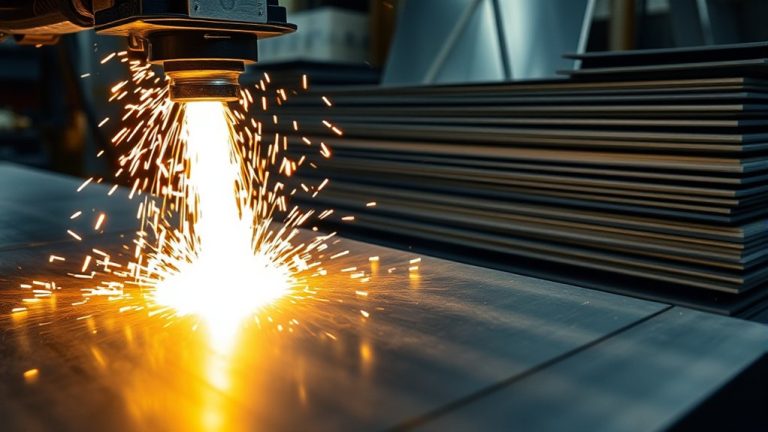
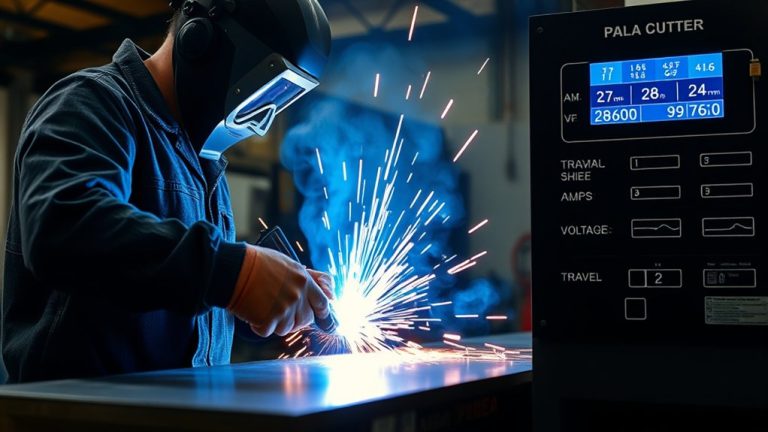
You’re likely aware that plasma cutters are versatile tools, but cutting copper sheets requires specific knowledge. It’s essential to adjust settings precisely, choosing the right amperage and speed to avoid oxidation and warping. Opt for an argon-hydrogen gas mixture to enhance edge quality. Regular maintenance of consumables can’t be overlooked for consistent performance. Curious about how plasma cutting stacks up against other methods? There’s more to uncover.
Understanding Plasma Cutting for Copper Sheets
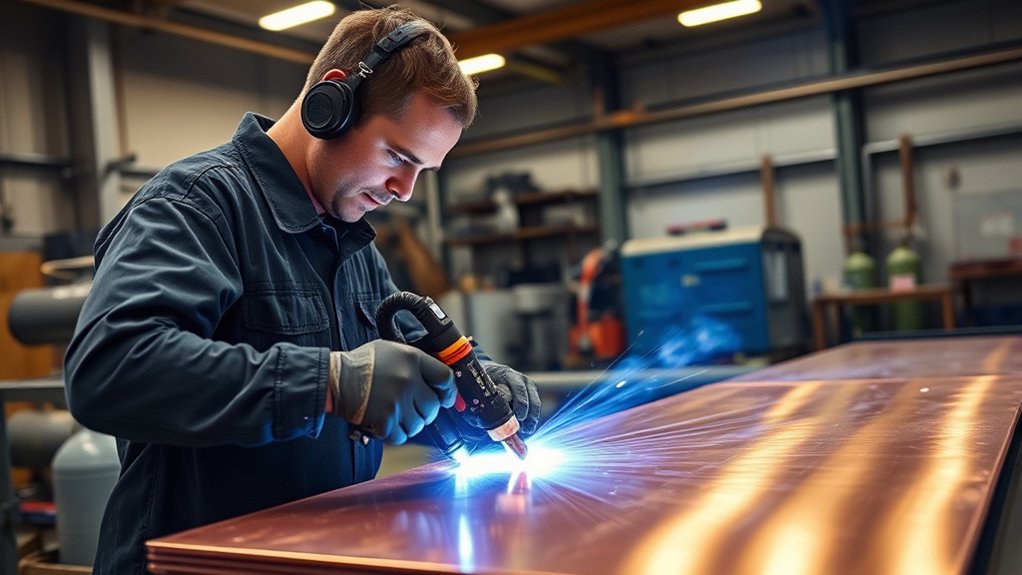
When it comes to plasma cutting copper sheets, understanding the specific properties of copper is vital to achieve precise results. Copper’s high thermal conductivity can be a double-edged sword in plasma cutting. It rapidly dissipates heat, which can prevent significant heat distortion but also requires careful calibration to avoid excessive melting.
By using a plasma gas mixture of argon and hydrogen, you guarantee superior cutting capability while minimizing oxidation on the cut edges.
Opt for an argon-hydrogen mix for superior cuts and reduced edge oxidation.
To liberate your cutting process from imperfections, maintaining the correct amperage and gas flow rate is fundamental. This precision prevents edge warping and assures a clean cut.
Remember, the consumables—nozzles and electrodes—are the unsung heroes of your setup. Regular maintenance and timely replacements aren’t optional; they’re your ticket to consistent, high-quality cuts.
Master these elements, and you’ll transform copper sheets into expertly crafted components with minimal waste and maximal efficiency.
Essential Settings for Cutting Copper With a Plasma Cutter
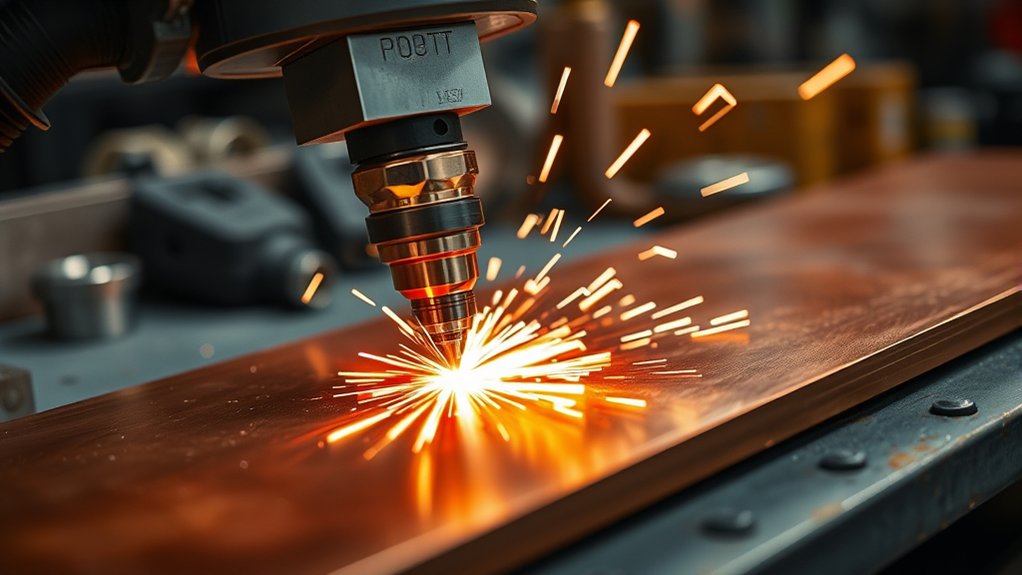
To achieve maximum results when cutting copper with a plasma cutter, set the amperage between 60 to 100 amps and maintain a cutting speed of 30 to 50 inches per minute.
You should select a nitrogen gas mixture to reduce oxidation and improve edge quality, as it performs better than air or oxygen.
Confirm the cutting height is consistently between 1/16 inch to 1/8 inch from the material, and regularly check consumables like nozzles and electrodes for efficient operation and precise cuts.
Optimal Plasma Cutter Settings
Cutting copper sheets with a plasma cutter demands precise settings to achieve high-quality results.
Begin by considering the cutting thickness adjustments—copper sheets require 40-60 amps, contingent on their thickness, to prevent excessive heat. A travel speed of 30-50 inches per minute strikes an ideal balance, minimizing warping and oxidation.
Maintain a consistent standoff distance of 1/16 to 1/8 inch between the torch and sheet to guarantee superior edge quality and reduce dross formation.
Plasma cutter maintenance is vital to performance longevity. Regular inspection and replacement of consumables like nozzles and electrodes keep cuts consistent and clean.
Adhering to these precise settings liberates you from subpar results, allowing mastery over copper sheet cutting with efficiency and accuracy.
Suitable Gas Selection
Understanding the ideal plasma cutter settings paves the way for selecting the right gas, an essential factor in achieving precision cuts in copper sheets.
First, consider nitrogen or an argon-hydrogen mix to minimize oxidation, vital in maintaining edge integrity. Prioritize gas purity; impurities degrade performance, causing erratic cuts.
Adjust gas pressure carefully, as it directly influences cut quality. Aim for a flow rate between 50 and 100 CFH, tailored to the copper sheet’s thickness and your machine’s capabilities.
A higher amperage, around 80 to 120 amps, is important for thicker sheets, while a smaller nozzle enhances arc precision.
Experiment with gas combinations and pressures; copper’s conductivity demands meticulous adjustments to prevent warping and guarantee liberation from subpar results.
Edge Quality Considerations
When aiming for impeccable edge quality in copper sheet cutting with a plasma cutter, leveraging the right gas mixture is vital. Utilizing a blend of argon and hydrogen guarantees a hotter plasma flame, resulting in superior edge smoothness.
Achieving cut consistency requires maintaining an amperage between 40 to 100 amps, precisely adjusted to the material’s thickness. Keep the plasma cutter’s torch consistently distant, ideally 1/16 to 1/8 inch, to minimize dross and optimize cuts.
High cutting speeds mitigate heat-affected zones, critical for copper’s conductive nature to prevent warping. Regularly replace consumables like nozzles and electrodes; they deteriorate rapidly, affecting precision.
Gas Choices for Optimal Copper Cutting
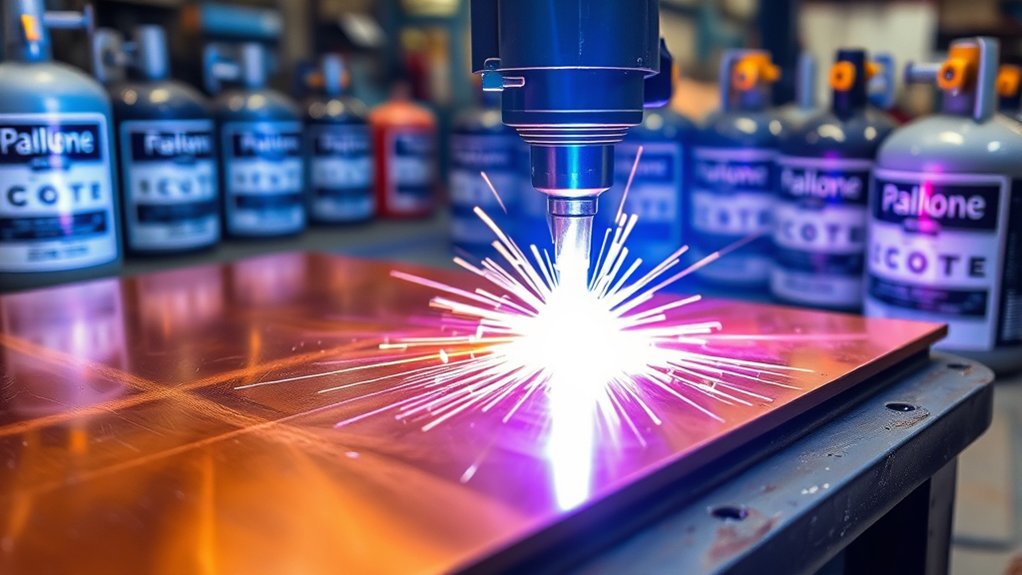
When cutting copper sheets with a plasma cutter, selecting the ideal gas mixture is essential for enhancing edge quality and operational efficiency.
You should consider using an argon-hydrogen mix for its ability to generate a hotter plasma arc, which reduces oxidation and improves cut cleanliness, while nitrogen can help achieve a precise edge with minimized heat-affected zones.
Balancing cost-effectiveness with performance, you must adjust the gas flow rates and settings specific to your system, especially for varying sheet thicknesses.
Selecting Ideal Gas Mixture
While cutting copper sheets, selecting the ideal gas mixture is crucial for achieving the best results.
Opt for a blend of argon and hydrogen, which guarantees gas efficiency and plasma stability, creating the hottest plasma flame for cleaner cuts. This mixture excels in delivering precision and minimizing oxidation risk.
Alternatively, nitrogen is a robust choice for reducing surface oxidation while maintaining cut quality.
Adjust the gas flow rate and amperage to your specific plasma system’s needs for peak performance.
Be wary of using compressed air, as it can introduce oxidation, compromising the finish.
Impact on Edge Quality
Choosing the right gas is essential to achieving superior edge quality when cutting copper sheets with a plasma cutter. Precision in gas selection liberates you from common pitfalls like excessive dross formation and poor edge finish.
To optimize your results:
- Nitrogen – Provides cleaner cuts by minimizing oxidation, enhancing the edge finish.
- Argon-Hydrogen Mix – Produces a hotter plasma arc, smoothing edges and reducing surface roughness.
- Flow Rate and Pressure – Critical for controlling dross; improper settings can mar the cut quality.
Moreover, maintaining your plasma cutter is important. Regular replacement of nozzles and electrodes guarantees consistent performance.
Lowering amperage for thin sheets prevents warping, delivering a refined edge. Your mastery over these elements dictates the quality of your copper cuts.
Cost-Effectiveness Considerations
Although cost-effectiveness is a pivotal factor in plasma cutting copper sheets, your choice of gas dictates both operational expenses and the quality of the final product.
Conducting a thorough cost analysis reveals that nitrogen mixtures enhance edge quality, minimizing oxidation, and reducing post-cut processing. While oxygen is viable, it oxidizes edges, increasing refinishing costs and impacting overall cost-effectiveness.
Argon-hydrogen blends deliver the hottest plasma flame, ideal for thicker sheets, though they might challenge budget constraints.
To optimize expenses, balance gas type with desired edge results, factoring in cutting speed and gas flow rates. By aligning gas choice with your operational goals, you minimize material waste and achieve a refined cut, empowering your bottom line through strategic budgeting.
Techniques for Achieving High-Quality Edges
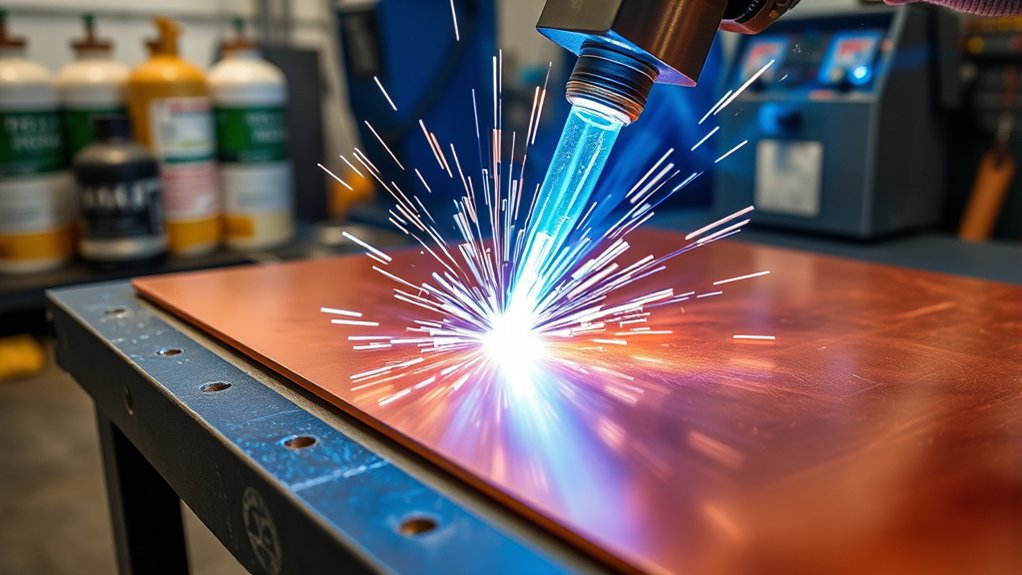
Achieving high-quality edges when cutting copper sheets with a plasma cutter requires a precise approach. Embracing cutting techniques like using a high-frequency arc and a fine plasma nozzle can greatly enhance edge refinement. Here’s how you can do it:
- Gas Mixture: Utilize a nitrogen or argon-hydrogen mix to improve edge quality by reducing oxidation and minimizing the heat-affected zone.
- Settings Adjustment: Tailor your cutting speed and amperage according to the copper sheet’s thickness. This prevents warping and guarantees smooth edges.
- Torch Maintenance: Regularly replace consumables, such as nozzles and electrodes, and adjust torch height for maintaining ideal standoff distance. This enhances stability and control, guaranteeing consistent cutting quality.
These methods liberate you from the constraints of poor edge quality, allowing you to achieve precision and artistry in your work.
Comparing Plasma Cutting to Other Copper Cutting Methods
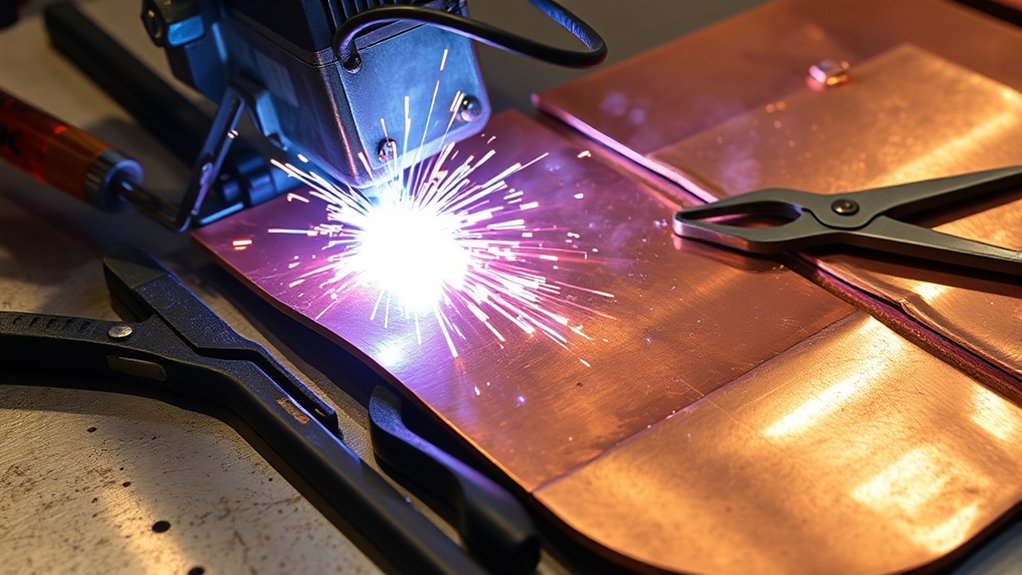
In the domain of copper cutting, understanding the nuances between different methods is essential for optimizing your results.
Plasma cutting delivers significant plasma efficiency, especially when handling thicker copper sheets up to 1.5 inches. However, it sacrifices cut precision, leaving you with rougher edges compared to laser cutting‘s pristine, high-definition results.
Plasma cutting excels in efficiency for thicker copper sheets, but at the expense of precision and edge quality.
Laser cutting stands out for intricate designs, achieving tolerances as tight as .002 inches, but at a higher operational cost, making it ideal for projects where precision is paramount.
On the other hand, waterjet cutting offers a compelling alternative, providing high-quality edges without heat-induced distortion—a common pitfall of plasma methods.
For small-scale projects, manual tools like saws or chisels might suffice, yet they lack the precision and efficiency of advanced technologies.
Ultimately, your choice hinges on the balance between cost-effectiveness and the level of precision required for your copper cutting tasks.
Tips for Maximizing Efficiency and Performance
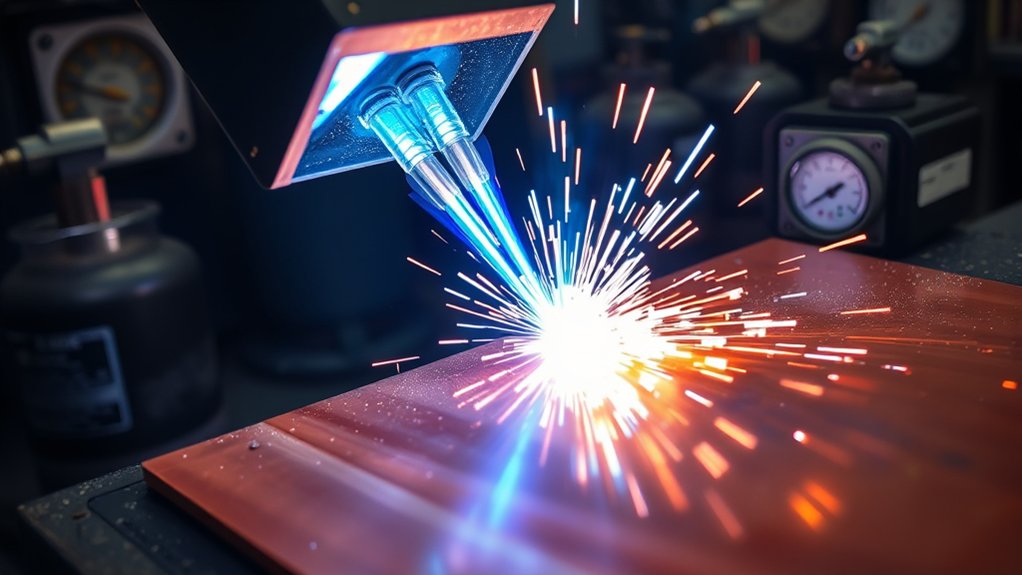
When selecting a method for cutting copper sheets, balancing precision and efficiency can be challenging. To maximize your plasma cutting techniques, consider these essential steps.
- Gas Selection: Opt for a nitrogen or argon-hydrogen mixture to enhance edge quality and minimize oxidation. This choice is critical for achieving a smooth, clean cut.
- Settings Adjustment: Tailor your plasma cutter’s settings, such as amperage and travel speed, according to the material thickness. Higher amperage is essential for thicker sheets, guaranteeing clean cuts without compromising speed.
- Consumable Maintenance: Regularly inspect and replace nozzles and electrodes. Worn parts can degrade performance and edge quality, so keeping them in top condition is indispensable.
Additionally, maintain a consistent torch-to-workpiece distance, ideally with a mechanized system, to guarantee precision.
Preheating the copper sheet can also improve cutting performance, particularly for thicker materials, by minimizing the heat-affected zone and reducing warping.
Embrace these strategies for ideal efficiency and performance.
Frequently Asked Questions
What Safety Precautions Should Be Taken When Plasma Cutting Copper?
Always wear appropriate personal protective equipment, including gloves and eye protection. Confirm fire safety by removing flammable materials and having extinguishers ready. Maintain proper ventilation to avoid fumes. Your liberation lies in precise, safe execution of your craft.
How Does Plasma Cutting Affect the Copper’s Structural Integrity?
Verily, plasma cutting can impact copper’s structural integrity through thermal effects and oxidation concerns. You must vigilantly control heat input and gas settings to minimize distortion and oxidation, ensuring the final product maintains desired mechanical properties and aesthetic appeal.
Are There Environmental Impacts of Plasma Cutting Copper?
Yes, plasma cutting copper can impact the environment. You should implement emission control systems to reduce harmful gases. Prioritize recycling copper to limit waste and enhance sustainability, ensuring efficiency without compromising environmental stewardship.
Can Plasma Cutting Be Used on Copper Alloys?
Yes, you can use plasma cutting on copper alloys. Harness the power of a plasma cutter’s performance like a sculptor shaping bronze. Different copper alloy types require precise amperage and gas flow settings for ideal precision and smooth edges.
What Are the Maintenance Requirements for a Plasma Cutter Used on Copper?
To maintain your plasma cutter on copper, regularly clean electrodes and replace consumables to guarantee peak performance. This prevents downtime, maintains cutting precision, and enhances edge quality. Embrace your freedom with efficient, well-maintained equipment that delivers consistently.
Conclusion
In the domain of metalworking, plasma cutting copper sheets is like wielding a scalpel in the hands of a skilled surgeon. You need to dial in the right settings—60 to 100 amps and a cutting speed of 30 to 50 inches per minute—while opting for an argon-hydrogen gas mix to guarantee pristine edges. Regularly maintaining your consumables keeps operations smooth and efficient. Mastering these nuances positions you to maximize both edge quality and cutting performance, making plasma cutting a stellar choice for copper.