Can the tool that fuses metal also slice through it? While at first glance, an arc welder might seem adaptable for plasma cutting, such transformations aren’t straightforward. Arc welders and plasma cutters operate on different principles, requiring distinct power outputs and mechanisms. Attempting to use an arc welder for cutting could pose significant safety risks and lead to unsatisfactory results. Understanding these differences is essential before considering any such conversion.
Understanding the Fundamentals: Arc Welding vs. Plasma Cutting
When you’re evaluating the fundamentals of arc welding and plasma cutting, it’s vital to understand their distinct operational principles.
Arc welding creates a continuous electric arc that melts metal to join workpieces. In contrast, plasma cutting utilizes an ionized gas to generate high temperatures and a focused stream of ionized air, effectively slicing through materials.
To perform plasma cutting, you need higher current levels and a specific air supply, which differs from traditional arc welders. Arc welders often lack the necessary voltage for the cutting process, emphasizing the unique requirements of plasma cutters.
Plasma cutting systems also rely on a compressor to supply air, a component not required in arc welding.
While some inverter stick welders might perform rudimentary carbon arc cutting, they’re not suitable substitutes for plasma cutters.
Attempting to convert an arc welder for cutting purposes can lead to operational inefficiencies and safety hazards.
Key Differences in Technology and Operation
Although both arc welders and plasma cutters serve the purpose of manipulating metal, their technological and operational differences are stark.
Arc welders function by establishing an electric arc between an electrode and the workpiece. This process relies on specific arc properties to generate the heat necessary for welding.
Establishing an electric arc generates the vital heat needed for effective welding.
In contrast, plasma cutters employ a high-velocity jet of ionized gas, or plasma, to achieve cutting. This plasma formation requires ionizing compressed air or gas, distinctly differing from the solid electrode method in arc welding.
Operationally, plasma cutting demands higher voltage and current, specifically tailored to maintain a stable arc, unlike the requirements for arc welding.
Attempting to convert an arc welder into a plasma cutter is impractical due to these differences. While carbon arc cutting is a theoretical adaptation, it doesn’t provide the essential components for plasma formation.
Consequently, understanding these differences is vital for any metal manipulation endeavor.
Safety Risks and Precautions When Attempting Conversions
If you’re considering converting an arc welder into a plasma cutter, be aware of the substantial safety risks involved. Safety measures are essential due to potential electric shock, fire hazards, and harmful fumes.
Equipment modifications must align with the distinct voltage and current requirements for plasma cutting. Inadequate setups can result in excessive heat, damaging your welder and posing injury risks.
Follow these precautions:
- Understand Operational Differences: Research the differences between plasma cutting and arc welding. Inadequate knowledge increases the likelihood of dangerous setups.
- Use Personal Protective Equipment (PPE): Wear gloves, face shields, and fire-resistant clothing. Proper PPE minimizes the risk of burns or injuries from equipment modifications.
- Ensure Proper Ventilation: Improper conversions can produce harmful fumes. Maintain proper airflow to mitigate inhalation risks.
Evaluating the Feasibility and Cost-Effectiveness
How feasible and cost-effective is it to convert an arc welder into a plasma cutter?
While the idea might seem budget-friendly at first glance, a detailed cost analysis reveals complexities. Plasma cutters operate using ionized compressed air—a capability most arc welders lack. This fundamental difference means you’d need additional equipment like a compatible air compressor, increasing your costs.
Moreover, the power demands for plasma cutting often exceed those of typical arc welders, especially when effective cutting requires up to 150A for larger rods.
While plasma cutters have become more affordable on platforms like eBay, the initial investment can still be significant.
User feedback often highlights the curiosity around unconventional setups, but it also underscores the risks. Many users report safety hazards and poor cutting results, suggesting that the conversion may not be as practical or cost-effective as initially perceived.
Essentially, investing in a dedicated plasma cutter may be more sensible.
Potential Hazards of Improper Equipment Use
When considering the conversion of an arc welder into a plasma cutter, it’s crucial to recognize the potential hazards posed by improper equipment use.
Failure to adhere to safety protocols can lead to severe consequences due to equipment malfunctions. Here are key hazards you should be aware of:
Severe consequences arise from equipment malfunctions if safety protocols are not followed diligently.
- Electric Shock and Fire Risks: Voltage mismatches may result in electric shock or fire. An arc welder isn’t designed for the ionized gas operation necessary for plasma cutting, increasing risk when misused.
- Overheating and Equipment Damage: Inadequate air supply relative to torch size can cause overheating. This not only damages equipment but also poses a safety threat from potential fires.
- Hazardous Fumes and Sparks: Attempting conversions can produce hazardous fumes, especially if cutting contaminated metal. Sparks can ignite flammable materials, creating dangerous environments.
Understanding these risks helps you implement effective safety protocols, minimizing the dangers associated with converting an arc welder into a plasma cutter.
The Importance of Proper Equipment for Quality Work
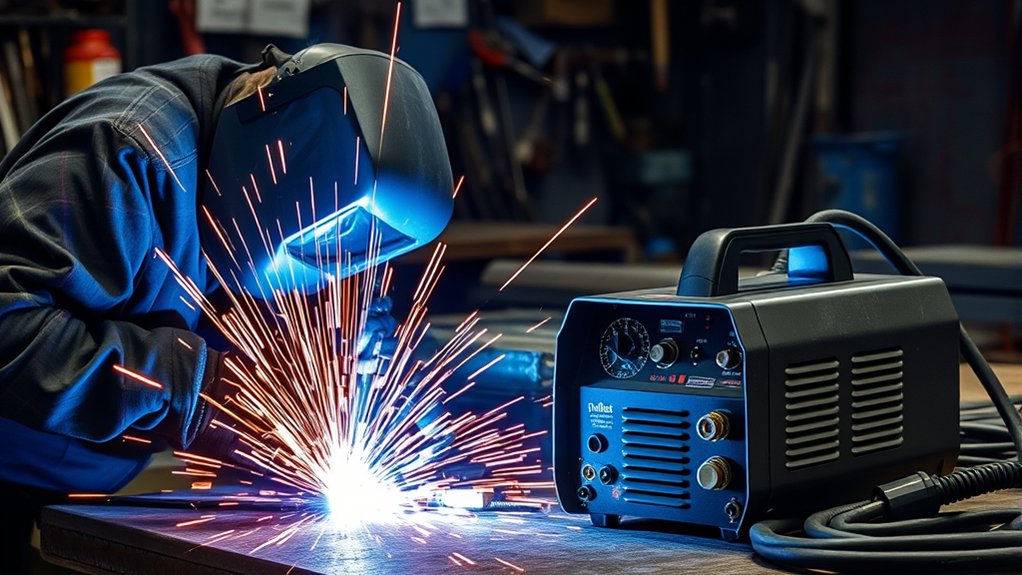
To achieve superior results in metalworking, investing in the right equipment is paramount. Tools selection directly impacts project efficiency and quality. A dedicated plasma cutter, for instance, employs ionized compressed air—unlike the arc utilized in stick welding. This distinction guarantees precise, clean cuts necessary for professional-grade work.
Plasma cutting relies on sufficient voltage and air supply volume, capabilities that arc welders inherently lack. Utilizing an arc welder inappropriately as a plasma cutter not only compromises cutting quality but also introduces safety hazards, including fire risks.
Moreover, proper equipment facilitates effective surface preparation. Welding over plasma cuts without adequate cleaning can lead to contamination, resulting in weak welds.
Recommendations for Safe and Effective Cutting Methods
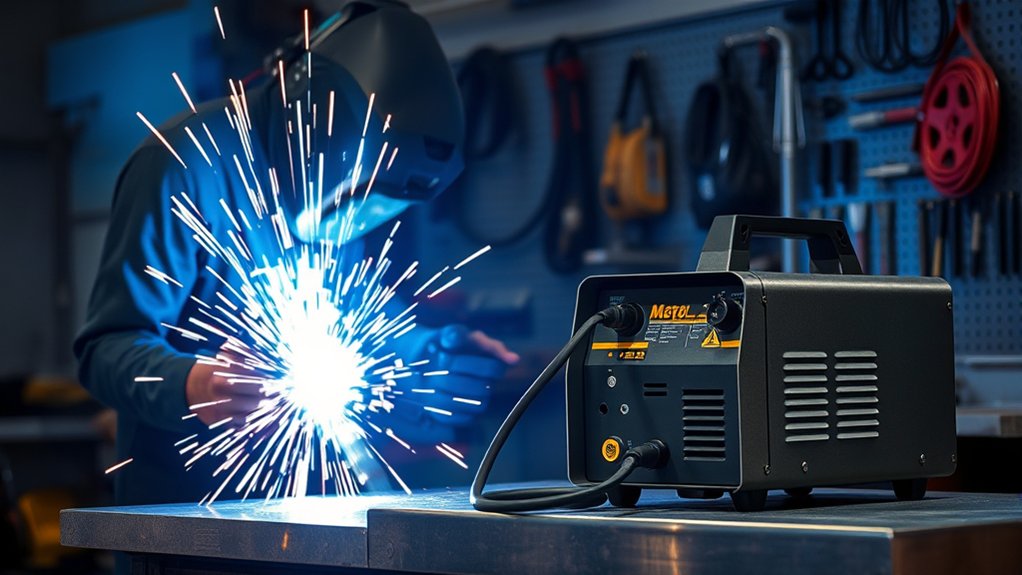
For ideal safety and effectiveness in cutting methods, it’s essential to recognize the unique requirements of plasma cutting compared to other techniques.
Plasma cutting demands a dedicated operational mechanism, distinct from arc welding. Attempting to modify an arc welder for plasma cutting can lead to significant risks, such as fire hazards and subpar cuts.
Plasma cutting requires specialized equipment to avoid fire hazards and ensure optimal cutting quality.
Here are key recommendations:
- Invest in Dedicated Equipment: Purchase a plasma cutter, preferably with built-in compressors, to guarantee proper functionality, as they offer the necessary power levels and air supply.
- Prioritize Equipment Maintenance: Regularly inspect and maintain your plasma cutter to prevent malfunctions and guarantee reliable performance. This includes checking connections, hoses, and filters.
- Prepare Material Surfaces: Thoroughly clean metal surfaces before cutting to minimize contaminants that could compromise weld integrity and increase porosity.
Frequently Asked Questions
Can Arc Welders Be Modified for Plasma Cutting?
You can’t directly modify an arc welder for plasma cutting due to distinct welding techniques. Prioritize safety considerations by using appropriate equipment designed for plasma cutting, ensuring precise control and reducing risks associated with improper tool usage.
What Materials Can Plasma Cutters Handle?
Think of a plasma cutter slicing through metals like butter: it handles steel, aluminum, and copper effortlessly. You’ll find its capabilities impressive, offering high precision. Material compatibility with non-ferrous and ferrous metals makes it indispensable.
How Does Plasma Cutting Affect Metal Thickness?
Plasma cutting affects metal thickness by determining your cutting speed. Thicker metals require slower speeds to achieve clean cuts. You’ll need a powerful plasma cutter to handle greater thicknesses efficiently while maintaining precision and minimizing material distortion.
Are There Dual-Function Welders and Cutters Available?
Yes, you can find dual-function welders and cutters. These dual process machines serve as multifunctional tools, enabling both welding and plasma cutting. They’re efficient, saving space and offering versatility for varying project needs.
What Is the Cost of a Basic Plasma Cutter?
Picture the bright sparks and clean cuts a plasma cutter delivers. A basic model typically costs between $300 and $500. Cost factors include power output, brand reputation, and additional features like built-in air compressors or digital displays.
Conclusion
Converting an arc welder into a plasma cutter isn’t just risky—it’s inefficient. Did you know that plasma cutters operate at voltages 2-3 times higher than arc welders? This difference isn’t trivial; it’s vital for safety and performance. Attempting such conversions can lead to electric shock or fire, compromising both safety and quality. Invest in the right tool for the job. A dedicated plasma cutter guarantees precision, reliability, and, most importantly, your safety.