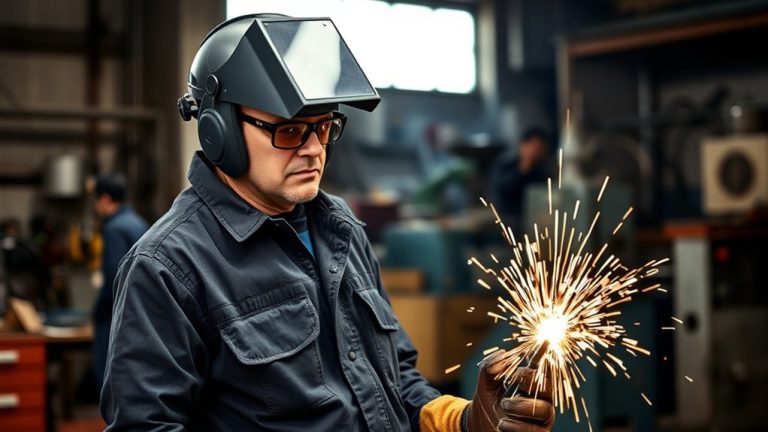
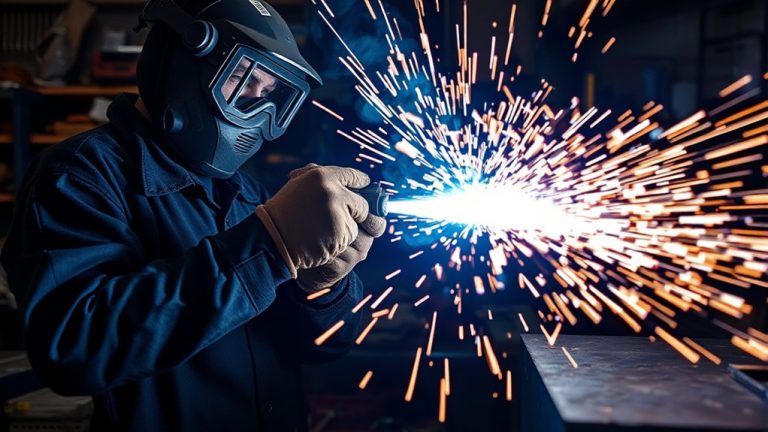
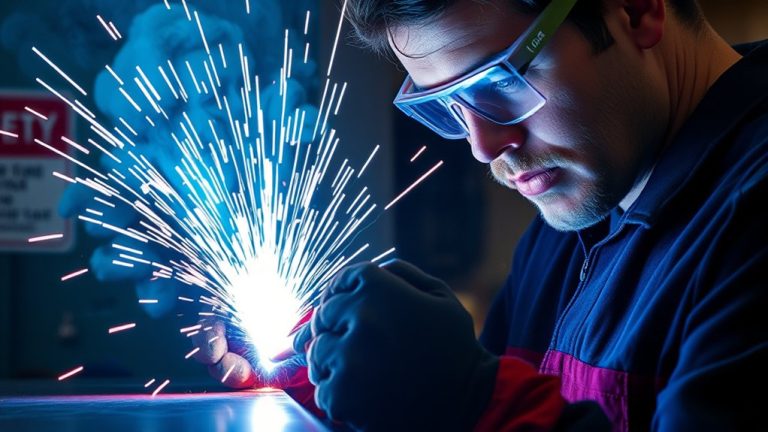
Can you really use a welding helmet for plasma cutting, or is it just a convenient myth? It’s vital to understand that plasma cutting and welding involve different light and heat intensities. Plasma cutting demands a minimum filter shade of 5, while standard welding helmets might not fully protect against the bright plasma arcs. Explore the specific adjustments required for plasma cutting helmets and discover why they might be essential for your safety and precision.
Understanding Plasma Cutting and Its Unique Requirements
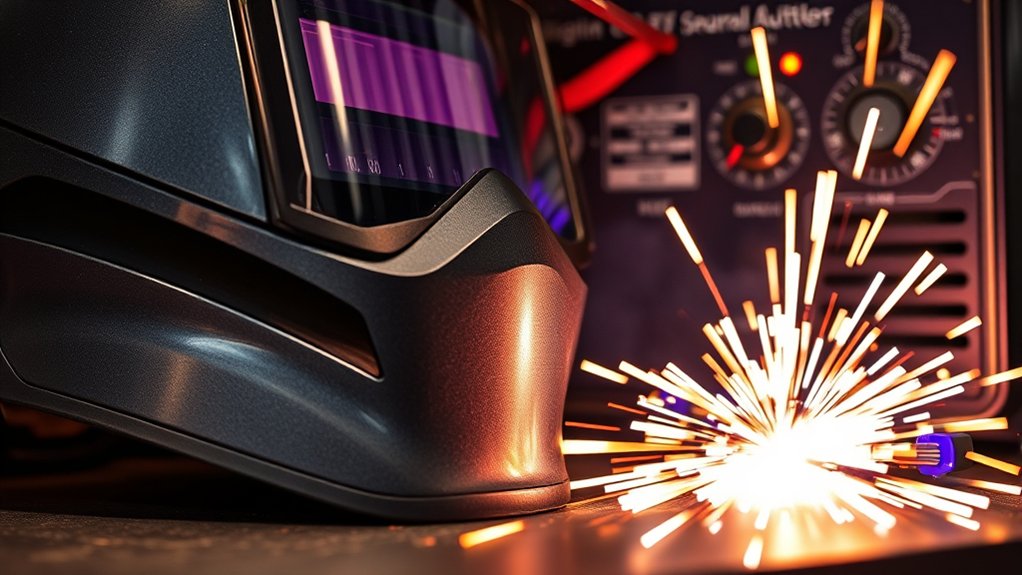
Although plasma cutting is similar to traditional welding in some respects, it demands specific considerations due to its unique characteristics. Plasma cutting techniques harness plasma arc dynamics, where gases are ionized at temperatures reaching up to 20,000°C (36,000°F). This generates intense light and UV radiation, necessitating specialized eye protection.
Unlike welding arcs, plasma arcs emit brighter light, requiring helmets with higher shade levels starting at shade 5. When engaging in plasma cutting, you must guarantee your helmet adheres to ANSI Z49.1:2005 standards. These standards recommend specific shade numbers based on cutting amperage, ranging from shade 4 for low currents to shade 10 for currents exceeding 300 Amperes.
Advanced helmets with auto-darkening filters enhance safety by adjusting lens shades according to the light intensity. Understanding these plasma cutting requirements is vital to optimizing visibility and guaranteeing protection against the plasma arc’s intense radiation.
Differences Between Welding Helmets and Plasma Cutting Helmets
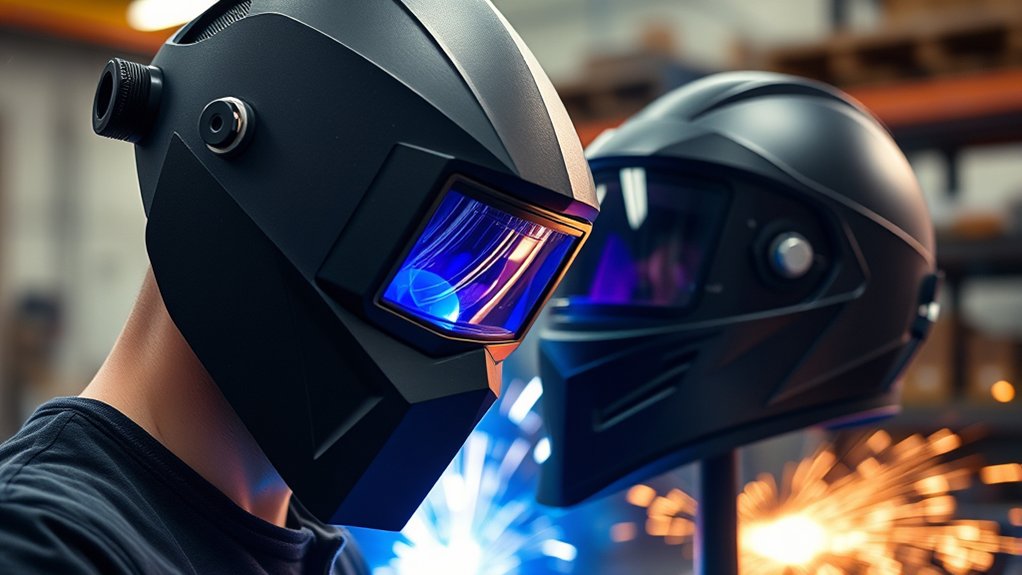
When selecting protective gear for plasma cutting, it’s vital to recognize the differences between welding helmets and those specifically designed for plasma cutting.
Plasma cutting helmet types are engineered to handle the intense light and heat from plasma arcs, requiring higher protection levels with shade levels starting at 5. In contrast, welding helmets are suited for the UV and IR radiation from electric arcs, which differ in intensity.
Advanced plasma cutting helmets often include auto-darkening filters, automatically adjusting to light intensity, ensuring maximum protection for your eyes.
While you can use welding helmets for plasma cutting, they may not provide sufficient protection against the intense brightness and heat unique to plasma operations, risking eye safety.
It’s important to verify that the chosen helmet has the appropriate filter shade for plasma cutting.
Inadequate protection levels in welding helmets can lead to eye damage, underscoring the significance of using the right helmet types for each task.
Choosing the Right Shade for Plasma Cutting
Having explored the distinctions between welding helmets and plasma cutting helmets, focus now shifts to selecting the right shade for plasma cutting, a critical aspect that guarantees optimal protection and visibility.
Shade selection is directly influenced by amperage considerations, as the intensity of light emitted during plasma cutting varies with current levels. For currents between 20-40 Amperes, a minimum shade of 5 is advised. When dealing with higher amperages, such as 60-100 Amperes, opt for shades of 8 or above to guarantee safety against intense light exposure.
Consider these key points:
- Minimum shade of 4: Suitable for currents below 20 Amperes.
- Shade 5: Balances visibility and safety for moderate amperage.
- Shades 8 to 12: Ideal for medium to heavy cutting applications.
- Adjustable shade settings: Allow adaptation to changing light conditions.
Selecting the appropriate helmet shade is paramount to prevent eye damage from UV and infrared radiation, guaranteeing both safety and effective task execution.
Key Features to Consider in a Helmet for Plasma Cutting
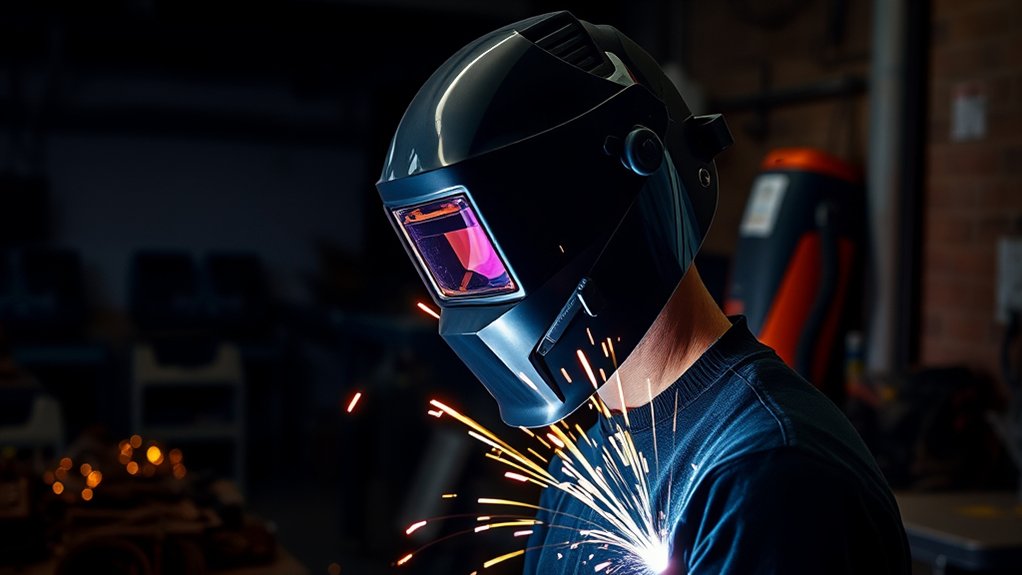
While selecting a helmet for plasma cutting, prioritize key features that enhance both safety and functionality. Superior lens quality is paramount; it should minimize distortion and provide clear visibility to guarantee precision.
Look for helmets with adjustable shade levels, starting from shade 5, to accommodate the intense light produced by plasma arcs. This feature helps maintain ideal visibility while protecting your eyes from harmful UV and infrared rays.
Ventilation features are equally critical, as they prevent overheating and promote comfort during prolonged cutting tasks. A well-ventilated helmet supports continuous airflow, reducing the risk of discomfort and allowing you to focus on the task without distraction.
Furthermore, advanced helmets may offer auto-darkening technology, automatically adjusting the lens shade according to the light intensity from the plasma arc, providing seamless protection and ease of use.
These features collectively guarantee a balance of safety and performance, making your plasma cutting experience both effective and comfortable.
Safety Considerations and Additional Protective Gear
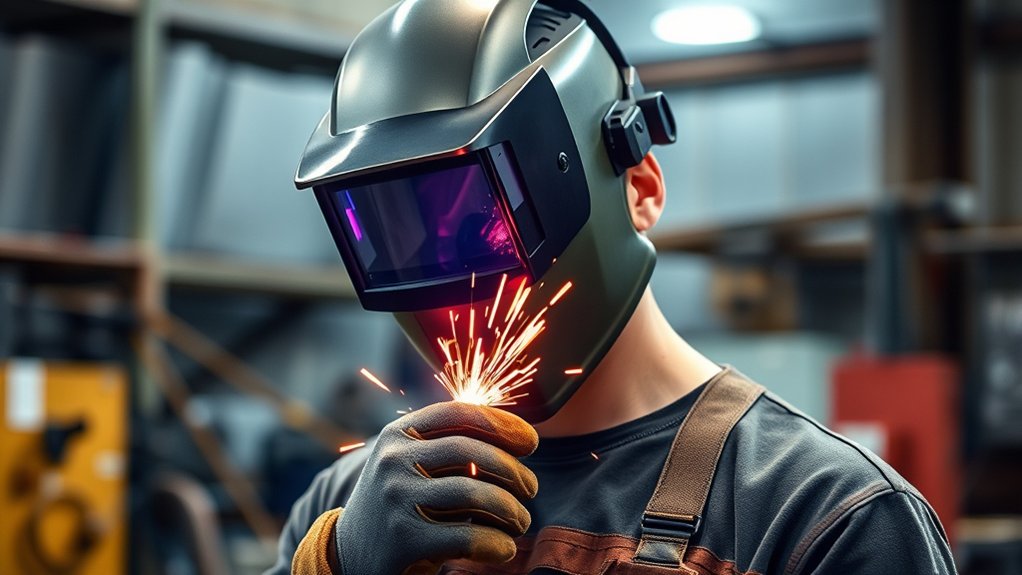
When engaging in plasma cutting, you must prioritize essential protective equipment to guarantee thorough safety.
Start with a welding helmet equipped with a filter shade of at least 5 to effectively block harmful UV and IR radiation.
Additionally, wear flame-resistant clothing and gloves to provide full skin coverage, and guarantee proper ventilation to mitigate exposure to toxic fumes.
Essential Protective Equipment
Although plasma cutting is an efficient technique, it requires stringent safety measures, starting with the proper selection of protective gear. Confirming the welding helmet has a suitable filter shade, beginning at shade 5, is vital. This prevents intense light exposure.
Don’t forget about preventive maintenance and proper fit for all equipment. Conduct regular inspections to verify PPE isn’t worn or damaged, as this could compromise safety.
Prioritize the following essential protective equipment:
- Flame-resistant clothing and gloves: Shield against burns and sparks.
- Ear protection: Use earplugs to mitigate high decibel levels, preventing hearing loss.
- Respiratory protection: Essential if workspace ventilation is inadequate.
- Regular equipment checks: Verify everything fits properly and functions effectively.
Comprehensive Skin Coverage
Securing thorough skin coverage during plasma cutting is critical to protecting yourself from the intense heat and sparks generated by the process.
Start with flame-resistant clothing that fully covers your skin for maximum skin protection. This includes long sleeves, pants, and a welding jacket.
Complement these with a welding helmet paired with a full face shield for additional coverage options against flying debris and molten materials.
Heat-resistant gloves are essential to protect your hands from burns and cuts while handling metal pieces.
Verify all your protective gear is free of flammable materials to reduce fire risks.
Regularly inspect and maintain your personal protective equipment (PPE) to assure its effectiveness and safety during plasma cutting tasks.
User Experiences and Recommendations for Helmet Use
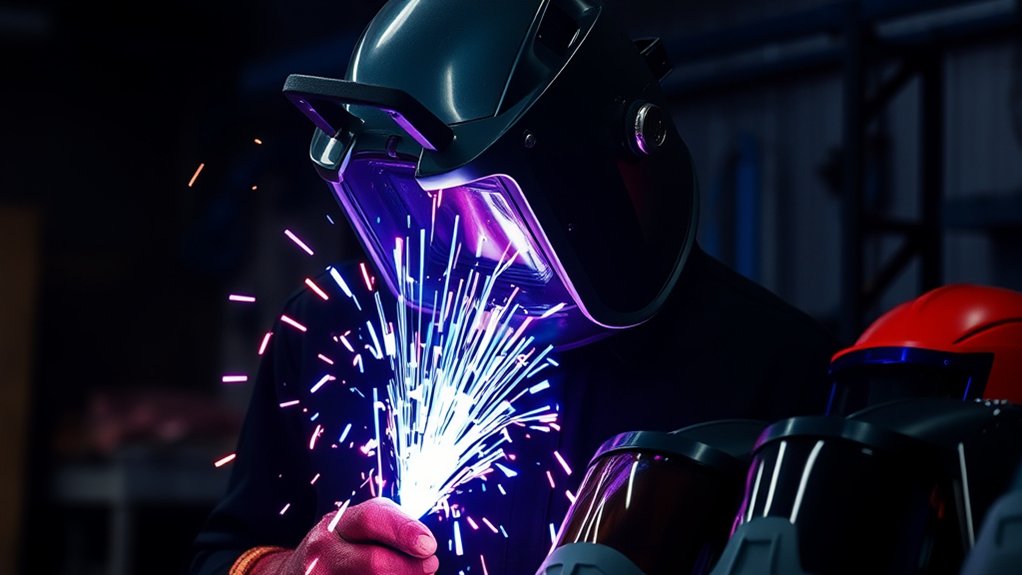
When using a welding helmet for plasma cutting, you may encounter flickering issues, such as those reported with the Parweld XR950A, necessitating precise sensitivity adjustments to maintain clear visibility.
Users recommend a shade level of at least #5, though shades up to #8 might enhance visibility and safety, depending on the intensity of the plasma arc.
Regularly inspect and adjust your helmet based on your specific amperage and cutting conditions to guarantee peak performance and protection.
Helmet Flickering Challenges
As you explore the intricacies of helmet flickering during plasma cutting, understanding user experiences and expert recommendations becomes essential.
Flicker frequency often disrupts your workflow, especially with helmets like the Parweld XR950A. Sensor sensitivity plays a pivotal role in this challenge, as even the Clarke GWH6 helmet isn’t immune, particularly in light state settings.
For a smoother operation, consider these strategic steps:
- Adjust sensor sensitivity and delay settings: Fine-tuning these can reduce flickering.
- Minimize external light interference: Reflective surfaces and mobile devices can trigger unwanted flicker.
- Choose reliable helmets: Opt for models with proven stability in plasma cutting conditions.
- Explore full face masks with tinted visors: These might offer superior protection against persistent flickering issues.
Precision in these adjustments can enhance your plasma cutting experience.
Shade Preferences Explained
Addressing helmet flickering challenges naturally leads to another critical aspect of your plasma cutting experience: selecting the right shade for your helmet. Users emphasize shade intensity and lens clarity when tailoring their equipment to specific amperage levels. A minimum shade #5 is commonly recommended, although some prefer #8 for enhanced visibility and protection. Lower currents, under 20 Amperes, might only require shade #4, while higher currents, over 60 Amperes, usually demand shade #8 or more. Older helmets with a #5 lens are often effective, while newer models with adjustable shades might offer superior performance. Additionally, using a full face shield along with your helmet guarantees protection from blowback and hot air.
| Amperage Range | Recommended Shade | Additional Notes |
|---|---|---|
| Below 20A | #4 | Adequate for low intensity |
| 20A – 60A | #5 | Balance of clarity and safety |
| Over 60A | #8+ | Maximum protection required |
Performance Adjustment Tips
Many users have found that fine-tuning the sensitivity knobs on their welding helmets can markedly reduce flickering issues during plasma cutting. Sensitivity adjustments are essential for optimizing helmet performance, ensuring the auto-darkening feature responds accurately to the plasma arc.
To further enhance effectiveness, consider these flickering solutions:
- Position strategically: Keep your helmet away from reflective surfaces and mobile devices to prevent unintended triggering.
- Utilize a straight edge: A straight edge can act as a guide, minimizing detection problems and promoting precision.
- Explore full face masks: If flickering persists, a full face mask with a tinted visor might offer more consistent performance.
- Regularly check delay settings: Adjusting the delay can improve helmet responsiveness, tailoring it to the dynamic nature of plasma cutting.
Frequently Asked Questions
Can Auto-Darkening Helmets Be Used for Plasma Cutting?
Yes, you can use auto-darkening helmets for plasma cutting. Adjust the shade sensitivity to match the plasma arc intensity. Auto-darkening technology quickly adapts, ensuring ideal visibility and protection while maintaining precision during your cutting tasks.
How Does Helmet Weight Impact Plasma Cutting?
When plasma cutting, helmet weight impacts comfort considerably. A well-distributed weight reduces neck strain, enhancing your focus and precision. Guarantee ideal weight distribution to maintain comfort and efficiency during extended use, thereby improving overall cutting performance.
Are There Specific Brands Recommended for Plasma Cutting Helmets?
Yes, you should consider brands like Miller, Lincoln Electric, and Hobart for plasma cutting helmets. Focus on helmet features like adjustable shade settings, lightweight design, and clear optics to guarantee precise cutting and enhanced safety.
Is It Necessary to Use Ear Protection While Plasma Cutting?
Yes, you should use ear protection while plasma cutting. The noise can exceed safety standards, leading to potential hearing damage. Ascertain your equipment meets industrial standards to maintain safe sound levels and protect your hearing effectively.
What Maintenance Is Required for Plasma Cutting Helmets?
Your plasma cutting helmet demands meticulous care! Clean it religiously, replace lenses like clockwork, and inspect for cracks. Neglecting helmet care could lead to disaster. Precision-focused maintenance guarantees your helmet’s longevity and performance during cutting tasks.
Conclusion
When it comes to plasma cutting, don’t gamble with your safety by using a standard welding helmet. The intense brightness of a plasma arc is a different beast, demanding a minimum shade of 5 and specific features to protect you effectively. Plasma cutting helmets are your best bet, offering auto-darkening filters and anti-flicker settings. Invest in the right gear—it’s not just about comfort; it’s about shielding your eyes from a storm of light.