Car frame straightening and frame welding both repair collision damage, but they solve different problems. Straightening pulls bent rails, mounting points, and unibody reference points back to factory measurements when the metal is still intact. Welding repairs cracked, rusted, torn, or separated metal when strength has been lost. The safest choice depends on the damage, the vehicle design, and the OEM repair procedure for that exact model.
Quick Answer
Use car frame straightening when the structure is bent but not cracked, torn, badly rusted, or weakened. Use welding or sectioning when metal is split, separated, rust-compromised, or requires an approved replacement section. A qualified collision repair shop should measure the frame and follow OEM repair procedures before deciding.
Key Takeaways
- Straightening restores alignment when the frame or unibody points are bent but still structurally sound.
- Welding repairs cracks, tears, rusted sections, broken mounts, and approved replacement sections.
- Unibody repairs need special care because the body shell carries crash loads through engineered load paths.
- DIY frame welding is risky because poor heat control, weak welds, and bad measurements can affect handling and crash performance.
- Choose a shop that can show computerized measurements, OEM repair information, welding qualifications, and a written warranty.
At a Glance
| Time Required | Inspection may take 30–90 minutes. Minor frame pulls may take a day or two. Structural welding, sectioning, parts delays, corrosion repair, and refinish work can take several days or longer. |
| Difficulty | Professional only for structural repairs. The work affects alignment, crash performance, corrosion protection, and resale value. |
| Tools Needed | Computerized measuring system, frame machine or pulling towers, OEM repair information, approved welders or spot-welding tools, alignment equipment, PPE, and corrosion-protection materials. |
| Cost | Minor measuring and pulls can land in the hundreds to low thousands. Structural welding, sectioning, corrosion, parts, refinish, and calibration can raise the bill. Always get a written estimate after measurement. |
Warning: Do not treat structural frame welding as a driveway repair. OSHA welding rules call for safe equipment selection, trained operation, fire prevention, and proper eye protection. A bad structural weld can affect steering, tire wear, crash energy management, and whether the vehicle is safe to drive.
What’s the Difference Between Car Frame Straightening and Welding?
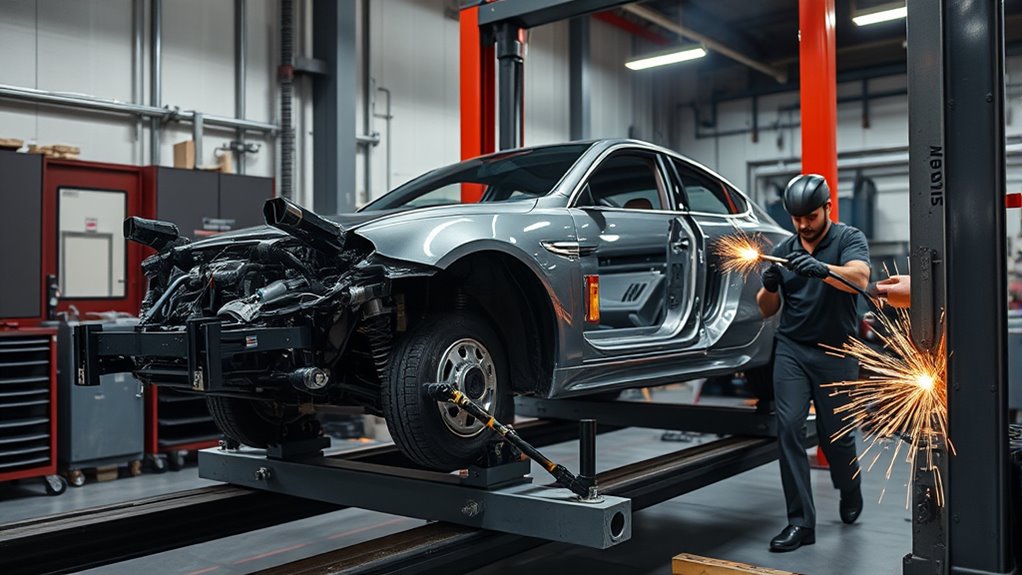
Car frame straightening and welding solve different damage problems.
With car frame straightening, a technician mechanically realigns bent rails, crossmembers, mounting points, and unibody reference points. The goal is to return the vehicle’s structure to the measurements listed in the repair data, without adding metal where it is not needed.
Straightening corrects shape. Welding restores metal continuity and strength when the structure is cracked, torn, rusted through, or separated.
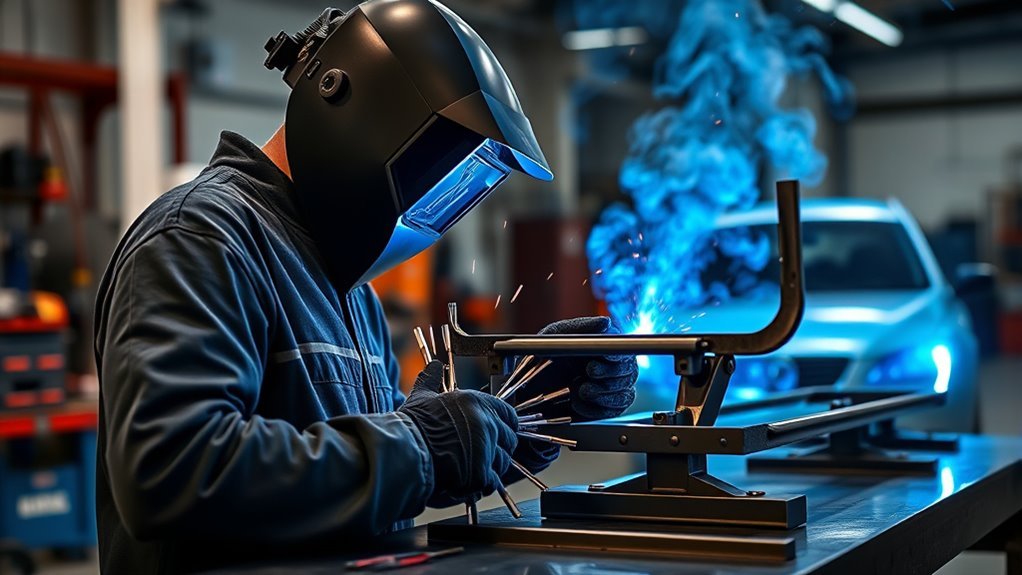
Welding joins metal after cracks, splits, rust holes, broken mounts, or approved replacement sections are found. A collision repair technician may use MIG welding, resistance spot welding, silicon bronze MIG brazing, TIG welding, or another approved process, depending on the vehicle maker’s procedure.
The key difference is simple: straightening is an alignment repair, while welding is a structural metal repair. Many collision jobs need both, but a shop should measure first, identify the material, check OEM instructions, and then decide which method is allowed.
When Car Frame Straightening Is Enough
You can usually rely on frame straightening when the damage is limited to bends, twists, or minor misalignment and the metal has not cracked, torn, buckled beyond repair limits, or rusted through.
Professional body repairers commonly inspect cars for structural damage, realign frames and chassis, and restore structural integrity to manufacturer specifications, according to the U.S. Bureau of Labor Statistics.
A proper straightening repair usually starts with computerized measurement. The shop compares your vehicle’s control points to factory data, then uses a frame machine or pulling towers to move the structure in small, controlled steps.
Minor Alignment Correction
When damage is limited to slight bends or minor misalignment, frame straightening may restore the structure without welding. This is common after low-speed impacts where the frame or unibody points moved but the metal stayed intact.
Good signs that straightening may be enough include:
- Small measurement deviations that are within pullable limits
- No cracks, torn seams, or separated welds
- No rust holes in load-bearing areas
- Suspension mounting points that can be brought back to spec
- Body gaps and tire alignment that improve after controlled pulls
This repair can be faster and less invasive than cutting or welding because it preserves the original structure when that structure is still safe to keep.
Non-Structural Frame Damage
Non-structural damage often looks like minor bends, dents, or cosmetic distortion around brackets, bumper supports, or outer body areas. It may not affect the main crash structure, but it still deserves a full inspection.
A technician should confirm that the damage is truly non-structural before giving the go-ahead. Hidden damage can sit behind bumper covers, under seam sealer, near suspension mounts, or inside boxed frame sections.
If the frame only has minor bends and the measured points return to specification, straightening can restore fit, handling, and body-panel alignment without unnecessary welding.
When Straightening Is Not Enough
Straightening is not enough when the metal itself has lost strength. That includes cracks, torn weld flanges, separated brackets, severe kinks, crushed sections, or rust that has eaten into a load-bearing area.
Some modern steels and aluminum structures also have strict repair limits. A section that looks repairable may need replacement if the OEM procedure says it cannot be heated, pulled, or welded in that location.
Note: “It pulled straight” does not automatically mean “it is safe.” The shop still needs final measurements, weld or seam checks, corrosion protection, wheel alignment, and a road test before the repair is complete.
Signs You Need Car Frame Welding
Cracks in steel or aluminum components, bent or twisted frame rails with torn metal, rust-compromised sections, and separated joints or mounts are clear signs the frame may need welding, sectioning, or part replacement.
Watch for these warning signs after a collision:
- Visible cracks near rails, crossmembers, or suspension mounts
- Broken or separated factory welds
- Rust holes in load-bearing areas
- Mounts that shifted, tore, or pulled away from the surrounding metal
- Uneven tire wear, pulling, vibration, or steering that feels off
- Doors, hood, trunk, or hatch that no longer line up correctly
- New creaks, clunks, or popping sounds near the damaged area
When you see these signs, do not assume a simple pull will fix the problem. A certified collision technician should inspect the vehicle, check OEM procedures, and decide whether welding, sectioning, replacement, or total-loss review is appropriate.
Products Worth Considering

【Even Pulling Force】 This universal auto body pull and weld clamp set helps spread pulling force across steel panels for more consistent dent and frame correction work.

Automotive Bodywork and Rust Repair

【Versatile Sizes】 Solve different dent sizes with 10×1", 5×1.5", 5×3" pull plates, ideal for auto body repair and collision jobs, saving time on setup.
How Car Frame Straightening Restores Alignment
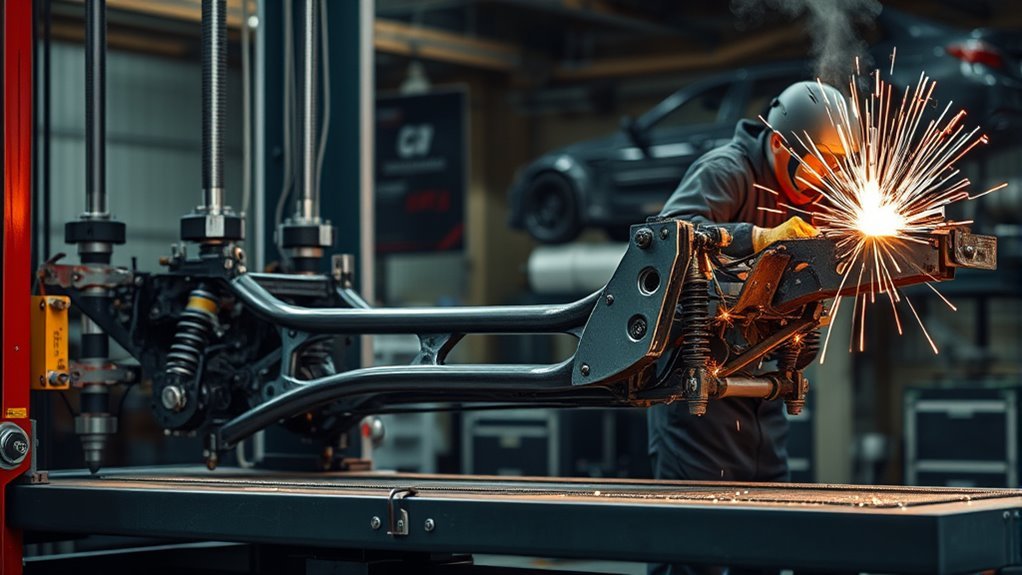
Car frame straightening uses specialized equipment, such as computerized measuring systems, frame machines, clamps, chains, and hydraulic pulling towers, to return bent or twisted points to specification.
The process usually works like this:
- Initial inspection: The shop checks visible damage, suspension points, panel gaps, tire position, and signs of hidden distortion.
- Computerized measurement: The technician compares the vehicle’s reference points to factory data.
- Controlled pulling: The frame machine applies measured force in the opposite direction of the damage.
- Repeated checks: The shop measures after each pull instead of relying on eye judgment.
- Final verification: The vehicle gets a final structural measurement, wheel alignment check, and road test when appropriate.
This process corrects frame damage from a collision and restores the geometry your suspension, steering, doors, and body panels rely on. When done correctly, it can be less invasive than welding because the original metal stays in place.
How Auto Frame Welding Repairs Damage
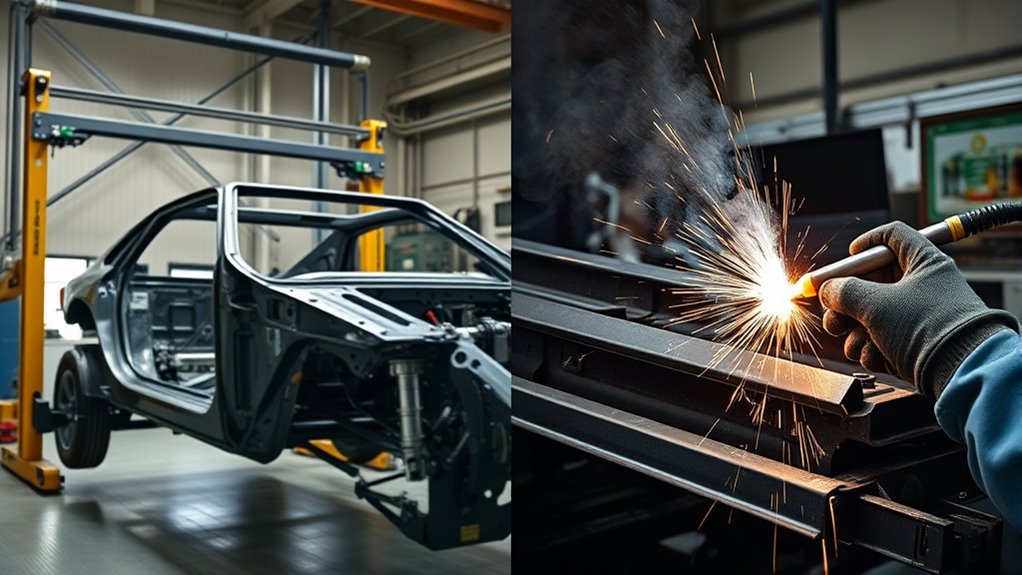
When straightening cannot fully restore damaged rails, cracked sections, or separated mounts, auto frame welding may be needed to rebuild strength. This can include repairing a crack, welding in an approved replacement section, replacing a bracket, or attaching a structural part according to OEM procedures.
On body-on-frame vehicles, the frame rails carry much of the load. On unibody vehicles, the body shell, floor, pillars, rails, rockers, and roof structure share load paths. That is why the same welding repair is not correct for every vehicle.
A safe welding repair should include:
- Identification of the metal type and thickness
- OEM instructions for where cutting and welding are allowed
- Correct weld type, weld length, spacing, and location
- Test welds or welder setup checks when required
- Proper seam sealing and corrosion protection after welding
- Final measurements and inspection before delivery
Automotive body repairers commonly fit, attach, and weld replacement parts into place, but the repair still has to match the vehicle maker’s instructions and the damaged area’s role in the structure.
MIG vs TIG for Car Frame Welding
Choosing between MIG and TIG for car frame welding depends on the metal, joint design, access, and OEM repair procedure. It is not just a personal preference.
MIG welding, also called gas metal arc welding, is common in collision repair because it is faster and works well for many steel repairs. It uses a continuously fed wire electrode and shielding gas.
TIG welding, also called gas tungsten arc welding, gives fine heat control and a clean weld, but it is slower and requires a higher skill level. It may be used for some aluminum or precision work, but it is not automatically the best choice for every frame repair.
Modern collision repair may also involve resistance spot welding, MIG brazing, rivet bonding, structural adhesives, or part replacement, depending on the vehicle. Some high-strength steel areas cannot be repaired with generic heat and welding methods because excess heat can weaken the steel.
- MIG is often faster for approved steel structural repairs.
- TIG gives tighter heat control for certain precision or aluminum work.
- Resistance spot welding may be required to duplicate factory-style welds in some locations.
- OEM procedures decide the repair method, not guesswork.
Pro Tip: Ask the shop which weld type the OEM repair procedure calls for. A good answer should mention the vehicle maker’s procedure, the material, and how the technician will verify the welds.
Why Unibody Repairs Need Special Care
Unibody repairs need special care because the body and frame act as one structure. The rails, rockers, pillars, floor, roof, and crumple zones all help manage crash energy.
The Insurance Institute for Highway Safety notes that structural, airbag, seat belt, and weight changes can affect crash-test performance. That is why collision repairs must restore more than panel appearance.
Unibody Crush Zone Care
Unibody crush zones are engineered to absorb impact energy in a controlled way. If a repair changes the shape, metal strength, weld pattern, or load path, crash forces may travel differently in a later collision.
That does not mean every damaged crush zone can be welded back together. In many cases, the OEM repair procedure may require a complete part replacement or a specific sectioning location.
- Restore dimensions so the structure loads correctly.
- Follow approved cut and weld locations.
- Avoid uncontrolled heat on high-strength steel.
- Seal and protect repaired seams from corrosion.
- Confirm final measurements before the vehicle leaves the shop.
OEM Weld Standards
OEM weld standards set the repair benchmark for unibody work because weld type, heat input, location, and bond strength are part of the vehicle’s crash design. You cannot treat modern vehicle structures like generic steel tubing.
Certified technicians should use the OEM repair manual or approved repair database for the exact year, make, and model. That information tells them whether the damaged area can be straightened, sectioned, welded, bonded, riveted, or must be replaced.
The National Institute for Automotive Service Excellence lists collision-focused certification tests, including Collision Repair & Refinish and Damage Analysis & Estimating, which are useful credentials to ask about when choosing a repair shop.
Precision Alignment Checks
Because a unibody shares crash loads through the whole shell, you need precision alignment checks after any structural repair. A small shift can affect suspension geometry, steering feel, tire wear, panel fit, and safety systems.
A complete check should include:
- Reference-point measurements before and after repair
- Diagonal and height measurements
- Suspension mounting-point checks
- Wheel alignment after structural work
- ADAS calibration review if cameras, radar, sensors, bumpers, windshield, or alignment angles were affected
- Final inspection and road test when appropriate
These checks help protect you from hidden damage, uneven tire wear, poor handling, and weak crash performance.
Why DIY Frame Welding Is a Bad Idea
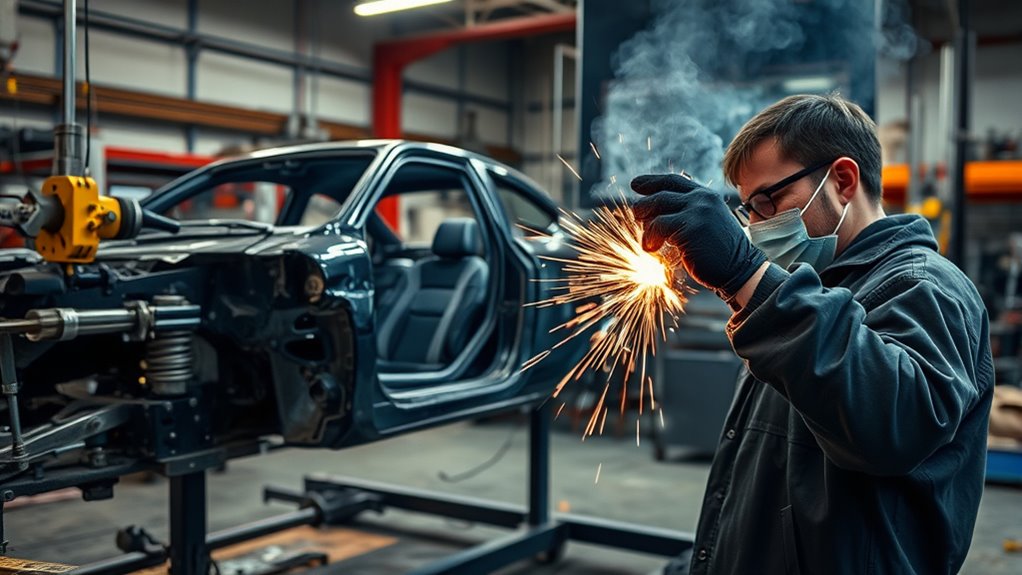
DIY frame welding is a bad idea if you do not have the training, repair information, measuring tools, and welding qualifications needed for structural work. A frame’s alignment and strength have to be restored with precision.
You cannot guess at welding settings, metal type, joint prep, sectioning location, or heat control and expect structural integrity to return. A weld can look acceptable on the surface and still be weak, contaminated, overheated, or placed in the wrong area.
OSHA’s arc welding and cutting rules call for welding equipment to be chosen for safe application and for workers operating arc welding equipment to be properly instructed and qualified. OSHA’s general welding requirements also cover fire prevention, eye protection, and safe hot-work practices.
Without a frame machine and computerized measuring system, you may leave hidden distortion in the chassis. That can create unsafe handling, vibration, abnormal tire wear, and worse crash behavior.
Poor frame welding can also hurt resale value and insurance outcomes. Buyers, inspectors, and insurers may reject or discount a vehicle with undocumented structural repairs.
How Shops Inspect, Repair, and Test Frames
Once a frame damage claim gets into a shop, technicians should inspect the structure and identify bent sections, twists, cracks, corrosion, and alignment errors before repair starts.
A good repair process usually includes:
- Damage mapping: The shop reviews visible damage, prior repairs, rust, suspension position, panel gaps, and safety-system damage.
- Computerized measuring: The technician compares the vehicle to factory dimensions.
- Repair-method selection: The shop checks OEM procedures and decides whether to straighten, weld, section, replace, or recommend total-loss review.
- Controlled repair: Straightening pulls and weld repairs are completed in the approved sequence.
- Corrosion protection: Welded or exposed metal is sealed, coated, and protected after repair.
- Final testing: The shop confirms dimensions, wheel alignment, panel fit, safety-system needs, and road-test results.
This process keeps you away from guesswork and gives you proof that the repair was measured, documented, and checked.
How to Choose the Right Frame Repair Shop
How do you choose a frame repair shop you can trust? Start by asking whether the shop has collision-repair certifications, OEM training, and access to current repair procedures for your vehicle.
Look for these signs:
- Computerized frame or unibody measuring equipment
- Technicians with ASE, I-CAR, OEM, or welding-related training
- Written repair plan based on OEM procedures
- Clear before-and-after measurements
- Ability to explain whether the repair needs straightening, welding, sectioning, replacement, or total-loss review
- Corrosion-protection steps after welding or cutting
- Wheel alignment and ADAS calibration review when needed
- Written warranty for workmanship
Read customer reviews, but do not choose only by price. A cheaper frame repair can cost more later if the vehicle pulls, wears tires, rusts at welds, fails inspection, or loses resale value.
Products Worth Considering

Build to Last: High-quality aviation aluminum and an exquisite electrophoresis process make this product sturdy, wear-resistant, corrosion-resistant, and not easy to rust and deform, ensuring a long service life.

【Telescoping Tram Gauge】That’s a total game changer. Collapses to 28" for easy hauling, then extends to 10 feet in seconds. Metric & US markings? You bet. Real-world ready.
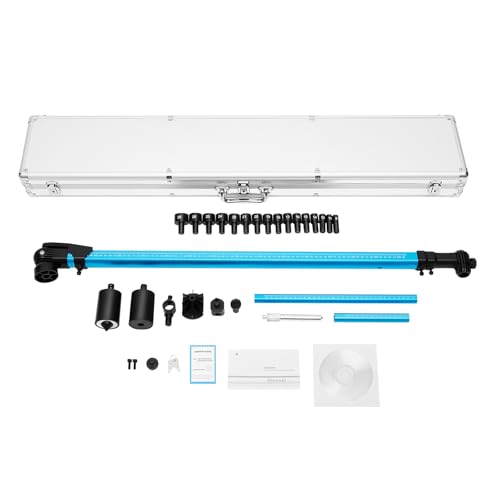
【Durable】This 2d measurement tool kit is made of high-quality aviation aluminum and exquisite electrophoresis technology, making it durable, wear-resistant and corrosion-resistant, not easy to rust and deform, ensuring a long service life.
When Frame Damage May Mean Replacement or Total Loss
Sometimes the right answer is not straightening or welding. If the damage is too severe, the shop or insurer may recommend replacing a structural component, replacing the frame, or declaring the vehicle a total loss.
This can happen when:
- Multiple structural load paths are crushed
- Rust has weakened large load-bearing sections
- OEM procedures prohibit repair in the damaged area
- Airbags, restraints, ADAS parts, suspension, and structure are all damaged
- Repair cost approaches or exceeds the vehicle’s value
- A previous poor repair makes a safe repair harder or impossible
If your vehicle has structural damage, ask for repair documentation. Keep the estimate, final invoice, measurement printouts, alignment report, calibration records, and warranty. Those records can help with insurance, resale, and future repairs.
Frequently Asked Questions
How much would it cost to straighten a frame?
Frame straightening often costs anywhere from several hundred dollars to the low thousands, depending on the vehicle, labor rate, damage location, measurements, and whether suspension, body panels, paint, or ADAS calibration are involved. A shop should measure the vehicle before giving a final estimate.
Can you fix a car frame by welding?
Yes, a car frame can sometimes be fixed by welding, but only when the repair is allowed by the OEM procedure and performed by a qualified technician. Welding may be used for cracks, approved replacement sections, brackets, mounts, or rust repair. If the metal is too damaged or the procedure forbids repair, replacement may be safer.
How much does it cost to get a chassis welded?
Chassis welding can range from a smaller localized repair to several thousand dollars for structural sectioning, corrosion repair, parts, paint, alignment, and calibration. The final price depends on damage severity, access, metal type, weld method, and whether the vehicle is body-on-frame or unibody.
How much does car frame welding cost?
Car frame welding often costs more than a simple pull because it may require disassembly, metal prep, OEM procedure review, welding, grinding, seam sealing, corrosion protection, paint, and final measurements. Use any online price range only as a rough starting point. The written shop estimate matters more.
Is frame straightening safe?
Frame straightening can be safe when the metal is still repairable, the shop uses factory measurements, and the final structure returns to specification. It is not safe if cracks, rust, torn welds, or heat-sensitive material damage are ignored.
How do I know if my frame should be welded or replaced?
You need a structural inspection and OEM repair procedure check. Replacement may be required if the damage is outside approved repair zones, the metal is badly rusted, the part is too crushed, or the vehicle maker does not allow welding in that area.
Conclusion
Car frame straightening and welding are not interchangeable repairs. Straightening is the right path when the structure is bent but still intact. Welding, sectioning, or replacement is needed when metal is cracked, torn, rusted through, separated, or no longer strong enough to keep. The smart move is to choose a collision repair shop that measures first, follows OEM procedures, documents the repair, protects the metal from corrosion, and verifies alignment before you drive away.
Sources
- U.S. Bureau of Labor Statistics: Automotive Body and Glass Repairers — supports frame inspection, realignment, welding replacement parts, and restoring structural integrity to manufacturer specifications.
- National Institute for Automotive Service Excellence: ASE Certification Tests — supports collision repair/refinish and damage-analysis certification references.
- OSHA 1910.252: General Welding, Cutting, and Brazing Requirements — supports fire prevention, eye protection, and safe hot-work practices.
- OSHA 1910.254: Arc Welding and Cutting — supports safe welding equipment selection and properly instructed/qualified operators.
- Insurance Institute for Highway Safety: About Our Tests — supports the importance of vehicle structure, airbags, seat belts, and weight in crash-test performance.