You might think converting a TIG welder into a plasma cutter is a clever cost-saving hack, but this approach is riddled with technical pitfalls and safety hazards. Plasma cutting demands specific voltage and current levels that TIG welders simply can’t provide without risking serious equipment damage and personal danger. Curious about the myths and potential drawbacks, and wondering about safer alternatives? There’s more to evaluate before taking such a risky plunge.
Understanding the Basics of TIG Welders and Plasma Cutters
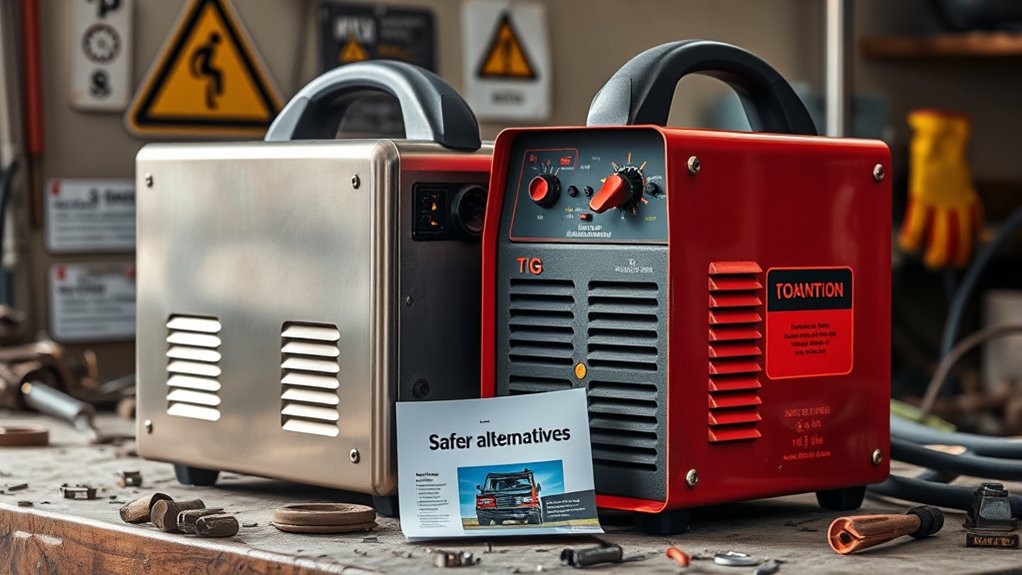
Understanding the fundamentals of TIG welders and plasma cutters is essential if you’re exploring their capabilities.
TIG welding utilizes a non-consumable tungsten electrode, producing a stable arc to weld metals with precision. It’s known for delivering high-quality welds, particularly when working with thinner materials.
TIG welding delivers precise, high-quality welds, especially suited for thinner materials with its stable tungsten arc.
On the other hand, plasma cutting employs an accelerated stream of hot plasma, effectively slicing through conductive materials like steel and aluminum. It excels in speed and efficiency, particularly when cutting thicker metals.
The voltage levels differ considerably between these tools. TIG welding operates at lower voltages, generally under 100 VDC, prioritizing control and accuracy.
Plasma cutters, however, require higher voltages ranging from 110 to 400 VDC, which enhances their cutting prowess but also poses a greater risk of electric shock.
While both tools handle similar materials, their distinct functions and voltage requirements highlight the importance of understanding their unique roles and safety considerations.
Common Myths About Converting TIG Welders
While it might seem tempting to repurpose your TIG welder into a plasma cutter, this conversion is fraught with misconceptions that can lead to costly mistakes.
To begin with, the belief that a TIG welder can easily become a plasma cutter with a few attachments is a myth. Plasma cutters require specific voltage and current capabilities, often ranging from 110 to 400 VDC, which TIG welders don’t provide.
Additionally, some users fall for the conversion misconceptions that all welding machines can be modified for multiple functions. This overlooks crucial safety standards and specifications unique to each welding method.
Consider these myth debunking points:
- Plasma cutters need a dedicated power supply and gas system, unlike TIG welders.
- Combination units may compromise performance in both applications.
- Perceived cost savings might lead to equipment damage and safety hazards.
- Each welding method demands specialized design for effective operation.
Potential Risks Involved in Conversion
When evaluating the conversion of a TIG welder to a plasma cutter, it’s vital to recognize the significant risks involved in such a modification.
Conversion challenges primarily stem from the high voltage requirements of plasma cutters, which exceed those of TIG welders. This disparity poses substantial risks of electric shock and fire hazards due to potential equipment failure from inadequate design and components.
In addition, the intense arc produced during plasma cutting demands proper eye protection, often neglected in DIY projects, leading to serious eye injuries.
Safety regulations are another important aspect to take into account. Using a converted TIG welder voids warranties and can violate established safety standards, exposing you to legal and financial consequences.
Additionally, poor ventilation during cutting increases the risk of toxic fume accumulation, especially with galvanized or coated metals.
It’s essential to weigh these risks carefully before proceeding with any such conversion, prioritizing safety and compliance over potential cost savings.
Safety Concerns With DIY Conversions
Converting a TIG welder to a plasma cutter involves substantial safety concerns that shouldn’t be underestimated. The high voltage and current requirements of plasma cutting pose considerable risks, including electrical shock and equipment damage if improperly handled.
DIY conversions often bypass essential safety standards and lack precise control systems, fundamental for preventing accidents. Without proper user training, the risk of mishandling during operation increases considerably.
Consider these important factors:
- Electrical Hazards: High voltage can lead to severe shocks if safety protocols aren’t followed.
- Heat and Fire Risks: Components not designed for plasma cutting may overheat, causing fires or failures.
- Gas Supply Issues: Inadequate gas handling can result in inefficient cutting and exposure to toxic fumes.
- Regulatory Compliance: Converting equipment may breach safety regulations, void warranties, and lead to legal liabilities.
Adhering to safety standards and ensuring thorough user training are essential to mitigating these risks.
Impact on Equipment Performance and Longevity
Changing a TIG welder to serve as a plasma cutter poses significant challenges that affect performance and longevity. When you convert a TIG welder, you risk severe performance degradation. These welders aren’t designed for the high-voltage demands of plasma cutting, leading to inadequate cutting power. The misalignment in voltage needs can result in equipment wear, as internal components aren’t built to withstand the extreme temperatures and fluctuations associated with plasma cutting.
Over time, this wear can drastically reduce the machine’s reliability and lifespan.
This wear significantly shortens the machine’s reliability and operational lifespan.
Moreover, the specific gas flow rates and pressures required for plasma cutting differ substantially from those in TIG welding. This mismatch makes the conversion impractical, as it impairs the function of both processes. Additionally, such modifications can void warranties, leaving you with costly repairs.
In contrast, dedicated plasma cutters are engineered to deliver peak performance and durability, making them the superior choice for cutting applications.
Differences in Cutting Efficiency and Quality
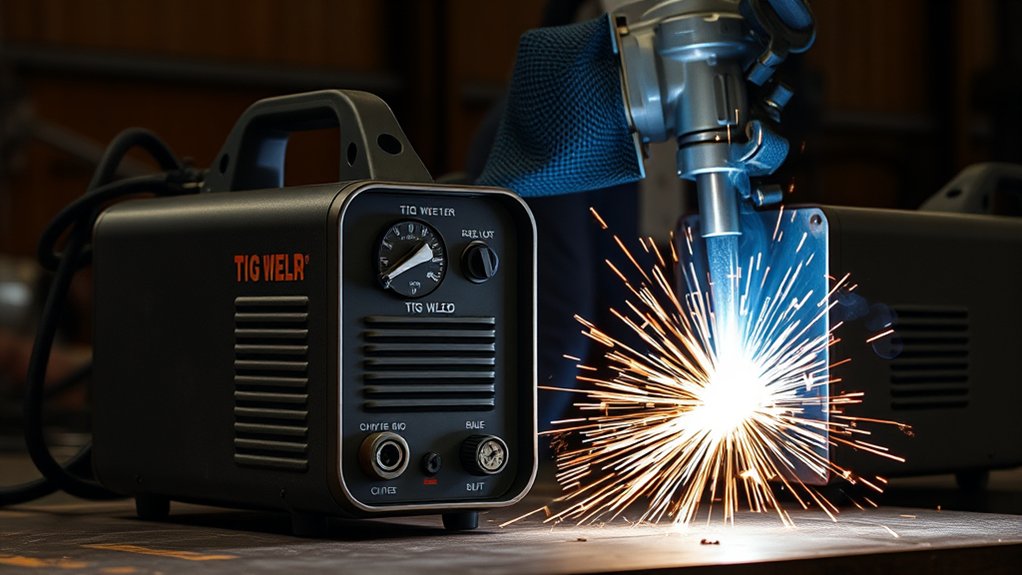
While evaluating the differences in cutting efficiency and quality between TIG welders and plasma cutters, you’ll quickly notice that plasma cutters are purpose-built for superior performance.
They operate at higher voltages, ranging from 110 to 400 VDC, which enhances their cutting speed, allowing you to cut thicker metals much faster than with a TIG welder. This speed, sometimes five to ten times faster, minimizes production time considerably.
Plasma cutting also excels in producing a narrow kerf width, which contributes to cleaner cuts with minimal distortion. This process creates a smaller heat-affected zone compared to TIG welding, resulting in high-quality cuts with smooth edges that often need no additional finishing.
- Cutting Speed: Plasma cutters achieve up to tenfold efficiency over TIG welding.
- Kerf Width: Narrower kerf means less material waste and cleaner cuts.
- Material Versatility: Capable of cutting aluminum and stainless steel without extra techniques.
- Quality: Requires minimal post-processing due to smoother edges.
Cost Implications of Conversion vs. Purchasing
Understanding the superior performance of plasma cutters regarding cutting efficiency and quality naturally leads to deliberations about cost effectiveness.
Performing a cost analysis reveals that converting a TIG welder to a plasma cutter can be surprisingly expensive. This conversion process often exceeds the cost of purchasing a dedicated plasma cutter, typically priced between $4,000 and $7,000.
Converting a TIG welder to a plasma cutter often costs more than buying a new plasma cutter.
When you factor in the investment comparison, consider that a converted TIG welder may lack the power and features necessary for ideal cutting. This results in potentially subpar performance and increased downtime due to additional labor and modifications.
Moreover, conversion kits don’t offer the same safety compliance, manufacturer support, or warranty as commercially available plasma cutters.
For those frequently engaged in both welding and cutting, maintaining separate units enhances workflow efficiency and minimizes the risk of equipment failure, making the purchase of dedicated machines a more prudent financial decision.
Benefits of Dedicated Plasma Cutters
Opting for a dedicated plasma cutter, rather than relying on a multi-function machine, offers substantial advantages regarding cutting efficiency and precision.
These machines are engineered specifically for cutting conductive materials, delivering superior performance thanks to their ability to operate at higher voltage levels, typically ranging from 110 to 400 VDC. This capability allows you to tackle thicker materials with ease, surpassing the limitations of TIG welders or combination units.
Dedicated plasma cutters guarantee cleaner cuts with minimal slag and dross, reducing the need for post-cut cleanup and enhancing the quality of your work.
The inclusion of advanced features like automatic gas control and built-in diagnostics elevates both user experience and operational safety.
- Cutting Precision: Achieves superior clean cuts with minimal post-processing.
- Operational Efficiency: Offers faster cutting speeds and reduced material waste.
- Advanced Features: Includes automatic gas control, enhancing user control and safety.
- Long-Term Savings: Reduces wear, tear, and maintenance costs.
Evaluating Reliable Combination Units for Multi-Functionality
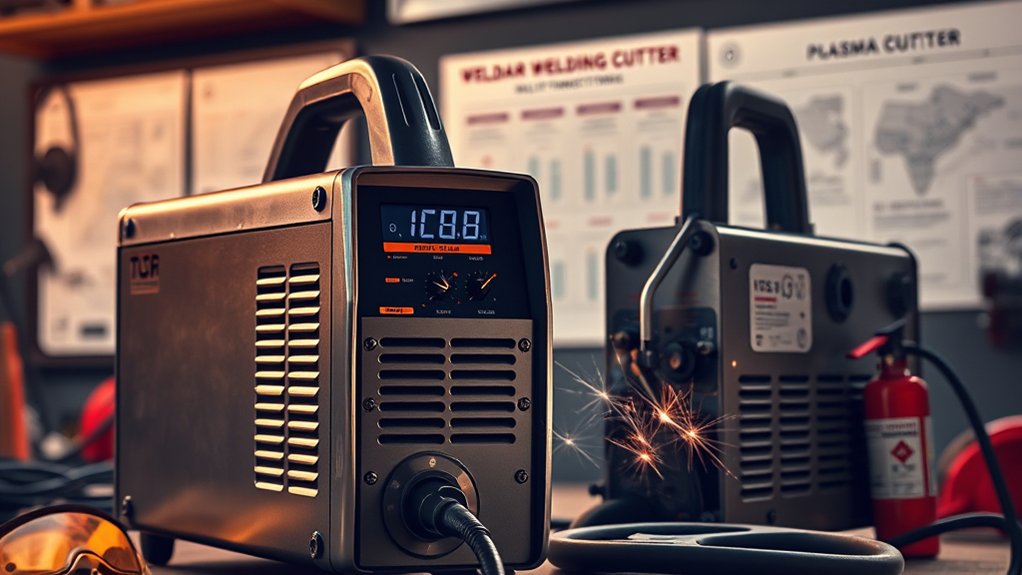
When considering reliable combination units for multi-functionality, it’s crucial to focus on the specific requirements of your projects.
Start by analyzing the combination unit features offered by reputable brands like Miller Electric and Lincoln Electric, known for their consistent performance.
Evaluate the power level considerations to guarantee the unit can handle your tasks, especially if you work with thicker metals, as lower power models might fall short.
Assess how often you’ll use both TIG welding and plasma cutting. If these tasks are frequent, you might find dedicated units more reliable.
However, a combination unit could be beneficial for versatility and reduced equipment footprint.
Portability is another key factor—opt for units designed for easy transport if you often work on job sites or in the field.
Finally, verify the unit is compatible with your available power outlets and generators to maintain a stable electrical current for peak operation.
Frequently Asked Questions
Can a TIG Welder Be Temporarily Converted Back After Modification?
Yes, you can temporarily convert a TIG welder back post-modification. Verify the modification feasibility doesn’t compromise its original functionality. Carefully reverse the changes, check for wear, and recalibrate settings to maintain operational integrity and performance.
What Are the Legal Implications of Modifying Welding Equipment?
Modifying welding equipment can release a legal storm! You must adhere to legal regulations and equipment standards. Non-compliance could result in hefty fines or legal action. Always consult local laws and experts to guarantee you’re on the right track.
Are There Insurance Issues With Using a Modified Welder?
Yes, you might face insurance liability issues when using modified equipment. Insurers could deny claims if the equipment isn’t used as intended. Ascertain you consult your policy and insurer before making any modifications to protect yourself.
How Does Modification Affect Warranty Claims on TIG Welders?
Modifying your TIG welder is like opening Pandora’s box; you risk voiding warranty claims. Manufacturer policies often have strict warranty limitations on alterations, leaving you holding the bag if issues arise. Always read terms carefully.
What User Skills Are Required for Effective Modifications?
You’ll need strong user skills, including technical knowledge of electrical systems, proficiency in reading schematics, and adeptness in using tools. Understanding circuitry and safety protocols are essential for effective modifications, ensuring both functionality and personal safety.
Conclusion
When pondering the transformation of a TIG welder into a plasma cutter, don’t get caught in the web of misconceptions. The risks of misguided conversions loom large, threatening both safety and equipment. Like a finely-tuned orchestra, each tool has its own role; forcing a TIG welder into a plasma cutter’s shoes can lead to discord. Invest in dedicated plasma cutters for precision and reliability. They’re the maestro of metal cutting, ensuring both harmony and efficiency in your workshop.