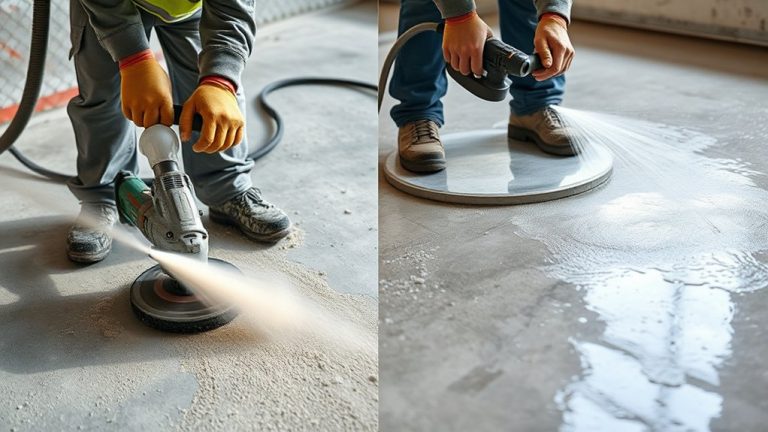
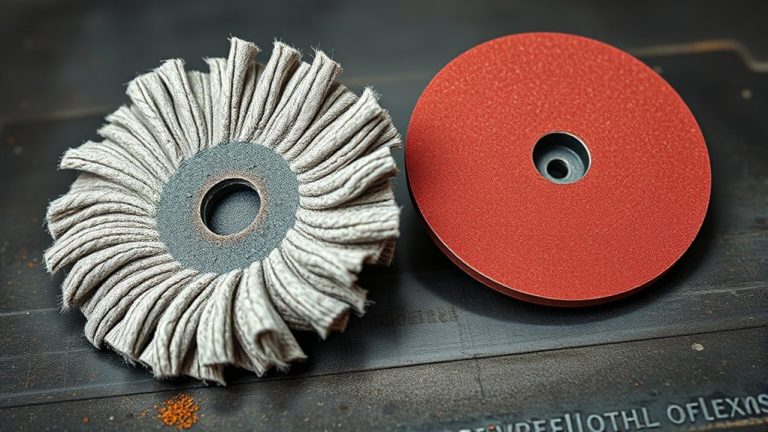
When choosing between corded and cordless angle grinders, consider power, runtime, and applications. Corded models deliver 500W to 2500W, offering unlimited runtime and consistent torque for heavy-duty tasks. In contrast, cordless grinders range from 800W to 1500W with a runtime of 20–45 minutes, ideal for light-duty work and mobility in remote areas. Both have unique benefits, making understanding your specific needs essential for peak performance. Explore further to uncover more insights on maximizing your tool choices.
Understanding the Basics of Angle Grinders
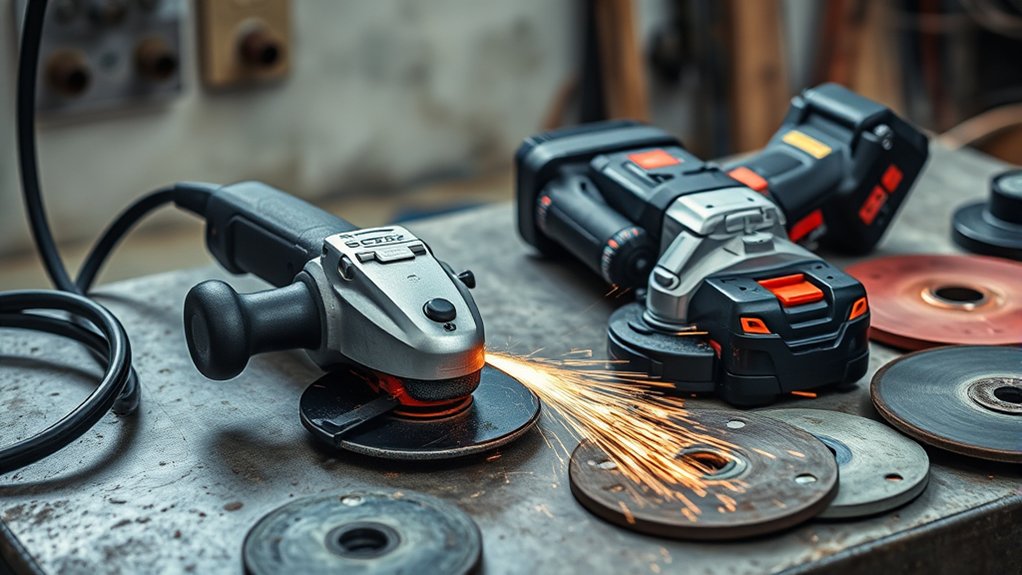
An angle grinder is a versatile tool that you’ll find invaluable for various tasks like cutting, grinding, and polishing. It operates using a rotating head with interchangeable discs, positioned at an angle for enhanced control. When considering your options, you’ll encounter both corded angle grinders and cordless angle grinders. Corded models typically offer higher power output, ranging from 500W to 2500W, and can achieve RPMs between 6,000 and 12,000, ideal for aggressive cutting tasks. Disc sizes usually range from 3 to 9 inches, with 4½ and 5 inches being the most common for various applications. If you opt for cordless grinders, pay attention to battery life and motor efficiency, as these factors greatly impact maximum power and performance during heavy-duty cutting. Understanding these basics will help you choose the right angle grinder for your specific needs, ensuring you achieve top-notch results every time.
Power and Performance: Corded vs. Cordless
When comparing power output, corded angle grinders generally outperform their cordless counterparts, boasting ratings from 500W to 2500W and RPMs up to 12,000. In contrast, cordless models typically deliver 800W to 1500W and max out at around 9,000 RPM, which can limit their effectiveness for heavy-duty tasks. Additionally, runtime efficiency varies greatly, as corded grinders maintain consistent torque under load, while cordless units suffer from decreased torque as battery life wanes.
Products Worth Considering

7 amp AC/DC, 12,000 rpm motor of the angle grinder is designed for faster material removal and higher overload protection
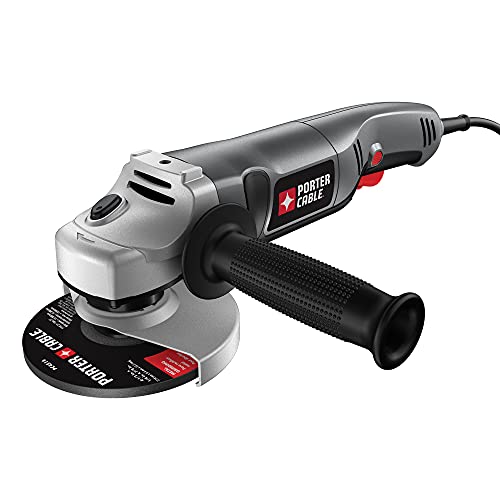
Durable 7.5-amp motor of the angle grinder powers through jobsite tasks with ease

High-Powered Performance for Tough Tasks: The 4-1/2 inch angle grinder is equipped with a 10 AMP motor, delivering up to 1200W of power and speeds up to 13,000 RPM. It efficiently handles demanding tasks like cutting metal, grinding concrete, and smoothing rough surfaces with ease and precision.
Power Output Comparison
While both corded and cordless angle grinders serve essential roles in various applications, their power output and performance capabilities differ considerably. Corded angle grinders typically operate between 500W and 2500W, ensuring consistent performance for heavy-duty tasks with RPMs reaching 12,000, ideal for demanding cutting depth. In contrast, cordless angle grinders offer power outputs of 800W to 1500W, relying on lithium-ion batteries. Their maximum speeds hover around 9,000 RPM, but performance dips as the battery charge wanes, impacting torque and efficiency. Your choice largely hinges on the work environment; corded models excel in prolonged use, while cordless grinders provide the mobility and flexibility needed for quick tasks in diverse settings.
Runtime Efficiency Analysis
Runtime efficiency is a critical factor when comparing corded and cordless angle grinders, especially for professionals who need reliable performance. Corded angle grinders offer unlimited runtime directly from a power source, ensuring consistent power for heavy-duty grinding tasks. In contrast, cordless angle grinders typically run for 20–45 minutes per charge, with runtime limitations influenced by task intensity. As battery levels drop, you may notice a decrease in performance due to voltage drop. Although advanced battery management systems optimize power delivery, careful battery management is essential for continuous tasks. For ongoing heavy-duty applications, corded models excel, while cordless versions shine in mobility and quick jobs, making your choice depend on specific project needs.
Cordless Grinder Runtime: What to Expect?
How long can you expect a cordless angle grinder to last on a single charge? Typically, you’ll get around 20 to 45 minutes, depending on the task’s intensity and your battery’s capacity. Light-duty tasks can stretch this runtime, while heavy grinding will drain the battery faster. To guarantee continuous work, consider having multiple battery packs ready.
Here’s a quick overview:
| Task Type | Approx. Runtime |
|---|---|
| Light-duty tasks | 35 to 45 minutes |
| Moderate tasks | 25 to 35 minutes |
| Heavy grinding | 20 to 25 minutes |
| Higher voltage (36V) | Extended runtime |
The voltage of your battery greatly impacts performance; higher voltage typically yields better results. Implementing efficient battery management, like rotating battery packs, can maximize your productivity and minimize downtime during operations.
Weight and Design: How Do They Compare?
When comparing corded and cordless angle grinders, weight distribution and design greatly influence your user experience. Corded models, typically more stable and robust, excel in durability for heavy tasks, while cordless options prioritize portability and ease of handling in tight spaces. Understanding these differences in ergonomics and comfort can help you choose the right tool for your specific needs.
Weight Distribution Differences
Weight distribution plays an essential role in the performance and usability of angle grinders, particularly when comparing corded and cordless models. Corded grinders typically boast a balanced weight, enhancing control and reducing operator fatigue during extended use. In contrast, cordless models, while offering a compact design for maneuverability in tight spaces, often feel front-heavy due to battery placement, impacting performance.
| Feature | Corded Grinders | Cordless Models |
|---|---|---|
| Weight Range | 4 to 6 pounds | 5 to 8 pounds |
| Balance | Generally balanced | May feel front-heavy |
| Endurance | High durability | Limited by battery life |
| Operator Fatigue | Lower | Higher during extended use |
Choosing the right model depends on your specific needs and work environment.
Design Ergonomics and Comfort
While both corded and cordless angle grinders have distinct advantages, their design ergonomics and comfort greatly affect user experience and performance. Corded models generally weigh between 4-6 pounds, providing a stable feel due to their consistent power supply, ideal for heavy-duty tasks and extended use. In contrast, cordless models weigh 5-8 pounds, with weight distribution often skewed toward the front because of the battery placement, potentially compromising user comfort during prolonged operation. Both types feature ergonomic handle grips that enhance comfort and reduce strain. However, the lighter, more portable cordless models may sacrifice power and heat management, making them less suitable for intensive applications compared to their robust, corded counterparts.
Portability and Handling Ease
Portability and handling ease are essential factors to take into account when choosing between corded and cordless angle grinders, as they directly impact your efficiency and comfort during tasks. Corded grinders typically weigh between 4 to 6 pounds, designed for stability during extended use, making them ideal for heavy-duty projects. In contrast, cordless models range from 5 to 8 pounds, with battery weight affecting maneuverability, especially in tight spaces. While corded grinders offer superior performance without overheating, cordless options provide unmatched freedom of movement, perfect for outdoor or remote work. Ultimately, your choice depends on whether you prioritize power and durability or the convenience and ease of handling that cordless models offer.
When to Choose a Corded Grinder
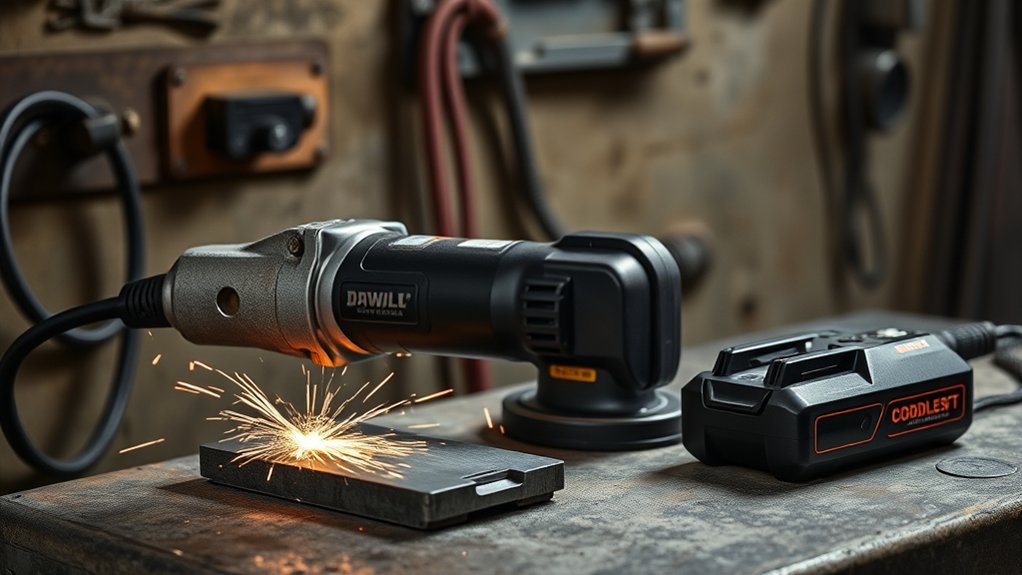
When you need consistent power for heavy-duty tasks, a corded angle grinder is often the best choice. These tools deliver wattages from 500W to 2500W, perfect for demanding tasks like heavy metal cutting and concrete work. With RPMs between 8,000 and 12,000, corded grinders provide efficient cutting and grinding without performance dips, ensuring uninterrupted performance during long grinding sessions.
If you’re operating in an environment with access to electrical outlets, you can work without worrying about battery runtime, making them ideal for extensive projects. Additionally, corded models are generally more budget-friendly upfront, with prices ranging from $50 to $200, and you won’t face ongoing costs for battery replacements. For consistent performance and reliability during heavy work, a corded angle grinder is the tool that can liberate your workflow and meet your toughest demands.
Optimal Applications for Cordless Angle Grinders
Cordless angle grinders shine in scenarios where mobility and quick setups are paramount. These tools excel in light-duty tasks like cutting and trimming, especially in remote locations lacking power access. With a runtime of 20–45 minutes, they’re designed for short bursts rather than prolonged heavy grinding sessions.
Their advanced lithium-ion batteries, ranging from 18V to 36V, deliver consistent power, but it’s essential to manage battery life to prevent performance drops as the charge decreases. The flexibility of cordless grinders allows you to navigate tight spaces and uneven terrain effortlessly, free from the hassle of cords snagging or dragging.
For DIY projects and home repairs, cordless grinders offer unparalleled convenience, particularly if you’re already invested in compatible battery systems. This makes them an ideal choice for users who value both performance and ease of use in varied applications.
Essential Safety Features in Angle Grinders
Safety is paramount when using angle grinders, especially given their power and versatility. Key features enhance user safety and prevent tool damage. Here’s a breakdown of essential safety features:
| Safety Feature | Description |
|---|---|
| Kickback Protection | Minimizes injury risk from sudden wheel movement when binding occurs. |
| Soft Start | Controls power surges during startup, guaranteeing smoother operation. |
| Emergency Braking | Quickly halts wheel rotation, reducing accident chances if control is lost. |
| Ergonomic Handles | Reduces hand strain, improving grip and comfort during extended use. |
| Vibration Control | Minimizes operator fatigue, helping prevent hand-arm vibration syndrome. |
For professional users, incorporating these safety features along with appropriate safety gear is essential. They guarantee continuous power, enhance user safety, and protect against potential injuries. Your safety is your priority—stay informed and equipped.
Cost Comparison: Corded vs. Cordless
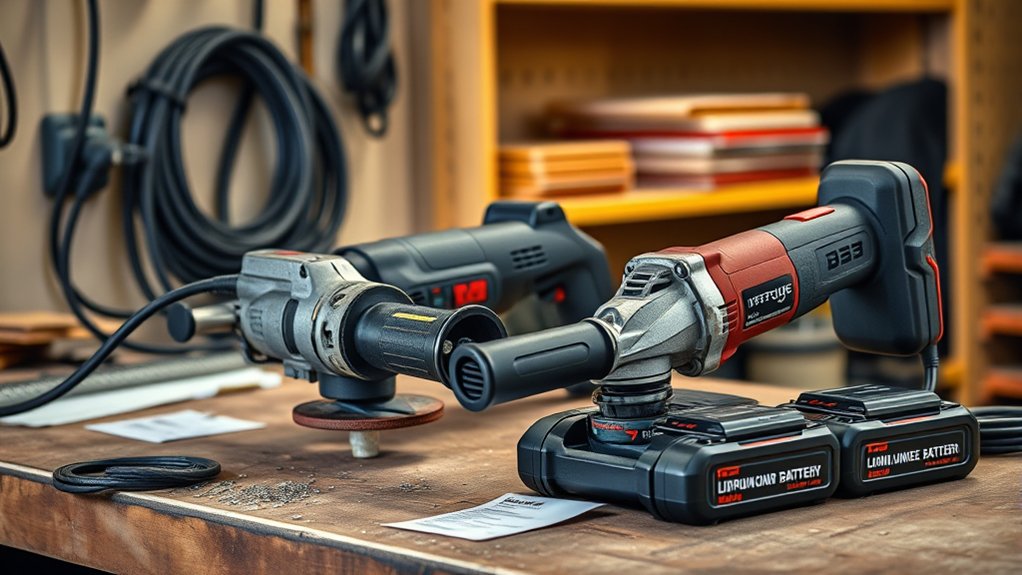
While evaluating the cost comparison between corded and cordless angle grinders, it’s essential to take into account both upfront and ongoing expenses. Corded grinders generally have a lower upfront cost, ranging from $50 to $200, making them a budget-friendly option for occasional users. In contrast, cordless models can set you back between $150 and $400, especially when factoring in battery replacements every 2-3 years. These ongoing costs can add up considerably over time, particularly for those using their tools heavily. For frequent users, corded grinders often provide better long-term value due to the absence of battery maintenance and replacement costs. However, if you already own compatible batteries, cordless models can mitigate overall expenses. Ultimately, your choice will depend on your usage frequency and budget, balancing immediate costs against long-term investment.
Products Worth Considering

Next generation 11 amp AC/DC 11,000 rpm motor on the electric grinder provides the best power to weight/size ratio available
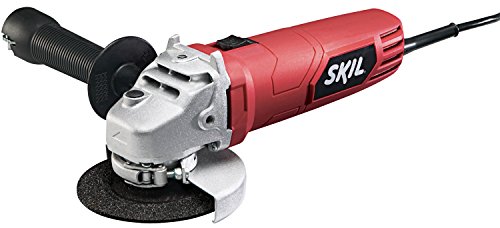
Powerful 6.0 Amp Motor with 11,000 RPM

7-amp motor generates up to 11,000 RPM
Maintenance Tips for Longevity of Your Grinder
Maintaining your angle grinder is vital for maximizing its lifespan and performance. Follow these maintenance tips to guarantee your tool operates efficiently:
Maintaining your angle grinder is essential for ensuring optimal performance and longevity. Regular upkeep guarantees efficient tool operation.
- Clean Vents and Cooling Systems: Regularly clean these areas to prevent overheating and maintain peak performance during use.
- Inspect and Replace Worn Brushes: In corded grinders, replacing worn brushes is essential for consistent power delivery and prolonging motor life.
- Monitor Battery Health: For cordless models, avoid complete discharges and store batteries at moderate temperatures to extend their lifespan.
- Lubricate Moving Parts: Confirm all moving components are lubricated, and inspect the power cord for damage to avoid electrical hazards.
Additionally, keep the grinder’s discs and attachments in good shape, replacing them when worn to maintain cutting efficiency and reduce strain on the motor. Following these steps will enhance your cordless tools’ reliability and performance.
Frequently Asked Questions
Are Cordless Angle Grinders as Powerful as Corded?
Cordless angle grinders aren’t as powerful as corded models due to limited torque output and motor efficiency. While they offer portability benefits and user convenience, battery performance and grinding speed often lag behind corded options.
How Long Does a Cordless Angle Grinder Last?
A cordless angle grinder typically lasts 20 to 45 minutes per charge, influenced by battery longevity, usage frequency, and motor efficiency. Ensuring tool maintenance and considering brand comparisons can enhance cutting performance and safety features.
How Many Watts Does a Corded Angle Grinder Use?
A corded angle grinder typically uses between 500W and 2500W, offering excellent motor efficiency. When considering power consumption, check user reviews and brand comparisons to guarantee tool durability and peak performance for your usage frequency.
Do Corded Power Tools Last Longer?
Yes, corded power tools typically last longer due to better durability, lower maintenance needs, and consistent performance. Consider usage frequency and brand reliability for ideal cost analysis, while minimizing environmental impact through repair options over battery technology.
Conclusion
In the battle of corded versus cordless angle grinders, your choice hinges on power needs and mobility. Remember, “the right tool for the job” is essential—cordless grinders shine in portability, while corded models deliver unmatched performance. Evaluate your specific tasks and preferences to make an informed decision. By considering runtime, weight, and application, you’ll find the perfect fit for your projects, ensuring efficiency and safety every step of the way.