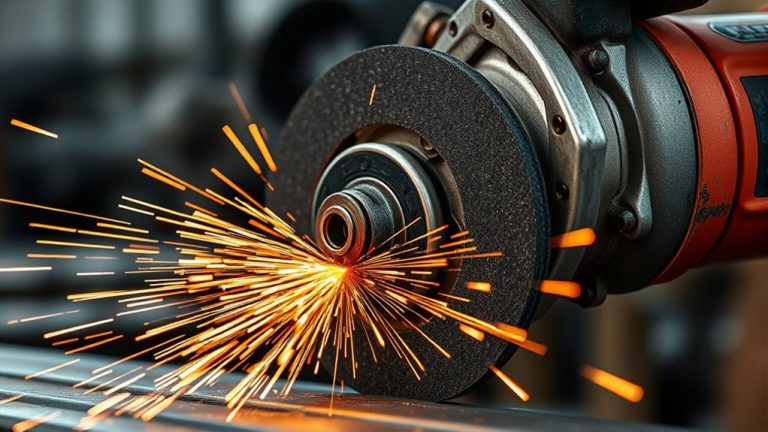
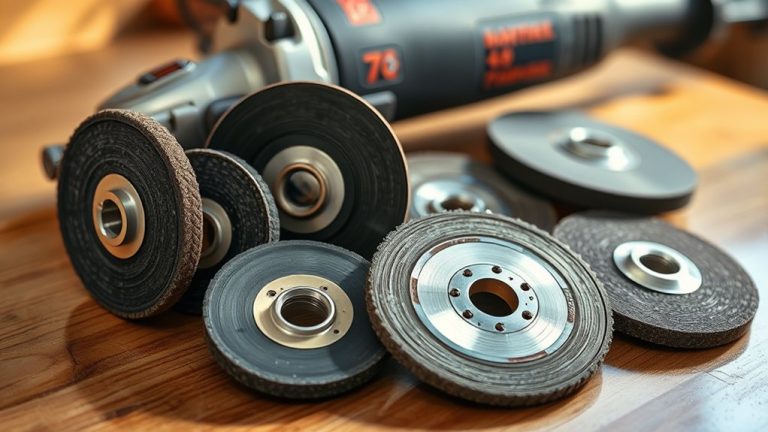
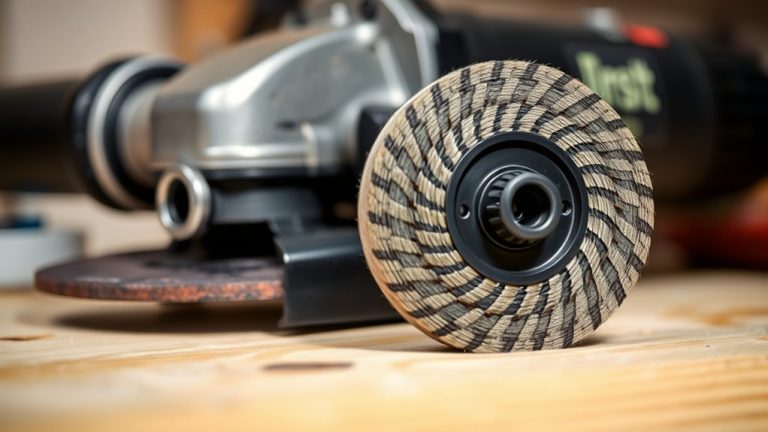
Cordless angle grinder voltage indicates the power and torque available for your tasks. Common ratings like 18V and 20V are designed for different applications; 20V offers more strength for demanding jobs. Selecting a higher voltage enhances efficiency and reduces stalling, especially under heavy loads. It’s essential to match voltage with the project’s requirements and battery compatibility. Understanding these factors will help you choose the right tool for best performance, and there’s more to explore on optimizing your selection.
Understanding Voltage: The Backbone of Cordless Angle Grinders
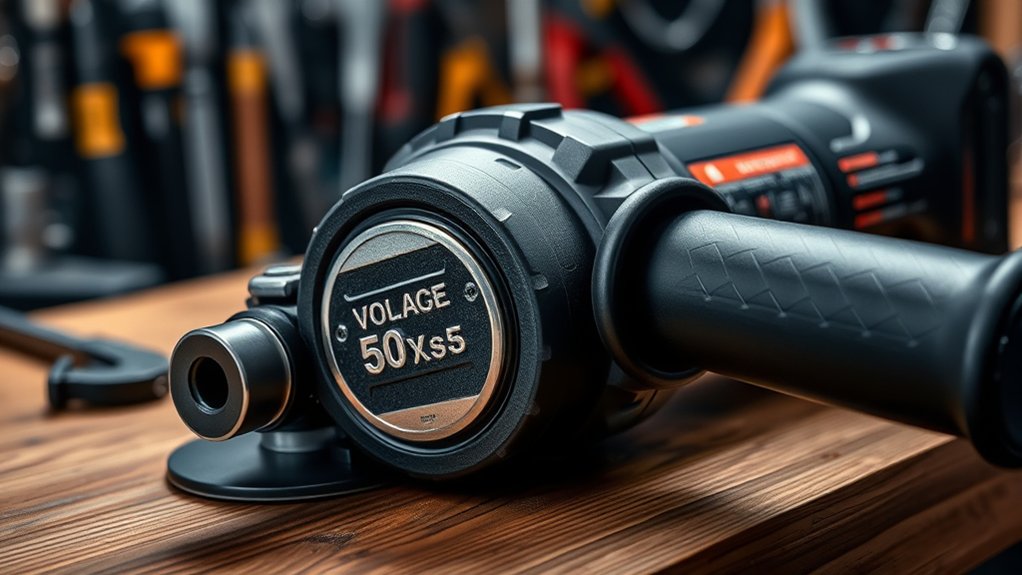
Voltage acts as the backbone of cordless angle grinders, directly influencing their performance and capability. When you choose a cordless angle grinder, you’ll notice common voltage ratings, typically 18V and 20V. Opting for a higher voltage often means increased power, enabling the tool to deliver more torque and maintain speed under load. This is vital for tackling demanding tasks or working with tougher materials. However, keep in mind that higher voltage tools may weigh more, which could impact portability. It’s important to evaluate battery compatibility; ensuring your new grinder works with existing batteries will streamline your workflow and avoid unnecessary purchases. For professional use, grinders operating at 20V and above are often preferred, as they allow you to complete tasks more quickly and effectively compared to lower-voltage models. Understanding these factors helps you make an informed choice, aligning your tool with your specific needs.
How Cordless Angle Grinder Voltage Affects Performance
How does the voltage of your cordless angle grinder impact its overall performance? Voltage directly influences power output and torque, vital for tackling various materials. Typically, cordless angle grinders operate between 18V and 60V; higher voltage often means increased performance. A 20V model suits most DIY tasks, while those exceeding 20V excel in heavy-duty applications.
With higher voltage tools, you’ll notice lower amperage draw for the same power level, enhancing battery life and runtime. For instance, a 24V grinder delivers superior torque compared to a 12V model, making it more efficient for larger fasteners and demanding tasks.
It’s important to verify compatibility between your cordless angle grinder and existing battery systems, especially if you’re using advanced power tools that leverage brushless technology. Ultimately, understanding voltage helps you select the right tool for your specific needs and guarantees peak performance.
Practical Tips for Selecting the Right Voltage for Your Tasks
Choosing the right voltage for your cordless angle grinder is crucial for optimizing performance based on your specific tasks. Here are some practical tips to guide your selection:
- Assess Task Requirements: For serious tasks, opt for at least 20V to handle tougher materials and larger fasteners efficiently.
- Consider Power Ratings: Higher voltage tools, like 18V or 20V models, provide better power output, minimizing stalling under heavy loads.
- Balance Weight and Portability: Higher voltage grinders may be heavier, so confirm they align with your portability needs for extended use.
- Verify Battery Compatibility: Always check voltage compatibility with your existing battery systems to enhance overall efficiency and tool life.
Choosing the Right Voltage Rating for Your Needs?
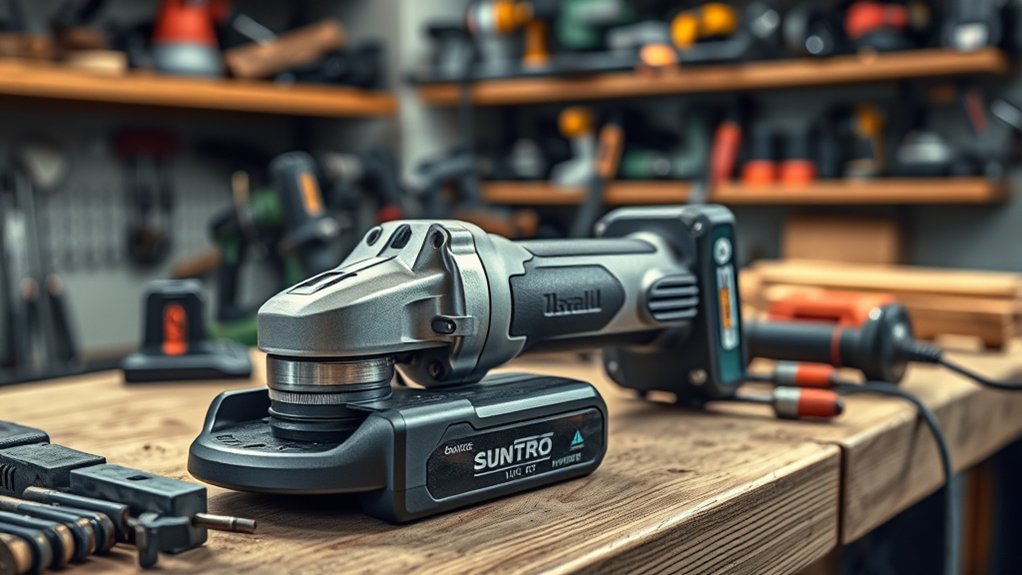
What factors should you consider when determining the right voltage rating for your cordless angle grinder? Start with higher voltage ratings, like 20V, which provide the power necessary for demanding tasks. These ratings enable faster, more efficient performance, making them ideal for both professional applications and DIY projects. However, keep in mind that higher voltage tools are often heavier; balance your need for power with portability based on your project requirements.
Additionally, higher voltage models typically operate at lower amp draws, resulting in increased battery efficiency and longer runtimes. Verify that the voltage of the cordless angle grinder you choose is compatible with your existing battery systems to avoid issues with battery life and performance. Ultimately, selecting the right voltage rating hinges on understanding your specific needs for power and efficiency while considering the weight and compatibility of the tool.
Matching Voltage to Your Projects
When tackling various projects, matching the voltage of your cordless angle grinder to your specific needs is crucial for ideal performance. Here’s what you should consider:
- Volts: Higher voltage models, like 20V, offer increased power for tasks such as cutting metal, guaranteeing efficient operation.
- Runtime: A 20V cordless grinder typically provides longer runtime due to lower amp draw, ideal for extensive projects.
- Power Source Compatibility: If you already own other cordless tools, confirm your new grinder is compatible with existing battery systems to enhance convenience and reduce costs.
- Avoiding Tool Bogging: Selecting the appropriate voltage prevents tool bogging during demanding tasks, maintaining performance without compromising safety.
Upcoming Innovations in Cordless Angle Grinder Voltage
As voltage technology evolves, upcoming innovations in cordless angle grinders promise to enhance both power and efficiency. You’ll see higher voltage options, like 60V systems, that markedly boost torque for heavy-duty applications. Manufacturers are focusing on efficient brushless motors to maximize performance while minimizing battery consumption, leading to longer runtimes.
Advancements in battery technology, including lithium-ion and solid-state batteries, will improve energy density, allowing cordless grinders to operate at higher voltages without added weight. Additionally, smart technology integration offers connectivity to monitor voltage levels and performance metrics via mobile apps. Enhanced user safety features like automatic voltage regulation and overload protection are also being prioritized.
| Feature | Upcoming Innovations |
|---|---|
| Higher Voltage Options | 60V systems for heavy-duty use |
| Brushless Motors | Increased efficiency and performance |
| Battery Technology | Lithium-ion and solid-state advancements |
| Smart Technology Integration | Mobile app connectivity for monitoring |
Frequently Asked Questions
Is Higher Voltage Better for Cordless Tools?
Higher voltage can enhance tool performance by improving power efficiency and torque output, extending battery life and reducing charging time. However, consider weight balance, heat generation, and user safety when choosing from various brand comparisons within your price range.
Is It Better to Have Higher or Lower Voltage?
It’s better to choose higher voltage for enhanced tool performance, battery efficiency, and motor power, but consider weight, runtime duration, safety features, compatibility, price comparison, brand reliability, and user reviews before deciding.
What’s the Difference Between 18 Volt and 20 Volt Power Tools?
The difference between 18V and 20V power tools mainly involves power output, battery capacity, and runtime efficiency. 20V tools often provide better torque levels, quicker charge times, and improved motor performance, enhancing tool compatibility and minimizing heat generation.
How Many Volts Is a Grinder?
Most grinders operate between 18V to 60V. Higher voltage ratings enhance motor efficiency and tool performance, improving battery life. Always consider weight, safety features, and user reviews when choosing the right grinder for your needs.
Conclusion
In summary, understanding cordless angle grinder voltage is essential for optimizing your tool’s performance and ensuring it meets your specific needs. Selecting the right voltage isn’t just a choice; it’s the difference between a smooth, effortless cut and a frustrating slog through your project. As innovations continue to emerge, you’ll find that voltage options are expanding, making it easier than ever to find the perfect grinder for your tasks. Remember, the right voltage is your key to releasing unparalleled efficiency.