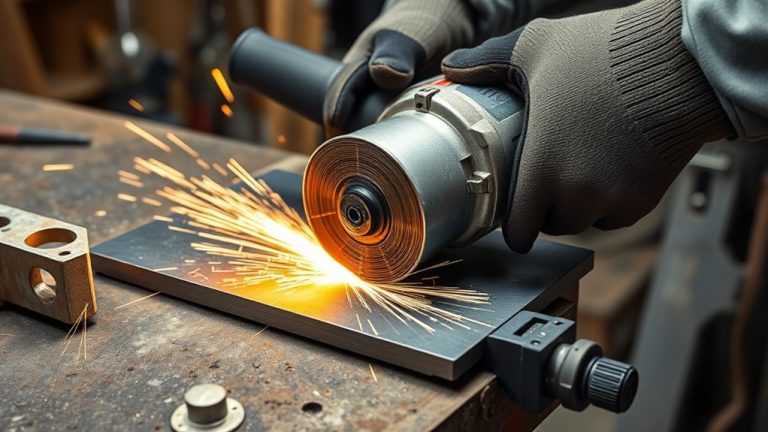
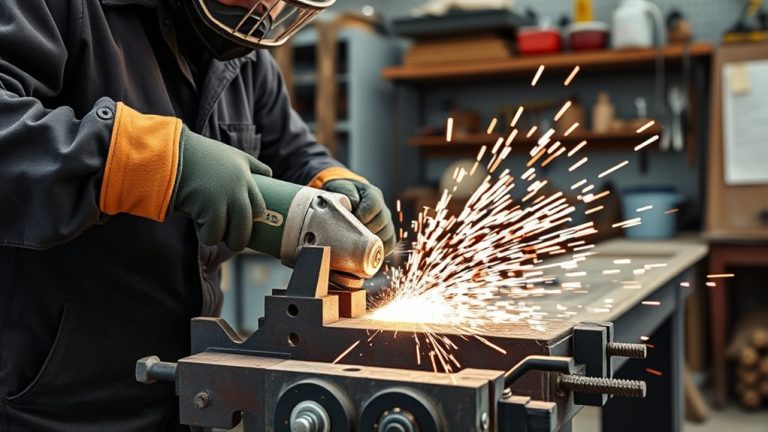
Cutoff wheel thickness markedly influences your cutting efficiency. Use thin wheels (0.8-2.5 mm) for precision tasks that require clean cuts and minimal material loss, especially on softer materials like stainless steel. In contrast, opt for thick wheels (2.5 mm and above) when tackling tougher materials like steel or iron, as they provide stability and increased durability. Understanding these differences guarantees ideal performance for your specific needs, and further insights can guide your selection for various applications.
Understanding Cutoff Wheel Thickness: The Basics
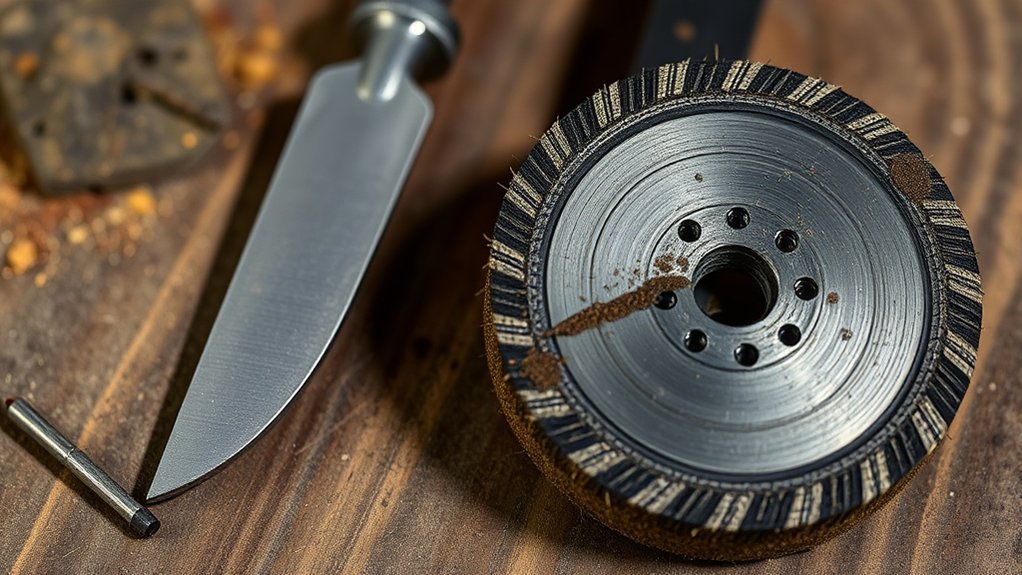
When you’re selecting a cutoff wheel, understanding the thickness is essential because it directly influences your cutting efficiency and effectiveness. Cutoff wheels typically range from 0.3 mm to over 4 mm in thickness, with thin wheels ideal for precision tasks due to their narrow kerfs and minimal material removal. These thin wheels excel in applications requiring efficiency and reduced heat generation, particularly with materials like stainless steel.
On the other hand, thick wheels, starting at 2.5 mm, provide greater stability and durability, making them suitable for heavy-duty cutting of thicker materials exceeding 5 mm. The choice of wheel thickness greatly impacts cutting speed and performance; thinner wheels enhance efficiency while thicker wheels prioritize strength. By comprehending the distinctions in wheel thickness, you can optimize your cutting applications, ensuring both performance and safety in your operations.
Thin Cutoff Wheels: Advantages and Applications
Thin cutoff wheels offer a range of advantages that make them highly effective for precision cutting tasks. Typically ranging from 0.045 to 0.125 inches in thickness, these wheels excel in applications requiring high-speed cutting and accuracy. They generate less heat during operation, which is essential for preventing distortion in materials, particularly soft metals like stainless steel.
| Advantage | Explanation |
|---|---|
| Precision Cutting | Ideal for clean, narrow cuts in delicate tasks. |
| Minimal Material Wastage | Results in lower kerf sizes, reducing costs. |
| High-Speed Cutting | Perfect for fast-paced metalworking applications. |
Thick Cutoff Wheels: Strengths and Use Cases
Thick cutoff wheels are engineered for heavy-duty applications, providing the strength necessary to tackle robust materials effectively. They excel in various scenarios, making them indispensable for professionals and DIY enthusiasts alike. Here are some key strengths and use cases for thick cutoff wheels:
- Increased Stability: Ranging from 2.5 mm to over 6.4 mm, they offer greater stability for cutting thicker materials (5 mm and above).
- Enhanced Safety: Their robustness minimizes the risk of breaking during operation, promoting safer use for less experienced users.
- Consistent Performance: Designed for sustained loads and deeper cuts, they guarantee reliable performance even in demanding conditions.
- Economical for Bulk Tasks: While removing more material, thick cutoff wheels are often more cost-effective for bulk cutting tasks where precision isn’t critical.
Incorporating these wheels into your toolkit can greatly streamline your heavy-duty cutting projects.
Understanding Kerf: How Thickness Affects Cutting Performance
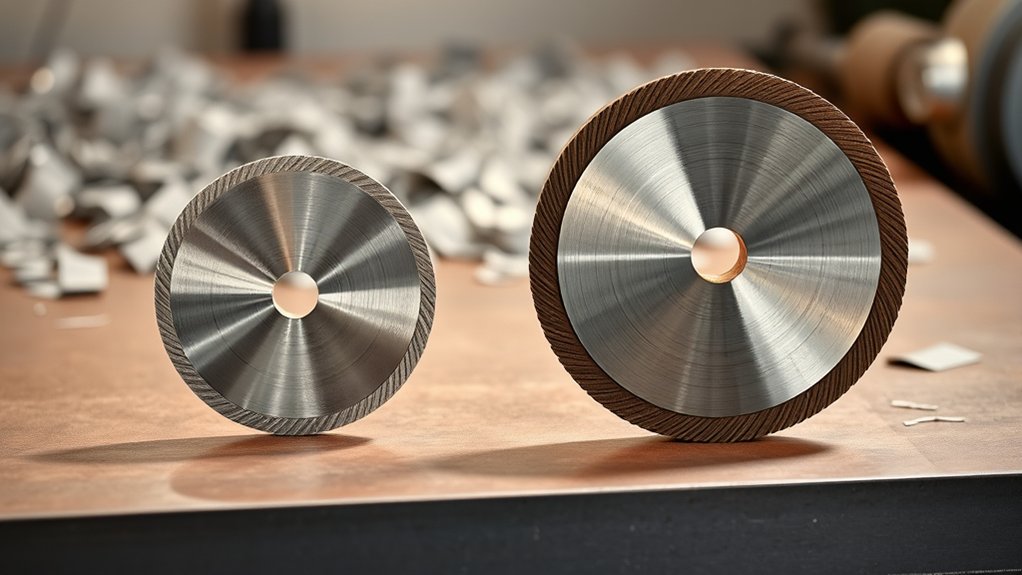
When selecting a cutoff wheel, consider how kerf width impacts your cutting speed and material efficiency. Thinner wheels create a narrower kerf, reducing material loss and enhancing precision, while thicker wheels offer stability but can lead to increased wastage. Understanding these dynamics helps you choose the right wheel thickness for your specific cutting needs.
Kerf Width Considerations
Choosing the right cutoff wheel thickness greatly impacts kerf width, which directly influences cutting performance. Understanding how thickness affects your work is essential for ideal results. Consider these points:
- Thinner wheels (0.3 mm to 2.5 mm) create a narrower kerf, perfect for precision cuts and minimizing material loss.
- Thinner wheels generate less heat, reducing distortion and producing cleaner cuts with fewer burrs.
- Thicker wheels (starting from 2.5 mm) result in a wider kerf, suitable for heavy-duty applications where durability is key.
- A wider kerf increases material removal, beneficial for bulk cutting tasks but can lead to waste when precision is required.
Your choice between thinner and thicker wheels ultimately shapes your cutting effectiveness and efficiency.
Impact on Cutting Speed
The thickness of a cutoff wheel greatly impacts cutting speed, directly linked to kerf size. Thinner wheels (≤2 mm) allow for faster cutting speeds and less material wastage, making them ideal for precision tasks in materials like stainless steel. In contrast, thicker wheels (≥2.5 mm) create wider kerfs, which increases material removal but decreases speed, suitable for heavy-duty applications. Understanding these dynamics is vital for peak performance.
| Wheel Thickness | Kerf Width | Recommended Use |
|---|---|---|
| Thin (≤2 mm) | Narrow | Precision cutting |
| Thick (≥2.5 mm) | Wide | Heavy-duty tasks |
Choosing the Right Thickness for Your Cutting Needs
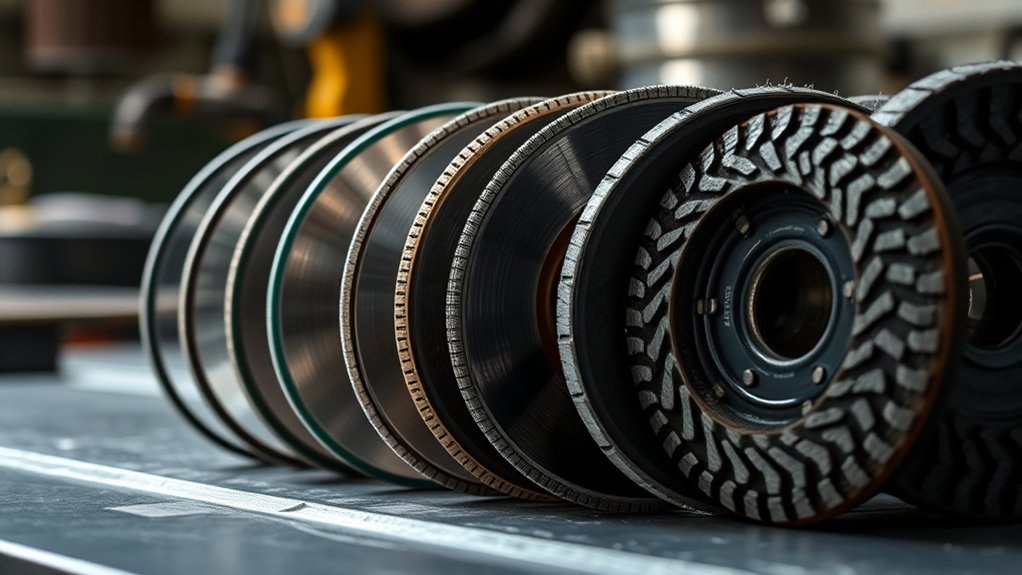
Understanding the right wheel thickness can greatly improve your cutting efficiency and accuracy. The choice between thin and thick wheels directly impacts your cutting needs, so consider the following factors:
- Material Type: Use thin wheels for softer metals like stainless steel; thick wheels excel with tougher materials.
- Cut Quality: Thin wheels guarantee clean, narrow cuts with minimal wastage, while thick wheels provide durability for heavy-duty tasks.
- Speed vs. Stability: Thin wheels allow faster cuts; thick wheels offer stability and longevity for demanding applications.
- Proper Technique: Match your technique to the wheel thickness to optimize performance—precision for thin wheels, strength for thick ones.
Selecting the appropriate thickness can greatly improve your overall cutting process, balancing precision with material removal rates and guaranteeing you achieve the desired cut quality.
Thin vs. Thick Wheels: Performance Comparison
When comparing thin and thick cutoff wheels, consider their impact on cutting precision and speed versus durability and longevity. Thin wheels excel in producing clean cuts with minimal heat, making them ideal for soft metals and premium materials. In contrast, thick wheels offer enhanced stability for demanding applications, aligning your choice with specific material compatibility needs.
Cutting Precision and Speed
While selecting the right cutoff wheel thickness can seem intimidating, it directly impacts both cutting precision and speed. Understanding the differences between thin and thicker cutoff wheels helps you make informed decisions:
- Thin cutoff wheels (0.045-0.125 inches) offer faster cuts, minimizing material wastage.
- Thicker cutoff wheels (0.125-0.250 inches) provide stability for heavy-duty tasks, albeit at a slower speed.
- For cutting precision, thinner wheels excel in producing cleaner cuts with fewer burrs, ideal for expensive materials.
- Heat generation is lower with thin wheels, reducing distortion in sensitive applications.
Durability and Longevity
The thickness of a cutoff wheel greatly influences its durability and longevity, impacting performance across various cutting tasks. Thin cutting wheels, typically between 0.3 mm and 2.0 mm thick, provide fast cutting speeds but wear out more quickly, making them less durable. They shine in applications needing precision and minimal burr formation. Conversely, thick wheels, starting at 2.5 mm, offer enhanced durability and stability, suitable for heavy-duty tasks on thicker materials, extending their lifespan considerably. Selecting the appropriate thickness based on material type and cutting requirements is vital. This choice not only optimizes performance but also prolongs the life of your cutting wheels, ensuring you achieve the best results while maximizing efficiency in your projects.
Material Compatibility Considerations
Choosing the right cutoff wheel thickness is essential for achieving peak performance based on material compatibility. The type of material you’re working with determines whether you should opt for a thin or thick cutoff wheel. Here’s a quick comparison for better understanding:
- Thin cutoff wheels (0.8 mm to 2.5 mm): Ideal for softer materials like stainless steel, offering precise cuts and reduced heat generation.
- Thick cutoff wheels (2.5 mm and above): Best for heavy-duty tasks, effectively cutting through materials 5 mm or more.
- Aluminum applications: Thinner wheels prevent melting or glazing.
- Tough materials (steel, iron): Thicker wheels provide stability and durability.
A proper selection not only enhances cutting efficiency but also prolongs the lifespan of your abrasive wheels, ensuring safer operations.
Cutoff Wheel Compatibility: Choosing the Right Type for Your Needs
Selecting the right cutoff wheel is essential for achieving peak performance and safety in your cutting tasks. First, confirm compatibility with your grinder or saw; Type 1 wheels suit die grinders and saws, while Type 27 wheels are ideal for right-angle grinders, enabling flush cuts. Next, verify the RPM ratings of both the cutting wheel and your equipment to prevent accidents or damage. Match the abrasive material to your project—aluminum oxide for mild steel, zirconia alumina for heavy-duty tasks, and ceramic alumina for tough metals like stainless steel. The thickness of the wheel also matters: thin wheels (0.04 to 0.045 inches) deliver precision for applications where precision is critical, and thick wheels (0.125 inches and above) provide durability for heavy-duty metal fabrication. Evaluating workload and cut quality guarantees you select the right type, minimizing waste while enhancing cutting efficiency.
Safety Tips for Using Cutting Wheels
When using cutting wheels, you must prioritize safety by wearing appropriate personal protective equipment, including eye protection and gloves. Securing your workpiece firmly is essential to maintain accuracy and prevent accidents during cutting. Additionally, following safe operating procedures, such as matching the wheel’s RPM rating with your grinder, will enhance both performance and safety.
Personal Protective Equipment
Using cutting wheels can be hazardous, so wearing appropriate personal protective equipment (PPE) is vital for your safety. To minimize risks while operating these tools, consider the following:
- Safety goggles: Protect your eyes from sparks and debris.
- Hearing protection: Use earplugs or earmuffs in noisy environments exceeding 85 decibels.
- Gloves: Wear gloves that provide a good grip; avoid loose-fitting ones that can snag on machinery.
- Sturdy work boots: Guarantee your feet are shielded from cuts, sparks, and heavy debris.
Proper Workpiece Securing
To guarantee safety and precision while cutting, securing your workpiece is vital. Always use clamps or vises for proper workpiece securing to prevent movement during cutting; this guarantees safety and accuracy. For larger or heavier materials, support them adequately to avoid tipping, which could lead to accidents. When cutting thicker materials, using the right backing pads provides additional stability for the cutting wheel. Maintaining a clear workspace free of hazards is essential; verify all materials are organized and that there are no obstructions. By following these guidelines and using the correct disc, you create an environment that’s ideal for cutting, maximizing efficiency while minimizing risks. Your diligence in these practices is key to successful operations.
Safe Operating Procedures
While cutting wheels are essential tools, adhering to safe operating procedures is crucial for preventing accidents and guaranteeing ideal performance. Follow these safety tips:
- Verify RPM Rating: Always confirm the cutting wheel’s RPM rating matches your grinder’s specifications to avoid dangerous malfunctions.
- Wear Personal Protective Equipment: Don protective gear, including eye protection, gloves, and long sleeves, to shield yourself from flying debris.
- Secure Workpieces: Firmly secure workpieces before cutting. This prevents movement that can lead to inaccurate cuts and potential injury.
- Use the Correct Type: Select the appropriate cutting wheel for your material to enhance safety and efficiency while minimizing the risk of wheel breakage.
Maintain a steady hand and apply consistent pressure to avoid excessive lateral force, which can result in accidents.
Tips for Maximizing the Longevity of Your Cutting Wheels
When you employ proper cutting techniques, you’ll find that the longevity of your cutting wheels can greatly improve. Start by using high-quality cutting wheels made from durable materials, like zirconia alumina or ceramic grains, to guarantee peak performance. Consistently maintain the correct angle during cuts, as this minimizes wear and enhances a longer lifespan. It’s essential to apply even pressure—allow the wheel to do the work rather than forcing it. This practice helps prevent overheating and glazing, which can drastically reduce rework and extend the wheel’s life. Incorporating cooling mechanisms, such as water or cutting oils, can further dissipate heat, enhancing longevity. Additionally, regularly check the RPM compatibility of your cutting wheel with your tool to avoid premature wear. By following these guidelines, you’ll maximize the efficiency and lifespan of your cutting wheels, empowering your work with precision and durability.
Common Mistakes to Avoid When Selecting Cutting Discs
Selecting the right cutting disc is essential for achieving ideal results in your projects, yet many users make common mistakes that can compromise performance and safety. To guarantee you select the right disc, avoid these pitfalls:
- Choosing the wrong thickness: Using a thick disc for precision tasks may waste material and degrade cut quality, while a thin disc for heavy-duty work can break and pose safety risks.
- Ignoring RPM ratings: Always verify the cutting disc’s RPM against your tool specifications to prevent dangerous operational conditions and potential wheel failure.
- Overlooking material compatibility: Confirm the disc matches the material type to avoid overheating, excessive wear, and subpar cutting performance.
- Neglecting workpiece profile: Failing to take into account the workpiece can lead to improper tool selection, affecting accuracy and making cutting more challenging.
Prioritize safety features by securing workpieces and using proper guards to minimize injury risks during cutting.
Frequently Asked Questions
What Is the Difference Between Thin and Thick Cut-Off Wheels?
Thin cut-off wheels excel in precision for softer metals, while thick wheels offer durability for tougher materials. Consider wheel materials, safety precautions, and grinding techniques to optimize performance and extend wheel lifespan in various cut-off applications.
Are Thinner or Thicker Wheels Better?
Neither’s universally better; it depends. Thinner wheels boost cutting speed and precision, ideal for soft materials, while thicker ones enhance tool durability and safety, handling tough tasks with lower heat generation. Choose wisely based on material type!
What Thickness Cut-Off a Wheel?
For ideal performance, select a cut-off wheel thickness based on your application suitability. Thinner wheels excel in precision cutting of soft materials, while thicker wheels enhance safety and lifespan for grinding and heavy-duty tasks.
How Do You Choose the Right Cutoff Wheel?
Choosing the right cutoff wheel is like finding the holy grail. Consider cut-off wheel materials, wheel diameter importance, safety precautions, wheel speed considerations, usage applications, and maintenance tips to guarantee peak performance and safety.
Conclusion
In the world of cutting, the right wheel thickness is your guiding compass, steering you toward precision and efficiency. Whether you choose a thin wheel that slices through materials like a hot knife through butter or a thick wheel that offers robust strength for tougher tasks, your choice directly impacts your results. By understanding these nuances, you’ll not only enhance your cutting performance but also extend the life of your tools, ensuring every project is a masterpiece.