Choosing the wrong angle-grinder wheel can ruin a cut, overheat the workpiece, or cause a wheel to break. Cutoff wheels and grinding wheels may fit the same tool, but they are built for different forces. This guide explains what each wheel does, how to read the label, and how to use the correct guard and technique.
Quick Answer
Use a cutoff wheel for straight, narrow cuts through metal. Use a grinding wheel for shaping, beveling, deburring, and weld removal. A thin cutoff wheel is not built for side pressure, so never grind with it unless the wheel is specifically labeled as a combination cut-and-grind wheel.
Key Takeaways
- Choose a cutoff wheel for separation cuts, narrow kerfs, and less material waste.
- Choose a grinding wheel for heavy stock removal, beveling, edge shaping, and weld cleanup.
- Match the wheel’s diameter, arbor, material rating, wheel type, and maximum RPM to the grinder.
- Use the guard and flanges required by both the grinder manual and wheel label.
- Keep a cutoff wheel straight in the cut; twisting or side-loading it can cause binding, kickback, or breakage.
- Control sparks, dust, and flying fragments with proper PPE, ventilation, workpiece support, and a clear work area.
What’s in This Article
- Understanding Cutoff and Grinding Wheels: Key Differences
- When Should You Use a Grinding Wheel?
- When Should You Use a Cutoff Wheel?
- Key Features of Cutoff Wheels
- Key Features of Grinding Wheels
- How to Choose the Right Wheel
- How to Mount and Use a Wheel Safely
- Safety Tips for Cutting and Grinding Wheels
- Common Mistakes to Avoid
- How to Maintain Your Angle Grinder
- Frequently Asked Questions
- Conclusion
Understanding Cutoff and Grinding Wheels: Key Differences
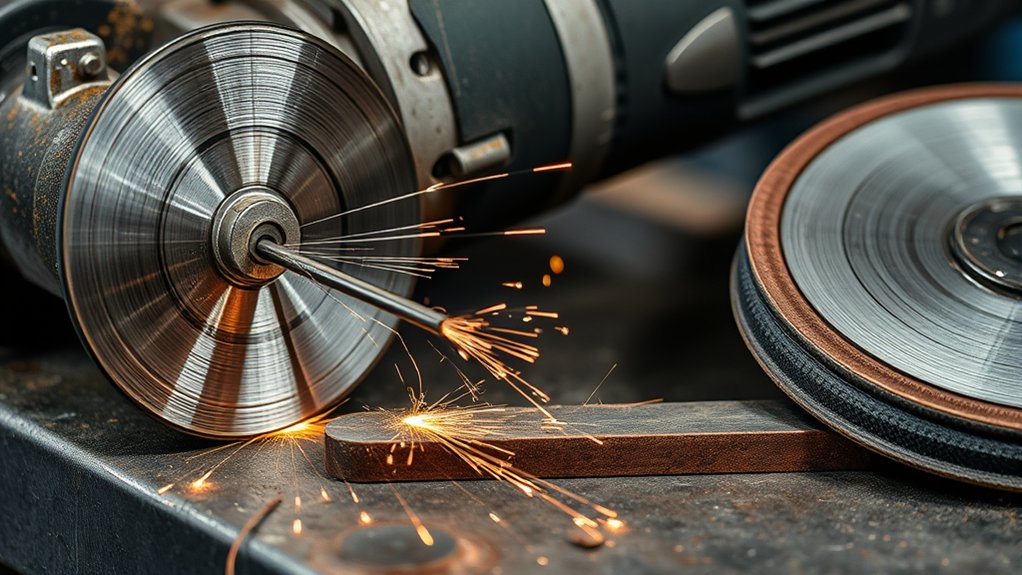
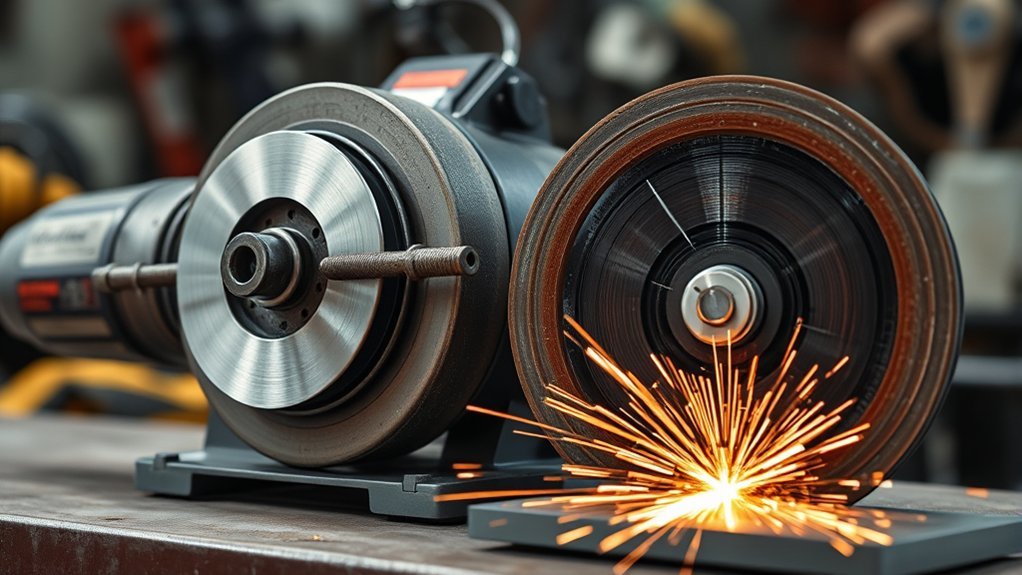
Start with the job. A cutoff wheel separates material by cutting with its outer edge. A grinding wheel removes material from a surface or edge. Both are bonded abrasive wheels, but their thickness, reinforcement, shape, and approved direction of force differ.
Common thin cutoff wheels are about 0.040 to 0.060 inch thick, with 0.045 inch being a popular size. Their narrow edge creates a small kerf, so they cut pipe, tube, sheet, bolts, and bar stock with less material loss. Manufacturers describe these wheels as making perpendicular cuts with the wheel’s outer edge. 3M’s cut-off wheel guidance is one example.
Common depressed-center grinding wheels for 4-1/2-inch grinders are about 1/4 inch thick. Their stronger body supports controlled surface grinding, weld removal, beveling, and edge work. Some 1/8-inch wheels are made for notching, edge grinding, cutting, or combination use, but their label must specifically permit the intended operation.
| Feature | Cutoff Wheel | Grinding Wheel |
|---|---|---|
| Main job | Separate or notch material | Remove, shape, bevel, or smooth material |
| Working area | Outer edge only, unless labeled for another use | Approved grinding face or edge, as labeled |
| Typical profile | Thin; often about 0.045 inch | Thicker; often about 1/4 inch |
| Tool position | Usually near 90 degrees to the work | At the angle stated by the wheel and grinder manufacturer |
| Main misuse risk | Side-loading, twisting, binding, or using the wrong guard | Using excessive pressure, the wrong angle, or an incompatible wheel |
Cutoff wheels can fracture if they are twisted, pinched, or pushed sideways. Grinding wheels handle approved surface forces better, but their wider kerf makes them a poor choice for clean separation cuts. Matching the wheel to the task improves control, cut quality, and safety.
Warning: Never use a standard thin cutoff wheel for surface grinding. Only use side pressure on a wheel whose label and manufacturer instructions specifically approve grinding or combination cut-and-grind use.
When Should You Use a Grinding Wheel?
Use a grinding wheel when you need material removal or surface preparation. A rigid Type 27 grinding wheel is a strong choice for heavy work where a flap disc would wear quickly or remove metal too slowly.
Common grinding-wheel jobs include:
- Removing excess weld bead height
- Beveling plate or pipe before welding
- Smoothing rough or sharp edges
- Removing slag, scale, or stubborn surface material
- Shaping metal during fit-up or fabrication
- Preparing a damaged area for repair
Apply light, steady pressure and keep the wheel moving. Use the operating angle shown in the grinder manual and on the wheel. For example, one current DEWALT angle-grinder manual specifies a 20- to 30-degree angle for surface grinding with approved grinding wheels. Do not assume that angle applies to every tool or accessory.
A bonded grinding wheel is not always the best finishing tool. After heavy stock removal, a flap disc or fiber disc may give better control and a smoother finish. A wire wheel is useful for loose rust and scale, but it does not replace a grinding wheel for beveling or weld removal.
Pro Tip: Stop grinding before the weld or edge is perfectly flush, then switch to a flap disc for the final blend. This reduces gouging and makes it easier to control the finish.
Grinding wheels are not the right choice for most full-depth cuts. Their wider body removes more metal, creates a wider kerf, and may generate more heat. For clean separation cuts, switch to a cutoff wheel.
When Should You Use a Cutoff Wheel for Precision Cuts?
Use a cutoff wheel when you need a narrow, straight cut through metal. Its thin kerf removes less material and usually leaves less cleanup than a thick grinding wheel. Cutoff wheels work well for pipe, sheet metal, bolts, bar stock, threaded rod, and tubing.
A cutoff wheel also works well for trimming parts, cutting small sections to length, removing damaged fasteners, and making fit-up notches before welding. Keep the wheel aligned with the cut. Once a groove is established, do not change the grinder’s angle because the wheel can bend, bind, or break.
Ideal Materials for Cutting
A cut-off wheel can cut carbon steel, stainless steel, aluminum, and other metals only when its label lists that material. The abrasive and bond must suit the workpiece. A wheel intended for steel may load quickly or create excess heat on aluminum, while a wheel used on carbon steel can contaminate stainless steel.
- Carbon steel: General-purpose aluminum oxide, zirconia, and ceramic-grain wheels are common choices.
- Stainless steel: Choose a wheel labeled for stainless or INOX use and avoid cross-contamination from wheels previously used on carbon steel.
- Aluminum and other nonferrous metals: Use a wheel specifically labeled for nonferrous metal so it resists loading.
- Masonry or concrete: Use only a masonry or diamond wheel approved for the grinder and material; a metal cutoff wheel is not a substitute.
Thickness and Kerf Considerations
Wheel thickness affects cutting speed, support, kerf width, and heat. A thinner wheel usually cuts faster and removes less material, but it is also less tolerant of side pressure. A thicker cutting or combination wheel may offer more support for notching, but only the label can confirm whether it may grind.
| Wheel Type | Common Thickness | Best Use |
|---|---|---|
| Thin cut-off wheel | About 0.040-0.060 inch | Fast, narrow separation cuts |
| Thicker cutting/notching wheel | About 3/32-1/8 inch | Notching or heavier cuts when labeled for the task |
| Combination cut-and-grind wheel | Often about 1/8 inch | Cutting plus limited grinding when expressly approved |
| Depressed-center grinding wheel | Often about 1/4 inch | Heavy stock removal, beveling, and weld grinding |
The thinnest wheel that safely performs the cut usually gives the narrowest kerf. Still, thickness is only one selection factor. Wheel type, diameter, arbor, material rating, maximum RPM, guard, and flange compatibility matter just as much.
Applications Requiring Precision Cuts
Choose a cut-off wheel when the project needs a narrow, accurate cut. These wheels work well for trimming metal bars, cutting tubing, shortening bolts, and making fit-up cuts before welding. Mark the line clearly, secure the workpiece, and support both sides so the kerf does not close and pinch the wheel.
For longer life, choose an abrasive grain suited to the material and workload. Ceramic and zirconia products often perform well on demanding metals, while aluminum oxide remains common for general steel cutting. The wheel label—not grain name alone—determines whether the product is approved for your material and operation.
Key Features of Cutoff Wheels
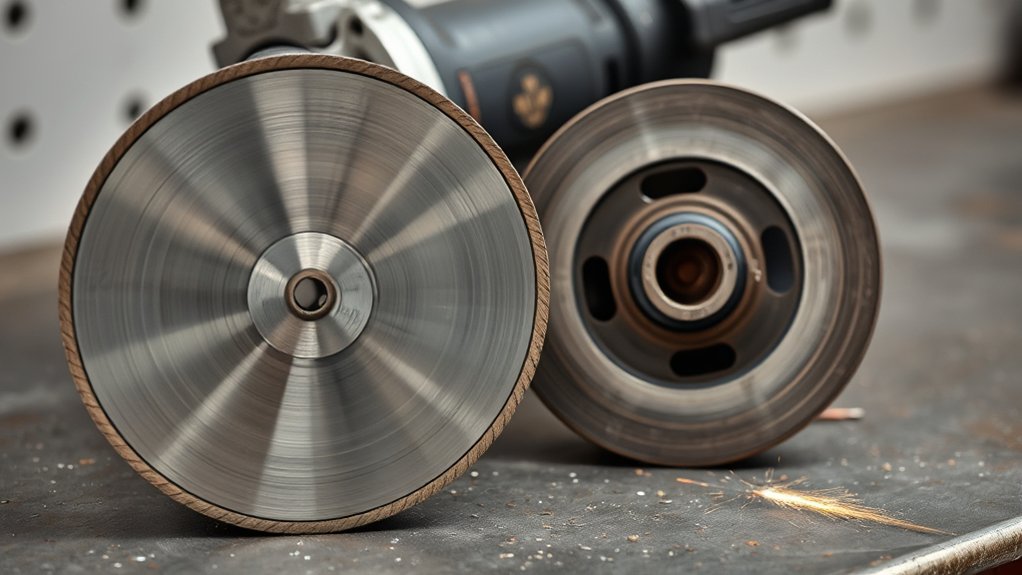
Cutoff wheels differ by shape, thickness, abrasive, bond, reinforcement, diameter, arbor, and approved use. Their thin profile creates a narrow kerf, but that same profile makes them sensitive to bending and side pressure.
Products Worth Considering


THIN-PROFILE PRECISION: Designed for clean, accurate cuts on metal, steel, stainless steel, aluminum, pipes, tubes, and flat sheets with a 6" diameter, 0.045" thin kerf and 7/8" arbor for minimal material loss. Built for craftsmen and DIY enthusiasts
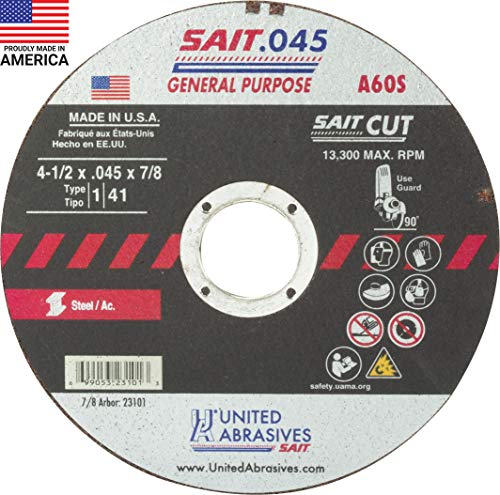
RECOMMENDED USE: For use on ferrous and/or non-ferrous metals (iron, steel, welds, etc.) for a quick and safe cut
Type 1/41 vs Type 27/42 Cutoff Wheels
Wheel labels may use ANSI and international numbering together. A flat cutoff wheel may be marked Type 1 or Type 41. A depressed-center cutoff wheel may be marked Type 27 or Type 42. The depressed center can improve flange clearance in tight positions, but it can also limit cut depth because the raised center must not contact the work.
Guard terminology also varies. Some manuals call the enclosed cutting guard a Type 1/41 or Type A guard; others describe a closed, two-sided cutting guard or a clip-on conversion for a grinding guard. Use the exact guard named in your grinder manual. The DEWALT manual linked above, for example, requires a closed two-sided guard for abrasive cutting wheels.
How to Read a Cutoff-Wheel Label
Check all of these items before mounting a wheel:
- Diameter: It must not exceed the grinder’s rated wheel size.
- Arbor or thread: It must match the spindle or approved flange system without forcing or modification.
- Maximum RPM: The wheel rating must meet or exceed the grinder’s no-load speed.
- Wheel type: Confirm whether it is Type 1/41, Type 27/42, a grinding wheel, a cutting-only wheel, or a combination wheel.
- Material rating: Choose a wheel labeled for the metal or masonry being cut.
- Direction and mounting marks: Follow any rotation arrow, flange, blotter, or hub instructions.
- Safety pictograms: Obey prohibitions for side grinding, damaged wheels, missing guards, water, or unsuitable materials.
- Date or storage marking: Do not use a wheel past a marked expiration date, and follow the manufacturer’s storage guidance.
Key Features of Grinding Wheels
When you select a grinding wheel, focus on wheel type, thickness, abrasive grain, grit, grade, bond, material compatibility, and maximum speed. Each factor affects how fast the wheel removes metal, how much heat it creates, and how the surface looks afterward.
Grinding Wheel Types
Unlike thin cutting wheels, common portable grinding wheels have a thicker, reinforced body for approved surface and edge forces. Type 27 depressed-center wheels are common on angle grinders. Type 28 wheels have a saucer shape and may support a steeper working angle, but only use a type listed in the grinder manual.
Common abrasive grains include:
- Aluminum oxide: A common general-purpose grain for carbon steel and many ferrous metals.
- Zirconia alumina: A durable grain often used for demanding stock removal.
- Ceramic alumina: A fast-cutting grain used in high-performance grinding products.
- Silicon carbide: Used in selected nonferrous, cast iron, stone, or specialty applications; follow the product label.
Grinding creates friction and heat. Use light pressure, keep the wheel moving, and stop if the metal discolors, the wheel glazes, vibration increases, or the tool begins to labor.
Why Does Grit Size Matter?
Grit size describes abrasive particle size. Lower grit numbers are coarser and remove material faster. Higher numbers are finer and produce a smoother scratch pattern. Norton’s grinding-wheel basics guide gives broad ranges of 12-24 for coarse, 30-70 for medium, and 80-220 for fine grinding wheels, while noting that specifications vary by manufacturer and application.
For a portable angle grinder, rigid bonded wheels commonly use coarse or medium specifications for heavy stock removal. Finer 60-, 80-, or 120-grit finishing work is often easier to control with a flap disc, fiber disc, or other finishing abrasive. Do not choose by grit alone; the wheel type, grade, bond, and material rating must also match the job.
Wheel grade or hardness describes how strongly the bond holds the abrasive grains. It does not simply mean that a harder wheel is always better or always lasts longer. The correct grade depends on the workpiece, pressure, speed, contact area, and desired finish.
How Do You Match a Wheel to the Job?
Match the wheel to the material, grinder size, and task. A grinding wheel works well for shaping, beveling, and removing metal. It does not work well for a narrow separation cut unless its label specifically approves cutting.
- Heavy weld removal: Use an approved rigid grinding wheel.
- Beveling: Use a grinding wheel with the angle and guard specified by the manufacturer.
- Blending and finishing: Consider a flap or fiber disc after heavy grinding.
- Rust and loose scale: Consider a wire brush or surface-conditioning product rated for the grinder.
- Separation cutting: Use a cutoff wheel and an approved cutting guard.
How to Choose the Right Wheel
Use this order instead of choosing by appearance or price:
- Define the operation. Decide whether you are cutting, notching, grinding, beveling, blending, or cleaning.
- Identify the material. Confirm carbon steel, stainless steel, aluminum, cast iron, masonry, or another material.
- Check the grinder. Read its rated wheel diameter, spindle or arbor, no-load RPM, guard options, and approved accessory types.
- Read the wheel label. Match the operation, material, wheel size, arbor, and maximum RPM.
- Match the guard and flanges. Do not assume the grinding guard is acceptable for a thin cutting wheel.
- Choose the thickness and abrasive. Use a thin wheel for a narrow cut and a robust grinding wheel for stock removal, subject to the label.
- Inspect before use. Reject cracked, chipped, warped, wet, contaminated, expired, or poorly stored wheels.
A wheel that physically fits the spindle is not automatically safe. Its type, speed rating, guard, flanges, material rating, and approved direction of force must also match the grinder and the job.
Products Worth Considering

Structural Components: A Cut off wheel typically comprises an abrasive, a binder, and air holes. The abrasive cuts, the binder shapes and strengthens, and the air holes remove swarf and dissipate heat to prevent damage to the cutting disc from overheating

【Fits All 4-1/2 Inch Angle Grinders】 PRETEC Cut Off Wheel is compatible with all 4-1/2 inch angle grinders with 7/8 inch arbor. The high rotating speed of up to 13,300 RPM, more than common 13,000 RPM, ensure maximum efficiency.

[Diamond Technology] 1 equals 100, EZARC diamond 4 1/2 cut off wheel delivers 5,000+ more cuts for metal with much lower cost per cut compared to bonded cut-off wheels
How to Mount and Use an Angle-Grinder Wheel Safely
- Disconnect power. Unplug a corded grinder or remove the battery before changing accessories.
- Inspect the tool. Check the guard, spindle, flanges, side handle, switch, cord, and vents.
- Inspect the wheel. Look for cracks, chips, warping, moisture damage, contamination, or an illegible label. Follow the wheel maker’s inspection method; do not improvise tests on thin wheels.
- Install the correct guard. Position it between your body and the wheel so it can help deflect fragments and sparks.
- Mount with approved hardware. Use the correct backing flange and locking nut. The wheel should fit freely and sit flat without forcing the arbor hole.
- Secure the workpiece. Clamp it firmly. Support the offcut so it cannot pinch the wheel or drop unpredictably.
- Clear the area. Remove flammable liquids, rags, dust, and debris. Keep other people out of the spark and fragment path.
- Use both hands. Grip the main handle and side handle, keep balanced footing, and stand out of the wheel’s plane.
- Start safely. Let the grinder reach full speed before contacting the work. If vibration or noise is unusual, stop and inspect the setup.
- Use light pressure. Keep a cutoff wheel straight and move a grinding wheel continuously at the approved angle.
- Finish safely. Remove the wheel from the work before switching off, then wait for a complete stop before setting the tool down.
Note: Kickback can occur when the wheel is pinched, stalled, or forced off line. Support the work so the cut stays open, keep your body out of the likely kickback path, and never restart a bound wheel while it is still in the kerf.
Safety Tips for Cutting and Grinding Wheels
Safety should guide every cut and grind. OSHA requires guarding for portable abrasive-wheel tools and says the accessory must be compatible with the machine’s speed. See OSHA 29 CFR 1910.243 and the grinder manufacturer’s manual for the requirements that apply to your workplace and tool.
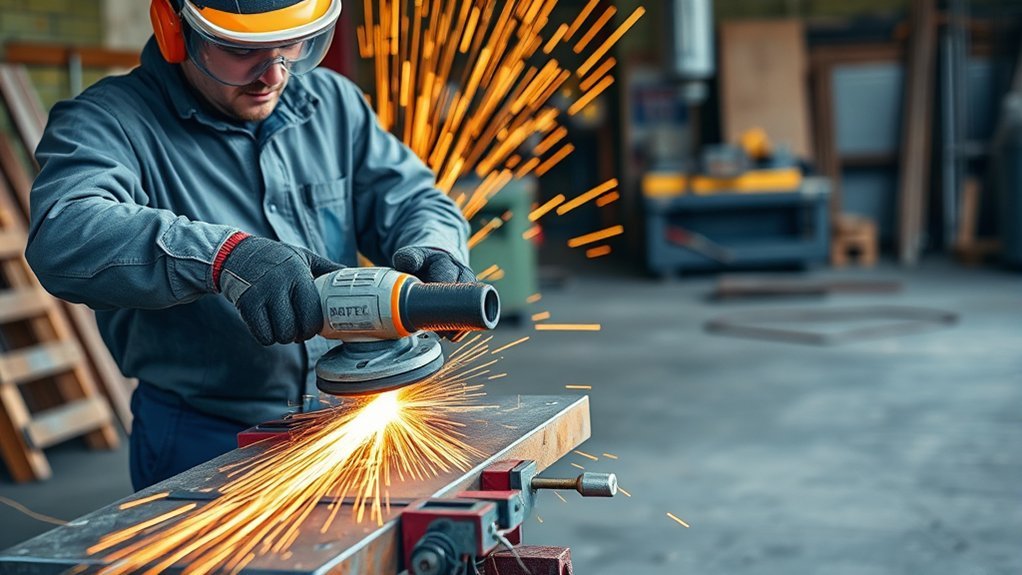
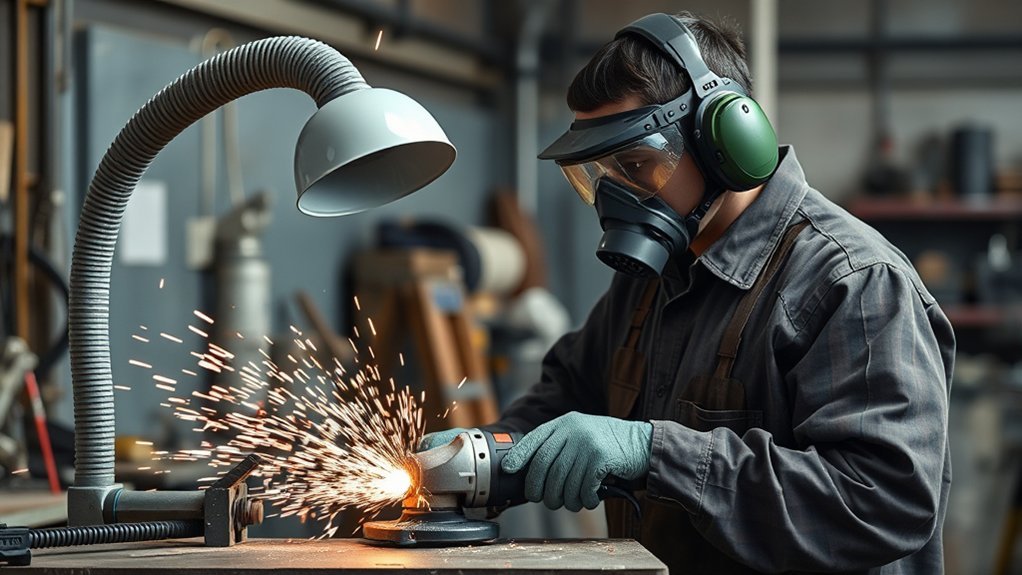
- Eye and face protection: Wear safety glasses with side protection and a face shield where sparks or fragments can fly. A face shield does not replace safety glasses.
- Hearing protection: Cutting and grinding can produce damaging noise, especially during long sessions or in enclosed spaces.
- Hand and body protection: Wear suitable gloves, closed footwear, and non-loose clothing that resists sparks. Tie back long hair and remove jewelry.
- Respiratory protection: Control dust with ventilation or extraction. Painted, plated, galvanized, stainless, or unknown materials may release hazardous dust; use the respiratory protection required by the hazard assessment and workplace rules.
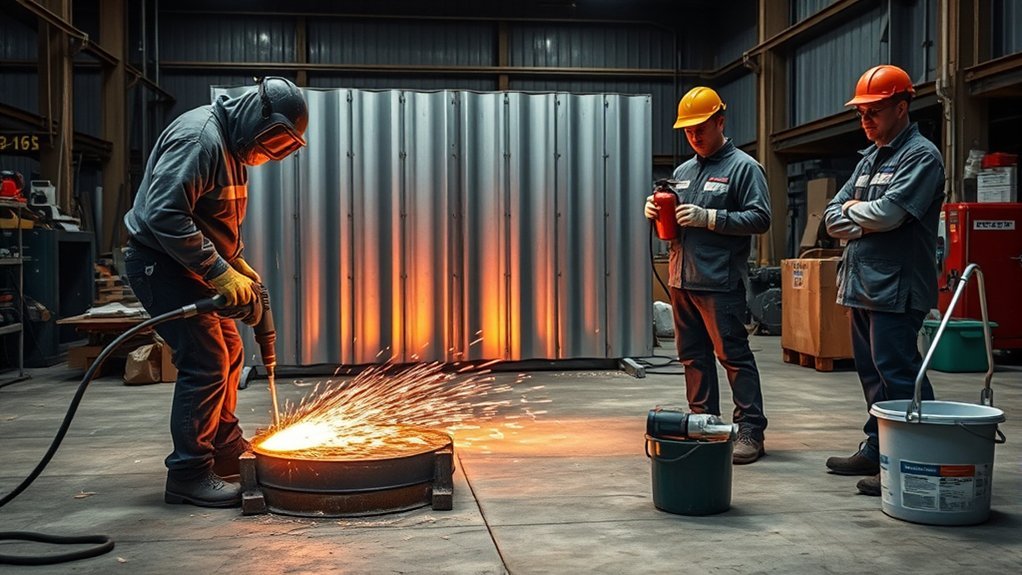
- Fire prevention: Grinding sparks can ignite combustibles and some metal dusts. Remove flammable materials, watch where sparks travel, and follow hot-work requirements where they apply.
- Guarding: Keep the correct guard installed and positioned between you and the wheel. Never defeat, trim, or remove it for clearance.
- Speed: The wheel’s maximum RPM must equal or exceed the grinder’s no-load speed.
- Control: Use the side handle and hold the grinder with both hands. Do not hold the workpiece in your free hand.
OSHA’s angle-grinder safety sheet also warns about flying particles, dust or fumes, kickback, fires, electrical shock, noise, and missing guards.
Warning: Do not grind or cut near gasoline, solvents, combustible dust, gas cylinders, or hidden fuel lines. Sparks can travel farther than expected and may start a fire after the tool is switched off.
Common Mistakes to Avoid With Cutting and Grinding Wheels
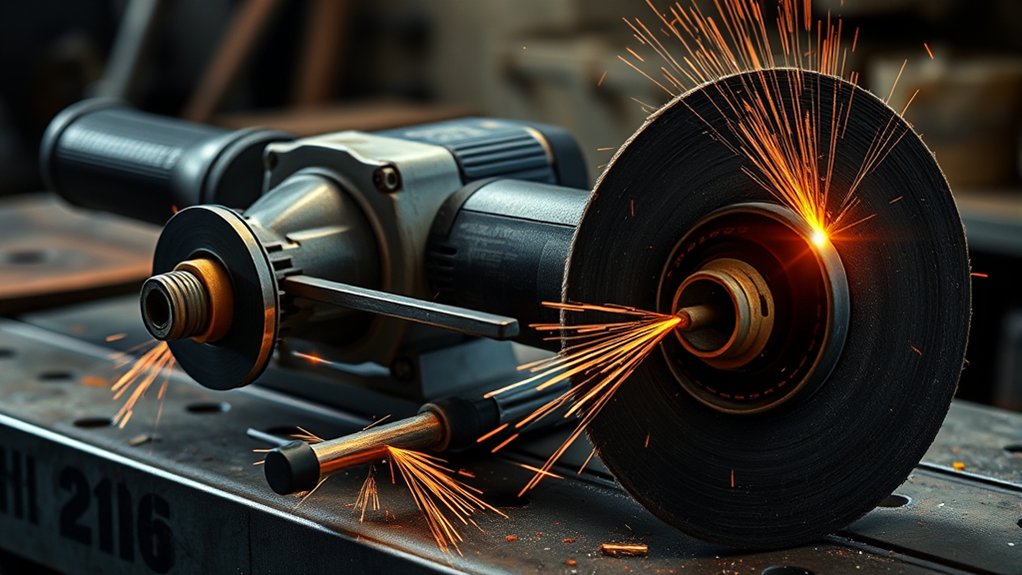
Most wheel failures are linked to the wrong accessory, poor mounting, side-loading, excessive pressure, damaged wheels, or missing guards. Avoid these common mistakes:
- Using a grinding wheel for a narrow separation cut when it is not labeled for cutting.
- Using the side of a thin cutting-only wheel for grinding or shaping.
- Using a Type 27 grinding guard when the grinder manual requires an enclosed cutting guard.
- Mounting a wheel with the wrong diameter, arbor, flanges, or locking nut.
- Using a wheel whose maximum RPM is below the grinder’s speed.
- Forcing the wheel into the work instead of allowing it to cut at full speed.
- Twisting a cutoff wheel after the kerf is established.
- Starting with your body in the wheel’s plane.
- Holding small work by hand instead of clamping it.
- Ignoring sparks, combustible dust, coatings, or ventilation needs.
- Using a wheel that is cracked, chipped, warped, wet, expired, or poorly stored.
- Setting the grinder down before the wheel stops.
Thin cutting wheels, such as common 0.045-inch wheels, are useful for many metal cutting tasks, but they demand straight alignment and the correct guard. Reserve thick grinding wheels for approved surface work and material removal. Use a labeled combination wheel when one accessory must perform both operations.
How to Maintain Your Angle Grinder
Regular care helps an angle grinder run more safely and last longer. Disconnect it before inspection or cleaning.
- Clean air vents and the housing according to the manufacturer’s instructions so metal grit does not block cooling airflow.
- Inspect the cord or battery interface, switch, guard, spindle, side handle, flanges, and locking nut before each job.
- Replace damaged guards, flanges, handles, cords, switches, or other parts before use.
- Check replaceable carbon brushes if the grinder uses them and the manual gives a service interval.
- Stop using the tool if it develops unusual vibration, noise, heat, smell, or speed changes.
- Store the grinder dry and protect the spindle and guard from impact.
Store bonded wheels in a dry, protected area away from heat, moisture, freezing temperatures, oils, and impact. Thin cutoff wheels should remain flat and supported so they do not warp. Norton’s wheel storage guidance recommends removing abrasive wheels from portable grinders during overnight storage and transport between worksites.
Always make sure cutting and grinding wheels sit securely on the spindle with the approved flanges. Poor mounting can cause vibration, uneven wear, and damage. Follow the tool manufacturer’s service and lubrication instructions rather than applying oil or solvent to the wheel or spindle assembly.
Frequently Asked Questions
When can a cutting-off wheel be used for grinding?
A standard thin cutting-only wheel should not be used for grinding because it is not designed for side pressure. Grinding is allowed only when the wheel is clearly labeled as a combination cut-and-grind wheel or otherwise approved for that operation, and the grinder, guard, and flanges also support it.
What is the difference between grinding and cutting on an angle grinder?
Cutting uses the outer edge of a thin wheel to separate material with a narrow kerf. Grinding uses an approved face or edge of a thicker wheel to remove, bevel, or shape material. The two operations apply force in different directions and may require different guards.
What’s the difference between a grinding wheel and a cutoff wheel?
A grinding wheel is generally thicker and built for stock removal, weld grinding, beveling, and shaping. A cutoff wheel is thinner and built for straight edge cutting. Always use the wheel label and grinder manual rather than thickness alone to identify the approved operation.
What do you use a cutoff wheel for?
Use a cutoff wheel to cut sheet, pipe, tube, bolts, bar stock, threaded rod, and similar materials when the wheel is rated for them. It works best for straight cuts with limited material loss. Keep it aligned and support the work so the kerf cannot close on the wheel.
Can you use the same guard for cutting and grinding?
Only when the grinder manufacturer specifically approves that guard configuration for both operations. Many thin cutoff wheels require an enclosed two-sided cutting guard or an approved clip-on conversion, while grinding wheels use a grinding guard. Check the exact grinder manual and wheel label before changing accessories.
Is a 0.045-inch or 1/16-inch cutoff wheel better?
A 0.045-inch wheel usually makes a narrower, faster cut, while a 1/16-inch wheel may feel slightly more supported. The better choice depends on the material, cut depth, tool power, desired wheel life, and manufacturer rating. Neither wheel should be side-loaded unless its label allows it.
Can the same wheel be used on steel, stainless steel, and aluminum?
Only when the wheel label lists all three materials. Stainless work should be protected from carbon-steel contamination, and aluminum needs an abrasive designed to resist loading. Using one wheel across materials can reduce performance, affect finish quality, or create contamination problems.
Conclusion
The main rule is simple: use a cutoff wheel to separate metal and a grinding wheel to shape, bevel, smooth, or remove metal. Then verify the wheel type, size, arbor, maximum RPM, material rating, guard, flanges, and approved working direction. Secure the work, control sparks and dust, wear proper PPE, and keep the grinder under firm two-handed control. The right wheel produces cleaner results and a safer workspace.
Sources
- OSHA 29 CFR 1910.243: Guarding of Portable Powered Tools — guard and portable grinder requirements.
- OSHA-supported Angle Grinder Safety Sheet — wheel selection, RPM, guarding, PPE, sparks, and work-area hazards.
- DEWALT DCG407/DCG408 Instruction Manual — accessory types, guards, flanges, working angles, and edge-cutting precautions.
- 3M Cubitron 3 Cut-Off Wheel Product Guidance — perpendicular edge cutting and suitable metal-cutting applications.
- Norton Grinding Wheel Basics — abrasive grain, grit, grade, bond, and wheel specification terminology.
- Norton Proper Handling and Storage of Grinding Wheels — storage and transport practices for bonded abrasive wheels.