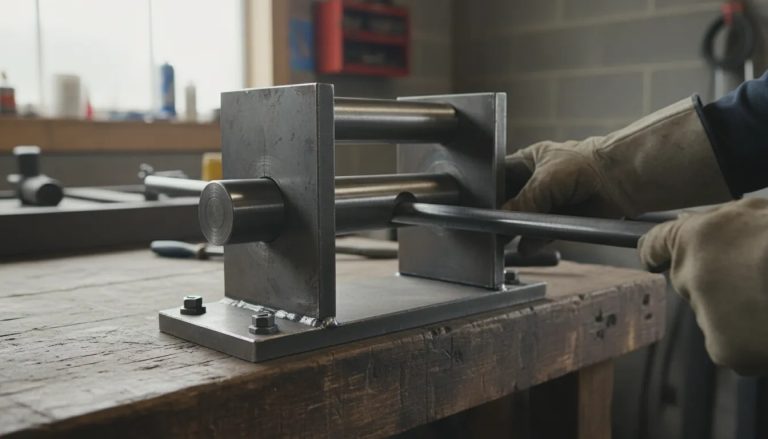
If you need a reliable clamping tool for metalwork, a DIY pipe clamp can be a practical alternative to expensive shop versions. With basic steel stock, a few moving parts, and solid welding, you can build a clamp that holds round and square tubing firmly for fabrication tasks.
This guide walks through an easy-to-build design concept: a rigid U-shaped frame, a sliding jaw, and a threaded tightening mechanism with bearings for smoother action. The result is a clamp that applies strong, stable pressure without slipping.
What this DIY pipe clamp is (and what it’s good for)
This style of clamp is built around three functional ideas:
- Rigid frame: A U-shaped steel piece resists bending under load.
- Sliding jaw: A moving jaw travels smoothly on round guide tubing so the clamp closes evenly.
- Threaded screw pressure: A threaded rod or similar shank converts turning force into clamping force.
It’s especially useful for:
- Positioning round pipes and small square tube during welding
- Aligning parts before tack welding
- Holding workpieces safely when you want consistent pressure
Tools and materials you’ll need
Materials (typical)
- Steel frame (U-shape): ~35 cm length of U-shaped or bend-fabricated steel
- Round guide tubing: Two short pieces (example build uses short sections like 8 cm each)
- Threaded rod (or threaded shank) for the main tightening mechanism
- Nuts sized for the threaded rod
- Bearings (used to reduce friction at the screw end)
- Washers for proper bearing seating
- Jaw components: Steel pieces for fixed jaw and sliding jaw
- Optional handle: A bar or tube for turning the screw
- Angle iron / structural steel for the reinforcement/upper jaw surface (as required by your design)
- Rebar or steel bar sections for compact jaw links (design-dependent)
Tools
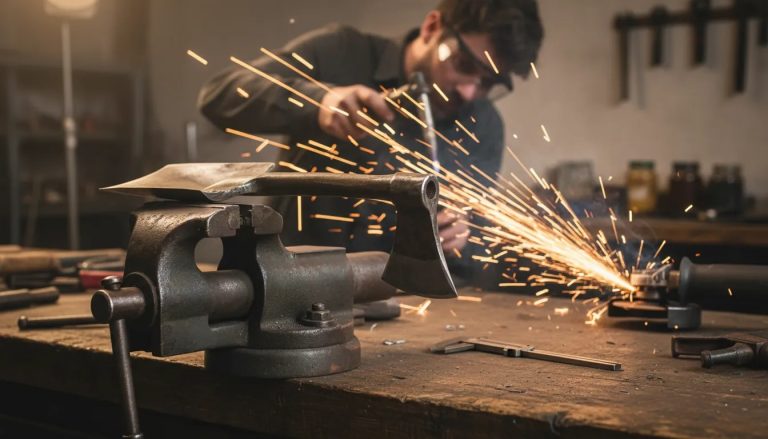
- Angle grinder (cutting and shaping)
- Drill (if you need extra holes) and measuring tools
- Welding machine (MIG, TIG, or stick)
- Clamps and a flat work surface
- Safety gear: welding helmet, gloves, eye protection, hearing protection
Key design choices for a strong, non-slipping clamp
A clamp only feels “extremely powerful” when the mechanics are stable and the closing force is transferred correctly. Focus on these build factors:
1) Rigid frame geometry
The U-shaped steel frame keeps the load path straight. If the frame flexes, the clamp will feel weak and may slip.
2) Smooth sliding action
The sliding jaw should move freely without binding. Using round guide tubing as rails helps the jaw translate evenly as the screw tightens.
3) Proper bearing and washer setup
Friction can turn a strong clamp into a hard-to-use tool. A bearing reduces drag and improves consistency, especially when the jaw is loaded.
4) Welding quality and alignment
Misalignment between the screw axis and the sliding jaw can cause uneven pressure and reduce clamping strength. Take time to tack first, verify alignment, then complete welds.
Step-by-step build (practical welding workflow)
The following steps describe a reliable build sequence. Exact dimensions can vary based on your steel sizes and the tubing you want to clamp.
Step 1: Cut and fit the U-shaped frame
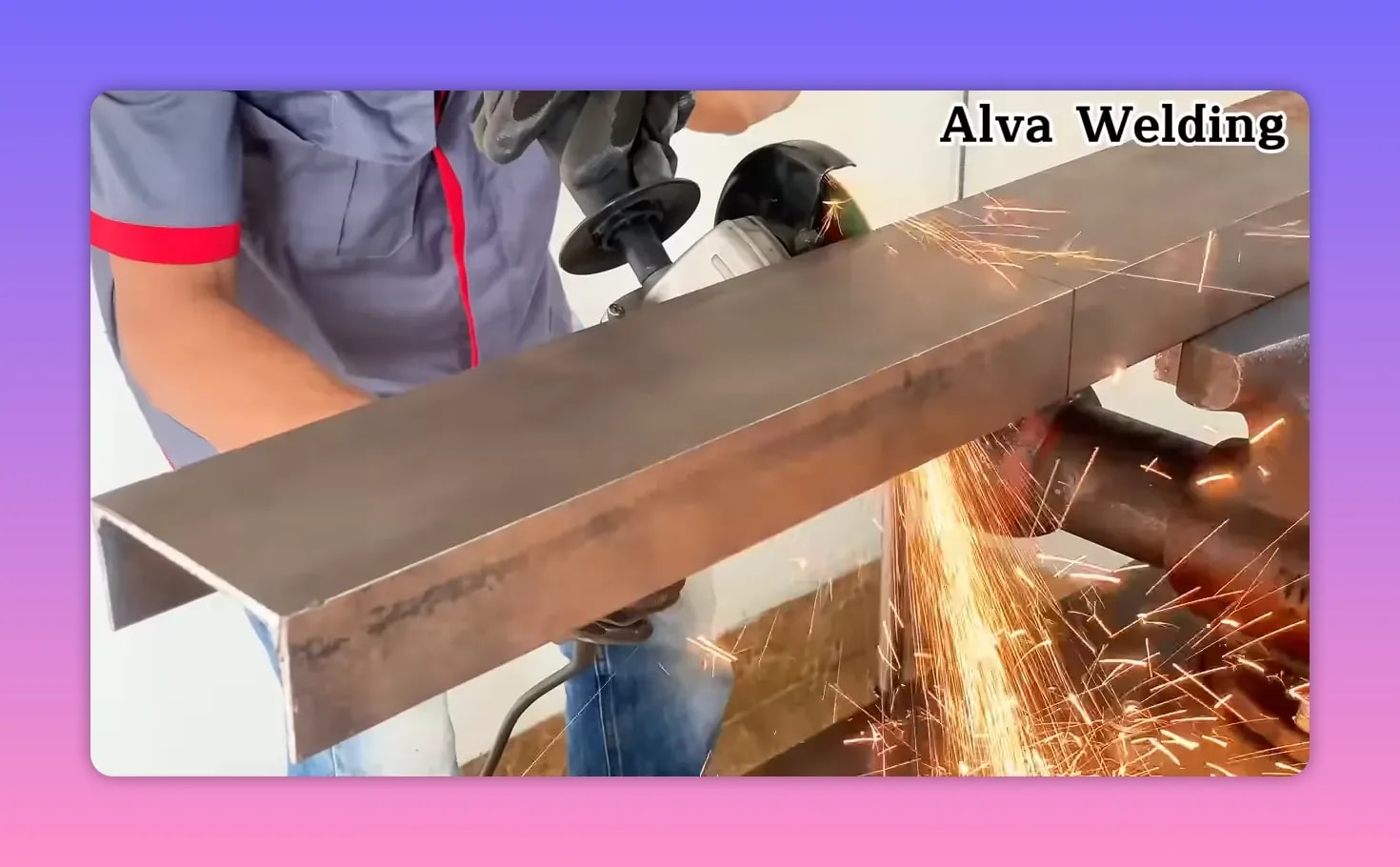
- Cut the U-shaped steel to your target length (example builds use about 35 cm).
- Clean cutting edges and remove mill scale where welding will occur.
- Mark where guide tubing and jaw mounting points will sit.
Step 2: Install the guide tubes for the sliding jaw
- Cut two guide pieces of round tubing (example uses short segments such as 8 cm each).
- Position them centered on the frame.
- Tack weld in place, confirm alignment, then fully weld.
- These guide tubes should be straight enough to allow smooth vertical or linear movement of the jaw.
Step 3: Build the screw-driven tightening section
- Prepare nuts for the threaded rod.
- Install or tack them so they align with the sliding jaw movement path.
- Weld the nut(s) securely to the threaded support section, ensuring the screw axis stays straight.
Step 4: Assemble jaw components (fixed + movable)
- Cut jaw steel pieces for a fixed jaw and a movable jaw.
- Attach the movable jaw to the guide tubes so it can travel smoothly.
- Ensure the movable jaw faces the fixed jaw squarely.
- Weld the jaw contact surfaces with care so they resist wear and deformation under load.
Step 5: Add bearing and washer stack on the tightening rod
- Mount a bearing at the end of the threaded rod where turning force will be applied.
- Add a steel washer under the bearing as needed to seat it properly.
- Weld or lock the bearing location so it cannot shift.
Step 6: Reinforce the top jaw structure
- Use angle iron or similar structural steel on top of the U frame where the jaw load concentrates.
- Mark, cut, and weld the reinforcement pieces to prevent flexing.
- Verify the clamp closes evenly along the jaw faces.
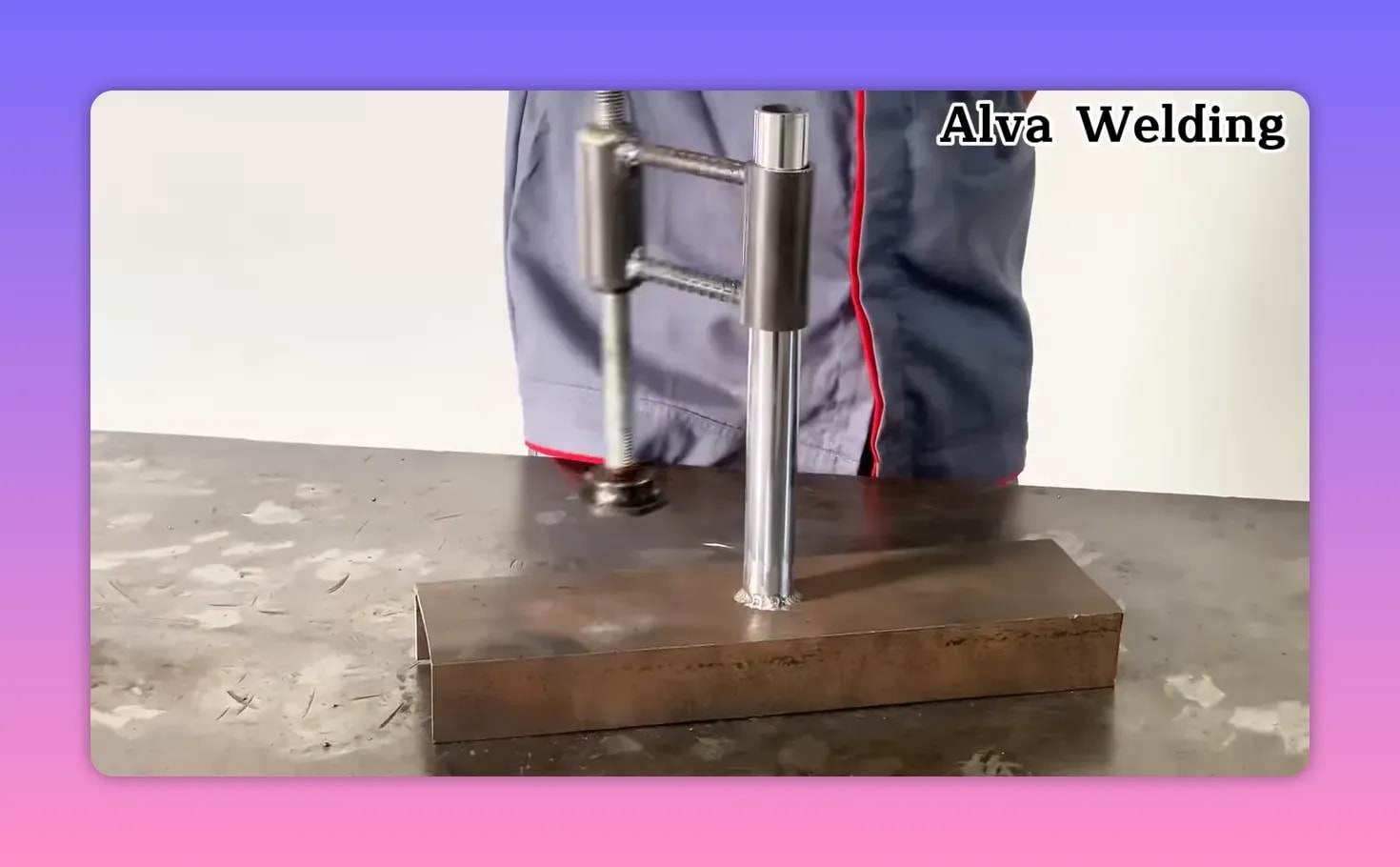
Step 7: Add leverage handle and finalize alignment
- Attach a handle to the threaded rod so you can apply strong torque comfortably.
- Spin the screw by hand to check smooth movement.
- Test closure against a piece of tubing and confirm there is no wobble or binding.
How to test clamping strength and prevent slip
After assembly, verify performance with a simple checklist:
- Even contact: Jaw faces should touch the workpiece uniformly.
- No binding: The movable jaw should slide smoothly as you tighten.
- Stable hold: Tighten on round tubing and attempt to rotate or slide it. It should not slip easily.
- Thread smoothness: Turning should feel consistent. If it “grabs,” check bearing seating and nut alignment.
If slip occurs, common fixes include improving jaw surface contact, reinforcing the frame, and re-checking alignment between the screw and jaw rails.
Common mistakes (and how to avoid them)
1) Misalignment from rushed tack-welding
Always tack first and confirm jaw squareness and screw axis alignment. Misalignment causes uneven clamping and reduced force transfer.
2) Skipping reinforcement where load is highest
Without top reinforcement, the clamp can flex. That flex reduces clamping pressure and can deform jaw surfaces over time.
3) Welding guide rails that are not straight
If guide tubes warp or are positioned crooked, the sliding jaw will bind. Clamp action becomes jerky and force becomes harder to apply.
4) Incorrect bearing seating
Bearing drag or misplacement increases friction. That means less effective tightening force and faster wear.
5) Using smooth jaws on slippery materials
If your workpieces have coatings or smooth finishes, plain jaws may slip under high torque. Consider adding mild texture or serrations where appropriate.
Safety notes for welding and testing
- Wear correct welding PPE and ensure adequate ventilation.
- Let parts cool fully before handling.
- When testing clamp force, start gently and use scrap material first.
- Check welds visually and by tapping lightly (do not strike aggressively). Re-weld any questionable joints.
FAQ
What size threaded rod should I use for a DIY pipe clamp?
Choose the threaded rod size based on the thickness and rigidity of your frame. A common approach is to select nuts that match the rod exactly, then build the frame and jaw thickness so the clamp does not flex under torque. If unsure, start with a rod size that allows strong leverage while keeping the overall tool compact for your workbench.
Why does a bearing make the clamp feel stronger?
It doesn’t increase mechanical strength directly, but it reduces friction at the turning interface. Lower friction means more of your hand torque becomes tightening force, so the clamp closes with less effort and more consistency.
Will this clamp work on both round pipes and square tubing?
Yes, provided the jaw faces contact properly. Round tubing typically grips well if the jaw faces are flat and aligned. Square tube can also be clamped effectively, especially if the jaw geometry keeps pressure even across the flats.
What’s the best way to check alignment before final welding?
Assemble with tack welds and use a straightedge or square to confirm that the fixed and movable jaws align. Then test movement by tightening by hand. Once the jaw closes evenly and slides without binding, complete the welds.
What should I do if the sliding jaw binds when tightening?
Check the guide rails for warping or misplacement, verify the movable jaw is seated straight, and confirm the threaded assembly is not pushing the jaw off-axis. Minor grinding and re-welding adjustments often fix binding.
How can I improve grip so the clamp doesn’t slip?
Use clean, properly aligned jaw faces. If your materials are smooth or coated, consider adding shallow serrations, a replaceable friction pad, or a textured surface on the jaw contact areas.
Takeaway
A strong DIY pipe clamp comes down to three things: a rigid frame, smooth sliding rails, and a well-aligned threaded tightening mechanism with reduced friction. Build it carefully with tack-and-check alignment, weld reinforced load points, and test closure on scrap before real work. The result is a practical home shop clamp that holds tubing firmly for fabrication.