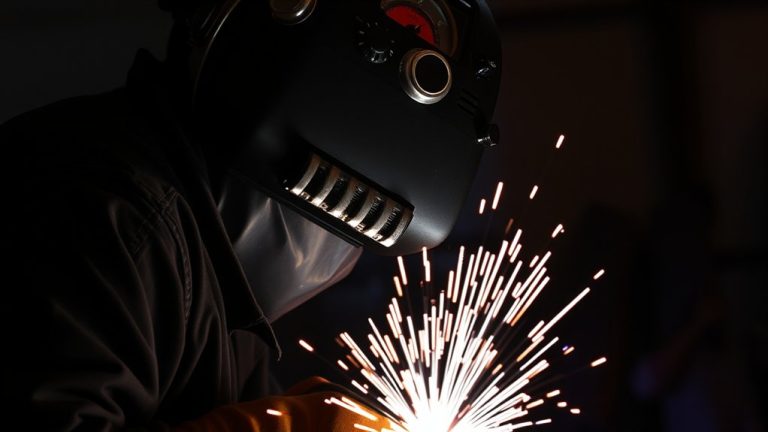
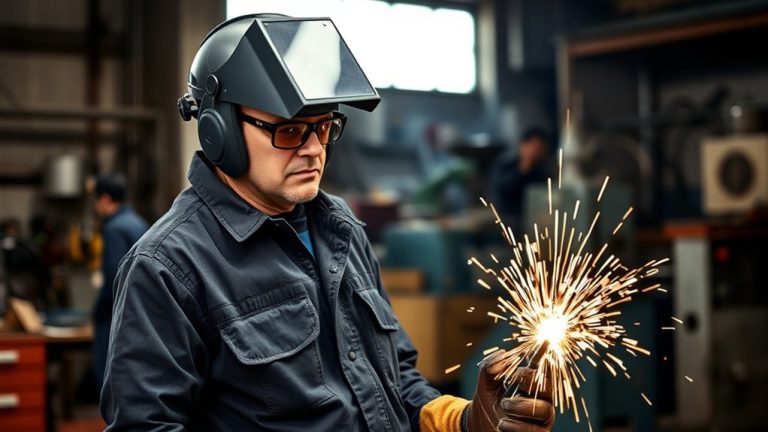
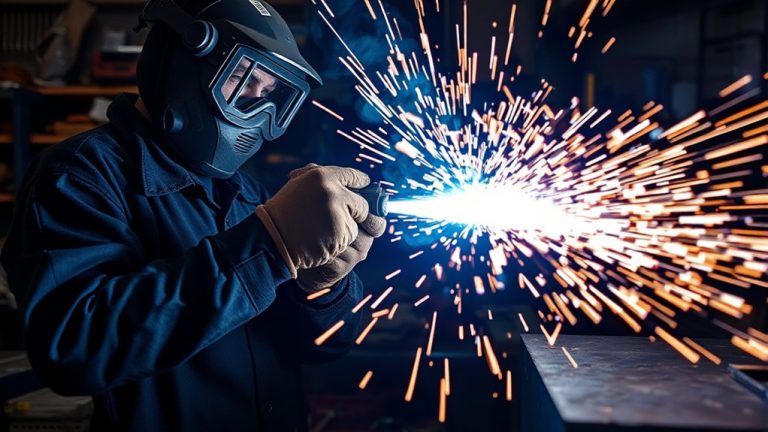
When operating a plasma cutter, you face risks like intense heat and flying sparks. Without the right gloves, your hands are vulnerable to burns and injuries. High-quality gloves are essential for safety and efficiency. Choosing the best gloves requires understanding materials and features that enhance protection and dexterity. Do you know what makes a glove suitable for plasma cutting? Explore the essential qualities and top recommendations to guarantee your safety and performance.
Understanding the Risks of Plasma Cutting
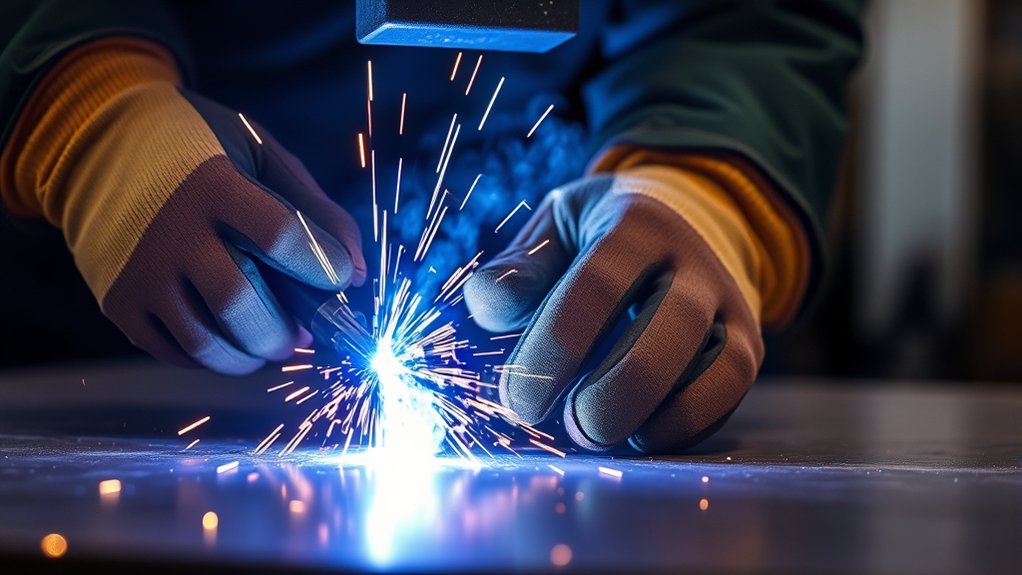
When you’re working with a plasma cutter, it’s crucial to understand the inherent risks to guarantee your safety. Plasma cutting generates extreme heat, reaching up to 20,000°C, and creates unpredictable sparks and molten metal. Without following strict safety protocols, these hazards can lead to severe burns or injuries.
The flying debris poses significant risks, emphasizing the need for thorough training requirements to make sure you know how to handle the equipment safely and respond to potential dangers.
In addition to thermal risks, plasma cutting releases toxic fumes and particles. Enforcing the right safety protocols, such as proper ventilation and the use of respiratory protection, is critical to avoid inhalation hazards.
Moreover, the loud operation of plasma cutters necessitates wearing hearing protection to prevent long-term damage. Understanding these risks and adhering to rigorous training requirements will help you operate plasma cutters safely and effectively, minimizing the chance of accidents.
The Importance of Proper Hand Protection
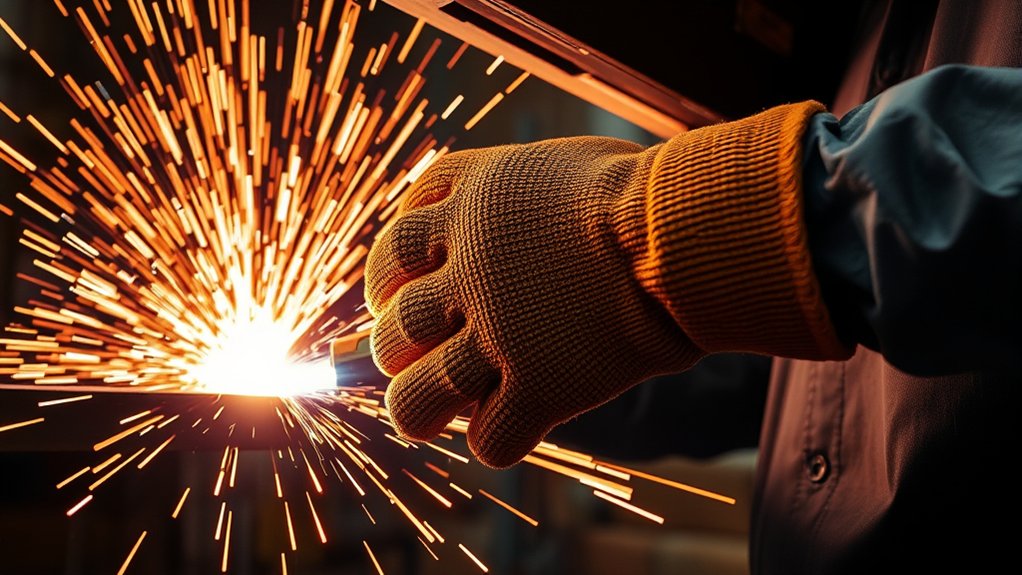
Understanding the risks associated with plasma cutting is only the beginning; safeguarding your hands is equally important. High-quality leather welding gloves are essential, providing the necessary heat resistance and cut protection.
These gloves shield your hands from burns caused by extreme heat and sparks during cutting operations. To guarantee your gloves meet safety standards, regular glove maintenance is vital. Inspect them for holes or wear, as compromised gloves reduce protection against hazards.
Kevlar-lined gloves offer additional cut resistance, ideal for handling freshly cut materials with sharp edges. Wearing the right gloves not only protects your hands but also enhances your grip and control over the plasma cutter, contributing to safer, more precise cutting.
Prioritizing proper hand protection aligns with safety standards and is a significant step in maintaining a secure working environment. Don’t underestimate the importance of your gloves—they’re your first line of defense.
Types of Gloves for Plasma Cutting
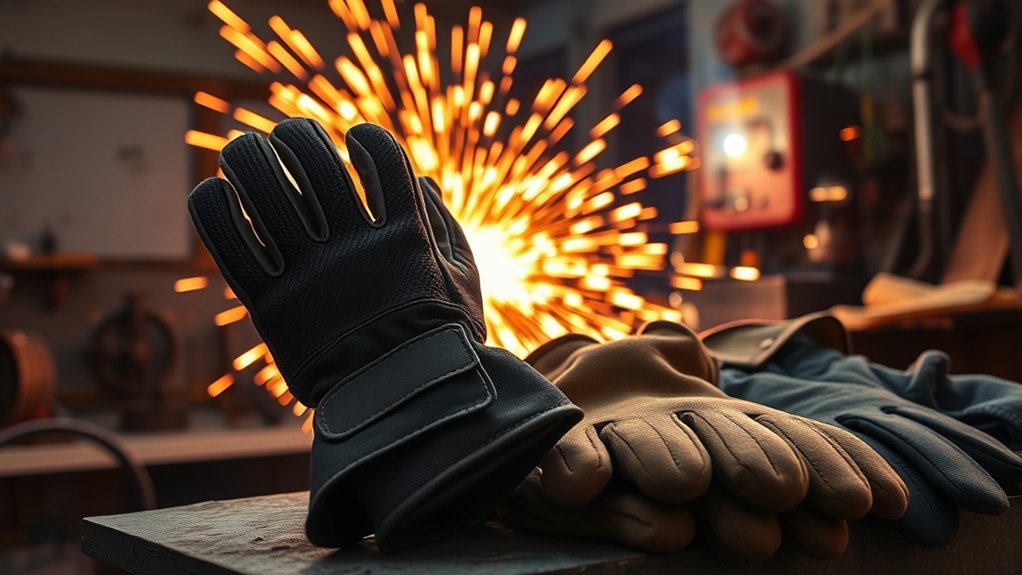
When selecting gloves for plasma cutting, prioritize those made from heat-resistant materials like leather, which can withstand high temperatures and protect against sparks.
Consider Kevlar-lined options for enhanced cut protection, essential for safely handling sharp metal edges post-cutting.
Make certain your gloves fit snugly to maintain comfort and dexterity, allowing precise control during operation.
Heat Resistance Materials
Although plasma cutting involves intense heat and sharp metal edges, you can protect yourself effectively by choosing the right type of gloves. Understanding heat resistance through material science is vital.
Leather gloves are a top pick, providing excellent heat resistance and shielding against sparks and sharp edges. Kevlar-lined gloves add another layer of protection, ideal for handling metal post-cutting while offering sufficient heat protection.
For extended coverage, consider welding gauntlets. These gauntlet-style gloves protect your wrists and forearms from intense heat and errant sparks. Additionally, gloves made from flame-resistant materials prevent burns and guarantee durability against high temperatures.
Cut Protection Features
Having explored heat resistance materials, it’s clear that selecting the right gloves involves understanding cut protection features as well.
Leather gloves remain a top choice due to their excellent heat resistance and ability to shield against sparks and sharp edges. However, for enhanced cut resistance, consider Kevlar-lined gloves. These offer superior protection when you’re handling sharp metal pieces post-cutting.
Make sure your gloves have a snug fit to maintain dexterity and prevent snagging, while still covering your wrists and forearms adequately.
Additionally, look for gloves with reinforced palms and fingers to enhance glove durability in the demanding plasma cutting environment.
Flame-resistant properties are also essential, as they help minimize burn risks from hot metal splatter and sparks.
Prioritize these features for maximum safety and performance.
Comfort and Dexterity
Selecting the right gloves for plasma cutting is essential, as it involves balancing comfort and dexterity with safety features. You need glove flexibility to handle intricate tasks while reducing hand fatigue over extended periods. Here’s what to look for:
- Leather Gloves: Opt for those offering heat resistance and protection against sharp edges while maintaining grip and dexterity.
- Kevlar-Lined Options: These provide enhanced cut resistance, ideal for managing sharp metal pieces post-cutting without compromising flexibility.
- Snug Fit: Guarantee gloves fit snugly to maintain dexterity without restricting movement. A reinforced palm and finger area will withstand plasma cutting’s wear and tear.
Additionally, consider gloves with long cuffs to shield your wrists and forearms from sparks and hot debris.
Key Features to Look for in Gloves
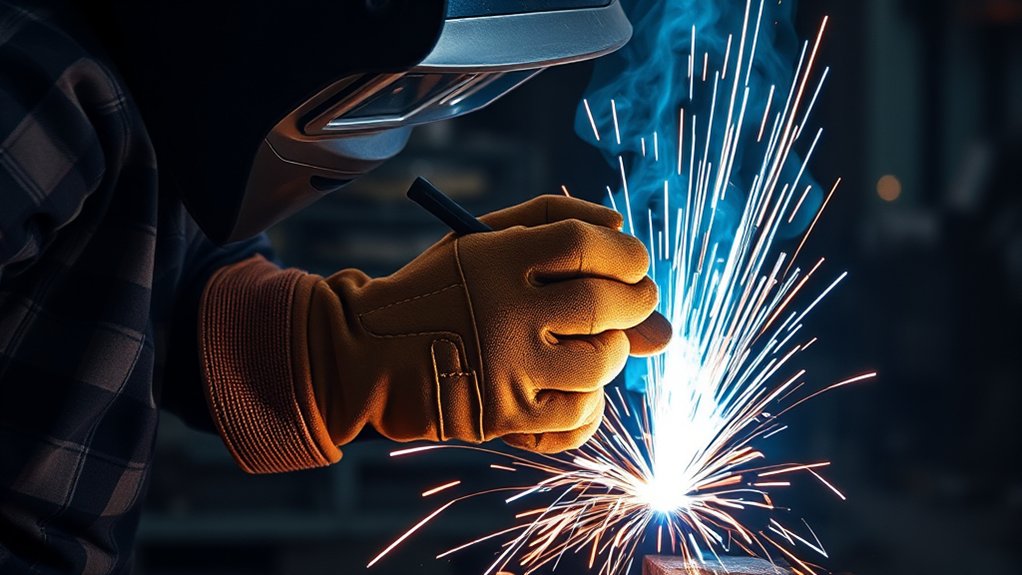
When choosing gloves for plasma cutting, prioritize materials like leather or other flame-resistant options to guard against the intense heat and sparks you’ll encounter. Confirm these glove materials meet recognized safety standards to provide ideal protection.
Look for reinforced stitching and seams, as these features enhance durability and resist wear and tear from sharp edges of cut materials.
A snug fit is essential—gloves shouldn’t be too tight, allowing for dexterity and precise control while handling the plasma cutter and materials. Consider gloves with a Kevlar lining for additional cut resistance, especially beneficial when dealing with sharp metal edges after cutting.
Also, opt for gloves with a longer cuff design. This feature protects your wrists and forearms from stray sparks and heat, offering a thorough safety barrier during plasma cutting tasks.
Best Material Choices for Gloves
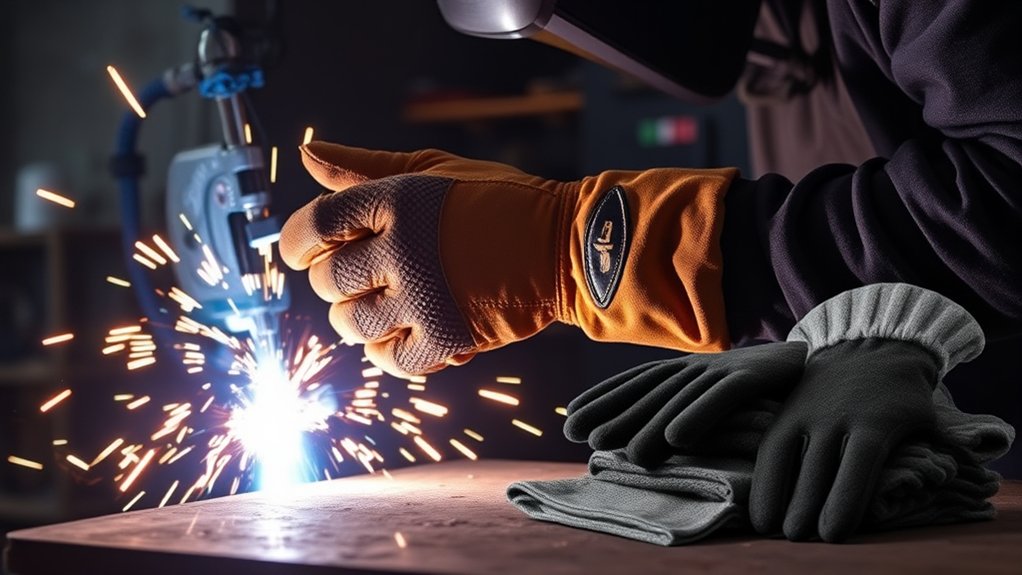
When selecting gloves for plasma cutting, you’ll want to prioritize materials that excel in heat resistance, like leather, to shield against intense temperatures and potential burns.
Consider Kevlar-lined options for superior cut protection, ensuring your hands remain safe from sharp metal edges while maintaining the necessary dexterity for precision tasks.
Also, choose gloves that are snug and comfortable, minimizing any risk of snagging on equipment, which could compromise your safety during operation.
Heat Resistance Levels
While working with a plasma cutter, it’s important to prioritize safety by choosing gloves with the right heat resistance levels.
Understanding heat resistance standards is vital. Opt for gloves that can withstand at least 1000°F (538°C) to guarantee you’re protected from the intense heat produced during cutting.
Here’s what to look for:
- Leather Gloves: These are highly recommended due to their excellent material heat resistance and durability, offering protection against burns and cuts.
- Reinforced Palms and Fingers: Confirm gloves have these features for added protection against sparks and molten metal splatter.
- Snug Fit: Choose gloves that fit snugly yet comfortably to maintain dexterity and control.
Verify your gloves meet these criteria to stay safe during plasma cutting tasks.
Cut Protection Features
Choosing the right gloves for plasma cutting is essential to guarantee both safety and efficiency. Opt for materials that offer excellent cut resistance and glove durability. Leather gloves are highly recommended due to their robust heat resistance and protection against sharp metal edges. For enhanced cut resistance, consider Kevlar-lined gloves, which also provide some heat protection. Prioritize flame-resistant materials to minimize burn risks from sparks. Confirm gloves fit properly—loose gloves can snag on equipment, while tight gloves can restrict movement. Always select gloves designed specifically for welding or metalworking to meet the necessary safety standards.
| Material | Cut Resistance | Glove Durability |
|---|---|---|
| Leather | Moderate | High |
| Kevlar-lined | High | Moderate |
| Flame-resistant | Moderate | High |
Dexterity and Comfort
After considering cut protection features, it’s time to focus on dexterity and comfort, which are equally important for effective plasma cutting.
Selecting the right glove design enhances your user experience by allowing precise handling while ensuring safety. Here are some key material choices:
- Leather Gloves: Opt for high-quality leather, offering both durability and excellent heat resistance. This material provides a snug fit, facilitating a full range of motion.
- Kevlar Gloves: Renowned for their cut resistance and ability to withstand sparks, Kevlar gloves offer an ideal balance between protection and dexterity.
- Reinforced Gloves: Look for gloves with additional padding in critical areas. This feature reduces fatigue during extended use, ensuring comfort without compromising safety.
Prioritize these materials to maintain control and protect your hands during plasma cutting tasks.
Maintaining Dexterity and Comfort
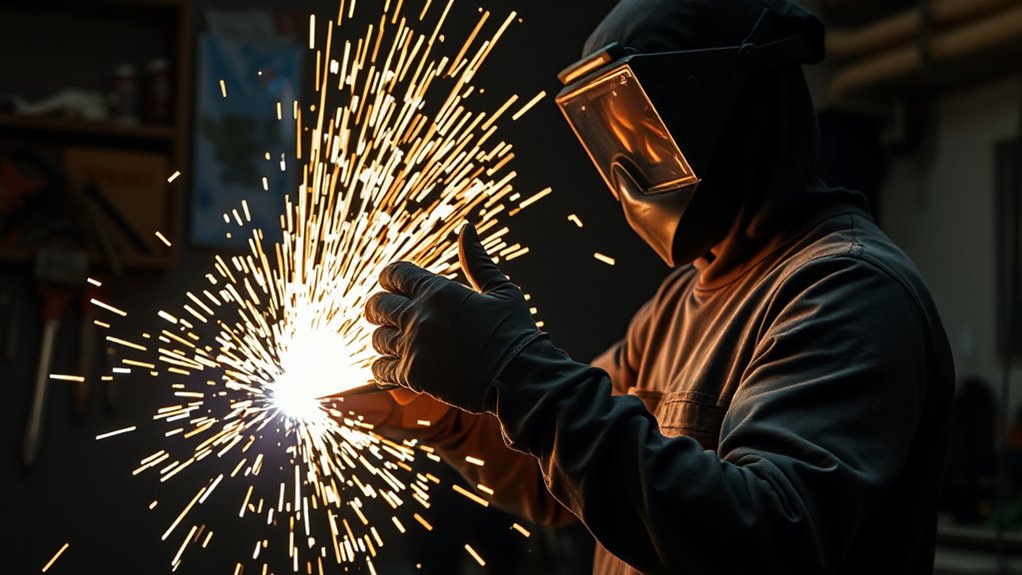
When using a plasma cutter, maintaining dexterity and comfort is fundamental for precision and safety. Gloves play a significant role in achieving this balance. Opt for glove materials like leather or Kevlar-lined options, which offer heat resistance and flexibility.
Opt for leather or Kevlar-lined gloves for heat resistance and flexibility when using a plasma cutter.
These materials guarantee you can maintain a secure hold, providing grip enhancement significant for handling tools and materials safely. Gloves designed specifically for welding and plasma cutting include reinforced seams and additional padding in important areas. This design choice enhances both comfort and protection, allowing you to move freely without compromising safety.
Conduct regular inspections of your gloves for wear and damage. Maintaining their integrity is essential to guarantee continued dexterity and comfort.
Damaged gloves can compromise your ability to control the plasma cutter precisely, increasing the risk of accidents. Staying vigilant about glove condition ensures you maintain the necessary control and comfort during your cutting tasks.
Selecting the Right Size and Fit
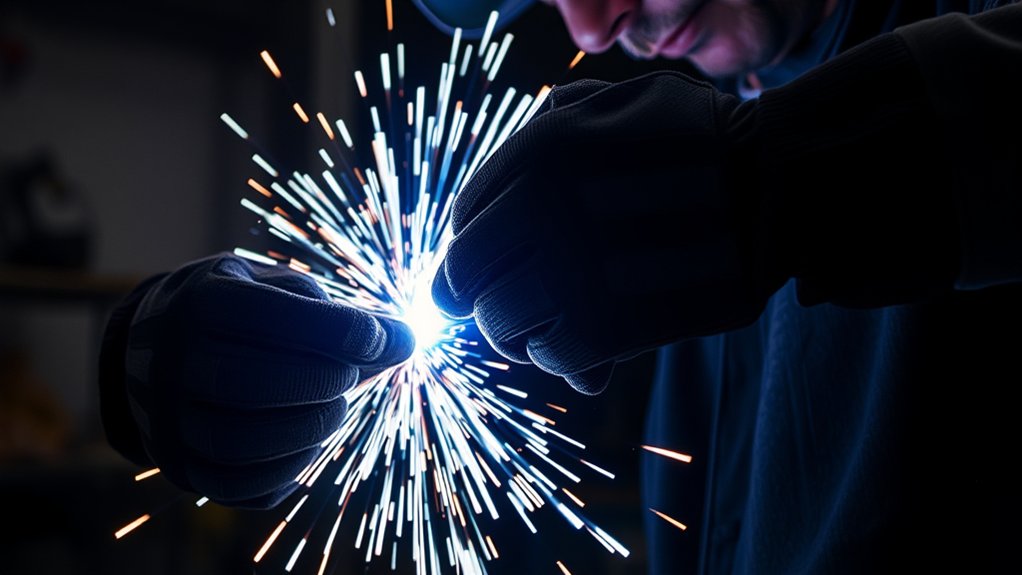
Selecting the correct size and fit for your gloves is essential when using a plasma cutter. Proper glove sizing guarantees safety and efficiency by preventing accidents and maintaining dexterity.
Here’s how you can achieve a snug fit:
- Measure Your Hand: Use a measuring tape to determine the circumference of your palm and the length from your wrist to the tip of your middle finger. Compare these measurements to the glove sizing chart provided by the manufacturer.
- Check for Snugness: Your gloves should fit snugly without being restrictive. A snug fit prevents the material from catching on the plasma cutter, which can cause accidents or impair your workflow.
- Test Dexterity: Before committing, try manipulating small objects or mimicking cutting motions. Gloves designed for plasma cutting should allow you to maintain a firm grip and precise control, essential for safety and precision during your tasks.
Prioritize a good fit to enhance your plasma cutting experience.
Additional Protective Gear to Consider
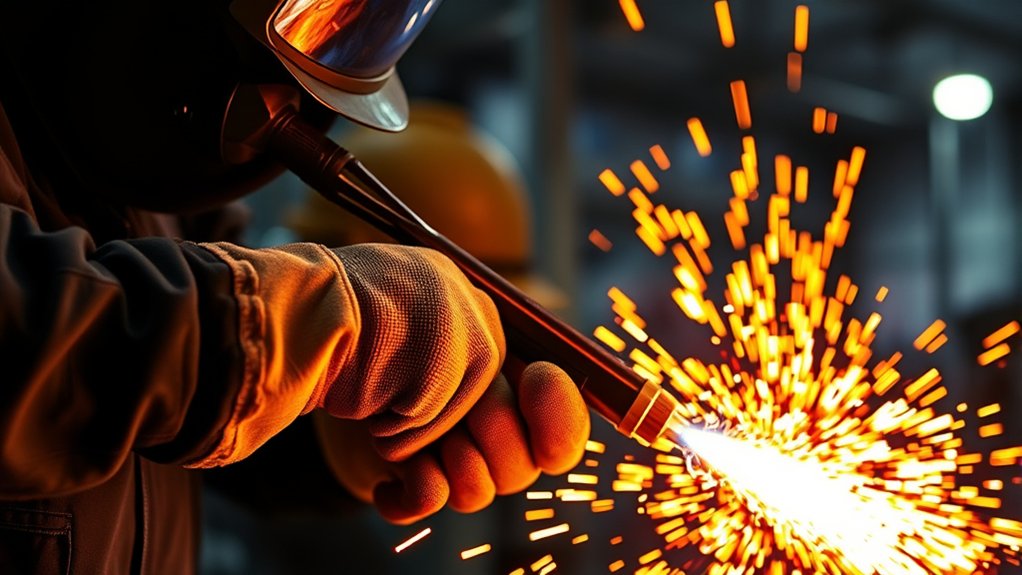
Guaranteeing a proper fit for your gloves is just one aspect of safeguarding yourself during plasma cutting. You’ll need additional gear to guarantee extensive protection.
Flame-resistant clothing is essential to shield your body from sparks and heat. As a significant safety accessory, a welding helmet with an auto-darkening feature protects your eyes from harmful UV and IR radiation emitted during the cutting process.
Don’t overlook face shields; they provide extra protection against flying debris and sparks, enhancing workspace safety.
The noise from plasma cutters can be dangerously loud, so using hearing protection like earmuffs or earplugs is recommended to prevent hearing damage over time.
Finally, a respirator or mask is important for filtering harmful fumes and particles, guaranteeing you’re breathing clean air while working.
Recommended Brands and Models
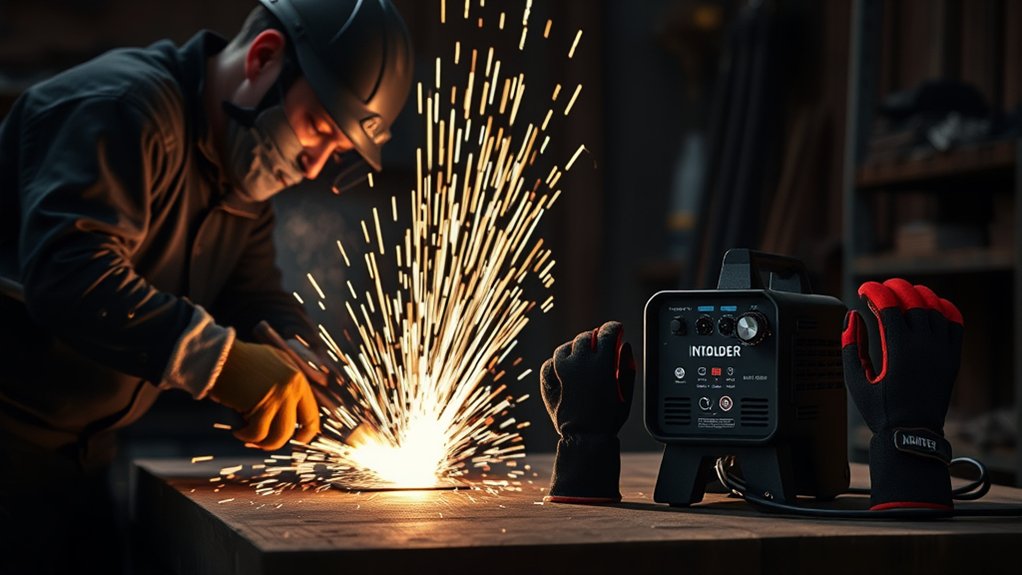
If you’re in the market for gloves tailored to plasma cutting, prioritize high-quality leather options known for their heat resistance and spark protection.
Consider the following brands and models that excel in glove durability and safety:
- Lincoln Electric K2979 – These gloves combine leather durability with excellent heat resistance, guaranteeing reliable protection against sparks while maintaining dexterity.
- Miller Electric 263360 – Designed with plasma cutting in mind, these gloves offer a snug fit to enhance control and comfort, vital for precision work.
- Revco Black Stallion BSX Series – Featuring Kevlar lining, these gloves provide added cut resistance, making them ideal for heavy-duty tasks while retaining flexibility.
When making a brand comparison, check for ANSI/ISEA 105 certifications to confirm compliance with industry standards.
Brands like Tillman and Steiner also offer specialized gloves for plasma cutting, providing both safety and comfort.
Frequently Asked Questions
Can Gloves Affect the Accuracy of Plasma Cutting?
Yes, gloves can affect the accuracy of plasma cutting. Ensuring precision handling and maintaining grip sensitivity are vital. Choose gloves designed for dexterity and heat resistance, enhancing control without compromising safety. Prioritize materials that balance protection and tactile feedback.
How Do I Clean Plasma Cutter Gloves?
To clean plasma cutter gloves, gently brush off debris, then hand wash using mild soap and lukewarm water. Confirm material durability by air drying. Regular cleaning methods maintain glove integrity and guarantee long-term safety and performance.
Are There Gloves Compatible With Touchscreens?
Touchscreen compatibility can be tricky, but textured thumb tips on certain gloves help. Look for glove materials like conductive leather or specialized fabric. Guarantee they’re thin yet tough, offering safety without sacrificing sensitivity when using screens. Prioritize precision.
Can Gloves Reduce Hand Fatigue During Extended Use?
Yes, gloves can reduce hand fatigue during extended use. Choose ergonomic designs with flexible material types for comfort and support. Prioritize safety-conscious options that absorb vibrations and fit well to maintain dexterity and prevent strain.
What Are the Signs of Glove Wear and Tear?
Your gloves are like old soldiers; they tell their story through frayed seams and thinning material. Check for reduced flexibility, visible burns, and weakened areas. Regular durability testing guarantees glove material remains reliable and safe for plasma cutting.
Conclusion
When using a plasma cutter, you can’t overlook the necessity of high-quality gloves. The extreme heat and flying sparks pose real risks, emphasizing the truth that proper hand protection isn’t just optional—it’s essential. Opt for gloves with reinforced stitching, longer cuffs, and materials like Kevlar for cut resistance. Guarantee a snug fit for ideal control and comfort. Remember, investing in the right gloves not only enhances safety but also boosts your efficiency in every cutting task.