Disclosure: As an Amazon Associate, we earn from qualifying purchases. If you click a link on this page and make a purchase, we may receive a small commission at no extra cost to you.
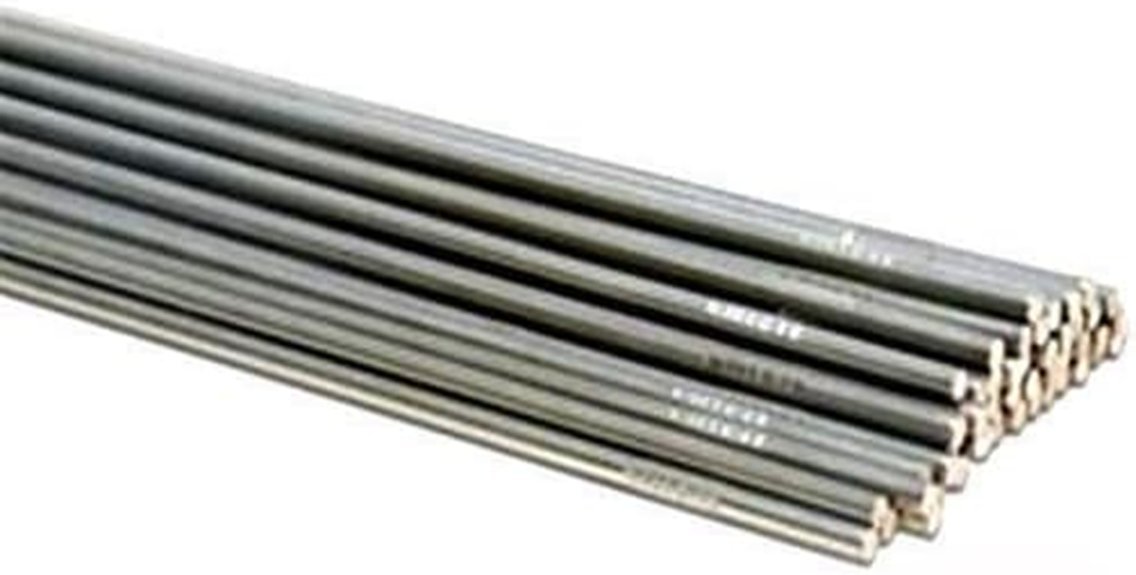
Choosing stainless TIG filler is less about buying the thickest rod and more about matching the filler alloy to the metal you are welding. The HYW Products ER308L Stainless Steel TIG Welding Rods are made for TIG welding common 304 and 304L stainless steel, with 36-inch cut lengths and three useful diameter choices. Their low-carbon ER308L classification is the main reason to consider them when corrosion resistance matters. The tradeoff is simple: these are not universal filler rods, so you should confirm your base metal before ordering.
Quick Verdict
Rating: Recommended with caveats
Best For: TIG welders joining 304 or 304L stainless who want ER308L filler in common diameters.
Bottom Line: The rods offer the correct low-carbon ER308L filler classification for common 304-series stainless work and come in practical 36-inch lengths. You should skip them if your job calls for a different filler alloy, such as ER309L for many dissimilar-metal joints or ER316L for 316-series stainless.
| Specification | Detail |
|---|---|
| Brand | HYW Products |
| Model / classification | ER308L |
| Product type | Stainless steel TIG (GTAW) filler rod |
| AWS classification | AWS A5.9 ER308L |
| Primary base-metal match | 304 / 304L stainless steel |
| Rod diameters | 1/16″, 3/32″, and 1/8″ |
| Rod length | 36 inches |
| Package options referenced for this listing | 1-Lb and 2-Lb variants |
| Shielding gas | 100% argon |
| Polarity | DCEN (direct current electrode negative) |
| Best use | General 304/304L stainless fabrication where ER308L filler is specified |
Key Takeaways
- HYW Products ER308L is a low-carbon stainless TIG filler classified to AWS A5.9.
- The manufacturer lists 304 and 304L stainless as the primary base-metal match.
- The rods are 36 inches long and available in 1/16″, 3/32″, and 1/8″ diameters.
- The verified TIG setup is 100% argon shielding gas with DCEN polarity, not AC.
- The listing includes 1-Lb and 2-Lb package choices, so you can match quantity to project size.
- ER308L is not the right filler for every stainless or dissimilar-metal job, so alloy matching matters more than package size.
What Is the HYW Products ER308L TIG Welding Rod?
This product is a solid stainless steel filler rod for gas tungsten arc welding, better known as TIG or GTAW. ER308L is the filler classification, and the “L” identifies a low-carbon version of the 308 family. That lower carbon level is used to reduce the risk of carbide precipitation and support corrosion resistance in suitable stainless welds.
HYW Products lists this ER308L rod for 304 and 304L stainless steel. The rods come in straight 36-inch lengths, which is a common format for hand-fed TIG filler. You can choose among 1/16″, 3/32″, and 1/8″ diameters depending on the joint, material thickness, heat input, and filler-feed preference.
Why Choose ER308L Stainless Steel TIG Welding Rods?
The main reason to choose ER308L is alloy compatibility. When you are welding 304 or 304L stainless and the procedure calls for ER308L, you get a filler designed around that chemistry rather than using a general-purpose mild-steel or unrelated stainless rod.
The low-carbon formulation also matters for corrosion-sensitive stainless work. It helps reduce intergranular corrosion concerns associated with carbide precipitation after welding. That does not make every weld automatically corrosion-proof, but it makes ER308L a logical filler choice for the base metals HYW identifies.
Before You Buy: Do not choose ER308L only because the diameter looks right. Confirm the base-metal grade and your welding procedure first. ER308L is primarily intended for 304/304L-type stainless, while other jobs may call for ER309L, ER316L, or another filler.
Key Features and Specifications of ER308L Rods
Low-Carbon ER308L Filler
The key feature is the ER308L classification itself. It gives you a stainless filler intended for common 304-series work while using a low-carbon composition designed to reduce carbide precipitation. For buyers, that is more meaningful than a generic claim about “premium” rod quality because filler chemistry directly affects suitability.
Three Practical Diameter Choices
The 1/16″, 3/32″, and 1/8″ options cover a useful range of TIG filler sizes. Smaller filler can be easier to control on lighter joints and smaller puddles, while larger filler may be more suitable when the joint and heat input require more deposited metal. Your welding procedure and base-metal thickness should guide the final choice.
36-Inch Straight Rods
Each listed size uses a 36-inch cut length. Straight rods are easy to feed by hand during TIG welding and can be stored in a rod tube or other clean, dry container between jobs. Keeping stainless filler separate from carbon-steel contamination is a sensible workshop practice.
Verified TIG Gas and Polarity
HYW specifies 100% argon shielding gas and DCEN polarity for these ER308L rods. That is important because the original article’s AC-and-DC statement was too broad. Your welding machine must support the proper TIG setup, and you should follow the machine manual and any qualified welding procedure for your job.
Who Should Buy It?
Best For
- You regularly TIG weld 304 or 304L stainless steel.
- You want common 1/16″, 3/32″, or 1/8″ filler diameters in 36-inch lengths.
- You prefer a low-carbon ER308L filler for corrosion-conscious stainless fabrication.
Skip If
- Your base metal is 316/316L or another alloy that calls for a different filler.
- You are joining stainless to carbon steel and your procedure specifies ER309L or another dissimilar-metal filler.
- You do not have a TIG setup that can run the required shielding gas and DCEN polarity.
How It Performs in Real Use
For General 304 Stainless Fabrication
This is the most straightforward use case. When the base metal is 304 or 304L and ER308L is the specified filler, the rod chemistry is aligned with the job. The 36-inch length also gives you enough rod to work continuously without handling very short pieces from the start.
For Thin or Detail-Oriented Work
The 1/16″ diameter gives you a smaller filler option when you need controlled additions to a smaller puddle. It does not replace proper amperage, torch angle, travel speed, or fit-up, but it can make filler feeding easier when a large rod would add too much metal at once.
For Heavier Joints
The 3/32″ and 1/8″ options give you more filler cross-section for jobs that can accept a larger rod. Larger is not automatically better. If the rod chills the puddle or forces you to add more heat than the joint needs, step down in size and follow the procedure for the material thickness.
For Shop and Field Work
TIG depends on stable shielding gas around the weld pool. Indoor shop work is usually easier to control. Outdoor welding can be difficult if wind disrupts the argon shield, so use suitable wind protection and do not assume a good-looking bead has adequate shielding if conditions are unstable.
Choosing the Right Size and Weight for Your Needs
Rod diameter changes how quickly you can add filler to the puddle. For small joints, light-gauge material, or precise work, 1/16″ is often the easier of these three sizes to meter. The 3/32″ option is a useful middle choice, while 1/8″ can suit larger puddles and heavier work when the welding procedure supports it.
Package weight affects convenience rather than weld chemistry. A 1-Lb package makes sense for occasional repairs, test pieces, or a less frequently used diameter. A 2-Lb package gives you more rod on hand if ER308L is a regular shop consumable. Check the exact Amazon variant before ordering so the selected diameter and package weight match your plan.
Pro Tip: Keep each diameter in a clearly labeled, closed container and avoid mixing stainless filler with carbon-steel rods. A clean storage routine makes it easier to identify the filler correctly and reduces surface contamination before welding.
How to Use It Correctly
- Confirm the base metal first: Verify that ER308L is appropriate for the stainless grade and joint design.
- Set up for TIG: Use 100% argon shielding and DCEN as specified by HYW Products.
- Choose the diameter for the joint: Match filler size to material thickness, puddle size, and the welding procedure.
- Keep the filler clean: Store rods dry and protected from shop dirt, oils, and cross-contamination.
- Protect the shielding zone: Wind can disturb argon coverage, so control drafts when welding outdoors or near open doors.
- Follow qualified guidance: For structural, pressure, sanitary, code, or safety-critical work, use the required welding procedure and applicable standards.
Compatibility and Safety
HYW’s current guidance lists 304 and 304L stainless steel as the primary base-metal match for ER308L. Do not assume every stainless alloy uses the same filler. For example, 316/316L commonly calls for ER316L, while many stainless-to-carbon-steel joints use ER309L. Confirm the joint requirements before welding.
Stainless welding also requires normal hot-work precautions plus attention to welding fumes. Welding stainless steel can create hazardous chromium-containing fumes, so use appropriate ventilation, eye and skin protection, and respiratory protection when required by your workplace conditions and applicable safety rules. Follow the product safety information, your employer’s procedures, and current welding-safety guidance.
Pros and Cons
Pros
- Verified ER308L classification for common 304/304L stainless TIG work.
- Low-carbon filler helps reduce carbide-precipitation concerns.
- Three common diameters let you match filler size to different joints.
- 36-inch straight rods are a standard, practical TIG filler format.
- 1-Lb and 2-Lb listing variants give occasional and regular users different quantity choices.
Cons
- Not a universal stainless filler, so alloy matching is required.
- Requires TIG shielding gas and the correct DCEN setup.
- Choosing the wrong diameter can make puddle control and filler feeding harder.
Is It Worth the Price?
For a welder who specifically needs ER308L in one of these listed sizes, this product can be a strong value because you are buying a straightforward consumable rather than paying for extra features. The most important value question is not the lowest package price. It is whether the filler classification, diameter, and quantity match the work you actually do.
The 1-Lb option is easier to justify for occasional stainless jobs or a diameter you rarely use. The 2-Lb option can make more sense when 304/304L TIG work is routine. It is not the best fit if you need a different alloy classification, because a cheaper wrong filler is still the wrong purchase.
How It Compares to Alternatives
If you want the same basic ER308L chemistry from another supplier, Blue Demon ER308L is a direct type of alternative to compare on package size, availability, and supplier preference. If the base metal changes, HYW ER316L is the more relevant comparison for 316/316L stainless, while HYW ER309L is designed for many dissimilar stainless-to-carbon-steel joints and overlay work.
The HYW ER308L rods make the most sense when your priority is a simple, correctly matched filler for 304/304L stainless in common 36-inch TIG rod sizes. Do not treat ER309L or ER316L as upgrades. They are different filler classifications for different material combinations.
Frequently Asked Questions
Are these rods suitable for all stainless steel types?
No. HYW identifies ER308L primarily for 304 and 304L stainless steel. Other alloys or dissimilar-metal joints may require ER316L, ER309L, or another filler, so confirm the material and procedure before welding.
Can I use these rods for outdoor welding?
You can TIG weld outdoors only when you can protect the argon shielding from wind and drafts. If the shielding gas is blown away from the puddle, weld quality can suffer even when your filler rod is correct.
What gas and polarity should I use with HYW ER308L TIG rod?
HYW specifies 100% argon shielding gas and DCEN polarity. Check your TIG machine manual and welding procedure before starting, especially for code or safety-critical work.
Which diameter should I choose?
Choose among 1/16″, 3/32″, and 1/8″ based on material thickness, joint size, puddle size, and your welding procedure. Smaller rod gives you finer filler additions, while larger rod adds more metal per dip.
What is the shelf life of ER308L rods?
The verified listing does not provide a fixed shelf-life claim. Store the rods clean and dry, protect them from contamination, and follow any storage instructions supplied with the package.
How should I store stainless TIG filler rods?
Keep them in a clean, dry, labeled container and avoid contact with oils, dirt, and carbon-steel grinding debris. Separate storage also reduces the chance of mixing ER308L with another filler classification.
Is there a performance difference between the 1-Lb and 2-Lb packages?
The package weight changes how much filler you receive, not the ER308L classification itself. Choose 1-Lb for lighter use or 2-Lb when you expect to use that diameter regularly.
Who should skip ER308L filler?
Skip it when your base metal or welding procedure calls for another filler alloy, or when you do not have the required TIG gas and polarity setup. Material identification should come before filler-rod selection.
The Bottom Line
HYW Products ER308L TIG rods are a sensible buy when you weld 304/304L stainless and want a low-carbon filler in 1/16″, 3/32″, or 1/8″ diameter. Their main strength is correct, well-established alloy matching for common 304-series stainless work, while the main limitation is that ER308L is not suitable for every stainless or dissimilar-metal joint.
Ready to Buy?
Check the latest price, diameter, package weight, and product details before you decide.