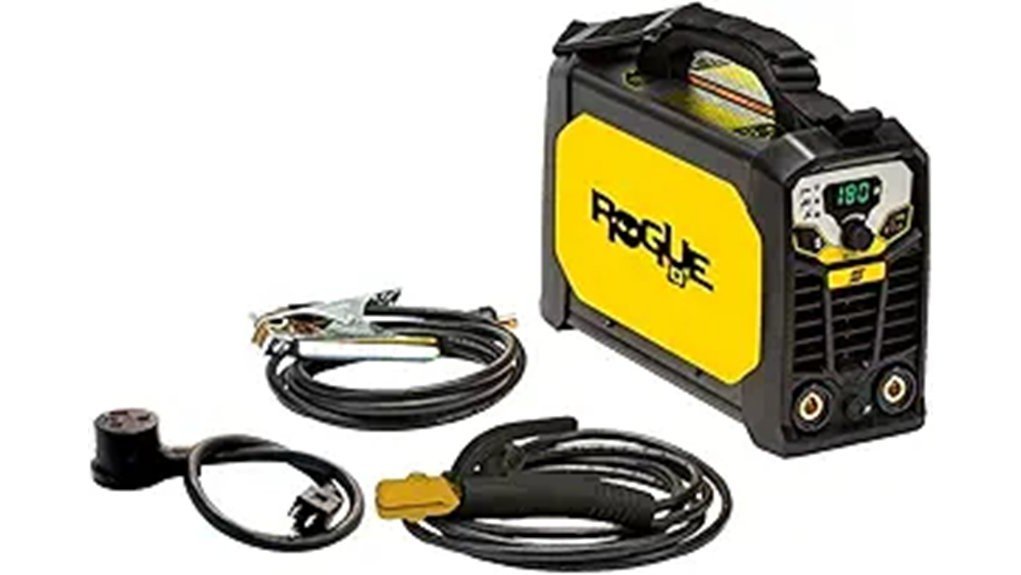
The ESAB Rogue ES 180i (sold as the MiniArc Rogue ES 180i) is a compact DC inverter that runs on 120V or 230V single-phase power and does stick welding and DC TIG. It is worth considering if you want one small machine for repairs, farm and shop work with 6010 and 7018 rods. Skip it if you need AC aluminum TIG or MIG, because it does neither.
This ESAB Rogue ES 180i review is based on the specs in the Amazon listing and retailer data, not hands-on testing. Check the listing for the current kit contents before you order.
Quick specs at a glance
| Item | Detail |
|---|---|
| Process | DC stick (SMAW) and DC TIG (needs a separate torch and gas setup) |
| Output range | 10 to 180 A |
| Input power | 120V or 230V single-phase, dual voltage |
| Weight | About 18.2 lb per listing |
| Stick duty cycle (retailer data) | 60% at about 65 A on 120V and about 116 A on 230V |
| Key controls | Hot Start, Arc Force, dedicated 6010 setting, power factor correction |
| Not suited for | AC TIG on aluminum, MIG or flux-core welding |
| Status | Retailers list it as replaced by a newer ESAB Rogue model, so availability varies |
What the ESAB Rogue ES 180i is and who it suits
It is a small, lightweight inverter built around stick welding. The listing highlights a mode tuned for E6010 electrodes, which are popular for pipe, farm repair and dirty or rusty steel because they dig deep and tolerate poor fit-up.
It also supports DC TIG, but only in a basic way: you add a TIG torch, an argon regulator and tungsten, and you cannot weld aluminum with it. Retail pages describe it as working with a 9- or 17-series torch and an optional foot control, so confirm what is in your kit.
- Good for: repair welders, farm and ranch shops, mobile jobs, hobbyists with a 230V outlet.
- Less suited to: aluminum fabrication, thin sheet-metal bodywork, or anyone who wants MIG speed.
Key features that matter in use
Hot Start gives a stronger kick at the start of the arc so rods strike without sticking. Arc Force adds current when the arc gets very short, which helps stop rods freezing to the work.
Power factor correction is meant to draw power more efficiently and keep the arc steady on weaker supplies. The unit is also described as generator compliant, but check ESAB’s generator guidance for the size and type of generator you plan to use.
The listing mentions an IP23S enclosure rating. That is a protection class for dust and light water, not a license to weld in rain. Keep the machine dry and the cables off wet ground.
How to check it fits your setup
- Outlet and breaker: Output is lower on 120V than on 230V. Retail data lists roughly 65 A stick duty-cycle current on 120V versus about 116 A on 230V. Match the plug and circuit to the owner’s manual.
- Plug type: Confirm whether the unit ships with a 120V plug, a 230V plug or an adapter. Never swap plugs or use an adapter that raises the circuit’s rating.
- Electrode size: Retail pages cite 5/32 in rods as the top size for 6000-series rods. Larger rods on 120V will push the machine to its limits.
- TIG gear: If you want TIG, check torch connectors and budget for the torch, argon, regulator, tungsten and foot control.
- Cables: Check that the electrode holder and ground clamp are included, and what lengths are supplied.
Pros and limitations
Pros
- Light and portable at about 18 lb per the listing.
- Runs on common household or shop power, depending on the plug you use.
- Useful controls for a small machine, including a 6010 setting.
- Adds basic DC TIG for steel and stainless.
Limitations
- DC only, so no AC aluminum TIG. Any claim that this machine suits aluminum welding should be treated with caution.
- Stick amperage at 120V is much lower than at 230V.
- TIG start is basic, and TIG accessories are extra.
- Warranty terms are not confirmed here; check the listing and ESAB’s own site.
Using it safely and getting good results
- Set the output by rod diameter and type, starting near the electrode maker’s recommended range.
- E6010 runs on DC only, which this machine supplies. E6011 and 6013 also work on DC; keep 7018 rods dry.
- Wear a proper auto-darkening helmet, leather gloves, flame-resistant clothing and ventilate. Fume from galvanized or coated steel is hazardous, so grind coatings off first.
- Do not run long, thin extension cords. Use a short, heavy-gauge cord rated above the machine’s input current.
- Let the fan run after welding and keep vents clear of dust.
Alternatives and related guides
- Blue Demon 6010 electrode review: a rod matched to this machine’s 6010 mode
- ESAB HandyArc 1/8 stick welder review: a simpler, stick-only ESAB option
- ESAB Rogue ET 200iP PRO review: a higher-output DC TIG/Stick ESAB machine
- Forney Easy Weld 100 ST review: a lower-cost stick welder to compare
- electrode rod storage tube review: keeps 7018 rods dry between jobs
Frequently Asked Questions
Can the ESAB Rogue ES 180i weld aluminum?
No. It is a DC-only machine, so it cannot do AC TIG, which aluminum needs. Use an AC/DC TIG machine or a MIG setup with a spool gun for aluminum. This unit suits steel and stainless with stick or DC TIG.
Does the ESAB Rogue ES 180i run on 120V and 230V?
Yes, it is dual voltage single-phase. Output is lower on 120V than on 230V, so thicker steel and bigger rods are better on 230V. Always match the plug and breaker to the owner’s manual.
Is the ESAB Rogue ES 180i good for beginners?
It can be. Hot Start and Arc Force help rods start and stay lit, and the machine is light. Beginners still need to learn rod angle, arc length and safety, and should practice on scrap steel before structural work.
What electrodes work well with it?
Retail data describes a dedicated E6010 setting and rods up to 5/32 in. E6011, 6013 and 7018 are common DC choices as well. Match rod size to metal thickness and keep low-hydrogen rods dry.
Final verdict
The ESAB Rogue ES 180i is a compact stick-first inverter with basic DC TIG, best for steel repair work where portability and dual-voltage power matter. If you need aluminum or MIG, look elsewhere. Check the current listing for kit contents, plug type and warranty before buying.