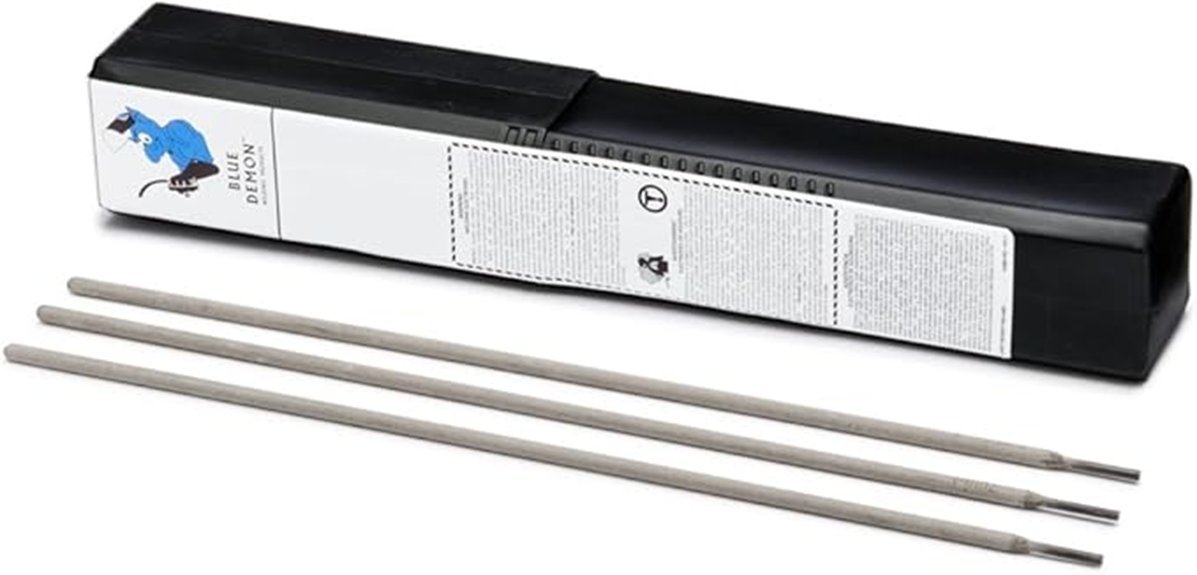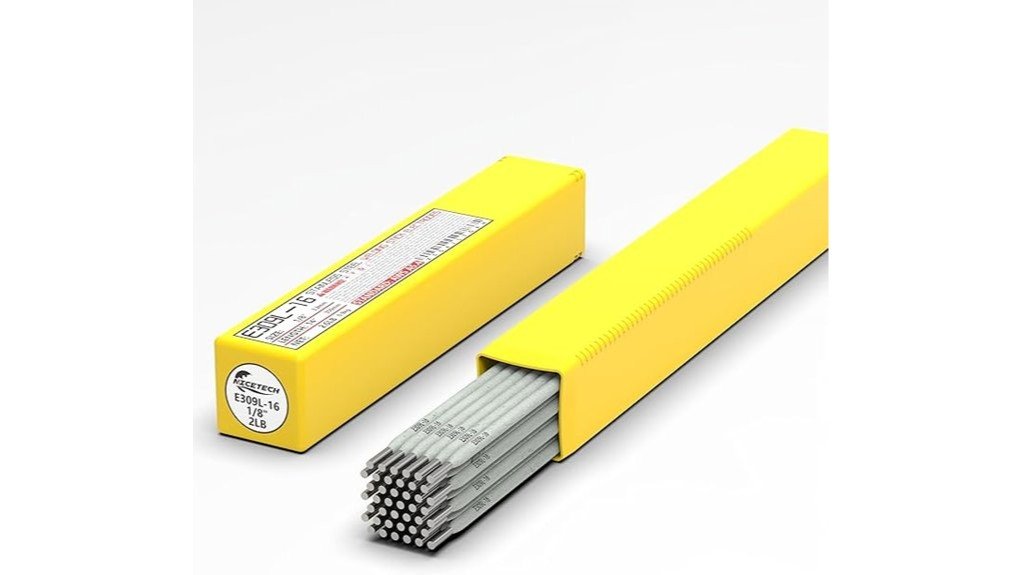
The E309L-16 welding rod in this listing is a 1/8 inch by 14 inch stainless steel stick electrode. E309L-16 is the classic choice for joining stainless steel to mild steel and for laying a buffer layer, so it is worth considering if you do repairs that mix those metals. If you only weld 304 to 304, a matching E308L-16 rod is usually the more natural fit.
This E309L-16 welding rod review draws on the Amazon listing and standard electrode classification, not hands-on testing. Confirm pack weight and brand details on the listing before you order.
E309L-16 welding rod specs at a glance
| Item | Detail |
|---|---|
| Classification | E309L-16 (stainless stick electrode) |
| Diameter and length | 1/8 in x 14 in per listing |
| Typical current | AC or DC electrode positive (DCEP), per the -16 designation |
| Positions | All-position rod in this class; thin 1/8 in is easiest flat and horizontal |
| Main use | Stainless to carbon steel, dissimilar joints, buffer layers |
| Listing details to check | Pack weight, count and brand/maker markings |
What E309L-16 means and who it suits
Each part of the label tells you something. “E” is an electrode, “309” is the stainless alloy family, “L” is low carbon, and “-16” is the coating type: a lime-titania flux that runs on AC or DC and gives a smooth, slag-covered arc.
309L has higher chromium and nickel than the stainless steels it joins, which is why it handles dilution when mixed with carbon steel. It is common for stainless to mild steel joints, for stainless-clad steel, and as a first layer under other stainless fillers.
- Good for: repair shops, farm and food-equipment repairs, fabricators who weld stainless brackets to steel frames.
- Less suited to: high-temperature service parts, anything with a specified filler (follow the welding procedure), or beginners who have never run any stick rod.
How to check it fits your project
- Base metals: 309L suits stainless to carbon steel. For same-grade 304 stainless, use E308L; for 316 base, use E316L. See our E316L-16 rod review.
- Machine: You need a stick welder that can hold a steady arc at the rod’s range. Check the box or manufacturer data for amperage, and start with the low end for 1/8 in rods on thin work.
- Thickness: 1/8 in rods are best on metal about 1/8 in and thicker. Thin sheet burns through easily; consider smaller diameters.
- Rod condition: Coating should be intact and dry. Cracked or damp flux causes porosity and a rough arc.
- Verify the markings: Reputable rods are printed with the classification. If the listing gives no maker, consider that when judging quality.
Pros and limitations
Pros
- Designed for the most common stainless-to-steel joint.
- Smooth-running -16 coating that works on AC or DC.
- Rod length and diameter suit most hobby and shop stick welders.
Limitations
- Not a universal stainless rod; matching alloys are better for same-grade work.
- Stainless stick welding creates more heat-affected discoloration and needs interpass cleaning.
- Stainless fumes require proper ventilation; the fume can contain hexavalent chromium.
- No single rod suits every stainless job, so match the filler to your base metals.
How to weld with E309L-16
- Clean the joint: remove oil, paint, rust and mill scale. Use a stainless-only brush, not one used on carbon steel.
- Set the machine to the range given on the rod package. If none, begin low and adjust based on bead shape.
- Keep a short arc and avoid wide weaving, which adds heat and can cause distortion.
- Chip slag and wire-brush between passes.
- Let the part cool between passes to limit warping and carbide issues.
- Weld in a ventilated space and wear a respirator suited to welding fume where ventilation is limited.
Storage and care
Keep rods in a dry, closed container or a heated cabinet if you can. Moisture in the flux affects arc stability. A simple electrode storage tube helps. If you suspect damp rods, check the maker’s guidance on re-drying instead of guessing a temperature.
Alternatives and related guides
- E316L-16 arc welding rod review: for 316 stainless base metal
- E309L-16 welding electrode review: another E309L-16 stick electrode listing
- E7018 rod review: a common mild steel rod for carbon steel parts
- Lincoln Viking 2450 helmet review: eye protection for stick work
- Lincoln welding gloves review: heat protection for stick welding
Frequently Asked Questions
What is E309L-16 used for?
It is mainly used to join stainless steel to carbon or low-alloy steel, to weld dissimilar metals, and to lay a buffer layer before stainless overlay. The L means low carbon, which helps reduce carbide formation and cracking.
Can you use E309L-16 on AC and DC?
The -16 coating is designed for AC or DC electrode positive. Check the rod package for exact current guidance. If your machine is DC only, set it to DC electrode positive for stick welding with this rod.
Can E309L-16 weld 304 stainless to itself?
It can be used, but E308L-16 matches 304 better and is the standard pick for same-grade joints. Use 309L when stainless meets mild steel or when a welding procedure calls for it.
How should I store E309L-16 electrodes?
Keep them dry in a sealed tube or container away from humidity. Damp flux can cause porosity and poor arc stability. Follow the manufacturer’s guidance for storage and re-drying rather than relying on general rules.
Final verdict
E309L-16 is the right tool for stainless-to-steel joints and buffer layers, and this 1/8 in x 14 in listing suits shop and repair use. Confirm the pack size and brand on Amazon, match the rod to your base metals, and ventilate well when welding stainless.