Disclosure: As an Amazon Associate, we earn from qualifying purchases. If you click a link on this page and make a purchase, we may receive a small commission at no extra cost to you.
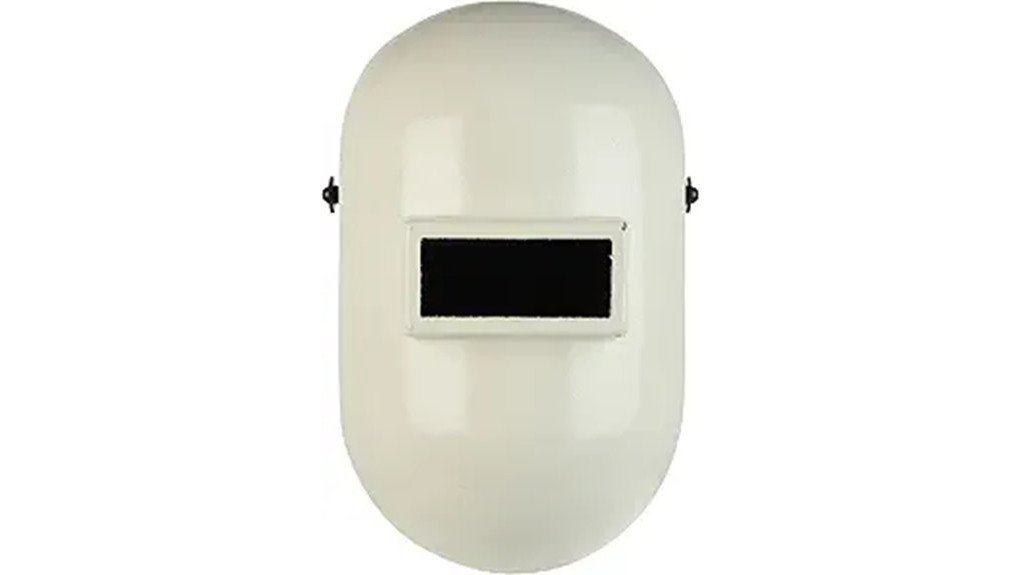
A welding helmet can feel too bulky when you are working around pipe, structural joints, or other tight clearances. The Fibre-Metal Pipeliner 110WH addresses that problem with a compact, fixed-front shell, a passive Shade 10 lens, and ratcheting headgear. Its SuperGlas Plus fiberglass construction is built to resist moisture, impact, sparks, and spatter. This review explains where the 110WH works well, what its fixed-shade design limits, and what you should verify before using it for your welding process.
Quick Verdict
Rating: Recommended with caveats
Best For: Pipe welders and shop professionals who want a compact, passive welding helmet with rugged fiberglass construction.
Bottom Line: The Fibre-Metal Pipeliner 110WH is a durable, tight-clearance helmet with a fixed 2 x 4-inch Shade 10 lens and adjustable ratchet suspension. Its main limitation is the passive fixed shade, which is less flexible than an auto-darkening helmet and may not suit every welding process or amperage range.
Key Takeaways
- The Fibre-Metal Pipeliner 110WH is a passive, fixed-front welding helmet made for pipe welding and restricted work areas.
- Its white SuperGlas Plus fiberglass shell is designed to be moisture-resistant, impact-resistant, and smooth enough to deflect sparks and spatter.
- The included viewing setup uses a 2 x 4-inch fixed Shade 10 lens, not an auto-darkening cartridge.
- Easy-set ratcheting headgear, multiple overhead adjustments, and free-floating arms help improve balance and reduce pressure points.
- You should confirm that Shade 10 is appropriate for your process, electrode size, and amperage before welding.
At a Glance: Fibre-Metal Pipeliner 110WH Specifications
| Specification | Detail |
|---|---|
| Brand | Fibre-Metal |
| Model | Pipeliner 110WH |
| Product Type | Passive fixed-front welding helmet |
| Shell Material | SuperGlas Plus fiberglass |
| Color | White |
| Lens Size | 2 x 4 inches |
| Shade | Fixed Shade 10 |
| Headgear | Easy-set ratchet suspension with overhead adjustment and free-floating arms |
| Size | One size |
| Package | One welding helmet with fixed Shade 10 lens |
| Best Use | Pipe welding, shop work, and tight-clearance welding positions |
| Weight Note | Current seller data is inconsistent, so confirm weight if it is a deciding factor |
| Safety Note | Confirm Shade 10 matches your process and use required primary eye protection |
What Is the Fibre-Metal Pipeliner 110WH?
The Fibre-Metal Pipeliner 110WH is a compact passive welding helmet designed around the needs of pipe welders. Unlike an auto-darkening helmet, it uses a fixed Shade 10 filter plate in a 2 x 4-inch viewing opening. That simple setup avoids batteries, sensors, sensitivity controls, and delay settings.
The shell is molded from SuperGlas Plus fiberglass. Its smooth exterior is meant to deflect sparks and spatter, while the material is described as self-extinguishing, moisture-resistant, and impact-resistant. The compact profile is the main reason to choose it over a larger general-purpose helmet.
Before You Buy: The 110WH is a passive fixed-shade helmet. Confirm that a Shade 10 filter is suitable for your welding process, electrode size, and amperage. Seller weight data also varies, so do not rely on the original 2.5-pound claim.
Who Should Buy It?
Best For
- Pipe welders who need a short, compact hood for restricted clearances.
- Professionals who prefer a simple passive lens with no batteries or electronic controls.
- Shop users who value a moisture-resistant fiberglass shell and replaceable headgear components.
Skip If
- You want auto-darkening convenience, variable shade control, or a large panoramic viewing area.
- Your welding procedure requires a shade other than Shade 10 unless you plan to use an approved replacement filter.
- You need a hard-hat-mounted system rather than the included ratchet suspension.
SuperGlas Plus Shell and Construction
The 110WH shell is built from SuperGlas Plus fiberglass, not thin thermoplastic. The material is formulated for a combination of strength and low bulk. It is also described as impervious to moisture and resistant to cracking, chipping, or splitting under normal harsh-use conditions.
The smooth shell surface gives sparks and spatter fewer edges to catch on. That does not make the helmet maintenance-free, but it can make routine cleanup easier than a shell with deep seams or decorative ridges. The white shell also makes dirt, spatter, and surface damage easier to spot during routine inspection.
This construction is especially useful in pipe work, where the hood may contact nearby metal, fixtures, or confined surfaces as you reposition. The fixed-front design has fewer moving lens-door parts than a flip-front helmet, but it also means you must raise the helmet when you need an unshaded view.
Passive Shade 10 Lens and Viewing Area
The helmet uses a 2 x 4-inch Shade 10 lens. This is a traditional passive setup: the filter stays dark at all times and does not switch when an arc starts. The Amazon product description states that the included filter blocks ultraviolet and infrared wavelengths while letting you view the weld puddle through the fixed Shade 10 plate.
A passive lens can be dependable because there are no sensors to block, batteries to replace, or electronic settings to misadjust. The tradeoff is workflow. You may need to nod the helmet down before striking an arc and lift it for setup, inspection, or repositioning. That can feel slower than an auto-darkening helmet during tack-heavy work.
Shade 10 is common for several arc-welding ranges, but it is not a universal answer for every process. The correct shade depends on the process, arc current, electrode size, and workplace requirements. Review OSHA filter-lens guidance and follow your employer’s procedure before welding.
Ratchet Headgear, Balance, and Fit
The 110WH includes easy-set ratcheting headgear. You can tighten or loosen the rear adjustment without changing the shell. The overhead band offers multiple positions so you can change how high the helmet sits and where the viewing opening lines up with your eyes.
Free-floating arms are designed to balance and stabilize the shell while reducing concentrated pressure points. That matters during long sessions because poor balance can make a light helmet feel tiring. Fit will still vary by head shape, welding cap, safety glasses, and how tightly you set the ratchet.
Pro Tip: Set the crown height first, then adjust the ratchet and shell angle. Check that the 2 x 4-inch window centers on your line of sight before you begin a long weld.
Compact Design for Pipe and Tight-Clearance Work
The Pipeliner name is more than branding. The shell is shaped to enter areas where a full-size helmet may hit pipe, framing, or nearby equipment. This can help when you are welding around a joint, working close to a wall, or changing position in a crowded fabrication setup.
The compact shell does not create more room around your body, but it reduces the helmet’s footprint. You may be able to turn your head, approach the puddle, or hold a position with less shell contact. That is the model’s clearest advantage over larger helmets with wide side pods or oversized viewing cartridges.
The smaller 2 x 4-inch viewing area is the related tradeoff. You get a narrow, focused view instead of broad peripheral visibility. Welders used to large auto-darkening windows may need time to adapt.
Compatibility and Safety
This helmet includes ratchet suspension and is listed as one size. It is not the same configuration as the Pipeliner 110PWE, which uses a rubber headband suspension. Do not assume headgear, hard-hat adapters, lenses, or cover plates from another helmet will fit without checking the Fibre-Metal part number.
A welding helmet is not a replacement for primary eye protection. Wear suitable safety glasses or goggles when flying particles, slag, grinding debris, or other impact hazards are present. Prescription eyewear should fit without shifting the helmet or protective lenses out of position.
Inspect the filter plate, cover plate, shell, and suspension before each shift. Replace parts that are cracked, deeply damaged, loose, or contaminated in a way that affects visibility. Follow the product instructions and your workplace PPE program for approved replacement parts.
How It Performs in Real Use
For Pipe Welding
The short shell is the key benefit. It can reduce interference when you are moving around a pipe or trying to hold an awkward body position. The focused viewing opening also suits welders who prefer a traditional pipeline hood and already know how to position a passive lens.
For Tack Welding and Frequent Repositioning
The passive lens is less convenient when you repeatedly switch between setup and arc time. You may lift and lower the helmet often, which can interrupt your rhythm. An auto-darkening model is usually easier for high-volume tack work.
For Humid or Rough Shop Conditions
The moisture-resistant fiberglass shell is a practical advantage in damp shops and demanding work areas. Impact resistance also helps the helmet tolerate ordinary knocks, but you should still store it where the lens and shell will not be crushed or scratched.
For Long Sessions
The ratchet suspension, overhead adjustment, and free-floating arms help distribute the helmet’s load. Comfort depends on correct setup. An overly tight ratchet, poor crown height, or misaligned lens can cause pressure and neck strain even when the shell itself is compact.
Setup and Fit Tips Before First Use
- Confirm the filter: Verify that the installed plate is Shade 10 and appropriate for your welding process.
- Set crown height: Adjust the overhead band until the viewing window aligns naturally with your eyes.
- Tune the ratchet: Tighten it enough to stop slipping without creating a pressure point at the back of your head.
- Check shell movement: Make sure the helmet lowers and stays in position without dropping unexpectedly.
- Test your eyewear: Wear your normal safety glasses or prescription protection and confirm that nothing shifts or presses against your face.
- Practice before striking an arc: Rehearse lowering the passive hood so you can maintain torch or electrode position.
Care and Maintenance
Clean the shell with a method approved for the material and avoid solvents that could damage the fiberglass, suspension, or lens components. Remove dust and spatter from the viewing area without using a material that scratches the cover plate.
Store the helmet with the lens protected from grinding dust, sharp tools, and direct impact. Check the ratchet teeth, headband, pivots, and mounting hardware as part of routine inspection. Replace worn suspension parts before they allow the helmet to slip during work.
Common Mistakes to Avoid
- Do not assume a fixed Shade 10 plate is correct for every welding or cutting task.
- Do not treat the helmet as a substitute for safety glasses or goggles when impact hazards are present.
- Do not buy the 110WH expecting auto-darkening controls, batteries, or a variable shade range.
- Do not rely on conflicting online weight specifications when exact weight is important to you.
- Do not use unverified replacement lenses, adapters, or suspension parts just because they look similar.
Pros and Cons
Pros
- Compact shell is purpose-built for pipe welding and restricted clearances.
- SuperGlas Plus fiberglass resists moisture, impact, cracking, chipping, and splitting.
- Smooth exterior helps deflect sparks and spatter.
- Ratcheting suspension, overhead adjustment, and free-floating arms improve fit control.
- Passive lens has no batteries, sensors, or electronic settings to maintain.
Cons
- Fixed Shade 10 is less versatile than variable-shade auto-darkening systems.
- The 2 x 4-inch window offers less peripheral visibility than large modern cartridges.
- Retailer weight information is inconsistent, so exact weight is not clear.
Is It Worth the Price?
The Fibre-Metal Pipeliner 110WH is worth considering when compact shape and rugged shell construction matter more to you than electronic convenience. Its value comes from the specialized pipe-welding profile, the SuperGlas Plus fiberglass shell, and adjustable ratchet suspension.
It is a weaker value if you regularly switch between welding processes or need variable shade control. In that case, an auto-darkening helmet may reduce hood lifting and offer a wider range of settings. The 110WH makes the most sense for welders who already prefer a passive Shade 10 pipeline hood.
How It Compares to Alternatives
The Fibre-Metal Pipeliner 110PWE uses a rubber headband suspension instead of the 110WH ratchet setup, so it is worth comparing if you prefer that traditional fit. The shell concept is similar, but the suspension choice changes how the helmet feels and adjusts during positional work.
If you need variable Shade 9-13 control, compare the 110WH with an auto-darkening model such as the PIP HW200. The auto-darkening option offers more convenience for changing tasks, while the 110WH remains the simpler choice for a fixed Shade 10 setup and compact pipe-welding profile.
Frequently Asked Questions
Is the Fibre-Metal Pipeliner 110WH auto-darkening?
No. The 110WH is a passive fixed-front helmet with a fixed Shade 10 lens. It has no arc sensors, batteries, sensitivity control, or delay setting.
What size lens does the 110WH use?
The included viewing setup is listed as a 2 x 4-inch Shade 10 lens. Confirm the exact replacement plate dimensions and Fibre-Metal part compatibility before ordering spare lenses or cover plates.
Is Shade 10 suitable for every welding process?
No. Required shade depends on the process, amperage, electrode size, and applicable workplace rules. Check the relevant shade table and your welding procedure before use.
Does the helmet include ratcheting headgear?
Yes. Model 110WH is the Pipeliner configuration with ratchet suspension. The headgear includes overhead adjustment and free-floating arms intended to improve positioning, balance, and stability.
Can you wear prescription safety glasses under it?
The helmet may fit over many safety-glass frames, but comfort depends on your frame, head shape, and headgear setting. Confirm that your eyewear stays correctly positioned and does not press against your face.
Is the 110WH the same as the 110PWE?
No. Both are Fibre-Metal Pipeliner fixed-front helmets, but the 110WH uses ratchet suspension and the 110PWE uses a rubber headband suspension. Check the exact model before ordering replacement headgear.
How much does the Fibre-Metal 110WH weigh?
Current retailer specifications conflict, so this review does not present one weight as definitive. Confirm the current seller or manufacturer specification if helmet weight is central to your decision.
Who should skip this welding helmet?
Skip it if you want auto-darkening controls, a large viewing window, or a variable shade range. It is best for users who specifically want a compact, passive Shade 10 pipeline hood.
The Bottom Line
The Fibre-Metal Pipeliner 110WH is a strong choice for pipe welders who want a compact fixed-front helmet, durable SuperGlas Plus fiberglass, and adjustable ratchet suspension. Skip it if you need auto-darkening convenience, broad peripheral vision, or a shade range that changes with different jobs. Its main strength is specialized tight-clearance durability, while its main limitation is the fixed 2 x 4-inch Shade 10 viewing setup.
Ready to Buy?
Check the latest seller, included lens, and product details before you decide.