Disclosure: As an Amazon Associate, we earn from qualifying purchases. If you click a link on this page and make a purchase, we may receive a small commission at no extra cost to you.
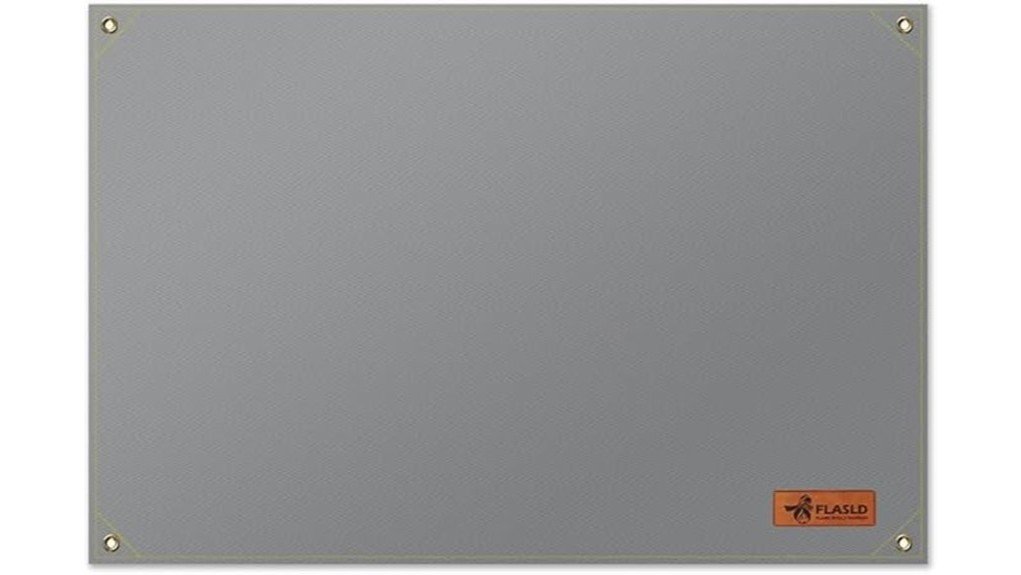
Welding sparks, spatter, and hot debris can damage floors, equipment, workbenches, and nearby surfaces, so a dependable heat barrier is useful when you cannot move everything away from the work area. The FLASLD Silicone Coated Welding Blanket combines a fiberglass base with a liquid silicone coating and is advertised for temperatures up to 1800°F. FLASLD offers several sizes, including 4×4, 4×6, and 6×8 feet, although you should confirm the exact size shown on the Amazon page before ordering. Its strongest advantages are the coated surface, reinforced hanging holes, Kevlar stitching, and easy-clean gray side, while the main limitation is that it is still a fiberglass-based protective blanket and should not replace proper welding PPE or fire-safety procedures.
Quick Verdict
Rating: Recommended with caveats
Best For: Welders, fabricators, garage users, and DIYers who want a coated fiberglass barrier for sparks, spatter, and general heat protection.
Bottom Line: The silicone-coated surface, reinforced copper holes, and Kevlar-stitched edges make this FLASLD blanket more practical to handle and maintain than a basic bare fiberglass sheet. Check the selected Amazon size carefully, and do not treat the 1800°F rating as permission for unrestricted direct-flame or prolonged molten-metal exposure.
Key Specifications
| Specification | Detail |
|---|---|
| Brand | FLASLD |
| Product type | Silicone-coated welding blanket |
| Base material | Fiberglass fabric |
| Surface | Liquid silicone coating on the gray protective side |
| Advertised temperature resistance | Up to 1800°F |
| Available family sizes | 4×4 ft, 4×4 ft 2-pack, 4×6 ft, 4×6 ft 2-pack, and 6×8 ft |
| Hanging points | Reinforced copper holes |
| Edge construction | Folded edges sewn with Kevlar fire-resistant thread |
| Surface properties | Gray side is described as water, oil, and dirt resistant |
| Cleaning | Wipe the gray side with a damp cloth or brush |
| Suggested uses | Welding, cutting-area protection, workshops, fire-pit surface protection, grills, smokers, and fireplaces when used appropriately |
Before You Buy: FLASLD sells several blanket sizes, and the linked Amazon ASIN may display a different size than the 4×6-foot version discussed in this review. Confirm the dimensions and quantity shown on the product page before checkout.
What Is the FLASLD Silicone Coated Welding Blanket?
The FLASLD blanket is a reusable protective sheet designed to separate sparks, welding spatter, embers, and radiant heat from nearby surfaces. Its core is fiberglass fabric, while the gray side has a silicone coating intended to improve heat resistance, abrasion resistance, water resistance, and cleanability.
FLASLD advertises the blanket for temperatures up to 1800°F. That specification makes it suitable for many welding and fabrication tasks where sparks and intermittent hot debris are the main concern, but a maximum material rating should not be read as a guarantee against every form of sustained heat, direct torch contact, or heavy molten slag.
The construction also includes folded edges stitched with Kevlar thread and reinforced copper hanging holes. Those features matter if you plan to hang the blanket vertically, secure it around a temporary work zone, or move it between jobs instead of leaving it flat on the floor.
Who Should Buy It?
Best For
- Garage and workshop users who need to shield floors, benches, equipment, or nearby surfaces from sparks and spatter.
- Buyers who prefer coated fiberglass over a basic exposed fiberglass blanket.
- Users who want reinforced hanging holes for positioning the blanket vertically or around a work area.
Skip If
- You need a blanket with a specific independently verified industrial certification for your workplace or job specification.
- You need protection designed for continuous direct flame, stress-relief operations, or uncontrolled heavy molten-metal exposure.
- You want a certified emergency fire-suppression blanket rather than a welding and heat-protection barrier.
Materials and Build Quality
Silicone-Coated Fiberglass
The blanket uses fiberglass as its heat-resistant structural fabric. FLASLD applies a liquid silicone coating to the gray side, which helps bind the surface, resist dirt and moisture, and make routine cleaning easier.
The coating is also useful if exposed fiberglass texture bothers your skin. It can reduce direct contact with loose fibers compared with an uncoated surface, but you should not assume that a coated fiberglass product can never shed fibers. Inspect it regularly, especially after it has been cut, punctured, heavily abraded, or repeatedly exposed to welding spatter.
Reinforced Copper Holes
The hanging holes are reinforced with additional fabric around the punched areas. That gives you defined attachment points instead of forcing you to clamp directly onto an unfinished edge.
This is most useful when the blanket is being used as a temporary vertical barrier. Secure it so it cannot slip into your welding area, interfere with tools, or create a trip hazard.
Kevlar Edge Stitching
FLASLD folds the blanket edges and uses Kevlar thread for the seams. Reinforced edges are a practical durability feature because blanket corners and borders often receive the most pulling and handling during setup and storage.
Pro Tip: For welding, position the gray silicone-coated side toward the sparks as FLASLD recommends. Before every job, check the blanket for holes, damaged seams, worn coating, or embedded hot-metal damage.
Heat and Spark Protection
The main selling point is FLASLD’s advertised 1800°F maximum temperature resistance. For a typical garage or fabrication setup, the more practical question is how well the blanket can act as a secondary barrier between the work and objects you do not want exposed to sparks or hot particles.
You can position it across a bench, over suitable equipment, or between the welding area and nearby surfaces. A larger sheet also gives you more room to catch sparks that travel farther than expected.
Do not use the temperature number alone to decide whether the blanket is appropriate for a specialized industrial operation. Duration of exposure, direct flame contact, molten material, blanket orientation, and the surface underneath can all change the risk.
Health and Safety Advantages
The silicone coating gives this blanket an advantage over exposed fiberglass when your priority is reducing direct contact with the fiberglass surface. It also creates a smoother side that is easier to wipe after routine use.
That does not eliminate the need for welding PPE. You should still use appropriate eye and face protection, gloves, protective clothing, ventilation, and other controls required for the welding or cutting process you are performing.
| Feature | Practical Benefit |
|---|---|
| Silicone-coated gray side | Reduces direct contact with the fiberglass surface and simplifies wiping. |
| 1800°F advertised maximum | Provides a high-temperature protective barrier for appropriate welding and hot-work applications. |
| Reinforced holes | Makes temporary hanging and positioning easier. |
| Water and dirt-resistant surface | Makes routine workshop cleanup more convenient. |
How It Performs in Real Use
For Workshop Welding
A 4×6-foot sheet provides useful coverage around a compact welding station, assuming that is the size you select. It can protect a section of floor, a nearby machine, a workbench, or another object from scattered sparks and light spatter.
As a Vertical Spark Barrier
The reinforced copper holes make the blanket easier to suspend than a plain sheet with no attachment points. Vertical placement can be useful when you need to protect an adjacent work area, but the blanket must be secured so it cannot fall toward the arc or hot work.
Around Grills and Smokers
FLASLD also promotes the blanket as an insulating cover for grills and smokers in cold conditions. If you use it this way, follow the grill or smoker manufacturer’s clearance and ventilation instructions. Do not cover exhausts, air intakes, controls, handles, or areas the appliance manufacturer says must remain unobstructed.
Around Fire Pits and Fireplaces
The blanket can serve as an additional surface barrier against embers and hot debris around suitable fire pits or fireplaces. It should not be used to justify placing a heat source closer to combustible flooring, grass, decks, tents, walls, or furniture than local rules or the equipment manufacturer allows.
How to Use It Correctly
- Face the gray side toward welding sparks. This is the side FLASLD identifies as the coated protective surface.
- Cover more area than the immediate weld. Sparks and grinding debris can travel beyond the point where you expect them to land.
- Secure hanging blankets. Use suitable attachment points so the blanket cannot shift or fall into your work.
- Keep combustible materials away. A welding blanket is an extra barrier, not a replacement for clearing the work area.
- Inspect after high-heat use. Replace the blanket if you find serious burns, holes, torn seams, damaged hanging points, or badly deteriorated coating.
Cleaning and Maintenance
One of the more convenient features is the wipe-clean gray side. FLASLD recommends cleaning dirt from this surface with a damp cloth or brush.
Allow the blanket to cool completely before handling or cleaning it. Remove loose debris carefully, check for embedded metal or damaged fabric, and store the blanket dry so moisture and workshop contamination do not remain trapped against it.
Avoid assuming that cleaning restores a heat-damaged blanket. If repeated spatter has created holes or weakened an area, replacement is safer than continuing to rely on a compromised barrier.
Pros and Cons
Pros
- Advertised temperature resistance up to 1800°F.
- Silicone-coated fiberglass surface is easier to wipe than exposed fiberglass.
- Reinforced copper holes provide practical hanging points.
- Folded edges use Kevlar thread for added seam strength.
- Several blanket sizes are available within the FLASLD product family.
Cons
- The linked Amazon variant may not match the 4×6-foot size, so you need to verify the selection before buying.
- It remains a fiberglass-based product even though one surface is silicone coated.
- No specific independent industrial certification or warranty term was verified for this FLASLD model during this review.
Is It Worth the Price?
The FLASLD makes the most sense as a step up from a basic bare fiberglass sheet when you value a coated surface, reinforced hanging points, easier cleaning, and multiple size choices. Those features are more useful for someone who repeatedly sets up and stores a welding barrier than for a buyer who needs a disposable layer for one small job.
Value also depends on the protection standard your work requires. For casual garage fabrication and general surface protection, the feature set is appealing. For regulated industrial work, you may get more value from a professional blanket with clearly documented testing or certification that matches your employer’s hot-work requirements.
How It Compares to Alternatives
The Steiner 379 is another silicone-coated fiberglass welding blanket. Steiner rates it at 1000°F and specifies a 32 oz/yd² construction, 0.035-inch thickness, grommets on all four sides, and FM approval for horizontal applications. It is worth comparing if documented material specifications and approval information matter more to you than FLASLD’s higher advertised temperature number.
For more demanding heat protection, the Weldas LAVAshield 50-1866 uses silica fabric rather than standard fiberglass and is intended for temperatures around 1000°C. Weldas also lists ISO 9150 test information, Kevlar stitching, and grommets. The FLASLD is more attractive when you want a consumer-friendly silicone-coated blanket in common workshop sizes, while the Weldas option is better suited to buyers prioritizing documented professional specifications.
Frequently Asked Questions
Is the FLASLD welding blanket really rated for 1800°F?
FLASLD advertises a maximum temperature resistance of 1800°F for its silicone-coated welding blanket. Treat that as a manufacturer material rating, not as permission for unlimited direct-flame exposure or every heavy industrial hot-work process.
Is this blanket 4×6 feet?
FLASLD sells a 4×6-foot version, along with 4×4 and 6×8-foot options. Because online marketplace variants can differ, confirm the size and package quantity displayed on Amazon before placing your order.
Which side should face the welding sparks?
FLASLD instructs users to face the gray silicone-coated side toward the sparks. That side is designed to provide the blanket’s coated, water-resistant, dirt-resistant protective surface.
Does the silicone coating eliminate fiberglass exposure?
The coating helps bind and cover the fiberglass surface, which can reduce direct contact with loose fibers compared with bare fiberglass. You should still inspect the blanket for wear, torn areas, damaged coating, and exposed fibers as it ages.
Can you use it around a grill, smoker, or fire pit?
FLASLD promotes the blanket for grills, smokers, fire pits, and fireplaces as well as welding. Follow the appliance manufacturer’s ventilation and clearance instructions, and never use the blanket to justify placing a heat source too close to combustible materials.
How do you clean the FLASLD welding blanket?
Let the blanket cool first. FLASLD recommends wiping the gray side with a damp cloth or cleaning it with a brush, then checking the fabric and seams for heat damage before the next use.
Can this replace an emergency fire blanket or fire extinguisher?
No. Treat it as a welding and heat-protection barrier unless you have documentation showing that a specific version is certified for another safety purpose. Keep the proper fire extinguisher and other required hot-work safety equipment available for your job.
The Bottom Line
The FLASLD Silicone Coated Welding Blanket is worth considering if you want a reusable spark and heat barrier with a coated fiberglass surface, reinforced copper holes, Kevlar-stitched edges, and an advertised 1800°F maximum temperature resistance. It is best for workshop, garage, and appropriate outdoor heat-protection tasks, but buyers who need documented industrial certification or a specialized high-temperature blanket should compare professional alternatives.
Most importantly, check the Amazon size before buying because FLASLD offers several variants and the linked listing may not default to the 4×6-foot configuration.
Ready to Buy?
Check the selected size, latest price, and current product details before you decide.