

Flux core welding can be a bit intimidating for beginners — spatter flying everywhere, uneven beads, and metal burning through when you least expect it. It’s a common struggle, especially when you’re just getting used to how flux core wire behaves compared to MIG or TIG welding.
The process runs hotter, reacts differently depending on metal thickness, and requires good arc control and joint prep to keep things clean and strong. Once you understand your settings — from wire feed speed and stick-out to travel angle and technique — flux core becomes one of the most versatile and forgiving welding methods out there.
It’s perfect for outdoor work, heavy fabrication, or when you don’t want to fuss with shielding gas. In this guide, I’ll share some proven flux core welding tips for beginners that’ll help you dial in your setup, master the puddle, and weld like you’ve been doing it for years.
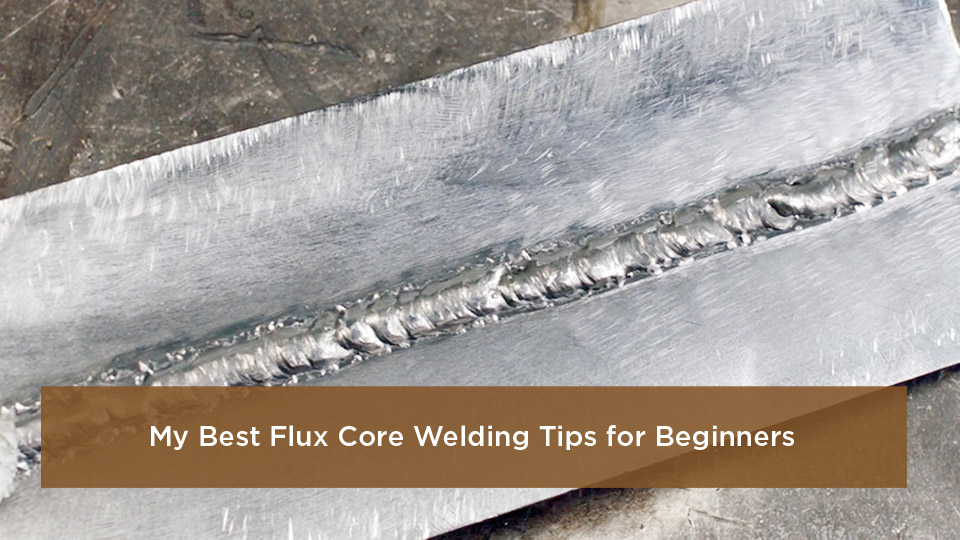
Photo by tookd
What Is Flux Core Welding and Why Start With It
Let’s kick this off with the basics, because if you’re searching for flux core welding tips for beginners, you’re probably wondering what makes this process tick. Flux core welding is essentially a wire-fed arc welding method where the electrode is a tubular wire filled with flux.
That flux creates a shielding gas when it melts, protecting your weld from contaminants in the air. It’s often called gasless MIG because you don’t always need an external gas tank, making it ideal for windy job sites or quick repairs outside.
How does it work? You feed the wire through your welding gun, strike an arc on the base metal, and the heat melts both the wire and the flux inside. The flux turns into slag that covers the weld as it cools, which you chip off later.
I remember my first time—it felt like magic watching that puddle form, but I quickly learned it’s all about control. Use it when you’re working on thicker steels, like 1/8-inch or more, or in spots where stick welding feels too clunky.
Why start with it as a beginner? It’s more forgiving than TIG for intricate work or stick for constant rod changes. No gas means less setup hassle, and it’s great for dirty or rusty materials common in real-world fixes. But don’t think it’s foolproof—get the wire speed wrong, and you’ll have a mess of spatter. In my early days, I used it to patch farm equipment, and it taught me patience fast.
Types of Flux Core Wire and Which One to Pick
Picking the right flux core wire is like choosing the right tool for the job—it can make or break your weld. There are two main types: self-shielding and dual-shield. Self-shielding wire has all the flux it needs built-in, so no gas required. It’s what I grab for outdoor work, like welding up a fence post in the breeze. Dual-shield adds an external gas like CO2 or argon mix for cleaner beads indoors.
For beginners, start with self-shielding .030-inch or .035-inch diameter wire. The .030 is easier on smaller machines, say a 120-volt unit, for thinner stuff like 16-gauge sheet. Go .035 for heavier plate or if you’re dealing with wind—it has more flux for better protection. Brands like Lincoln Electric or Hobart are solid picks here in the States; I’ve burned miles of their E71T-11 wire without issues.
When to use each? Self-shielding for portability and cost savings on hobby projects. Dual-shield when you want pro-level appearance, like in a fab shop. A tip from my shop days: Match wire to your material—mild steel on mild steel avoids cracking.
I once grabbed the wrong spool mid-job and ended up with porous welds that needed grinding out. Lesson learned: Always check the label for AWS classifications like E71T-GS for general use.
Essential Equipment for Flux Core Welding Setup
Before you even plug in, let’s talk gear. You need a flux core-capable welder—most MIG machines convert easily. Entry-level ones like the Harbor Freight Vulcan or Lincoln 140 run on household power and handle beginner tasks fine. Add a good helmet with auto-darkening lens (shade 10-13), leather gloves, jacket, and safety glasses. Don’t forget a chipping hammer and wire brush for slag removal.
For the wire feeder, ensure it has knurled drive rolls—they grip the tubular wire without crushing it. I swap mine out when changing diameters to avoid feeding problems. Ground clamp? Get a heavy-duty one; the cheapies that come with kits slip and cause arc issues.
Why this setup matters: Proper equipment means consistent feeds and safer operation. In my first garage setup, I skimped on gloves and paid with a burn—now I preach full PPE every time. Budget around $200-500 for a starter kit, and you’re set for years of practice.
How to Set Up Your Welder for Flux Core
Setting up is where many beginners trip up, so let’s break it down like I’m showing you in the shop. First, polarity: Switch to DCEN (electrode negative) for flux core—torch negative, ground positive. MIG is usually DCEP, so flip those leads or you’ll get spatter city.
Next, install the wire: Thread it through the liner, set tension by pressing the gun against wood until the drive rolls slip, then tighten half a turn. Too loose? Birdnesting. Too tight? Crushed wire. For a 140-amp machine on 1/8-inch steel, try voltage at 18-20 volts, wire speed 250-300 inches per minute. Test on scrap—adjust until the arc sounds like frying bacon, not popping fireworks.
Practical know-how: Clean your contact tip often; slag builds up fast. I keep a nozzle dip handy to prevent spatter stick. One anecdote: On a job site repair, wrong polarity turned a quick fix into an hour of cleanup. Always double-check before striking.
Safety Considerations Before You Strike an Arc
Safety isn’t glamorous, but it’s why I’m still welding today. Flux core throws more fumes and spatter than MIG, so ventilate your space—use a fan or work outside. Respirators are a must for those zinc-heavy galvanized steels; they prevent metal fume fever, which laid me out once after ignoring it.
Wear flame-resistant clothes—no synthetics that melt. Eye protection under your helmet, and keep a fire extinguisher close; sparks fly far. Ground properly to avoid shocks, and never weld wet.
Why prioritize this? A safe welder is an effective one. I’ve trained new guys who rushed in without gloves, ending up with blisters. Take it slow—inspect your setup, and you’ll avoid hospital trips.
Preparing Your Metal for the Best Welds
Prep work is 80% of a good weld, trust me. Start by cleaning: Grind off rust, paint, or mill scale with an angle grinder. Blow away dust, then wipe with acetone for oils. Flux core handles some dirt, but clean metal means less porosity.
For joints, bevel edges on thicker stock for better penetration—45 degrees on plates over 1/4-inch. Clamp pieces tight; movement ruins beads.
Common mistake: Skipping this and wondering why welds crack. Fix? Always prep. I once welded rusty pipe without grinding—porous mess. Now, it’s my first step every time.
Basic Techniques for Flux Core Welding
Technique time—grab your gun like a pistol, comfortable grip. Drag the weld: Pull the gun toward you at 10-15 degrees from perpendicular. This lets slag float up properly. Push only in tight spots, but drag is king for beginners.
Travel angle: 5-15 degrees back. Too steep? Spatter. Stickout: 3/4 to 1 inch—short for control. Move steady; watch the puddle widen evenly.
When to use: Flat positions first, then practice vertical up with weaves. My tip: Practice stringers (straight lines) before fillets. Early on, I weaved too wide and trapped slag—keep it narrow.
Step-by-Step Guide to Your First Flux Core Weld
Alright, let’s do this step by step, as if I’m spotting you.
- Gear up: Helmet down, gloves on.
- Set machine: DCEN, voltage 18V, wire speed 250 IPM for 1/8-inch mild steel.
- Prep metal: Clean two scraps, clamp flat.
- Strike arc: Touch wire to joint, pull back slightly to start.
- Form puddle: Hold until molten pool forms.
- Travel: Drag gun slowly, keeping wire in leading edge.
- End: Circle back to fill crater, release trigger.
- Cool and chip: Hammer off slag, inspect.
Repeat on scrap. My first bead looked like bird droppings—yours will improve with reps.
Machine Settings Suggestions for Different Materials
Settings vary, but here’s a starting point for US common steels.
For 16-gauge sheet: Voltage 16-18V, wire speed 200-250 IPM, .030 wire.
1/8-inch plate: 18-20V, 250-300 IPM, .035 wire.
Thicker 1/4-inch: 20-22V, 300-350 IPM, maybe dual-shield for indoors.
Test always—run a bead, check penetration. Too hot? Burn-through. Too cold? No fusion. I adjust by ear and eye on job sites.
Joint Preparation and Filler Compatibility
Joints matter for strength. Butt joints: Bevel both sides for full pen. T-joints: Fillet with 45-degree gun.
Filler: Match wire strength to base—E71T for A36 steel. Incompatible? Brittle welds.
Tip: Gap joints slightly for better fill. I’ve fixed trailers with proper prep—lasts years.
Common Mistakes Beginners Make and How to Fix Them
We all mess up—here’s what I see most.
Mistake 1: Wrong polarity. Fix: Check DCEN.
Mistake 2: Dirty metal. Fix: Grind clean.
Mistake 3: Pushing instead of dragging. Fix: Pull gun.
Mistake 4: Inconsistent speed. Fix: Practice steady hand.
Mistake 5: Long stickout. Fix: Keep under 1 inch.
One story: New trainee pushed welds, got inclusions everywhere. Switched to drag—night and day.
Troubleshooting Porosity, Spatter, and Other Issues
Porosity? Holes from gas trapped—clean better, check stickout.
Spatter? High voltage or wrong angle—dial down, drag properly.
Birdnesting: Tension issue—adjust rolls.
Burnback: Short stickout or fast feed—lengthen, slow speed.
Slag inclusions: Weave too much—straighten up.
I’ve troubleshot on-site; start with basics, tweak one thing at a time.
Pros and Cons of Flux Core vs Other Processes
Let’s compare in a table for clarity.
| Aspect | Flux Core | MIG | Stick |
|---|---|---|---|
| Ease for Beginners | High—forgiving | Medium—needs gas | Low—rod changes |
| Cost | Low—no gas often | Medium—gas tanks | Low—basic gear |
| Outdoor Use | Excellent—wind resistant | Poor—gas blows away | Good—but slower |
| Weld Appearance | Fair—slag to clean | Excellent—clean | Fair—slag |
| Penetration | Good on thick | Good with gas | Excellent |
| Common Cons | More fumes, spatter | Gas expense | Electrode waste |
Flux core wins for hobbyists; I use it 60% of the time.
Advanced Tips for Better Weld Quality
Once basics click, try multi-pass: Clean between layers.
Weave for wide joints: Side-to-side, pause at edges.
Heat input: Monitor to avoid warping—short bursts.
Anecdote: On a fab project, weaving saved a wide seam from underfill.
Real-World Applications for DIY and Pros
For DIY: Trailer hitches, gates—strong, quick.
Hobbyists: Custom furniture, auto repairs.
Pros: Structural steel per AWS codes.
Students: Practice for certs.
I’ve used it on everything from farm fixes to shop builds—versatile.
Wrapping Up: Key Takeaways for Flux Core Success
Flux core welding tips for beginners that’ll get you from shaky starts to solid beads. Remember, clean prep, right setup, drag technique, and practice are your foundations. You’re now equipped to avoid common pitfalls like porosity or weak joints, saving you rework and building confidence.
Whether fixing up your ride or starting a side hustle, these insights draw from real shop hours to make your welds safer and stronger. Always run a test bead on scrap before the real deal—it catches issues early and hones your eye. Grab that gun and get welding; you’ve got this.
FAQ
What size flux core wire is best for beginners?
For most starters, .030-inch self-shielding wire works great on thinner materials and smaller machines. It’s easier to control and requires less power. If you’re on thicker stock, step up to .035-inch for better flux coverage.
Why do my flux core welds have holes?
That’s porosity, usually from dirty metal or too much moisture. Clean thoroughly with a grinder and solvent, keep stickout short, and avoid drafts that disrupt shielding. Test your settings on scrap to dial it in.
Can I use flux core welding outdoors?
Absolutely—it’s designed for that. Self-shielding wire resists wind better than gas processes. Just ensure good ventilation for fumes, and it’ll handle rusty or painted surfaces decently.
How do I avoid spatter in flux core welding?
Drag your gun at 10-15 degrees, keep consistent speed, and use anti-spatter spray. Check voltage isn’t too high—if it sounds explosive, turn it down. Clean your nozzle often too.
Is flux core welding good for thin metal?
It can be, but it’s trickier than MIG. Use lower settings, .030 wire, and fast travel to prevent burn-through. Practice on scraps first—it’s forgiving but needs finesse on gauge material.


