Disclosure: As an Amazon Associate, we earn from qualifying purchases. If you click a link on this page and make a purchase, we may receive a small commission at no extra cost to you.
Stick welding repair work often means dealing with metal that is not perfectly clean, flat, or shop-ready. The Forney 31101 E6011 Welding Rod is positioned for those tougher maintenance jobs, especially when you need a rod that can handle rusty, dirty, oily, or galvanized surfaces with less prep. This review helps you decide if it fits your welder, your material, and your repair style. Its main strength is practical versatility, while the main tradeoff is that you still need to confirm the exact rod diameter and amperage range before you weld.
Quick Verdict
Rating: Recommended with caveats
Best For: Maintenance welding, farm repairs, garage projects, and stick welders who need an E6011 rod for imperfect steel surfaces.
Bottom Line: The Forney 31101 E6011 is a useful choice when you need deep penetration and all-position welding on less-than-perfect metal. Confirm the size and machine settings before buying, because E6011 rods are sold in multiple diameters and the right amperage matters.
| Specification | Detail |
|---|---|
| Brand | Forney |
| Model | 31101 |
| Product type | E6011 stick welding electrode |
| Welding process | SMAW stick welding |
| Listed size | 1/8 inch diameter and 14 inch length, listed product detail |
| Package detail | 1 lb package, listed product detail |
| Polarity support | AC and DC+ operation, listed product detail |
| Best use | Maintenance, repair work, and welding on imperfect steel surfaces |
| Surface compatibility | Rusty, oily, dirty, and galvanized steel surfaces |
| Safety note | Use proper welding PPE, ventilation, and welder settings for the rod diameter and base metal |
What Is the Forney 31101 E6011 Welding Rod?
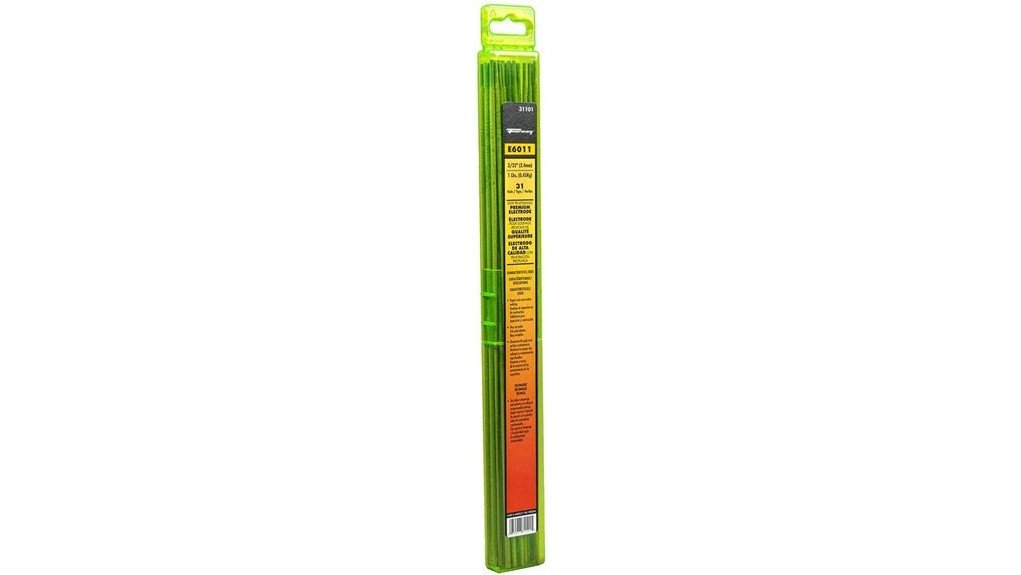
The Forney 31101 E6011 Welding Rod is a stick welding electrode for shielded metal arc welding. It is made for welders who need an electrode that can strike and hold an arc while working on practical repair jobs, not only clean bench-top practice pieces.
For this specific Forney rod, the listed details point to a 1/8 inch diameter, 14 inch length, 1 lb package, and AC or DC+ use. That makes it a practical option for many home, farm, and repair users who already know they need an E6011 electrode.
Before You Buy: Confirm the rod diameter and recommended amperage on the Amazon listing or product package before you weld. This matters because E6011 rods come in different diameters, and the correct current range changes with rod size.
Who Should Buy It?
Best For
- Stick welders who need an E6011 rod for repair work on rusty or dirty steel.
- Farm, garage, and maintenance users who value penetration and fast-freeze puddle control.
- Buyers using compatible AC or DC+ stick welders for general repair projects.
Skip If
- You need a verified low-hydrogen rod for code-sensitive structural work.
- You want the smoothest cosmetic bead for thin, clean sheet metal practice.
- Your welder cannot run the amperage range required for the exact rod diameter you buy.
Performance and Features
The main reason to choose the Forney 31101 E6011 is its repair-focused performance. The rod is described as offering stable arc behavior, minimal spatter, and strong penetration, which can help when the joint is not perfectly clean.
For real-world repairs, the rapid freezing behavior of an E6011 rod helps control the puddle in vertical, overhead, and awkward positions. That makes it more practical for brackets, frames, gates, small equipment repairs, and field-style work than rods that demand cleaner fit-up and slower technique.
Material Compatibility
This rod makes the most sense on carbon steel repair work where the surface may have rust, oil, paint residue, or mill scale. Galvanized steel may be one possible use case, but that material requires extra caution because zinc fumes can be hazardous.
You should still clean the joint when you can. E6011 rods are useful on imperfect surfaces, but clean edges, good fit-up, and correct current settings still improve arc control, bead shape, and final weld strength.
Surface Preparation Requirements
The Forney 31101 E6011 is useful when you do not have time for heavy surface prep. It can help with quick maintenance welds where the surface is rusty, oily, or dirty, but that does not mean you should ignore basic prep.
Remove loose rust, heavy oil, paint, and dirt before welding whenever the job allows it. A cleaner joint gives you better visibility, steadier puddle control, and fewer avoidable weld defects.
Pro Tip: Start with the amperage range printed on the rod package, then adjust in small steps. If the rod sticks often, runs cold, or leaves a tall bead, your current may be too low for the rod size and joint.
How It Performs in Real Use
For Maintenance Repairs
For maintenance work, this rod is most useful when speed and penetration matter more than a perfect-looking bead. It can help you repair worn steel parts, brackets, gates, and general hardware without spending as much time on surface cleaning.
For Rusty or Dirty Steel
The E6011 classification is well-suited to surfaces that are not perfectly clean. You should still remove heavy contamination, but the rod gives you more forgiveness than electrodes made mainly for clean, smooth bead appearance.
For Galvanized Metal
Galvanized steel requires strong ventilation and proper safety steps when you weld it. Grind away coating near the weld area when appropriate, avoid breathing fumes, and follow workplace safety guidance.
For Beginner Practice
Beginners can use E6011 rods to learn arc starts, puddle control, and travel speed, but they may find the arc more forceful than smoother beginner rods. If you are new to stick welding, practice on scrap steel before using it on an actual repair.
How to Use It Correctly
Match the rod diameter to your welder output and base metal thickness before you strike an arc. A 1/8 inch rod usually needs more current than a smaller rod, so do not assume every E6011 electrode runs the same way.
Keep your arc length short and steady. A long arc can increase spatter, reduce control, and make the bead harder to manage, especially when you are welding out of position.
Store rods in a dry place between uses. Moisture, dirt, and damaged flux can hurt arc performance, so keep the package closed and avoid leaving rods exposed in a damp shop.
Compatibility and Safety
The Forney 31101 E6011 is meant for stick welding with compatible AC or DC+ machines. Before use, check your welder manual, the rod package, and the base metal thickness so you can choose a safe current setting.
Wear a welding helmet, gloves, long sleeves, and eye protection. You also need good ventilation, especially when welding dirty, painted, oily, or galvanized metal, because heated coatings and contaminants can create harmful fumes.
Pros and Cons
Pros
- Works well for repair jobs where the metal surface is not perfectly clean.
- Supports all-position welding when used with the right technique and settings.
- Useful for maintenance tasks on rusty, dirty, oily, or galvanized steel surfaces.
- Compatible with AC and DC+ operation, based on the listed details.
- Good choice for deeper penetration compared with smoother cosmetic practice rods.
Cons
- Exact rod diameter and amperage should be confirmed before purchase and use.
- Not the best choice if you want the smoothest-looking bead on clean thin metal.
- Galvanized or coated metal still needs proper prep, ventilation, and safety care.
Is It Worth the Price?
The Forney 31101 E6011 is worth considering if you need a practical stick welding rod for repair work rather than fine cosmetic welding. It fits buyers who want a dependable electrode for rusty, dirty, or less-than-perfect steel surfaces.
Its value is strongest for garage, farm, and maintenance users who already know they need an E6011 rod. It is not the best fit if your main goal is a polished-looking bead on clean, thin material or if your welder cannot support the required current range.
How It Compares to Alternatives
Compared with E6013 rods, E6011 is usually the better fit when you need deeper penetration and more tolerance for imperfect steel. E6013 can be easier for smooth bead practice, but it is not as repair-focused.
Compared with E7018, E6011 is more forgiving on rusty or dirty surfaces, while E7018 is often chosen for cleaner, stronger low-hydrogen welds when the job calls for that type of electrode. Compared with E6010, E6011 is more flexible for many home users because it can run on AC as well as DC+ when your machine supports it.
Frequently Asked Questions
What is the Forney 31101 E6011 best used for?
It is best used for stick welding repair jobs on steel that may be rusty, dirty, oily, or difficult to prepare fully. It makes the most sense for maintenance, farm, garage, and field-style repair work.
Can beginners use E6011 welding rods?
Yes, beginners can practice with E6011 rods, especially if they want to learn repair-focused stick welding. The arc can feel more aggressive than smoother beginner rods, so practice on scrap steel first.
What amperage should you use with this rod?
Use the amperage range printed on the product package or listing for the exact diameter you buy. Do not rely on one fixed setting. Confirm the final setting against your welder, rod size, and metal thickness.
Can it weld galvanized steel?
Use extra caution with galvanized metal because zinc coating can create hazardous fumes when heated. Prep the area when appropriate and use proper ventilation.
Does this rod work on AC welders?
This rod is listed for AC and DC+ compatibility. You should still check your welder manual and the package instructions to make sure your machine can run the exact rod size properly.
How should you store E6011 rods?
Store them in a dry place and keep the package closed when you are not using them. Avoid damp storage because moisture and damaged flux can make arc starts and bead control less reliable.
Who should skip this welding rod?
Skip it if you need a verified low-hydrogen electrode for a code-sensitive job or if you want the easiest rod for smooth cosmetic practice. You may also want a different rod if your welder cannot support the current range for the exact diameter.
The Bottom Line
The Forney 31101 E6011 Welding Rod is a smart buy for repair-focused stick welders who need penetration, all-position use, and better tolerance for imperfect steel surfaces. Skip it if you need verified low-hydrogen performance, a smoother cosmetic practice rod, or a confirmed size that your welder cannot support.