Disclosure: As an Amazon Associate, we earn from qualifying purchases. If you click a link on this page and make a purchase, we may receive a small commission at no extra cost to you.
A compact stick welder can save space in your garage, but it still needs enough control to start clean arcs and handle common repair work. The GNI 250A Welding Machine is a handheld 110V arc welder aimed at DIY repairs, light fabrication, and small workshop jobs. It gives you a wide advertised current range, a digital display, and a portable toolbox-style kit, but it is not the right choice for every metal or every thickness. This review helps you decide where it makes sense, what to verify before buying, and which claims deserve caution.
Quick Verdict
Rating: 7.8/10, recommended with caveats
Best For: DIY users, beginners, and small-shop owners who need a portable 110V stick welder for light repair work.
Bottom Line: The GNI 250A is easy to carry, simple to set up, and useful for mild steel, stainless steel, cast iron, and small repair jobs when you use the correct rod. Skip it if you need verified industrial duty-cycle data, aluminum welding, or heavy structural work.
| Specification | Detail |
|---|---|
| Brand | GNI |
| Model | GNI 250A handheld welding machine |
| Product Type | Portable stick welder / MMA arc welder |
| Input Power | 110V |
| Advertised Output Range | 20 to 250 amps |
| Display | LCD digital current display |
| Inverter Type | IGBT inverter design |
| Rod Compatibility | Common 1/16-inch to 1/8-inch rods, including E6010, E6011, E6013, E7018, and E308 according to seller listings |
| Recommended Starter Rod | 3/32-inch rods are commonly recommended for easier arc starting |
| Suitable Materials | Mild steel, carbon steel, cast iron, sheet metal, square pipe, and stainless steel with compatible rods |
| Not Ideal For | Aluminum, thick structural steel, and heavy industrial use |
| Weight Note | Seller listings vary, commonly around 2.9 to 3.7 lb for the welder body |
| Package Dimensions Note | Some listings show about 13.1 x 11.3 x 4.3 inches for the package |
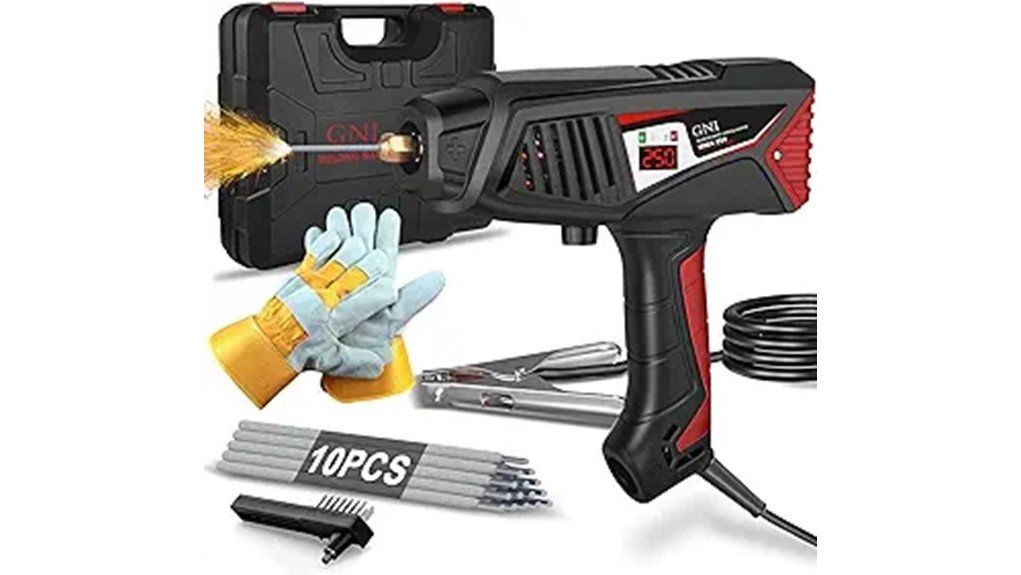
| Included Accessories | Toolbox, welding rods, gloves, earth clamp, chip hammer, and instruction manual may be included, depending on seller bundle |
| Safety Features | Over-voltage, over-current, over-heating, overload protection, and 360-degree cooling are listed by sellers |
What Is the GNI 250A Welding Machine?
The GNI 250A Welding Machine is a handheld 110V stick welder built for small metal repair jobs, garage projects, and portable work. It uses an IGBT inverter design and an LCD display so you can see the current setting while you adjust the machine.
The main appeal is portability. Instead of using a larger bench-style welder, you can carry this compact unit to a fence repair, a small auto bracket job, or a quick workshop fix. That convenience comes with limits, so you should treat it as a light-duty welder, not a replacement for a full professional welding setup.
Before You Buy: Check the current Amazon listing before ordering. Package contents, rod count, color, accessory bundle, weight, and warranty language can vary by seller, and this machine should not be treated as an aluminum welder.
Who Should Buy It?
Best For
- DIY users who need a small stick welder for mild steel repairs.
- Beginners who want a simple current knob, digital display, and included starter accessories.
- Garage owners who need a portable tool for fences, brackets, square pipe, sheet metal, and small auto repairs.
Skip If
- You need to weld aluminum or need TIG-level control.
- You need verified industrial duty-cycle performance for long production runs.
- You regularly weld thick structural steel or code-critical joints.
Output and Rod Compatibility
The GNI 250A is advertised with a 20 to 250 amp output range. That range gives you room to tune the current for smaller rods and lighter repair work, but you should still match your setting to the rod size, metal thickness, and the product manual.
Seller listings describe compatibility with common 1/16-inch to 1/8-inch rods, including E6010, E6011, E6013, E7018, and E308. For many beginners, 3/32-inch rods may feel easier to start and control than larger rods, especially on a 110V machine.
This welder can be a practical fit for mild steel, carbon steel, stainless steel, cast iron, square pipe, and sheet metal when the rod matches the material. For stainless work, use the correct stainless rod and avoid assuming one general-purpose rod will work for every job.
Design and Portability
The compact handheld shape is the biggest reason to consider this machine. Some seller listings describe the welder body as weighing only a few pounds, which makes it easier to move around a garage, carry to outdoor repairs, or use in tight spaces.
The ergonomic grip supports one-handed handling while you position the machine, but you still need proper welding posture and protective gear. A lightweight welder is easier to carry, yet the welding lead, ground clamp, rod angle, and workpiece setup still decide how clean your weld becomes.
The toolbox-style storage also helps if you do not have a large shop. You can keep the welder, rods, gloves, clamp, hammer, and manual together so the kit is ready when you need it.
Controls, Display, and Arc Features
The LCD digital display is useful because it shows the current setting in real time. That helps you make repeatable adjustments instead of guessing by knob position alone.
The listing also mentions arc force and anti-stick support. These features can help beginners because stuck rods are common when the current is too low, the rod angle is poor, or the work surface is dirty. They do not replace good technique, but they can make the learning curve less frustrating.
Pro Tip: Start on clean scrap metal with a 3/32-inch rod before welding your actual part. Adjust the current gradually until the rod starts cleanly, the arc sounds steady, and the bead does not sit too high on the surface.
Safety Features and Heat Control
The GNI 250A includes listed protections for over-voltage, over-current, over-heating, and overload conditions. Those protections are helpful on a small inverter welder, especially when you use it for repeated short welds.
The machine also lists an intelligent heat dissipation system and 360-degree cooling. Even with those features, you should give the unit time to cool if it feels hot, the arc becomes unstable, or the machine shuts down for protection.
Always wear welding gloves, a proper welding helmet, long sleeves, closed shoes, and eye protection. Keep flammable materials away from the work area, clamp the ground securely, and follow the instruction manual before your first weld.
Accessories and Package Contents
Accessory bundles can vary, so check the current Amazon listing before you buy. Matching seller pages mention a toolbox, welding rods, gloves, earth clamp, chip hammer, and instruction manual, but the rod count may differ across sellers.
The included accessories make the kit easier to start with, but they should not be treated as a complete professional safety setup. You may still need a proper welding helmet, better gloves, extra rods, a wire brush, clamps, and protective clothing.
How It Performs in Real Use
For Home DIY Repairs
The GNI 250A makes the most sense for quick household metal repairs, small brackets, garden tools, and light-duty shop fixes. Its small body and 110V input are useful when you want a tool that does not take over your workbench.
For Small Automotive Jobs
It can help with small automotive repair tasks such as tabs, light brackets, or non-critical metal pieces. Do not use it for safety-critical frame, suspension, or structural repairs unless you have the right training and can verify the weld quality.
For Portable Outdoor Work
The lightweight design helps when you need to carry the welder to a gate, fence, trailer accessory, or outdoor repair area. Use a safe power source, keep the machine dry, and avoid welding in wet or windy conditions that can affect safety and arc control.
For Beginner Practice
Beginners benefit from the simple controls, LCD display, and common rod compatibility. Expect some trial and error with rod angle, travel speed, amperage, and surface prep before your beads look consistent.
Setup Tips Before First Use
- Read the manual first: Confirm the correct polarity, rod size, current range, and cooling guidance for your exact bundle.
- Prep the metal: Remove paint, rust, oil, and dirt near the weld area so the arc starts more cleanly.
- Use the right rod: Match the rod to the metal. Use stainless rods for stainless steel and avoid aluminum unless the manufacturer clearly supports it.
- Clamp the ground well: A poor ground connection can cause weak arc starts and inconsistent welds.
- Practice first: Run beads on scrap material with similar thickness before welding the actual part.
- Watch heat buildup: Let the machine cool between longer sessions, especially when running near higher settings.
Pros and Cons
Pros
- Compact handheld design makes it easier to carry and store.
- 20 to 250 amp advertised output range gives you flexibility for common stick welding tasks.
- LCD display helps you monitor current settings more clearly.
- Supports common rods from 1/16 inch to 1/8 inch.
- Listed safety protections include over-voltage, over-current, over-heating, and overload protection.
Cons
- Not a good choice for aluminum welding.
- Package contents and rod count may vary by seller.
- Not ideal for heavy industrial welding, thick structural steel, or long production sessions.
Is It Worth the Price?
The GNI 250A is worth considering if you want a compact, low-commitment stick welder for small repair work. Its value comes from the portable design, included starter accessories, digital display, and broad rod compatibility.
It is a smart buy for everyday light use if you mostly weld mild steel, small brackets, square pipe, or sheet metal. It is not the best fit if you need verified professional duty-cycle specs, multi-process welding, aluminum capability, or long continuous welds.
How It Compares to Alternatives
Compared with larger 120V/240V stick welders, the GNI 250A is easier to carry and store, but it gives you less confidence for demanding shop work. A heavier dual-voltage welder may suit you better if you often weld thicker steel or need more stable output under load.
Compared with 2-in-1 MIG/MMA machines, this GNI model keeps things simpler. Choose it if you want a small stick welder for quick repairs. Compare other options if you want wire-feed welding, flux-core convenience, or cleaner welds on thin automotive sheet metal.
Frequently Asked Questions
What welding rods work with the GNI 250A?
Seller listings describe compatibility with common 1/16-inch to 1/8-inch rods. Listed rod types include E6010, E6011, E6013, E7018, and E308, but you should confirm the manual for your exact unit.
Can the GNI 250A weld aluminum?
Do not buy it for aluminum welding unless the current seller listing and manual clearly say your version supports it. Matching retailer information points to this machine as a stick welder for steel, stainless steel, cast iron, and similar metals, not aluminum.
Is it good for beginners?
Yes, it can work well for beginners because it has a compact body, a simple current adjustment, and an LCD display. You still need practice, proper safety gear, and clean scrap metal before working on a real part.
What materials can it weld?
It is best suited for mild steel, carbon steel, cast iron, square pipe, sheet metal, and stainless steel when you use the correct rod. Avoid using it for critical structural welds unless you have the training and inspection process to confirm weld quality.
What comes in the box?
Common listings mention the welding machine, toolbox, rods, gloves, earth clamp, chip hammer, and instruction manual. The exact rod count and accessory bundle can vary, so check the current Amazon product details before ordering.
Does it need a 220V outlet?
The reviewed version is listed as a 110V portable welder. Use a proper outlet and avoid weak extension cords, since poor power delivery can affect arc stability and safety.
What common mistake should you avoid?
Do not start on dirty, painted, rusty, or oily metal and blame the machine for a poor arc. Clean the surface, clamp the ground securely, choose the right rod, and test your setting on scrap first.
Who should skip the GNI 250A?
Skip it if you need a professional production welder, verified long duty-cycle performance, aluminum capability, or multi-process welding. It is better for small repair work than heavy industrial use.
The Bottom Line
The GNI 250A Welding Machine is a solid fit for DIY users who want a small, portable 110V stick welder for light repair work and beginner practice. Its strengths are portability, simple controls, rod flexibility, and useful safety features, while its main limits are aluminum incompatibility, seller bundle variation, and light-duty positioning.
Buy it if you need a compact garage welder for small steel projects. Skip it if you need a proven professional machine for thick material, long production welding, or code-critical work.