Disclosure: As an Amazon Associate, we earn from qualifying purchases. If you click a link on this page and make a purchase, we may receive a small commission at no extra cost to you.
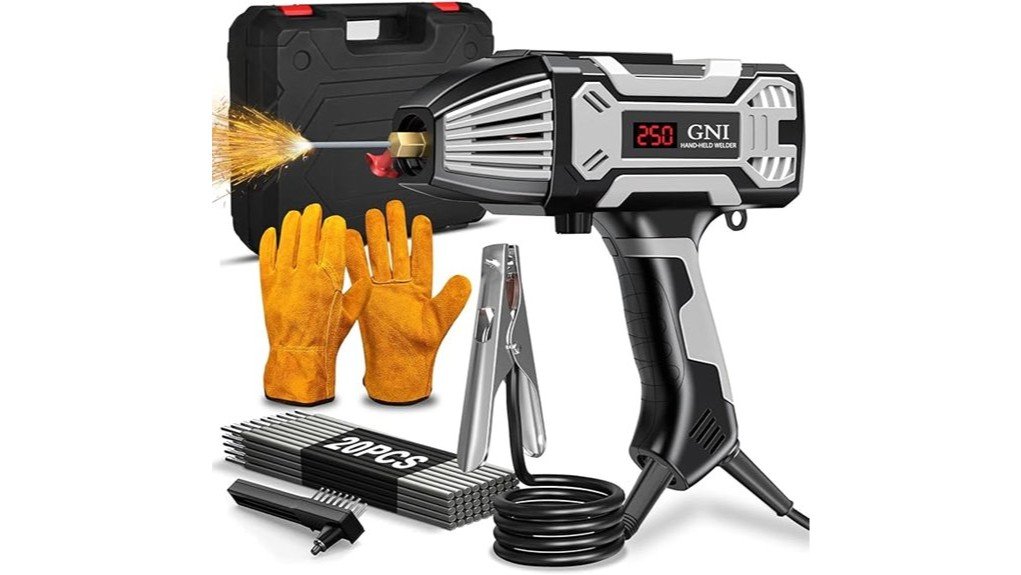
A handheld welder can be useful when a full-size machine takes up too much space, but portability only matters if the unit can strike a stable arc and match the rods you plan to use. The GNI 250A Welding Machine is a 110V handheld stick welder with a seller-stated 20 to 250 amp adjustment range, LCD current display, IGBT inverter, and arc-force anti-stick control. Its 2.9-pound machine body and included toolbox make it easy to carry for small repairs and practice sessions. The main concern is documentation, because the available listings do not publish a verified duty cycle, input-current requirement, certification, or clear warranty term.
Quick Verdict
Rating: 7.5/10, Recommended with caveats
Best For: DIY users and beginners who need a compact 110V stick welder for short repair jobs, practice beads, and portable garage work.
Bottom Line: The GNI 250A Handheld Welding Machine combines low machine weight, digital amperage control, broad seller-listed rod compatibility, and a useful starter kit. It is less convincing for demanding work because the live documentation does not clearly state duty cycle, actual rated output, circuit requirements, certification, or warranty coverage.
| Specification | Detail |
|---|---|
| Brand | GNI |
| Listed model | Handheld Welder / GNI 250A Welding Machine |
| ASIN | B0D97ZYVMY |
| Product type | Portable handheld stick welder |
| Input voltage | 110V |
| Claimed output range | 20 to 250 amps, seller-stated |
| Controls | Current-adjustment knob and real-time LCD display |
| Arc technology | IGBT inverter with arc-force anti-stick function |
| Machine weight | 2.9 pounds, seller-stated for the handheld unit |
| Listed kit weight | About 6.49 pounds |
| Package dimensions | About 13.11 × 11.14 × 4.41 inches |
| Color | Gray |
| Rod diameter | 1/16 inch to 1/8 inch, seller-stated |
| Listed rod examples | E6010, E6011, E6013, and E308 |
| Listed material uses | Mild steel, stainless steel, and cast iron, subject to correct rod and setup |
| Included accessories | 20 rods, welding gloves, earth clamp, portable toolbox, chip hammer, and instruction manual |
| Protection features | Over-voltage, over-current, overheat, and overload protection |
| Cooling | Built-in heat dissipation and seller-described 360° cooling |
| Not clearly published | Duty cycle, rated input current, certification, exact warranty term, and verified aluminum capability |
What Is the GNI 250A Welding Machine?
The GNI 250A Welding Machine is a compact shielded metal arc welding, or stick-welding, unit made for users who want a welder that can be carried and stored with minimal effort. Unlike a conventional box-style machine with a separate electrode holder, the electrode is held at the front of the handheld unit, while an earth clamp completes the welding circuit.
The product listing centers on four selling points: 110V input, a claimed 20 to 250 amp adjustment range, an LCD current display, and IGBT inverter control with arc-force anti-stick support. These features can make setup easier for practice work because you can see and adjust the displayed current instead of relying on an unmarked dial.
The kit also includes 20 rods, gloves, an earth clamp, a chip hammer, a portable case, and a manual. It covers several startup needs, but it is not a complete welding-safety package because a proper welding helmet and fire-resistant clothing are still required.
Before You Buy: Treat the 250-amp figure as a seller claim, not a verified continuous-output rating. The available listings do not publish duty cycle, rated input current, breaker requirement, or certification, so check the rating label and current manual before using the machine at high settings or on a long extension cord.
Who Should Buy It?
Best For
- Beginners who want a visible current setting and a compact machine for practice beads on scrap steel.
- DIY users who need a portable stick welder for short garage, fence, bracket, or maintenance repairs.
- Buyers with limited storage space who value a 2.9-pound machine body and included carrying case.
Skip If
- You need published duty-cycle data, third-party certification, or clear professional warranty support.
- You plan to weld structural, safety-critical, thick, or high-volume work every day.
- You need confirmed aluminum welding or built-in MIG and TIG capability.
Design and Portability
Portability is the clearest advantage. The handheld machine is listed at 2.9 pounds, which is light enough to move around a vehicle, workbench, gate, or small repair area without dragging a separate electrode-holder lead. The full kit is listed at about 6.49 pounds and comes in a compact toolbox, so it should be easier to store than a cart-style welder.
The grip-style design can also help with quick tack welds and short beads where space is limited. The tradeoff is wrist fatigue. Supporting the machine and electrode in one hand may become tiring during longer welds, overhead work, or awkward positions, especially after you add the power cable and rod.
The package is listed at roughly 13.11 × 11.14 × 4.41 inches. That size suits a shelf, truck compartment, or garage cabinet, but the case still needs a dry storage area with enough room to avoid crushing the cables or blocking the cooling vents.
Power, Display, and Arc Control
The seller advertises a 20 to 250 amp adjustment range through a front control and LCD display. The display is useful because it gives you a repeatable reference point when you switch between rods or return to a previous practice setup.
IGBT inverter technology and arc-force anti-stick control are intended to improve arc starts and reduce electrode sticking. Those features can help a beginner maintain a steadier bead, but they do not replace correct polarity, clean metal, a solid earth-clamp connection, or the right amperage for the rod.
The missing duty-cycle and input-current specifications matter more than the maximum number on the screen. A compact 110V machine may need frequent cooling breaks, and the available household circuit can limit practical output. Use the rating label and manual, not the display alone, to decide how hard the machine can be run.
Rod Compatibility and Project Fit
The listing states that the welder accepts rods from 1/16 inch to 1/8 inch and gives E6010, E6011, E6013, and E308 as examples. That range covers several common repair and practice electrodes, but you should confirm that the exact rod type, diameter, polarity, and current range are supported by the current manual.
Seller materials describe use on mild steel, stainless steel, and cast iron. Actual results will depend on rod selection, joint preparation, material thickness, and technique. Cast iron and stainless work can require specialized consumables and procedures, so the broad listing claim should not be treated as proof that every alloy or repair is suitable.
This model is not a wire-feed MIG welder and does not provide the gas control or torch arrangement of a dedicated TIG machine. It makes the most sense for small stick-welding jobs where low storage weight and quick setup matter more than process versatility.
Included Accessories and What You Still Need
The kit includes one handheld welder, 20 rods, welding gloves, an earth clamp, a portable toolbox, a chip hammer, and an instruction manual. The rods let you test the machine immediately, while the earth clamp and chip hammer cover two basic stick-welding needs.
The included gloves should be treated as starter gear until you inspect their fit, condition, and heat protection. You still need an appropriate auto-darkening or fixed-shade welding helmet, safety glasses, fire-resistant clothing, closed leather footwear, and suitable ventilation.
You may also need extra electrodes, a wire brush, clamps, a grinder, and properly rated power equipment. Package contents can change by seller, so compare the current listing photos and included-components section before ordering.
Safety, Electrical, and Automotive Use
The machine is listed with over-voltage, over-current, overheat, and overload protection, plus built-in cooling. These features can protect the unit during normal use, but they do not remove the risks of electric shock, arc radiation, fumes, hot metal, fire, or damaged wiring.
Use the welder only in a dry, ventilated area. Keep the power connection off wet ground, inspect the cable and clamp before each session, and avoid undersized extension cords. Stop if the plug, cord, machine, or receptacle becomes unusually hot, and follow the manual for circuit and cooling requirements.
Vehicle work needs extra care. Keep sparks away from fuel, brake cleaner, batteries, upholstery, wiring, and painted panels. Follow the vehicle manufacturer’s welding procedure, place the earth clamp close to the repair, and protect sensitive electronics. Hybrid and electric vehicles contain high-voltage systems and should not be welded without model-specific service information and qualified training.
How It Performs in Real Use
For Beginner Practice
The LCD display helps you record a starting point for each rod, which is useful when learning how amperage affects arc starts, penetration, and slag. Begin on clean scrap steel and practice flat beads before attempting joints or repairs that carry a load.
For Small Home and Garage Repairs
The light machine body and 110V input suit short repairs on brackets, gates, lawn-equipment parts, and similar steel items. The compact format is less suitable for long beads or repeated high-current welding because the published duty cycle is not available.
For Automotive Maintenance
The small case is easy to carry near a vehicle, and the listing specifically markets the welder for automotive repairs. Use it only when the joint, material, rod, and service procedure are appropriate. Exhaust or body work can involve thin or coated metal that is easy to burn through and may be better handled with a controlled wire-feed process.
For Portable or Outdoor Jobs
The toolbox and low unit weight make transport simple, but outdoor use still requires dry conditions and a stable power source. Wind can move fumes and hot sparks into unsafe areas, so clear the work zone and keep a suitable fire extinguisher nearby.
Setup Tips Before First Use
Read the current manual and rating label before connecting power. Then choose a rod that matches the metal, joint, and position. A clear setup routine reduces sticking, weak fusion, overheating, and avoidable electrical problems.
- Confirm the outlet, breaker, plug, and any extension cord meet the machine’s stated input requirements.
- Remove paint, rust, oil, plating, and dirt from the weld area and clamp location.
- Connect the earth clamp to clean bare metal as close to the joint as practical.
- Check the rod manufacturer’s polarity and amperage range instead of relying only on the machine’s display.
- Start with scrap metal of similar thickness and adjust in small steps.
- Keep the cooling openings clear and stop when thermal protection activates.
- Store the welder, rods, and cables in a dry place after they cool.
Pro Tip: Write down the rod classification, rod diameter, metal thickness, polarity, and displayed current after a good practice bead. That record gives you a safer starting point the next time you weld a similar joint.
Pros and Cons
Pros
- 2.9-pound machine body is easy to carry and store.
- LCD display gives you a visible and repeatable current setting.
- IGBT inverter and arc-force anti-stick features support easier arc starts.
- Seller-listed 1/16-inch to 1/8-inch rod range covers common small-job electrodes.
- Kit includes rods, gloves, earth clamp, chip hammer, case, and manual.
Cons
- No clearly published duty cycle, rated input current, or breaker requirement.
- The claimed 250-amp maximum is not backed by detailed performance documentation.
- Certification, exact warranty coverage, and aluminum capability remain unclear.
Is It Worth the Price?
The GNI 250A Handheld Welding Machine can be a strong value for the price when your priority is a light, compact stick welder for occasional practice and small repairs. The case and starter accessories reduce the number of separate items you need to buy before your first test weld.
You get the most value if you already understand that the seller’s maximum-amperage figure does not tell you the duty cycle or continuous working capacity. Buyers who need documented performance, certification, a longer published warranty, or daily professional use may get better long-term value from a more established machine with a complete specification sheet.
How It Compares to Alternatives
The YesWelder ARC-125DS-PRO is another compact 110V stick welder and is worth comparing if you want manufacturer-hosted product support. The Forney Easy Weld 100 ST-i costs more in many markets but publishes a 120V input requirement, duty cycle, machine weight, certification, and warranty, which makes its working limits easier to evaluate.
The Hobart Stickmate 160 is a larger 120V/240V option with documented output and duty-cycle data. It is less convenient to carry than the GNI, but it is a better comparison for buyers who care more about established support and verified performance than one-handed portability.
Frequently Asked Questions
Is the GNI 250A Welding Machine good for beginners?
It can suit beginners who want a visible current setting, a light machine, and a basic accessory kit. Practice on clean scrap metal, follow the manual, and do not use early welds on structural or safety-critical parts.
Does this welder really produce 250 amps?
The seller advertises a 20 to 250 amp adjustment range, but the available listings do not provide a duty-cycle chart or detailed rated-output test data. Treat 250 amps as a claimed maximum and verify the rating label before basing a purchase on that number.
What rods can you use with the GNI handheld welder?
The listing states a 1/16-inch to 1/8-inch rod range and names E6010, E6011, E6013, and E308 as examples. Confirm rod diameter, polarity, and amperage in the current manual and on the electrode package.
Can the GNI 250A weld aluminum?
Do not buy it mainly for aluminum unless the current manufacturer instructions identify a supported aluminum electrode and procedure. The verified listing information focuses on mild steel, stainless steel, and cast iron.
Can it run from a standard 110V outlet?
The product is listed for 110V input, but the available pages do not clearly state rated input current or breaker size. Check the machine label and manual, and avoid undersized or damaged extension cords.
What comes with the GNI welding machine?
The 20-rod listing includes the handheld welder, 20 welding rods, gloves, an earth clamp, a toolbox, a chip hammer, and an instruction manual. Check the current package list because sellers may change the included quantity or accessories.
Is it suitable for automotive welding?
It may handle selected small steel repairs when the rod, thickness, and vehicle service procedure are appropriate. Keep sparks away from fuel and wiring, protect electronics, and do not work on hybrid or electric high-voltage systems without qualified procedures.
Who should skip this handheld welder?
Skip it if you need verified industrial output, a published duty cycle, formal certification, or MIG and TIG processes in one machine. It is better matched to occasional small repairs and practice than daily production welding.
The Bottom Line
The GNI 250A Welding Machine is worth considering when you need a light 110V stick welder for short DIY repairs, portable practice, and limited garage space. Its main strengths are the 2.9-pound machine body, LCD adjustment, arc-force anti-stick feature, and included kit. Skip it if you need documented duty cycle, verified high-output performance, certification, or professional multi-process capability.
Ready to Buy?
Check the current package contents, rating label, and product details before you decide.