Disclosure: As an Amazon Associate, we earn from qualifying purchases. If you click a link on this page and make a purchase, we may receive a small commission at no extra cost to you.
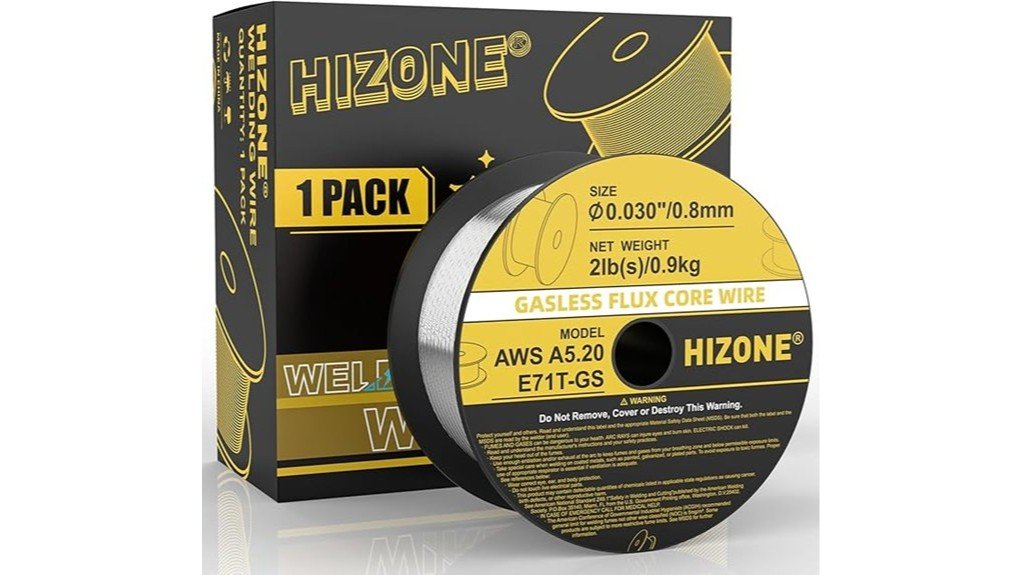
Flux-core wire can make outdoor welding simpler, but only if the wire matches your machine, your project, and the type of steel you plan to weld. The HIZONE Flux Core Welding Wire is a .030-inch, 2.07-pound gasless wire made for mild steel work, home repairs, and general fabrication tasks. Its biggest appeal is convenience: you do not need a separate shielding gas bottle, and the article-supported claims point to low spatter, easy slag removal, and clean welds when your setup is dialed in. The main tradeoff is that it still needs the right welder settings, good ventilation, and test passes before you use it on a visible or load-sensitive project.
Quick Verdict
Rating: 8.3/10
Best For: DIY welders, home repair users, and hobby fabricators who need a gasless .030-inch wire for mild steel.
Bottom Line: HIZONE Flux Core Welding Wire is worth considering if you want a simple gasless wire for outdoor repairs and general mild steel projects. Skip it if your welder does not support .030-inch flux-core wire or if you need verified industrial-grade specifications for critical work.
| Specification | Detail |
|---|---|
| Brand | HIZONE |
| Product Name | HIZONE Flux Core Welding Wire |
| Product Type | Gasless flux-cored MIG welding wire |
| Wire Diameter | .030 inch |
| Spool Weight | 2.07 pounds |
| Shielding Design | Gasless flux-cored design for use without a separate shielding gas bottle |
| Primary Material Use | Mild steel projects |
| Example Joint Types | T-joints, butt welds, and lap welds |
| Best Use | Outdoor welding, home repairs, construction tasks, and general manufacturing work |
| Safety Note | Use welding PPE, keep good ventilation, and follow your welder manual before setting voltage or wire feed speed. |
What Is the HIZONE Flux Core Welding Wire?
The HIZONE Flux Core Welding Wire is a gasless flux-cored MIG wire designed for welders who want to work without carrying a separate gas cylinder. The source article lists it as a .030-inch wire on a 2.07-pound spool, which makes it a practical size for small-shop use, hobby welding, and repair work.
This wire is aimed at mild steel applications, including T-joints, butt welds, and lap welds. Because it is flux-cored, the wire creates its own shielding action during welding, which helps make it more practical outdoors than solid MIG wire that depends on external shielding gas.
The article-supported strengths are low spatter, easy slag removal, and clean weld results when used correctly. Those points matter because less spatter can reduce grinding time, and easier slag removal can help you inspect the bead more clearly after each pass.
Before You Buy: Do not assume every MIG welder is ready for this wire. Confirm that your machine supports flux-core welding, .030-inch wire, and the correct contact tip, drive roll, and settings before ordering.
Who Should Buy It?
Best For
- DIY welders who need gasless wire for mild steel repairs.
- Hobby fabricators working on outdoor projects where wind can make shielding gas harder to manage.
- Users who want a .030-inch flux-core wire for T-joints, lap welds, and butt welds.
Skip If
- Your welder only supports solid MIG wire with shielding gas.
- You need verified commercial certification, alloy classification, or structural procedure data before welding.
- You want a wire that requires no cleanup, since flux-core welding still leaves slag that must be removed.
Key Performance Features
Gasless Outdoor Welding
The gasless design is the main reason to consider this HIZONE wire. For outdoor work, flux-core wire can be more forgiving than solid wire because you are not relying on an external shielding gas stream that can be disturbed by light wind.
This makes the wire a practical fit for fence repairs, small brackets, mild steel patch work, and other jobs that may not happen inside a controlled shop. You still need to clean the metal, protect nearby surfaces from sparks, and avoid welding in unsafe weather or damp conditions.
Low Spatter and Cleaner Work Areas
The article describes the wire as producing minimal spatter. That is a useful feature because spatter can stick to nearby metal, slow down finishing, and create extra grinding or brushing work after the weld cools.
Low spatter does not mean zero spatter. Your results still depend on voltage, wire feed speed, travel angle, stickout, surface prep, and machine condition. If the wire is feeding unevenly or your settings are too hot or too cold, you may still see rough beads or excess cleanup.
Easy Slag Removal
Flux-core welding leaves slag over the weld bead, so removal is part of the process. HIZONE’s article-supported benefit is easy slag removal, which can save time after each pass and make the bead easier to inspect before adding another weld.
That matters most on multi-pass welds and visible repair work. A slag layer that releases cleanly helps you spot undercut, porosity, missed edges, or areas that need another pass before the project is painted or put back into use.
Mild Steel Project Compatibility
This wire is described for mild steel projects, including home repairs, construction, and manufacturing tasks. That makes it best suited for common steel fabrication rather than aluminum, stainless steel, or specialty alloys.
Use it when your base metal, welder, and project requirements all match the wire. For critical welds, load-bearing repairs, vehicle frame work, pressure vessels, or safety-related structures, follow a qualified welding procedure or get help from a trained professional.
Applications and Compatibility
HIZONE Flux Core Welding Wire fits the type of work many home and shop welders handle most often: small repairs, mild steel fabrication, brackets, frames, practice coupons, and outdoor fixes. The source article also lists T-joints, butt welds, and lap welds as supported joint examples.
The article says the wire works with standard MIG welders, but that should be read carefully. Your MIG welder still needs to support flux-core wire, feed .030-inch wire smoothly, and accept the correct contact tip and drive roll setup. Always check your machine manual before loading a new spool.
Pro Tip: Before welding your actual project, run a few test beads on scrap mild steel of similar thickness. Adjust voltage and wire feed speed until the bead wets in smoothly and the slag chips away without fighting you.
How It Performs in Real Use
For Outdoor Repairs
This wire makes the most sense when you need to weld outside and do not want to set up shielding gas. It can be useful for mild steel repairs around a garage, farm, yard, or small workshop, as long as the work area is dry, stable, and clear of flammable materials.
For Home Shop Projects
For general home projects, the .030-inch diameter gives you a common wire size for small MIG and flux-core machines. It can handle practice welds, small brackets, light fabrication, and repair work when the steel thickness and welder output are appropriate.
For Learning Flux-Core Welding
Beginners may appreciate that this is a gasless wire, since it removes one setup variable from the process. You can focus on travel speed, stickout, gun angle, and bead placement, but you still need to chip slag and inspect your welds after each pass.
For Cleanup and Finishing
The low-spatter and easy-slag claims are helpful if you care about post-weld cleanup. You should still keep a chipping hammer, wire brush, grinder, and proper eye protection nearby because flux-core welding always involves hot slag, sparks, and surface cleanup.
Setup Tips Before First Use
Start by confirming that your welder is set up for .030-inch flux-core wire. Use the correct contact tip size, make sure the drive roll matches the wire, and check that the spool feeds smoothly without bird-nesting or slipping.
The original article suggests a general voltage range of 18 to 24 volts for optimal results, but your best setting depends on your machine, steel thickness, joint type, and travel speed. Use your welder chart as the starting point, then fine-tune on scrap metal before welding the final piece.
Clean the joint area before welding. Flux-core wire can tolerate less-than-perfect conditions better than some processes, but paint, oil, rust, and mill scale can still weaken the weld or cause porosity. Better prep usually means a cleaner bead and less rework.
Safety and Handling Notes
Flux-core welding creates heat, sparks, fumes, slag, and bright arc light. Wear a proper welding helmet, gloves, jacket or sleeves, long pants, and closed-toe leather footwear. Keep a fire extinguisher nearby and remove flammable items from the area before striking an arc.
Indoor use requires extra care. The original article notes that the wire is mainly designed for outdoor use, and indoor welding should only happen with proper ventilation and safe work practices. If fumes collect, stop welding and improve airflow before continuing.
Store the spool in a dry, clean place. Moisture and contamination can hurt wire feed and weld quality. Keep the wire covered when it is not in use, and avoid leaving it exposed in a damp garage or open work truck.
Pros and Cons
Pros
- Gasless flux-core design works well for outdoor mild steel repairs.
- .030-inch wire size is common for many small MIG and flux-core welders.
- 2.07-pound spool size is practical for home shop and hobby use.
- Low-spatter claim can reduce cleanup when your settings are correct.
- Easy slag removal helps you inspect the weld bead between passes.
Cons
- Product-specific third-party specifications were not available from reliable sources during review.
- Not ideal if your welder does not support .030-inch flux-core wire.
- Still requires slag removal, ventilation, PPE, and correct machine setup.
Is It Worth the Price?
HIZONE Flux Core Welding Wire looks like a strong value for the price if you need a gasless .030-inch wire for mild steel repairs and outdoor projects. It is especially useful for buyers who want a simple spool for weekend work, practice welds, and general shop tasks.
The value depends on your welder compatibility and expectations. You get the most benefit if your machine already runs .030-inch flux-core wire well and you are prepared to tune your settings. It is not the best fit if you need fully verified industrial specifications, a documented welding procedure, or a wire for metals other than mild steel.
How It Compares to Alternatives
Compared with better-known flux-core options from brands such as Lincoln Electric, Forney, and Hobart, the HIZONE wire is most appealing if you want a simple gasless spool for casual mild steel work. Those alternative brands may be better to compare if you need widely documented classifications, published procedure data, or a wire your workplace already approves.
The HIZONE wire makes the most sense when convenience, outdoor use, low spatter, and easy slag removal are your main priorities. For professional code work or safety-critical repairs, choose a wire that matches the required welding procedure and documentation.
Frequently Asked Questions
Is HIZONE Flux Core Welding Wire gasless?
Yes. The source article describes it as a gasless flux-cored MIG wire, which means it is designed to weld without a separate shielding gas bottle. That makes it useful for outdoor mild steel repairs where gas shielding can be harder to control.
Can you use it with a standard MIG welder?
The article says it has broad compatibility with standard MIG welders, but your machine must support flux-core wire. Check your welder manual for .030-inch wire support, contact tip size, drive roll type, and recommended settings.
What metal is this wire best for?
The article supports using this wire for mild steel projects. Do not assume it is suitable for aluminum, stainless steel, or specialty alloys unless the product label and your welding procedure confirm it.
Is it good for outdoor welding?
Yes, outdoor use is one of its strongest article-supported benefits. Because it is gasless, it is less dependent on an external shielding gas stream, but you still need dry working conditions, clean metal, and safe spark control.
What voltage should you use with this wire?
The source article gives a general range of 18 to 24 volts. Use that only as a starting point because the right setting depends on your welder, steel thickness, joint type, wire feed speed, and travel speed.
Does it still need cleanup after welding?
Yes. Even with low spatter and easy slag removal, flux-core welding still leaves slag that must be chipped or brushed away. Cleaning between passes also helps you inspect the bead before continuing.
Can you use this wire indoors?
You can use flux-core wire indoors only with proper ventilation, PPE, and fire safety. The source article says the wire is mainly designed for outdoor use, so indoor welding should be done cautiously and only in a safe, prepared area.
Who should skip this welding wire?
Skip it if your welder cannot run .030-inch flux-core wire or if you need documented wire classification details for professional code work. It is also not the right choice for metals outside the mild steel applications supported by the article.
The Bottom Line
The HIZONE Flux Core Welding Wire is a smart buy for DIY welders who need a gasless .030-inch wire for mild steel repairs, outdoor jobs, and general home shop use. Its main strengths are convenience, low-spatter performance, and easy slag removal, while its main limitation is the need to confirm machine compatibility and settings before you weld. Skip it for critical or code-required work unless you can verify the exact wire specifications required for that job.