Imagine the hum of electricity as you power up your plasma cutter, ready to slice through metal with precision. To achieve peak performance, understanding your machine’s amperage requirements is essential. A dedicated 50-amp circuit is typically recommended for models like the Powermax 45xp. Lower circuits might limit power, causing inefficiencies. Explore how proper circuit planning can enhance cutting performance and guarantee safety in your workshop.
Understanding Plasma Cutter Power Consumption
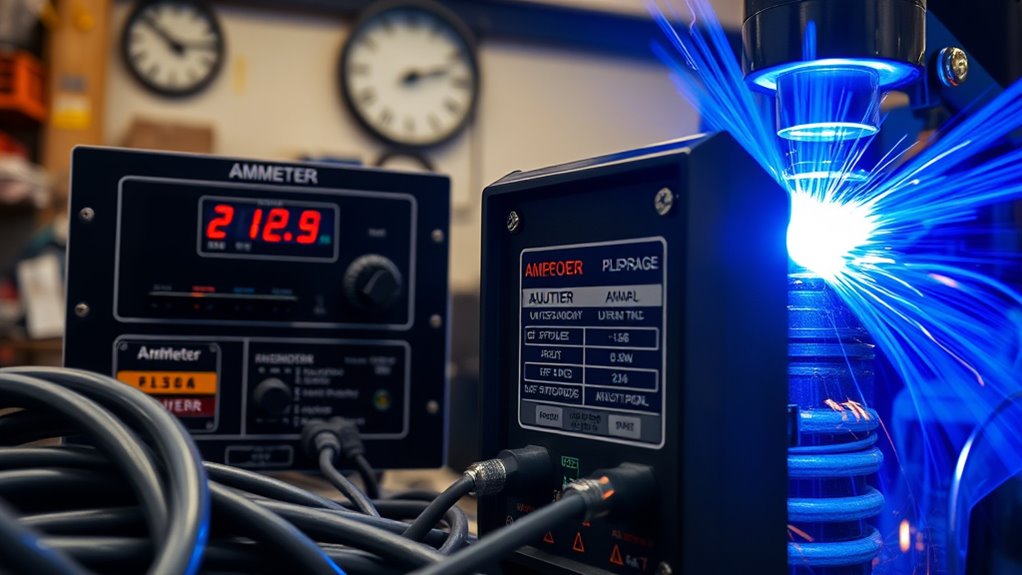
When you’re working with plasma cutters, understanding their power consumption is vital for peak performance and safety. Plasma cutters, like the Powermax 45xp, can draw up to 39 amps under low voltage, demonstrating significant power draw requirements.
For maximum operational efficiency, you’ll need to guarantee your cutter is connected to a circuit that can handle its demands. Typically, plasma cutters use around 1,000 amps at full capacity, but they rarely operate continuously at this level.
An important factor in maintaining performance is the circuit breaker rating; a 50-amp breaker is often recommended over the standard 15 or 20 amps. Using a lower amperage circuit, such as 30 amps, might restrict your cutter’s capabilities, leading to potential underperformance.
A 50-amp breaker is essential to ensure optimal performance and prevent underperformance in plasma cutters.
To maintain efficiency and avoid tripping breakers, it’s vital to monitor your amperage settings and consider upgrading wiring to accommodate the cutter’s high power draw.
Workshop Electrical Requirements for Plasma Cutting
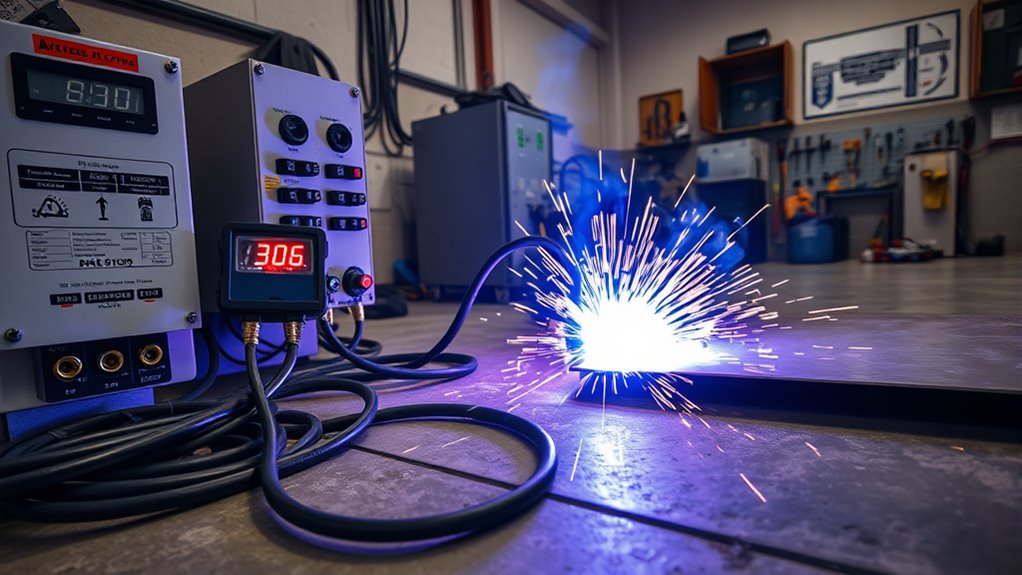
To guarantee your workshop is equipped for plasma cutting, it’s crucial to evaluate your electrical setup meticulously. Assess the workshop layout to allocate space for dedicated circuits, making sure that the electrical capacity can support the demands of your plasma cutter.
Plasma cutters, like the Powermax 45xp, typically require a dedicated 50-amp circuit breaker, vital for managing high amperage, especially when cutting thicker materials. Standard 15 or 20-amp circuit breakers mightn’t suffice and could compromise electrical safety.
Examine your current setup to determine if upgrading existing circuit breakers or installing heavy-duty outlets is necessary. This prevents tripping breakers and promotes peak plasma cutter performance.
Avoid running multiple devices on the same circuit as the plasma cutter; this can overload the system. Prioritizing dedicated circuits enhances safety and efficiency, mitigating risks associated with electrical overload.
Circuit Breaker and Outlet Specifications
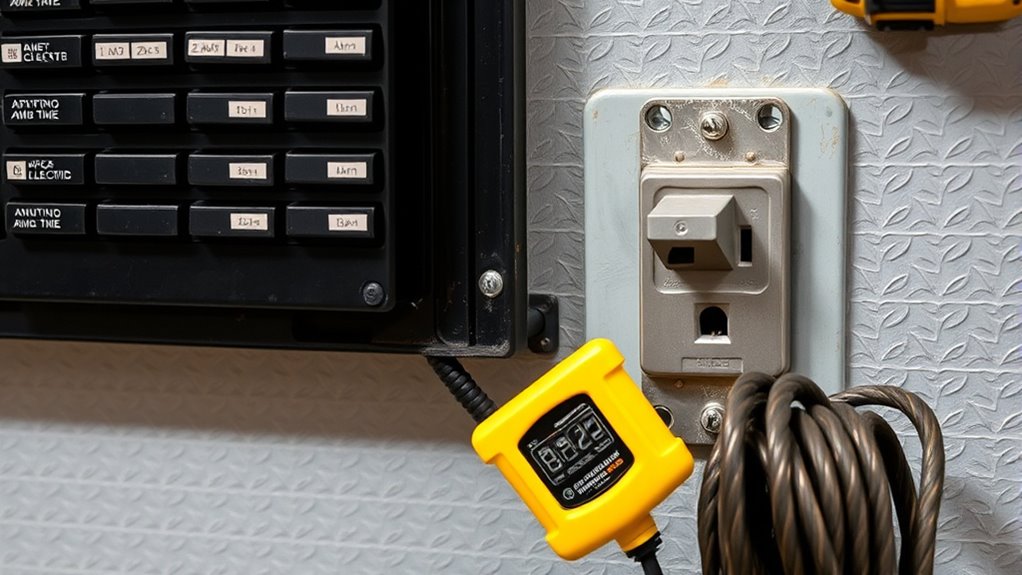
To guarantee your plasma cutter operates efficiently, you must consider the circuit breaker ratings and the installation of dedicated outlets.
A breaker rated between 30 to 50 amps is typically necessary, with models like the Powermax 45xp requiring a 50A breaker to prevent limitations in performance.
Installing a dedicated outlet with appropriate amperage can mitigate the risk of tripping breakers and guarantee a stable power supply for peak functionality.
Circuit Breaker Ratings
Although plasma cutters are powerful tools, they demand careful attention to circuit breaker ratings to guarantee safe and efficient operation.
Breaker types and amperage calculations become critical when determining the appropriate setup for your plasma cutter. Typically, a standard 15 or 20-amp breaker won’t suffice due to the high power consumption of these devices.
For example, the Hypertherm Powermax 45xp requires a 50-amp breaker to function effectively, as it can draw up to 39 amps under low voltage conditions. Using a 30-amp breaker could limit its performance, especially with thicker materials.
Monitoring the circuit’s capacity is essential to prevent frequent tripping, ensuring that the breaker can handle the demands of the plasma cutter without compromising safety.
Dedicated Outlet Installation
When setting up a plasma cutter, ensuring a dedicated outlet installation is essential for safe and efficient operation. Plasma cutters, like the Powermax 45xp, should connect to a 50-amp breaker to handle the electrical load, particularly when cutting thicker materials.
Prioritize these installation tips to enhance safety and performance:
- Select appropriate outlet types: Use heavy-duty outlets rated for 30 to 50 amps, aligning with the cutter’s power demands.
- Install a dedicated circuit: Prevent overloading by ensuring the plasma cutter has its own circuit, avoiding interference from other devices.
- Consult an electrician: Professional evaluation of your workshop’s electrical capacity can confirm the system supports the cutter’s requirements.
These measures mitigate risks and optimize the plasma cutter’s functionality.
Choosing the Right Plasma Cutter Model
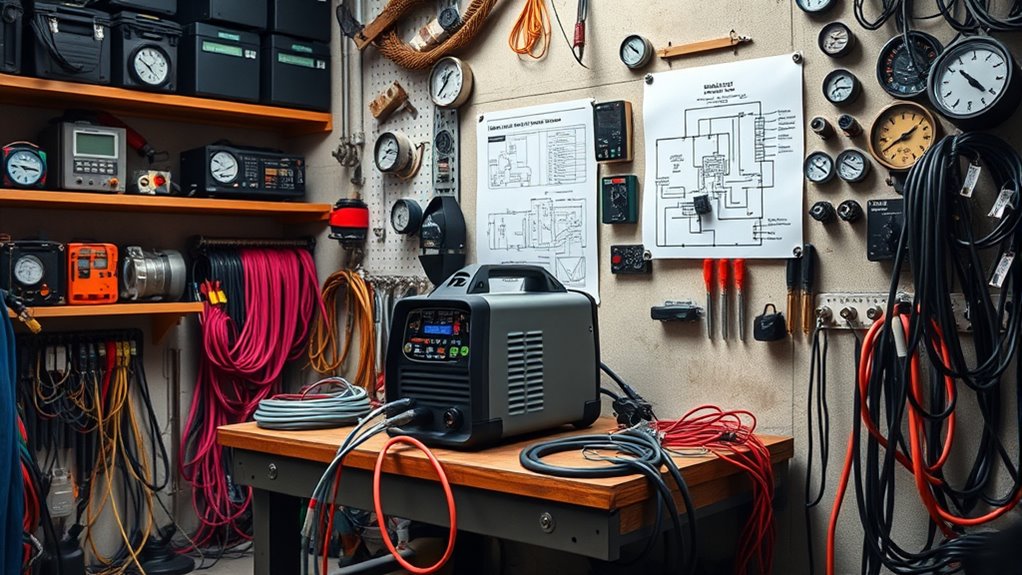
Selecting the right plasma cutter model involves understanding key specifications like amperage, voltage capacity, and the material thickness you’ll be working with.
Plasma cutter features such as dual voltage capability offer flexibility, as seen with the Hypertherm Powermax 30xp, which operates on both 110V and 220V. This versatility guarantees it adapts seamlessly to different power settings.
Cutting thickness considerations are vital; the Powermax 30xp efficiently handles materials up to 3/8″ mild steel, with occasional capability for 1/2″ thickness.
For those seeking higher power, the Powermax 45xp is recommended, requiring a 50A breaker for peak performance despite a 30A initial circuit limitation. This model offers enhanced power for more demanding tasks.
When choosing, assess your typical material thickness and consult an electrician about potential electrical upgrades to support higher amperage models. By aligning these specifications with your needs, you guarantee effective and efficient plasma cutting operations.
Safety Measures for Plasma Cutting Operations
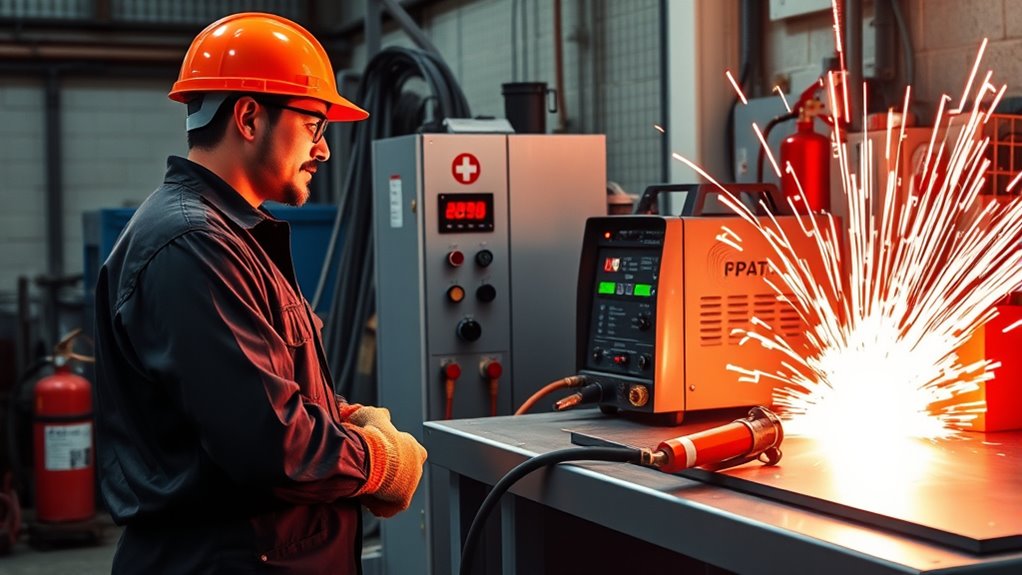
Before you start plasma cutting, prioritize safety by donning appropriate personal protective equipment (PPE). This includes safety glasses or a welding helmet, flame-resistant clothing, and heat-resistant gloves to guard against sparks and burns.
Safety training is essential to guarantee you operate the plasma cutter correctly and recognize potential hazards. Always use respiratory protection in confined spaces to prevent inhaling harmful fumes.
Adhering to regular equipment maintenance schedules is vital for safe operations. Inspect the plasma cutter and its components frequently to prevent malfunctions that could lead to accidents.
Confirm your workspace is well-ventilated to minimize hazardous gas accumulation.
Consider these measures critically:
- Fire Safety: Keep a fire extinguisher readily available to address any spark-induced fires.
- Ventilation: Enhance airflow to reduce fume exposure.
- Regular Inspections: Conduct equipment checks to maintain safety and performance.
Managing Noise and Consumables
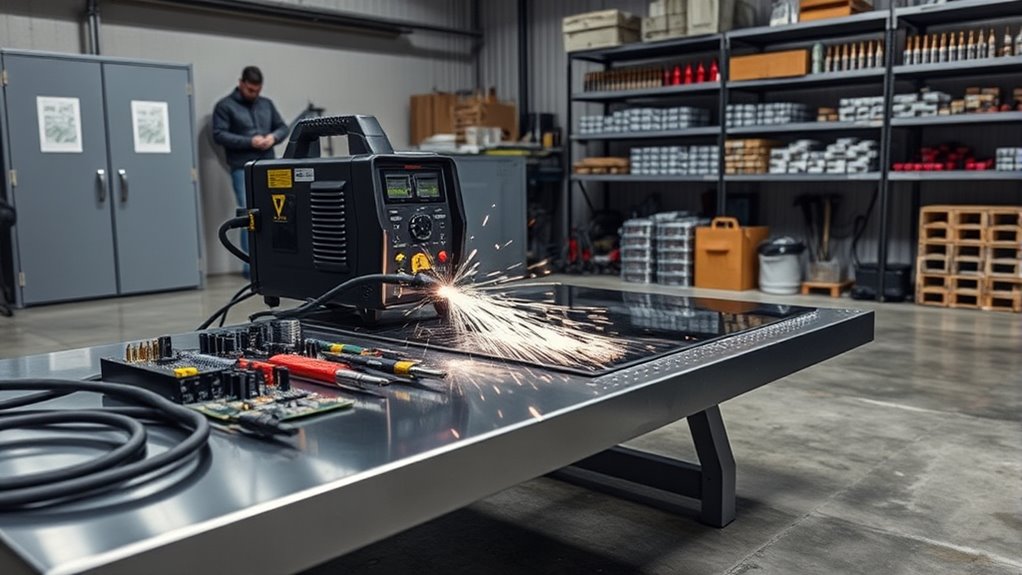
Despite their efficiency, plasma cutters are notorious for generating high noise levels exceeding 100 decibels, which makes ear protection indispensable to prevent hearing damage.
Implementing noise reduction strategies is essential; guarantee regular maintenance and inspect components like electrodes and nozzles. These consumables directly affect the operational noise and have varying lifespans based on quality. Opt for reputable brands, such as Miller, to maximize consumable lifespan.
Proper air supply also plays a significant role. A consistent, adequate air flow minimizes wear on consumables, leading to less frequent replacements and reduced noise.
Monitor air pressure and quality to guarantee peak performance.
Regularly replacing worn parts not only extends consumable lifespan but also helps maintain smooth cutting operations.
Optimizing Efficiency and Cutting Performance
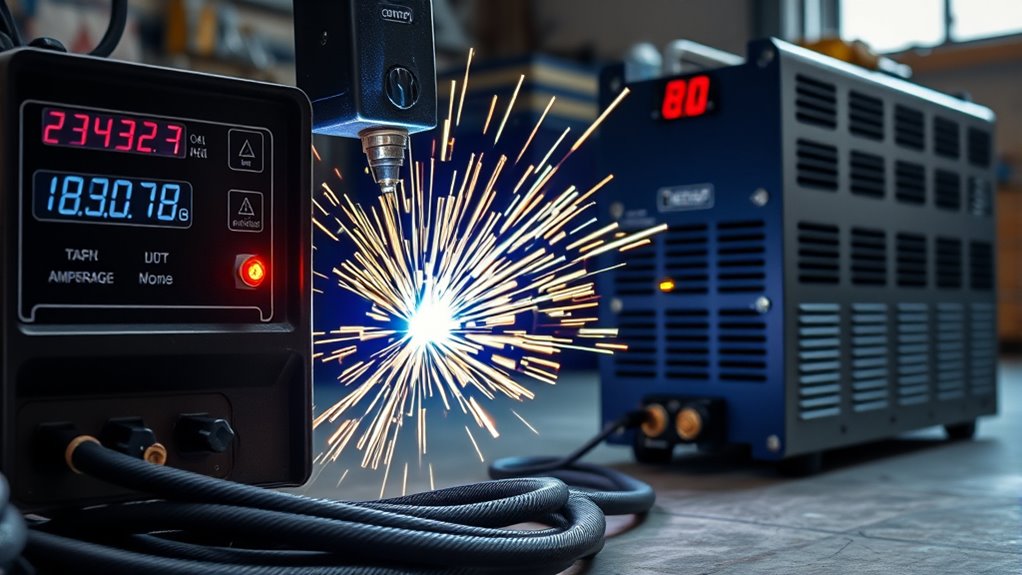
To enhance efficiency and cutting performance with a plasma cutter, understanding and adjusting the amperage settings is essential. Different material types and thickness influence the amperage needs. For instance, cutting techniques for thicker materials demand higher amperage to maintain speed and performance.
Consider these key points:
- Amperage Adjustment: Match the amperage to the material’s thickness. Thicker materials necessitate higher amperage for effective cutting, while thinner materials require lower amperage to prevent energy waste.
- Circuit Requirements: Verify a dedicated circuit with a breaker rated at least 50 amps for heavy-duty models like the Powermax 45xp. This prevents breaker tripping and supports peak performance.
- Monitor Load Voltage: Keep an eye on load voltage to enhance cutting efficiency. Lower amps on thinner materials reduce arc length and amperage draw, while thicker materials increase these requirements.
Upgrading your circuit breaker and wiring may be necessary to handle the plasma cutter’s power demands safely.
Frequently Asked Questions
How Does a Plasma Cutter Affect Energy Bills?
A plasma cutter’s energy consumption can increase your energy bills, but it’s cost-efficient if used properly. Analyze your cutting duration and power settings to manage costs effectively. Choose a model with advanced features for ideal cost efficiency.
Can I Use a Generator to Power a Plasma Cutter?
Sure, you can employ a generator to power a plasma cutter. Just make certain your generator specifications align with the plasma cutter’s compatibility requirements, focusing on wattage and amperage to avoid any hiccups during operation.
What Is the Lifespan of a Plasma Cutter’s Consumables?
Your plasma cutter’s consumable lifespan varies based on usage, typically lasting between 2-8 hours. Monitor performance closely and establish replacement intervals to maintain efficiency. Factors like cutting thickness and air quality greatly impact longevity and replacement frequency.
Do Plasma Cutters Require Regular Maintenance?
Persistent plasma cutter performance demands dedicated maintenance. You should adhere to recommended maintenance schedules, routinely checking consumables, cleaning components, and calibrating settings. Ensuring efficient operation maximizes machine lifespan, enhances cut quality, and prevents unexpected breakdowns.
Are There Portable Plasma Cutter Options for Outdoor Use?
Yes, you can find portable plasma cutter options ideal for outdoor usage. These models typically feature lightweight designs, inverter technology, and robust cooling systems, ensuring efficient cutting performance while maintaining safety and reliability in various outdoor environments.
Conclusion
To guarantee your plasma cutter sings smoothly without tripping over itself, prioritize setting up a dedicated 50-amp circuit. This allows your Powermax 45xp to release its full potential, avoiding the pitfalls of lower amperage options. Think of it as giving your cutter the right stage to perform its best act. Proper wiring and breaker specifications are your backstage crew, managing the power flow with precision, ensuring both safety and peak cutting performance.