Choosing a generator for a plasma cutter is not as simple as matching the amperage printed on the front of the machine. You must match the cutter’s AC input requirements, the generator’s continuous kW and kVA ratings, voltage, phase, frequency, receptacle, and any separate air-compressor load. The safest starting point is always the plasma cutter manufacturer’s engine-generator recommendation.
Quick Answer
Use the plasma cutter manufacturer’s engine-generator rating whenever it is available. Current Hypertherm examples require about 5.5 kW for a 30-amp unit, 10 kW for 45 amps, 15 kW for 65 amps, and 20 kW for 85 amps. Also match voltage, phase, frequency, receptacle, cord, and compressor load.
Key Takeaways
- Do not size the generator from the plasma cutter’s cutting-output amps alone.
- Use the cutter manufacturer’s engine-drive requirement before applying a homemade sizing formula.
- Compare both continuous kW and kVA, especially with inverter-based cutting equipment.
- Include the external air compressor and every other load that may operate at the same time.
- Confirm voltage, phase, frequency, plug, cord, grounding, and operating conditions before connecting the cutter.
At a Glance
| Time Required | 10–20 minutes to review the manuals, nameplates, and loads |
| Difficulty | Moderate; professional electrical help may be required |
| Tools Needed | Plasma cutter manual, generator manual, equipment nameplates, calculator, and compressor specifications |
| Cost | Sizing costs nothing; generator, cord, receptacle, and electrical-installation costs vary |
Understanding Plasma Cutter Power Requirements
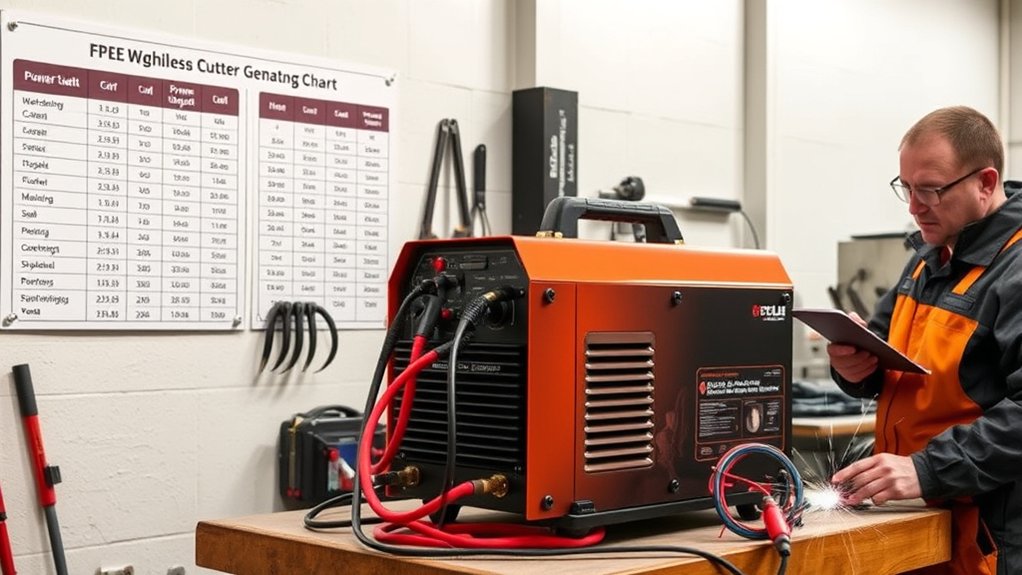
The first number to understand is the plasma cutter’s AC input requirement. Do not confuse it with the cutter’s DC output amperage.
A machine described as a 45-amp plasma cutter can deliver up to 45 amps to the cutting arc. That does not mean it draws 45 amps from every wall outlet or generator. Its AC input current changes with the input voltage, phase, design, and selected cutting output.
For example, the current Hypertherm Powermax45 SYNC specifications list 32 amps of input current at 240 volts, single-phase, while the cutting output can reach 45 amps. Hypertherm lists a 12.5 kVA, or 10 kW, engine-drive requirement for full output.
Before sizing a generator, find these items on the cutter’s nameplate or in its manual:
- Input voltage: Common examples include 120, 200, 208, 230, 240, 400, and 480 volts.
- Phase: Single-phase and three-phase equipment are not interchangeable.
- Frequency: Many cutters accept 50/60 Hz, but you must verify the exact machine.
- Rated input current: Use the input current at the voltage and output setting you plan to use.
- Input kW or kVA: These values are more useful for generator sizing than cutting-output amps.
- Engine-generator requirement: Use this value when the cutter manufacturer provides it.
- Required branch circuit: Check the specified breaker, fuse, conductor, plug, and receptacle.
- Air requirement: Record the required pressure and flow and determine whether the compressor is another electrical load.
Note: Duty cycle controls how long the plasma cutter can operate at a stated output and ambient temperature before it must cool. It does not reduce the generator power needed while the cutting arc is active.
A 60% duty cycle normally means the machine can cut for six minutes during a ten-minute test period at the stated amperage and temperature. Lowering the cutting current may increase the duty cycle, but the exact relationship is model-specific.
Factors to Consider When Choosing a Generator
Generator capacity is only one part of compatibility. Review all of the following before buying or connecting equipment.
| Factor | What to Verify | Why It Matters |
|---|---|---|
| Continuous rating | Continuous kW and kVA at the required voltage and phase | A short peak rating cannot support continuous cutting |
| Voltage and phase | Exact cutter input voltage and single- or three-phase supply | The wrong supply can prevent operation or damage equipment |
| Power quality | Voltage regulation, frequency stability, waveform, and any cutter-manufacturer limits | Poor power quality may cause faults, unstable arcs, or overheating |
| Receptacle and wiring | Plug type, receptacle rating, conductor size, breaker protection, and cord length | Undersized wiring creates voltage drop and heat |
| Other loads | Air compressor, dryer, lights, grinder, ventilation, and battery chargers | Simultaneous loads can overload an otherwise adequate generator |
| Site conditions | Altitude, temperature, rain exposure, ventilation, and noise limits | Engine output and safe placement depend on the environment |
An inverter generator is not automatically required just because the plasma cutter uses inverter electronics. A conventional engine-driven generator may work correctly when it meets the cutter manufacturer’s voltage, frequency, phase, capacity, and power-quality requirements.
Likewise, the fuel type does not determine electrical compatibility. Gasoline, diesel, and propane generators can all produce suitable power when properly designed and rated. Compare runtime, fuel availability, storage requirements, service access, noise, and the equipment manufacturer’s instructions.
Every combustion-powered generator produces exhaust. Propane should not be treated as safe for indoor operation simply because it may burn differently from gasoline or diesel.
Determining the Right Generator Size for Your Plasma Cutter
The best generator size is the one specified for your exact plasma cutter, input connection, and desired output. Manufacturer tables are more dependable than a generic multiplier because they can account for power factor, nonlinear input current, arc stretching, and internal protection.
The following chart shows verified examples. It is not a universal amp-to-generator conversion table.
| Example Plasma Cutter | Rated Cutting Output | Manufacturer Engine-Drive Requirement |
|---|---|---|
| Hypertherm Powermax30 AIR | Up to 30 A | 5.5 kW for full 30 A output |
| Hypertherm Powermax45 SYNC | Up to 45 A | 12.5 kVA, or 10 kW, for full 45 A output |
| Hypertherm Powermax65 SYNC | Up to 65 A | 15 kW for full 65 A output |
| Hypertherm Powermax85 SYNC | Up to 85 A | 20 kW, or 25 kVA, for full 85 A output |
| Hypertherm Powermax105 SYNC | Up to 105 A | 30 kW, or 37.5 kVA, for full 105 A output |
The amperage on the front of a plasma cutter is cutting output—not the AC amperage the generator must supply.
A smaller generator may support reduced cutting output when the cutter manufacturer specifically provides a reduced-output table. For example, some Hypertherm manuals list full and limited performance at several generator sizes. Do not assume the same relationship applies to another brand or model.
Products Worth Considering

【𝐂𝐞𝐫𝐭𝐢𝐟𝐢𝐜𝐚𝐭𝐢𝐨𝐧 & 𝐃𝐞𝐭𝐚𝐢𝐥𝐬】ETL Listed NEMA L14-30P to 6-50R, 4 Prong 30 Amp to 3 Prong 50 Amp, STW 10AWG/3C 125/250V 3750/7500W 12inch

50A to 30A Welder Adapter Cord: this adapter cord converts a 50amp 6-50P plug to a 30amp l6-30R locking receptacle, allowing you to easily connect the 30Amp welder and plasma cutter or other devices with a L6-30P plug to 50Amp welder outlet or other devices with a 6-50R outlet without changing the power cable; Max 240V 30 Amp, cannot transform to 120V

【30A to 50A Welder Adapter】:NEMA TT-30P to 6-50R welder adapter, rated 30 Amp, up to 250V / 7500W, STW 10AWG/3C pure copper, ETL Listed.
Importance of Generator Frequency, Voltage, and Phase
The generator must produce a supply that matches the plasma cutter’s listed input range. Check all three of these electrical characteristics:
- Voltage: A 240-volt cutter must be connected to a correctly configured and rated 240-volt output. A 120/240-volt generator may not provide its full advertised wattage from one receptacle.
- Frequency: North American generators commonly produce 60 Hz. Many modern cutters accept 50/60 Hz, but the nameplate or manual must confirm it.
- Phase: A single-phase generator cannot directly power a cutter that requires three-phase input. A receptacle shape or homemade adapter cannot change the phase.
Voltage should remain stable as the arc starts, stretches, and cuts. Frequency should also stay within the ranges permitted by both manufacturers. Do not apply a universal THD limit unless the plasma cutter manual specifies one.
A generator advertised with low harmonic distortion and automatic voltage regulation may be a good candidate, but those features do not replace the cutter manufacturer’s compatibility guidance. Confirm that the generator can support nonlinear electronic loads at the required kW and kVA.
Also inspect the physical connection. The plug, receptacle, breaker, and conductors must be rated for the required voltage and current. Long or undersized extension cords can cause voltage drop, heat, nuisance faults, and poor arc performance.
Handling Load Changes and Startup Surges
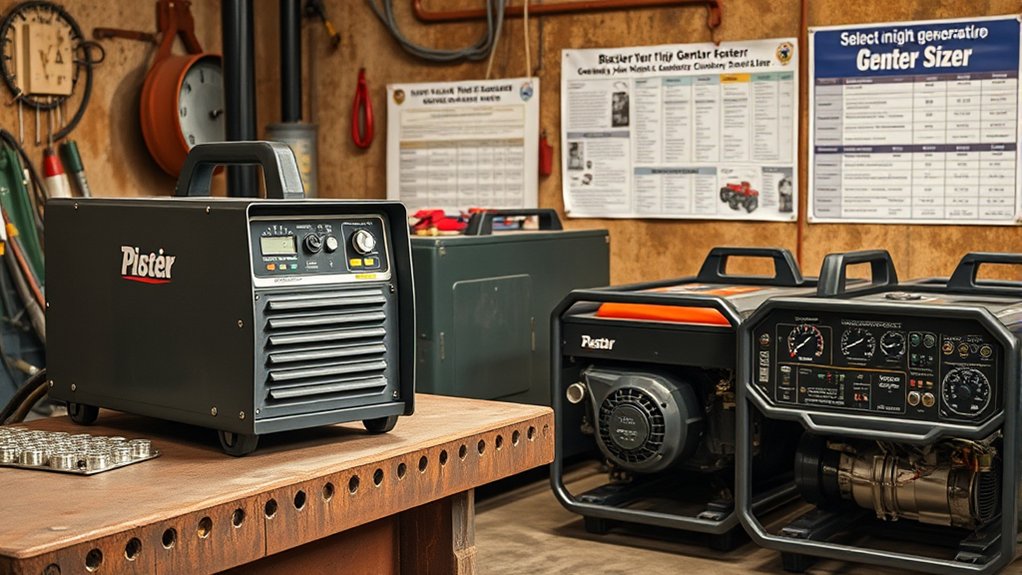
A plasma cutter does not necessarily behave like a basic induction motor, so a generic “three to four times running watts” rule should not be applied automatically.
Inverter plasma cutters can create fast changes in input demand when the arc starts or stretches. A manufacturer’s engine-drive table is designed to address that behavior. Use the listed requirement rather than adding several unrelated safety multipliers.
The external air compressor is different. Its motor may draw a high starting current when the pressure switch calls for air. If the compressor starts while you are cutting, the combined load can cause the generator to bog, trip, or drop voltage.
Pro Tip: When practical, use a separate power source for a large compressor. Otherwise, size the generator for the cutter and the compressor operating together, including the compressor’s documented motor-starting requirement.
Do not add a capacitor, soft-start device, phase converter, or homemade power-conditioning circuit unless the plasma cutter manufacturer, generator manufacturer, and a qualified electrician approve the exact setup. An unapproved device can create new voltage, overcurrent, shock, and warranty problems.
Ensuring Compatibility Between the Generator and Plasma Cutter
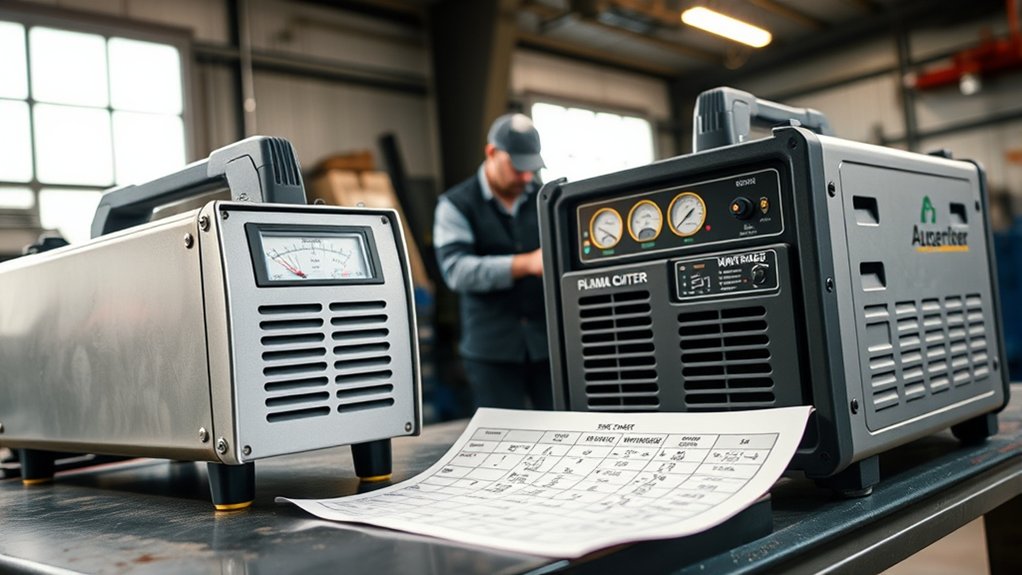
Use this checklist before connecting the equipment:
- Identify the exact cutter model and configuration. Similar model names may have different voltage or phase options.
- Find the manufacturer’s generator recommendation. Check the installation, setup, or engine-driven generator section of the manual.
- Match the voltage. Confirm both nominal voltage and the allowed input range.
- Match the phase. Verify single-phase or three-phase operation.
- Match the frequency. Confirm 50 Hz, 60 Hz, or 50/60 Hz acceptance.
- Compare continuous kW and kVA. Do not use only the generator’s short-duration maximum number.
- Add simultaneous loads. Include the compressor, ventilation, lights, and every tool that can run during a cut.
- Verify the connection. Confirm receptacle, plug, neutral arrangement, grounding, breaker, conductor size, and cord length.
Warning: Never operate a fuel-powered generator indoors, in a garage, or in another enclosed or partly enclosed space. Keep it dry and away from doors, windows, and vents. Follow the generator manual and applicable electrical rules for grounding, GFCI protection, cords, and receptacles.
Have a licensed electrician handle hardwired connections, unfamiliar neutral-bonding arrangements, phase issues, transfer equipment, or high-current receptacle installation. Never connect a generator directly to a building’s wiring without an approved transfer system.
How to Calculate Generator Capacity for a Plasma Cutter
Use the plasma cutter manufacturer’s engine-generator requirement whenever one is published. A manual calculation is a screening tool, not a replacement for that requirement.
Step 1: Record the input specifications.
Find the voltage, phase, frequency, and rated input current at the intended cutting output. Also record any listed input kW, kVA, power factor, or engine-drive requirement.
Step 2: Calculate apparent power when needed.
For single-phase AC equipment:
kVA = volts × amps ÷ 1,000
For three-phase AC equipment:
kVA = 1.732 × volts × amps ÷ 1,000
Step 3: Distinguish kVA from kW.
kVA is apparent power. kW is real power. They are related through power factor:
kW = kVA × power factor
Inverter-based equipment can place limits on both sides of the generator rating. A generator that has enough kW but too little kVA may still be unsuitable.
Step 4: Compare the calculation with manufacturer guidance.
Suppose a cutter is rated at 240 volts, single-phase, and 32 amps at full output:
240 × 32 ÷ 1,000 = 7.68 kVA
That calculation identifies the approximate apparent input load. It does not automatically establish the correct generator size. For the Powermax45 SYNC example, Hypertherm specifies a 12.5 kVA, or 10 kW, engine drive for full 45-amp output. Use that published requirement.
Step 5: Add the other simultaneous loads.
Add the compressor, air dryer, lights, ventilation, and other equipment. Use each device’s running load and documented starting requirement. Do not add only the wattage printed in marketing material.
Step 6: Apply environmental derating.
Generator output can fall at higher elevations and in demanding temperatures. Follow the exact altitude and temperature derating instructions in the generator manual. The advertised rating may assume conditions near sea level and a specified ambient temperature.
Step 7: Verify the final setup.
Confirm that the required capacity is available from the exact receptacle and voltage configuration you will use. Some generators divide their output between receptacles or windings, so the full nameplate wattage may not be available from one outlet.
Products Worth Considering

fit SG-55 AG-60 WSD-60 Plasma Cutter Torch
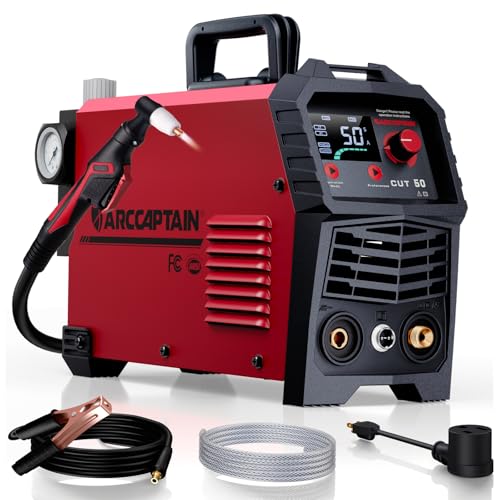
【Powerful Cutting Ability】Switch effortlessly between 110V and 220V for home or workshop use. Achieve professional 1/2" clean cuts on steel, aluminum, and copper with advanced LGBT technology. Perfect for DIY projects and heavy-duty tasks. Recommended maximum cutting thickness: 12mm @ 35A / 110V / 55 PSl; 18mm @ 50A / 220V / 75 PSI. Note: Requires compressed air (compressor sold separately).
Best Practices for Using a Generator With a Plasma Cutter
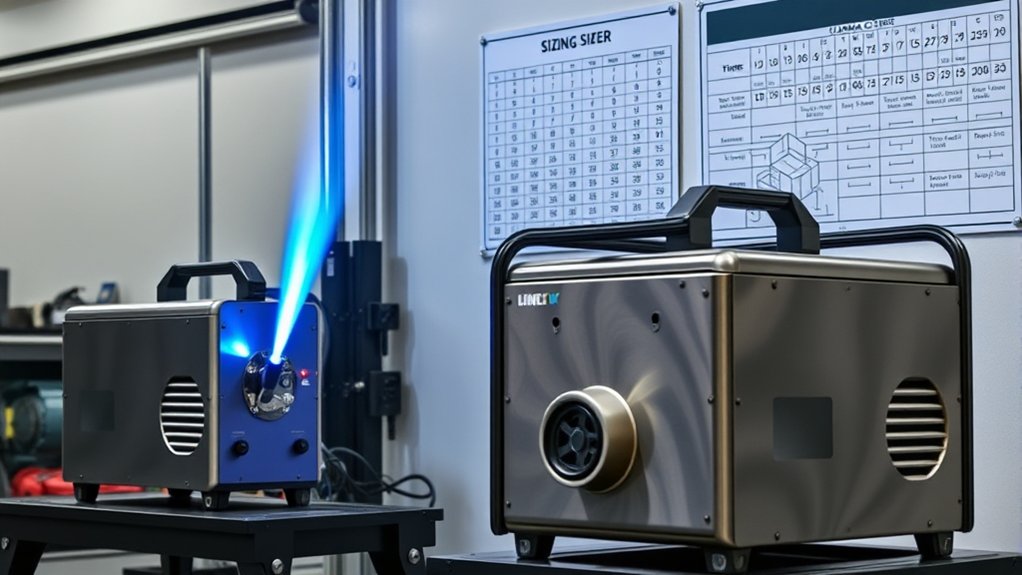
Once the generator and plasma cutter are confirmed as compatible, follow a controlled startup process.
- Place the generator outdoors on a stable, dry surface with the clearances required by its manual.
- Inspect the fuel system, grounding connections, receptacles, plugs, and cords.
- Confirm that the plasma cutter and other loads are switched off before connection.
- Start the generator and allow it to reach normal operating speed and voltage.
- Connect the cutter using the approved plug, receptacle, and properly rated cord.
- Connect and test the air supply before cutting.
- Begin at a moderate cutting output and check for overload warnings, engine bogging, voltage faults, or unstable arc behavior.
- Increase the cutting output only within the cutter and generator manufacturers’ limits.
- Stop work if cords, plugs, receptacles, or connectors become unusually hot.
- Shut the generator down and let it cool before refueling.
Pro Tip: Test the complete setup before taking it to a remote job. Make trial cuts at the planned amperage while the compressor cycles so you can identify overloads, voltage faults, or air-supply problems in a controlled location.
Keep the generator maintained according to its own service schedule. Oil-change, filter, spark-plug, battery, and fuel-system intervals vary by model, fuel type, operating hours, dust, temperature, and load.
Common Mistakes to Avoid When Selecting a Generator
- Sizing from cutting-output amps: A 45-amp cutter does not necessarily draw 45 amps from its AC supply.
- Using a universal multiplier: A blanket 1.5×, 2×, or 4× rule can overstate or understate the actual requirement.
- Comparing only watts: Both kW and kVA may limit generator compatibility.
- Using the peak rating: The generator must support the load with its continuous rating.
- Ignoring phase: A single-phase generator cannot directly supply a three-phase-only cutter.
- Ignoring the compressor: Compressor starting demand can cause the largest voltage drop in the setup.
- Assuming every inverter generator is suitable: Generator type alone does not prove voltage, phase, capacity, or power-quality compatibility.
- Using an undersized cord: Excessive length and small conductors cause voltage drop and heat.
- Using improvised adapters: An adapter cannot correct an incompatible voltage, phase, neutral, grounding, or current rating.
- Operating indoors: Open doors and windows do not make indoor generator operation safe.
- Adding unapproved electrical devices: Capacitors, phase converters, and soft starters require engineering and manufacturer approval.
Troubleshooting Generator and Plasma Cutter Problems
| Symptom | Likely Causes | What to Check |
|---|---|---|
| Generator bogs or trips when the arc starts | Insufficient continuous capacity, wrong receptacle, environmental derating, or other loads | Compare the setup with the cutter’s engine-drive table; disconnect extra loads and verify the generator rating at the selected voltage |
| Cutter displays an input-voltage fault | Voltage drop, unstable frequency, incorrect voltage setting, or undersized cord | Verify generator output, cord gauge and length, plug connections, and the cutter’s accepted input range |
| Arc stops when the compressor starts | Combined load or compressor motor starting demand exceeds generator capacity | Use a separate compressor supply or size the generator for both loads operating together |
| Cutter works at low amps but not full output | Generator supports only reduced cutter output or is derated by site conditions | Check the manufacturer’s reduced-output generator table and the generator’s altitude and temperature limits |
| Poor cut quality with no electrical fault | Low or wet air, worn consumables, poor work-clamp contact, speed, or torch-height problems | Inspect the air supply, consumables, work connection, cutting speed, and torch setup before blaming the generator |
| Plug or cord becomes hot | Loose connection, damaged contact, excessive cord length, or undersized conductors | Stop using the setup and have the connection, cord, and receptacle inspected |
Frequently Asked Questions
Can I use a solar generator with my plasma cutter?
Possibly, but the term “solar generator” normally describes a battery and inverter system. Its inverter must provide the cutter’s required voltage, phase, continuous kW, kVA, and load response. The battery must also store enough energy for the planned cutting time. Many portable power stations do not have a suitable 240-volt output or enough continuous capacity for a full-output plasma cutter.
How do weather conditions affect generator performance?
High elevation and demanding temperatures can reduce the available engine and generator output. Rain and wet surfaces create a serious shock risk. Follow the generator manual’s altitude, temperature, ventilation, weather-protection, and clear-air requirements, and never operate electrical equipment while standing in water.
Are there lower-emission generator options for plasma cutters?
A battery-inverter system can eliminate exhaust at the point of use when it has enough capacity. Propane and other fuel choices may change emissions, storage, and maintenance characteristics, but every combustion generator can produce dangerous carbon monoxide. Electrical compatibility and outdoor placement still apply.
What maintenance does a generator used with a plasma cutter need?
Follow the maintenance schedule for the exact generator and engine. Typical tasks include checking oil, filters, spark plugs, fuel, battery condition, cooling airflow, receptacles, and grounding connections. Heavy loads, dust, high temperatures, and long operating hours may shorten service intervals.
Can a battery backup system support a plasma cutter?
Yes, when the inverter provides the correct voltage, phase, continuous kW and kVA, and acceptable power quality. Battery energy capacity determines how long the cutter can operate. A small household UPS is normally unsuitable for a high-power plasma cutter.
Can I use a smaller generator if I lower the cutting amperage?
Some plasma cutters support reduced output from a smaller generator, and their manuals provide a table showing the permitted cutting current and performance. Use that table rather than guessing. Reduced generator capacity may limit arc stretching, gouging, cutting thickness, or duty cycle.
What should I do if my plasma cutter manual does not list a generator size?
Contact the plasma cutter manufacturer with the exact model, serial number, input voltage, phase, and planned output. Ask for the required continuous kW, kVA, allowable voltage and frequency range, and power-quality limits. A qualified electrician can then compare those requirements with the generator specifications and other loads.
Conclusion
The correct generator for a plasma cutter is determined by the cutter’s AC input and manufacturer-approved engine-drive requirement—not by cutting-output amps alone. Verify continuous kW and kVA, voltage, phase, frequency, receptacle, wiring, environmental derating, and the separate air-compressor load.
When the manufacturer provides a generator table, follow it. When it does not, calculate the electrical load as a starting point and confirm the final setup with the cutter manufacturer, generator manufacturer, or a qualified electrician. A properly matched system will start more reliably, maintain a stable arc, and avoid unnecessary stress on the generator and cutter.
Sources
- Hypertherm Powermax30 AIR specifications — verifies input and 5.5 kW engine-drive requirements.
- Hypertherm Powermax45 SYNC specifications — verifies input current, duty cycle, and 10 kW/12.5 kVA engine-drive requirements.
- Hypertherm Powermax65/85/105 SYNC system specifications — verifies current input, duty cycles, air requirements, and generator ratings.
- Fluke power-factor guide — explains the relationship between kW, kVA, voltage, current, and power factor.
- OSHA: Using Portable Generators Safely — supports carbon-monoxide, shock, cord, grounding, GFCI, fuel, and wet-location precautions.
- Honda generator owner’s manual — documents altitude-related engine-output reduction and generator operating precautions.