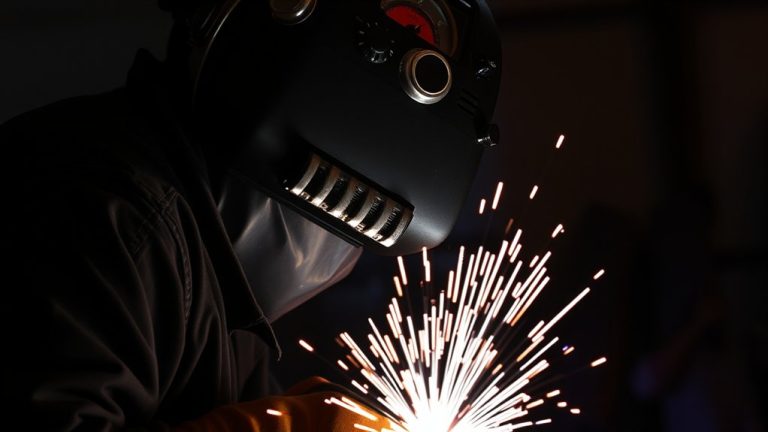
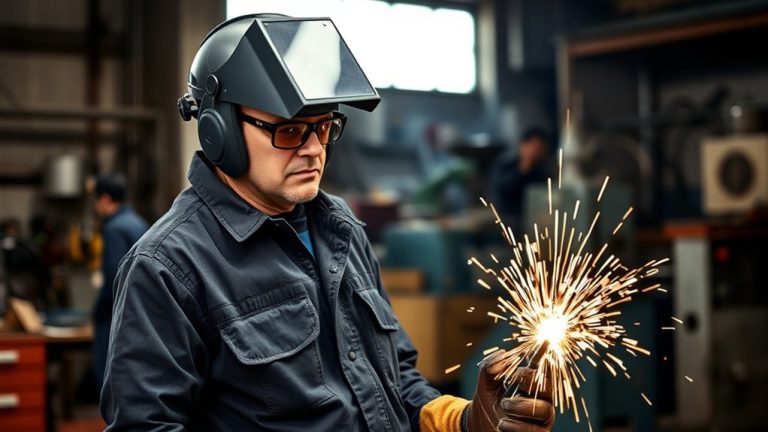
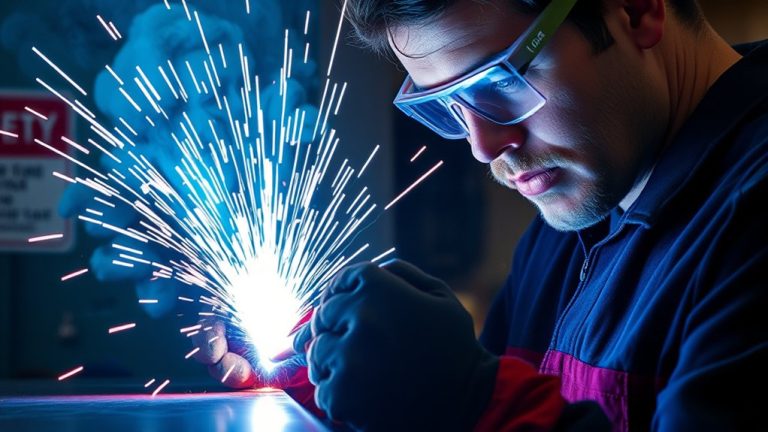
If you’re working with a plasma cutter, understanding its safety is essential. These powerful tools can pose significant risks due to high voltages, intense heat, and toxic fume emissions. It’s easy to be misled by myths that downplay these dangers. However, by focusing on key safety precautions like using appropriate personal protective equipment and ensuring proper ventilation, you can mitigate these hazards. Ready to explore the intricacies of plasma cutter safety?
Understanding the Basics of Plasma Cutting
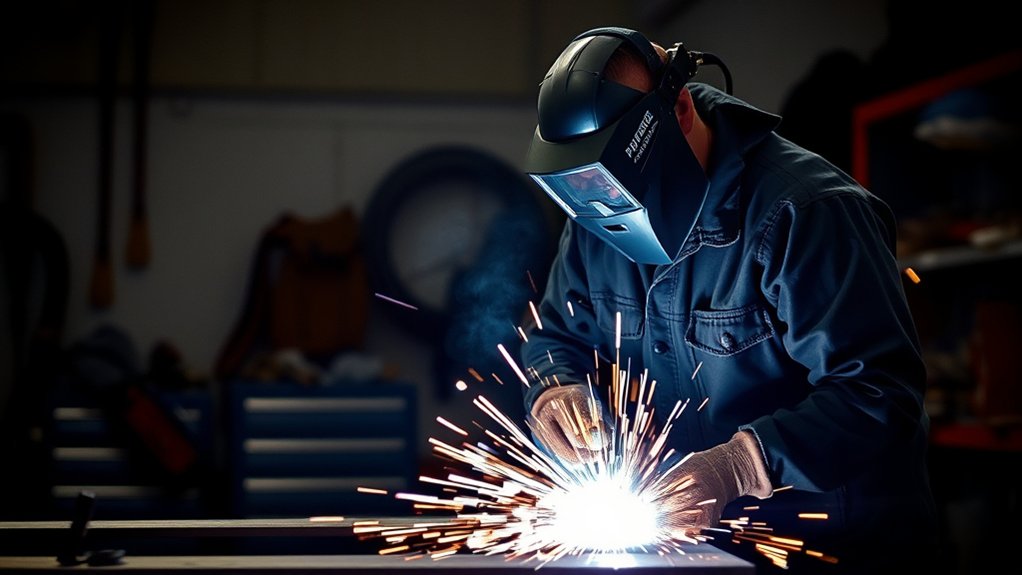
Plasma cutting, a powerful tool in the industrial domain, employs a high-velocity stream of ionized gas to slice through conductive materials with remarkable efficiency.
At its core, plasma cutting fundamentals rely on the transformation of a gas into plasma by subjecting it to extreme heat, reaching temperatures over 20,000°C. This ionized gas, or plasma, is then propelled through a nozzle to cut metals like steel, aluminum, and stainless steel with precision and speed.
Transforming gas into plasma with extreme heat enables precise cutting of metals like steel and aluminum.
You’ll notice that plasma cutters operate at 100 to 400 VDC, much higher than typical welding equipment, requiring diligent handling to prevent electric shocks. They offer versatility, slicing through materials ranging from 25mm to 150mm in thickness, depending on the setup.
For peak performance, guarantee proper ventilation to manage fumes and ultraviolet radiation. Understanding these plasma cutting fundamentals enables you to harness this technology’s capabilities effectively while maintaining safety.
Identifying Key Hazards Associated With Plasma Cutters
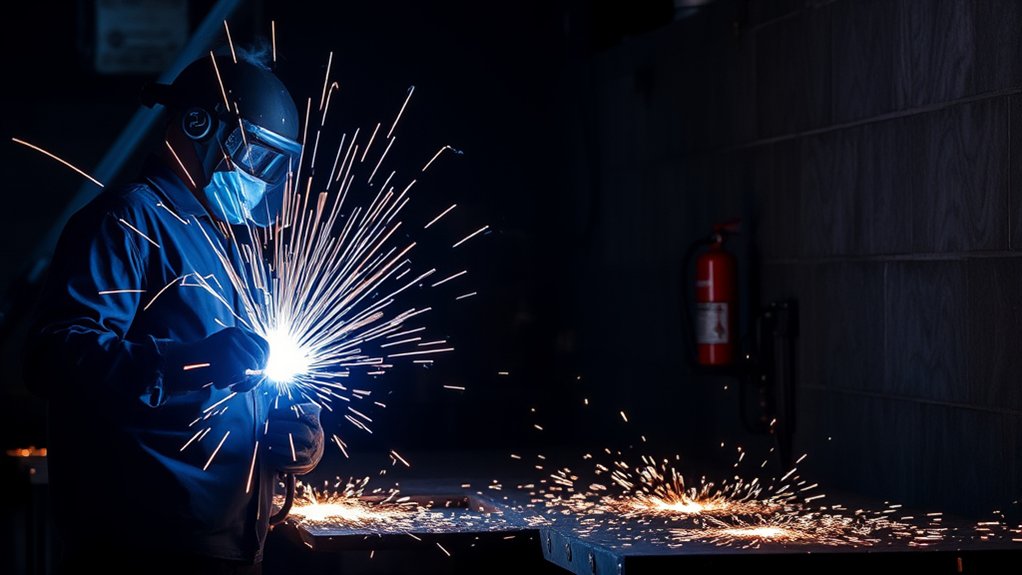
When operating a plasma cutter, understanding the inherent hazards is essential to guaranteeing a safe working environment. Plasma cutters function at high voltages, ranging from 100 to 400 VDC, presenting significant electrical hazards. Without proper grounding, you risk fatal electric shocks. It’s vital to adhere to safety protocols to mitigate these dangers.
Concurrently, the plasma arc generates extreme heat, creating burn risks. Be mindful of residual heat on cut materials, which can cause severe burns upon contact.
Moreover, cutting metals like stainless steel releases toxic fumes, including chromium and nickel. To protect yourself, guarantee proper ventilation and use respiratory protective equipment.
The operation also produces loud noise levels, often exceeding 100dB(A), necessitating ear protection to prevent hearing loss. Additionally, sparks and molten metal present fire hazards. Maintain a clutter-free workspace and keep flammable materials at least 35 feet away to minimize fire risks.
Dissecting Common Myths About Plasma Cutter Safety
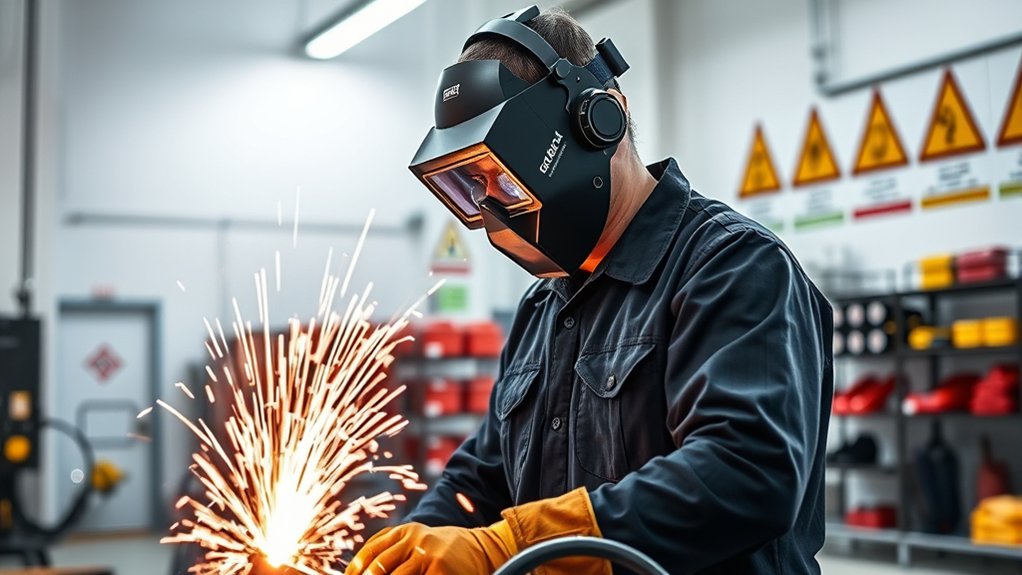
Despite the allure of advanced technology, plasma cutters aren’t inherently safe and require strict adherence to safety protocols to prevent injury. A prevalent myth suggests that plasma cutting’s sophistication guarantees safety; however, the high temperatures and voltages involved necessitate vigilance.
Myth debunking reveals that standard safety glasses aren’t enough—specialized face shields with the right lens shading are essential to protect against intense light and harmful rays.
Safety misconceptions extend to fire risks; sparks and molten metal can easily ignite flammable materials. It’s important to maintain a 35-foot clearance from potential fire hazards.
Another misconception is about ventilation—never underestimate the toxic fumes produced. Guarantee proper ventilation and use fume extraction systems.
Finally, grounding is mistakenly considered optional; however, secure metal-to-metal contact between the work cable and workpiece prevents potentially fatal electric shocks.
Essential Safety Precautions for Plasma Cutting
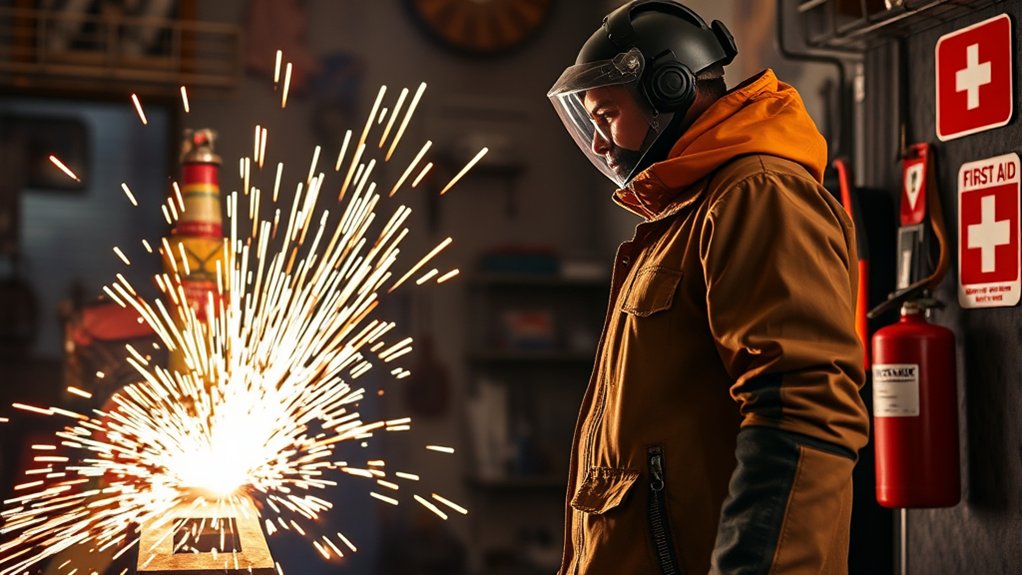
To guarantee a safe plasma cutting environment, you must rigorously adhere to essential safety precautions. Start by removing all flammable materials within a 35-foot radius to enhance fire prevention. Sparks and molten metal can easily ignite these materials, so maintaining this safe distance is vital.
Participate in thorough safety training to understand the operation risks and emergency procedures. Before each use, inspect the plasma cutter, focusing on cables and connections, to prevent electrical hazards. Replace any damaged components immediately.
Ensure the workspace is well-ventilated to dissipate toxic fumes effectively. In confined spaces, utilize fume extraction systems or respirators. Confirm the plasma cutter is properly grounded, adhering to the National Electrical Code (NFPA 70) and OSHA standards, to eliminate electrical shock risks.
Personal Protective Equipment: What You Need
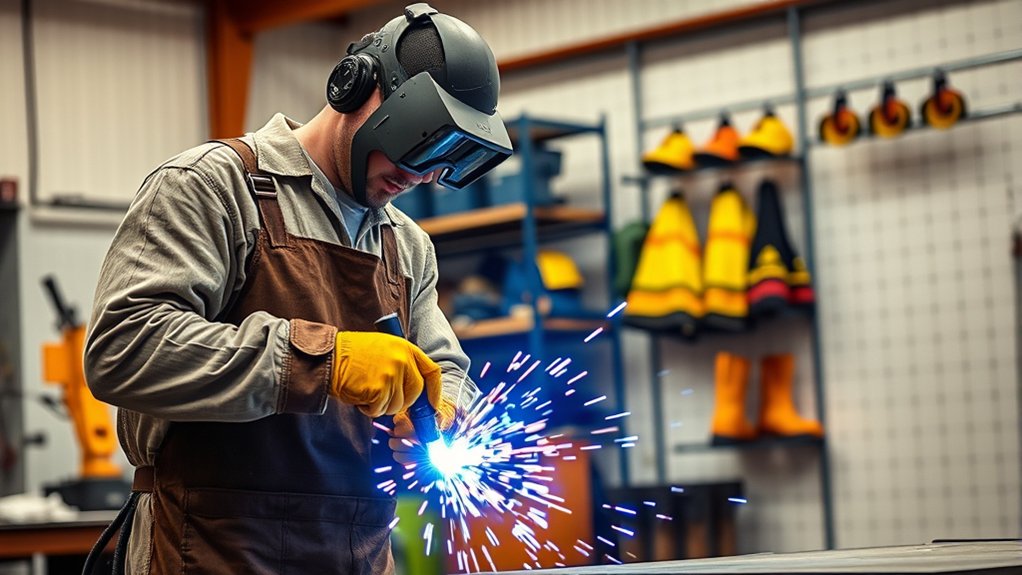
Before engaging in plasma cutting, make certain you’re equipped with the necessary personal protective equipment (PPE) to safeguard against various hazards. Protective gear is not just a recommendation but a critical safety standard. Begin with a welding helmet featuring a shade lens at level four or five to shield your eyes from intense UV radiation. Flame-retardant clothing and gloves are non-negotiable to protect your skin from sparks and molten metal.
Safety glasses must have side shields and meet ANSI Z87.1 standards to prevent debris-related eye injuries. The noise levels during plasma cutting can exceed 100dB(A), so hearing protection like earplugs or earmuffs is essential. Finally, respiratory protection, such as masks or respirators, guards against harmful fumes.
| Protective Gear | Purpose | Safety Standard |
|---|---|---|
| Welding Helmet | UV Radiation Protection | Shade Level 4 or 5 |
| Safety Glasses | Eye Protection | ANSI Z87.1 |
| Respiratory Mask | Fume Inhalation Prevention | N/A |
| Flame-retardant Gear | Burn Protection | N/A |
| Hearing Protection | Noise Reduction | N/A |
Maintaining Equipment for Safe Operation
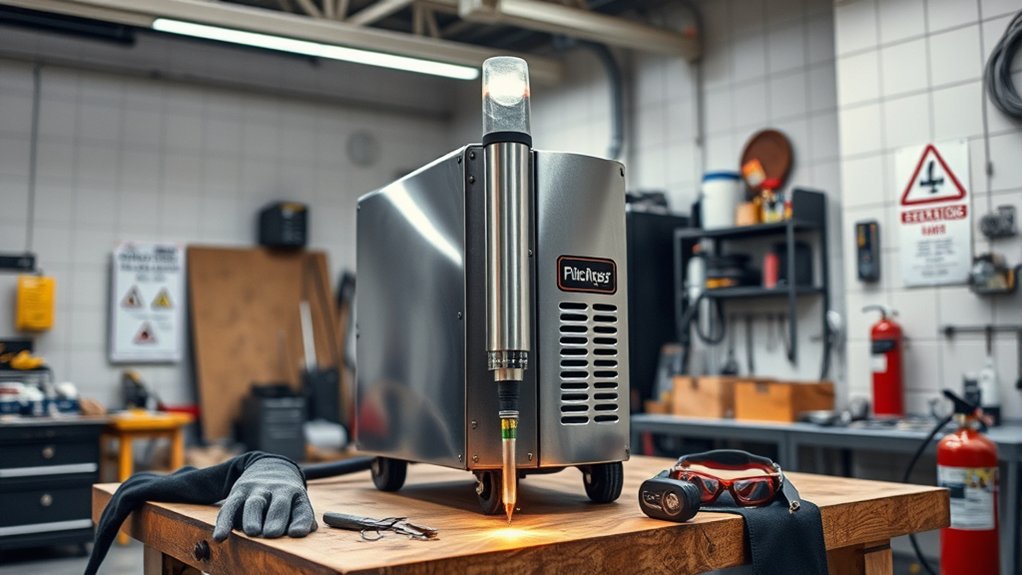
Guaranteeing your plasma cutter operates safely starts with diligent equipment maintenance.
Begin with regular cable inspections, checking for signs of wear or damage. Replace any compromised cables immediately to prevent electrical hazards. Pay close attention to connections and components to guarantee they’re intact and functioning properly.
Next, focus on equipment grounding. Adhere to the National Electrical Code (NFPA 70) and OSHA standards to minimize electric shock risks. Proper grounding not only protects you but also guarantees the plasma cutter performs efficiently. Use non-conductive surfaces for setup, further reducing shock potential.
Adhering to NFPA 70 and OSHA standards ensures safe and efficient plasma cutter operation through proper grounding practices.
Maintain a clean workspace, free from flammable materials, to prevent fire hazards from sparks and molten metal.
Routinely verify the functionality of safety circuits and cooling systems to avoid overheating and other operational issues. Through thorough maintenance practices, you enhance both safety and performance, guaranteeing that your plasma cutter remains a reliable tool in your workshop.
Ensuring Proper Ventilation and Fume Control
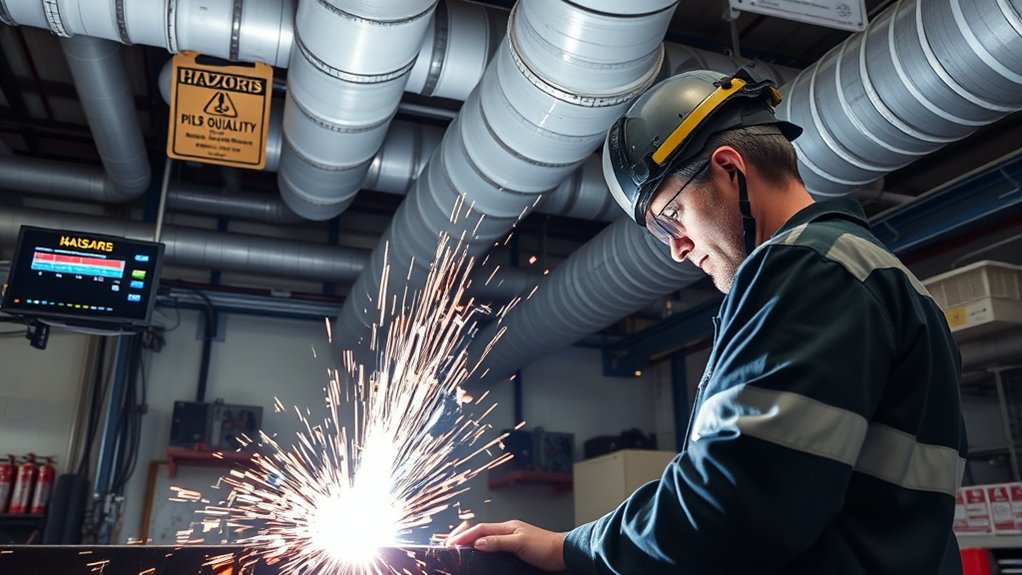
You need to prioritize proper airflow and effective fume extraction when using a plasma cutter to guarantee a safe working environment.
Implementing a Local Exhaust Ventilation system with a capture velocity of at least 0.75 meters per second can efficiently manage toxic emissions and maintain air quality.
Additionally, consider removing coatings from metals before cutting to further reduce fume toxicity and enhance safety.
Importance of Airflow
When operating a plasma cutter, guaranteeing proper ventilation is paramount to mitigate the risks posed by toxic fumes, especially those emitted from metals like stainless steel.
You must understand airflow dynamics to implement effective ventilation strategies. Proper airflow reduces the concentration of harmful chromium and nickel fumes.
In confined spaces, using air-supplied respirators is non-negotiable, while maintaining good airflow prevents asphyxiation.
Local exhaust ventilation (LEV) systems are essential; they need to be positioned near the fume source for maximum effectiveness.
Regularly test extraction rates against design standards to verify these systems control exposure effectively.
Additionally, removing coatings from metals before cutting greatly lowers fume toxicity, highlighting the importance of thorough pre-cutting preparation for a safer environment.
Effective Fume Extraction
While operating a plasma cutter, managing effective fume extraction is essential to safeguard against harmful exposure. Proper fume management hinges on extraction systems, with local exhaust ventilation (LEV) being vital for controlling toxic emissions.
For dry cutting, a down draft high volume LEV is necessary, achieving a capture velocity of at least 0.75 meters/sec at the fume production point to effectively extract harmful particles. Regularly test your system’s extraction rate against design standards to guarantee compliance with health and safety regulations.
Even underwater cutting, which reduces noise and fumes, might still require LEV to handle residual gases. If working in confined spaces, use safe systems of work and verify that respiratory protective equipment is CE marked or HSE approved for maximum safety.
Frequently Asked Questions
Can a Beginner Use a Plasma Cutter Safely?
Yes, a beginner can use a plasma cutter safely by taking precautions and wearing the right safety equipment. Focus on understanding the machine’s manual, checking connections, and using protective gear like gloves, goggles, and flame-resistant clothing.
What Materials Should Never Be Cut With Plasma Cutters?
Never cut materials like PVC, zinc-coated metals, or magnesium with plasma cutters. Cutting these can release toxic fumes. Did you know 40% of plasma cutting hazards involve toxic exposure? Always avoid flammable materials to prevent accidents.
How Often Should Plasma Cutter Safety Training Be Refreshed?
You should refresh your plasma cutter safety certification annually. Regular training frequency guarantees you’re updated on the latest safety protocols and techniques, minimizing risks. Staying informed and certified helps maintain a safe and efficient work environment.
Are There Specific Plasma Cutters Designed for Hobbyists?
Yes, you’ll find hobbyist plasma cutters designed with beginner-friendly models. But which one suits your needs? Analyze features like power, portability, and ease of use before diving in, ensuring your choice aligns with your projects.
How Do Environmental Conditions Affect Plasma Cutting Safety?
Environmental conditions like poor air quality and temperature extremes can impact plasma cutting safety. You should guarantee proper ventilation to avoid inhaling harmful fumes and maintain equipment in moderate temperatures to prevent overheating or malfunctions.
Conclusion
In your quest for cutting with caution, consistently consider vital safety steps. Plasma cutting presents potential perils, but proper precautions prevent problems. Prioritize personal protective equipment—helmets, gloves, and respiratory gear—to guard against glaring UV rays and grievous gases. Ground your gear, keep your workspace clutter-free, and manage fumes meticulously. Regularly review and refresh your safety knowledge, ensuring efficiency and effectiveness. By embracing these essential elements, you enhance your environment’s safety and safeguard your skills.