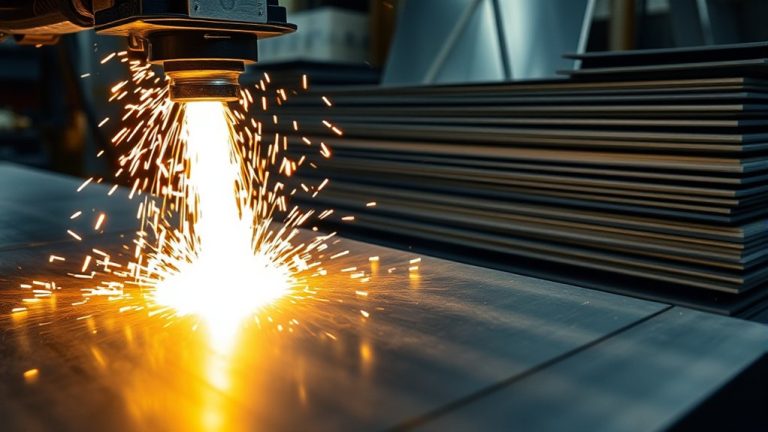
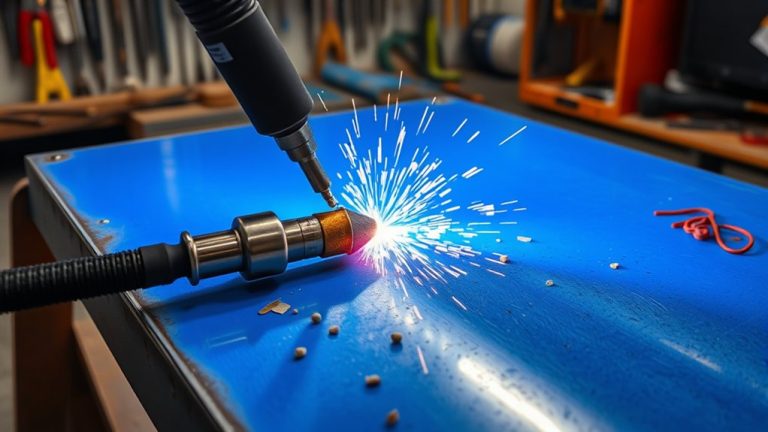
When you’re considering how thick a plasma cutter can cut, focus on three key factors: amps, voltage, and travel speed. Amperage determines the power your cutter can deliver; higher amps mean thicker cuts. Voltage guarantees a stable arc, essential for precision. Travel speed must be adjusted to match material thickness: slower speeds for thicker metals, faster for thinner ones. Mastering these elements is vital for ideal cutting performance. Curious about aligning these for different materials?
Understanding Plasma Cutter Amperage and Its Impact on Cutting Thickness
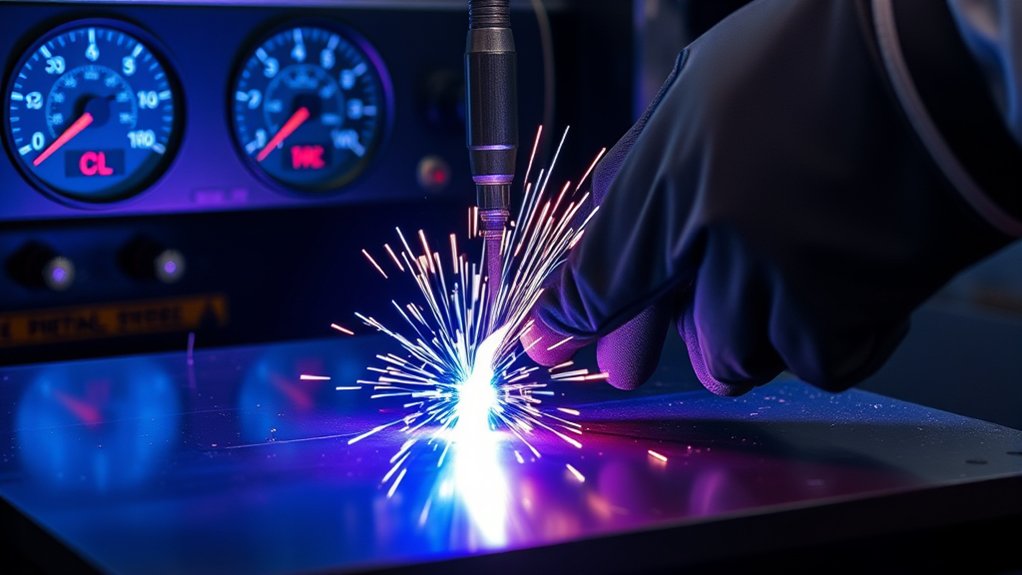
Understanding the role of plasma cutter amperage is crucial when determining cutting thickness. By mastering amperage settings, you gain the ability to cut with precision and speed, achieving the freedom to work with various materials.
The thickness guidelines suggest that you need about 1 amp per 0.001 inch of thickness; hence, a 50A cutter effectively handles up to 0.050 inches. For 1/4-inch steel, you usually set your cutter to 60A, while 1-inch thickness demands around 85A to maintain cutting efficiency.
Higher amperage allows faster cuts through thicker materials, but it also requires careful management. Excessive amperage can lead to warping and dross, compromising cut quality.
Matching amperage settings to your material’s thickness guarantees maximum performance and extends consumable life. This control not only enhances your cutting capabilities but also empowers you to tackle diverse projects without hesitation, expanding your creative and professional horizons.
The Role of Voltage in Plasma Cutting Performance
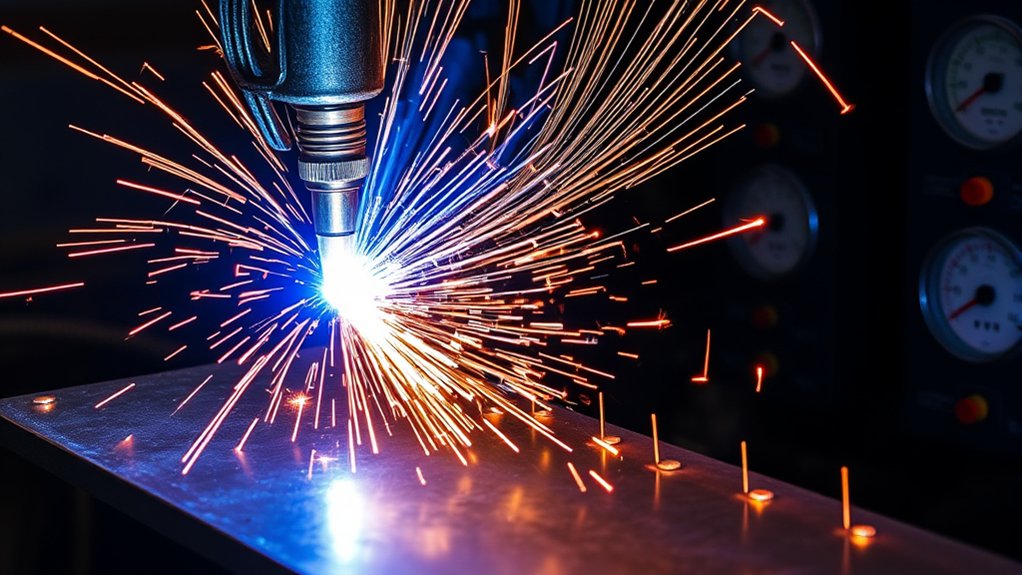
Balancing amperage settings with voltage adjustments is key to optimizing plasma cutting performance. Voltage stability plays an essential role in maintaining a consistent torch-to-work distance, directly impacting cut quality.
If voltage varies, so does the arc, potentially leading to angular cuts and compromised precision. Keep the standoff distance steady to guarantee a clean cut profile and smooth surface finish.
Optimal voltage settings can markedly minimize dross formation, which is especially beneficial when cutting thin metals. By fine-tuning voltage, you can enhance the quality of your cuts and reduce post-process cleanup.
However, be cautious with higher voltage levels; while they speed up cutting, they also heighten the risk of warping thin materials.
Adjustable voltage features in plasma systems are your ally, enabling a stable arc and effective cutting. Prioritize voltage stability to achieve superior cut quality and access the full potential of your plasma cutter.
Optimizing Travel Speed for Maximum Cutting Efficiency
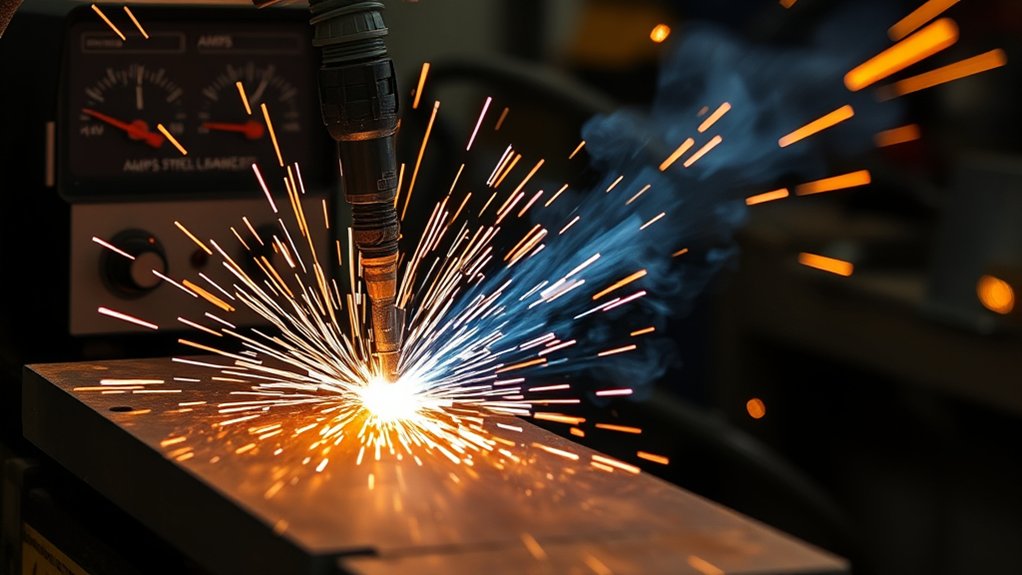
When optimizing travel speed for maximum cutting efficiency, it’s imperative to match the speed with the metal’s thickness for precise results.
Adjusting travel speed is significant: thicker materials demand slower speeds, typically between 6 to 30 IPM, to minimize dross and guarantee cut quality. For thin metals, a speed around 100 IPM maintains cutting speed consistency without sacrificing precision.
Excessively fast speeds risk arc instability and degrade cut quality, while slow speeds introduce excessive heat, causing warping and dross. Consistency in speed is essential; fluctuations can lead to uneven cuts and increased consumable wear.
Regularly replace worn consumables for peak performance.
Implement feedback systems, like those in cobot plasma cutters, to achieve travel speed adjustments over 100 IPM, enhancing both efficiency and accuracy.
- Feel the power of precision: Master your cuts with perfect speed.
- Liberate your workflow: Achieve flawless results with peak speeds.
- Conquer complexity: Tackle any thickness with confidence.
- Maximize your efficiency: Release the full potential of your plasma cutter.
Balancing Amperage, Voltage, and Travel Speed for Different Materials
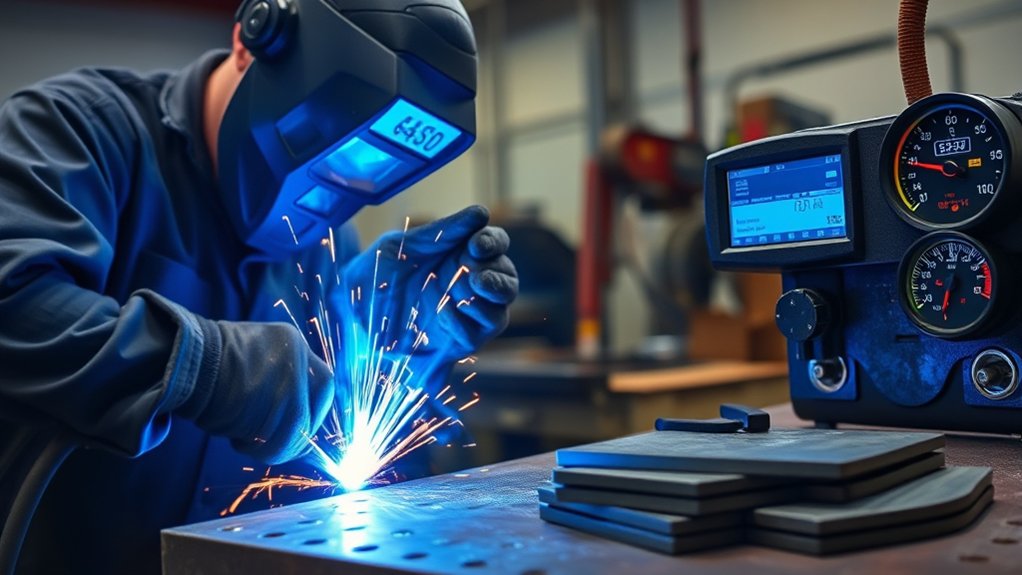
To achieve the ideal cut, one must skillfully balance amperage, voltage, and travel speed for the specific material at hand. Amperage adjustments are essential; higher amperage allows cutting thicker materials like 1-inch steel swiftly. Voltage variations influence arc characteristics—higher voltage yields angular cuts, vital for maintaining precision when the torch-to-work distance changes. A consistent travel speed, tailored to material thickness, enhances cutting precision. For instance, cutting 1/4-inch steel necessitates speeds around 200 IPM. Here’s how you can balance these parameters:
| Material | Amperage (A) | Travel Speed (IPM) |
|---|---|---|
| 1-inch Steel | 85 | 60 |
| 1/4-inch Steel | 50 | 200 |
| Stainless Steel | 50 | 50-100 |
| Aluminum | 65 | 150 |
| Copper | 70 | 120 |
Proper amperage and voltage settings are indispensable for clean cuts. Maintain a steady travel speed—too fast causes arc instability, while too slow leads to excessive heat input.
Tips for Achieving Clean Cuts Across Various Metal Thicknesses
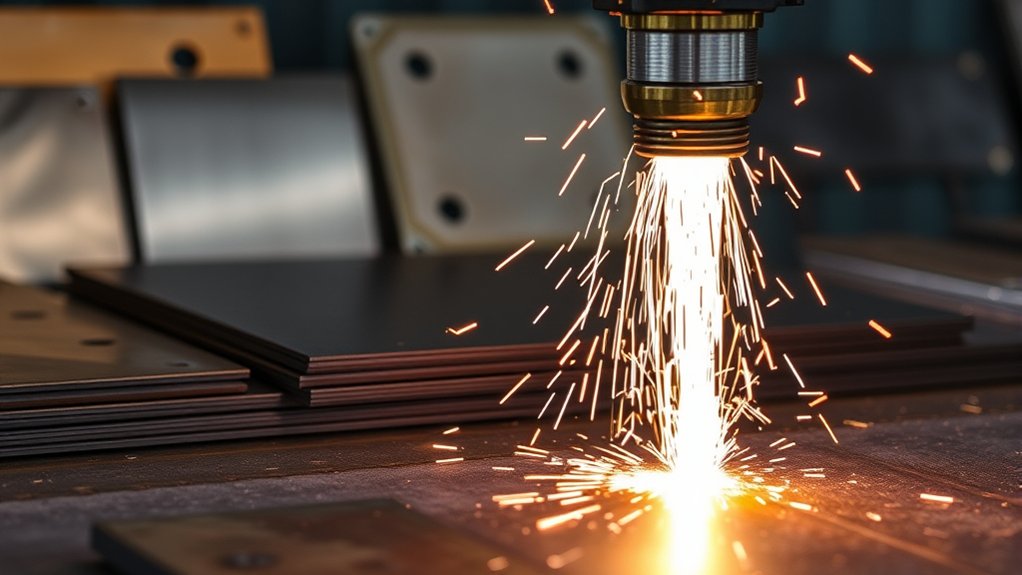
Achieving clean cuts across various metal thicknesses hinges on precise adjustments tailored to each material’s unique properties.
To enhance cut quality, adjusting amperage to match metal thickness is key. For thin sheets, opt for FineCut consumables to produce a narrow kerf and a stiff arc. For medium-thickness metals, like 1/4-inch material, a device such as the Hypertherm Powermax 85 SYNC operates efficiently at 200 IPM, while thicker plates require industrial-grade models like the Hypertherm MAX200 for cutting up to 2 inches with precision at 6 IPM.
- Embrace precision: Adjust amperage for each specific thickness, optimizing cut quality.
- Harness efficiency: Use the right plasma cutter for the metal’s thickness, freeing you from subpar results.
- Master speed: Maintain correct travel speed to prevent dross and distortion.
- Ensure steadiness: Keep a consistent torch-to-work distance for angular precision and enhanced quality.
These strategies empower you to achieve superior cuts, regardless of metal thickness.
Frequently Asked Questions
How Do Environmental Factors Affect Plasma Cutting Performance?
Environmental factors considerably impact plasma cutting. You’re dealing with variations in cutting conditions and atmospheric pressure, which can alter arc stability and cut quality. Optimize your setup by adjusting parameters to accommodate these external influences for precise, efficient results.
What Safety Precautions Are Essential When Using a Plasma Cutter?
When wielding the power of a plasma cutter, like a dragon’s breath, make certain you wear safety gear to protect against burns. Stay vigilant for fire hazards by maintaining a clean workspace and keeping fire extinguishers nearby.
How Does Plasma Cutter Maintenance Impact Cutting Quality?
Maintaining your plasma cutter is essential for ideal cutting quality. Follow maintenance tips like regular electrode and nozzle checks, ensuring proper air pressure, and monitoring consumables. These practices enhance quality control, empowering you to achieve precise, liberating cuts.
Can Plasma Cutters Be Used on Non-Metal Materials?
Using a plasma cutter on non-metal materials is like trying to slice water with a knife. Plasma cutter applications focus on conductive metals, so they’re not suitable for non-metals due to their lack of electrical conductivity.
What Are Common Troubleshooting Steps for Poor Plasma Cutting Results?
Check your cutting speed and make certain it’s not too fast, affecting arc stability. Inspect the electrode and nozzle for wear. Verify gas pressure and flow settings. Confirm proper grounding to enhance cutting performance and liberate your creativity.
Conclusion
To master plasma cutting, it’s essential you strike a perfect balance between amperage, voltage, and travel speed. Think of it as a dance: amperage leads, setting the pace for thickness; voltage follows, ensuring stability; and travel speed keeps the rhythm, adjusting for material challenges. By optimizing these elements, you’ll achieve clean, precise cuts, preventing issues like warping and dross. Remember, the right settings are your ticket to slicing through metal with finesse and efficiency.