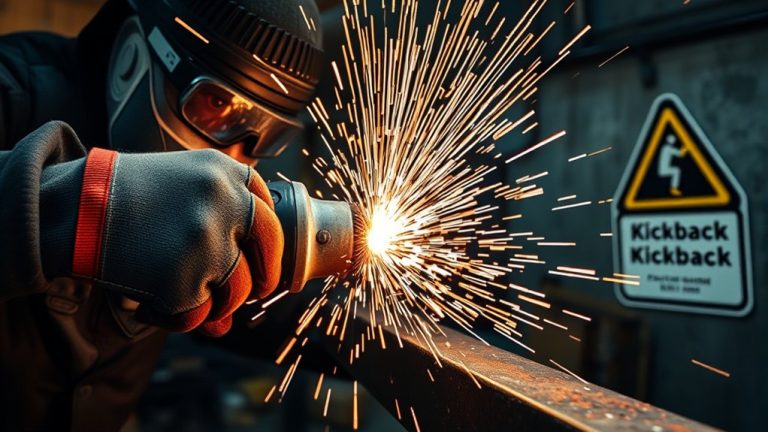
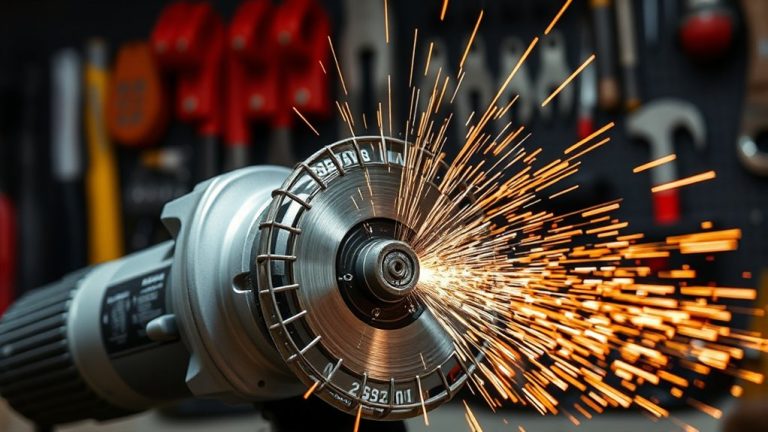
To bevel metal with an angle grinder, gather essential tools: a 4.5-inch grinder, flap disc, angle finder, marker, and clamps. First, measure and mark a 22.5-degree angle on the metal plate. Secure the plate firmly on a stable surface. Use long, even strokes with the grinder, applying consistent pressure to achieve a clean bevel. Finish with the flap disc for a polished edge. Following these steps can enhance your technique, revealing further tips and tricks.
Overcoming Bevel Cutting Struggles: Essential Tools to Gather
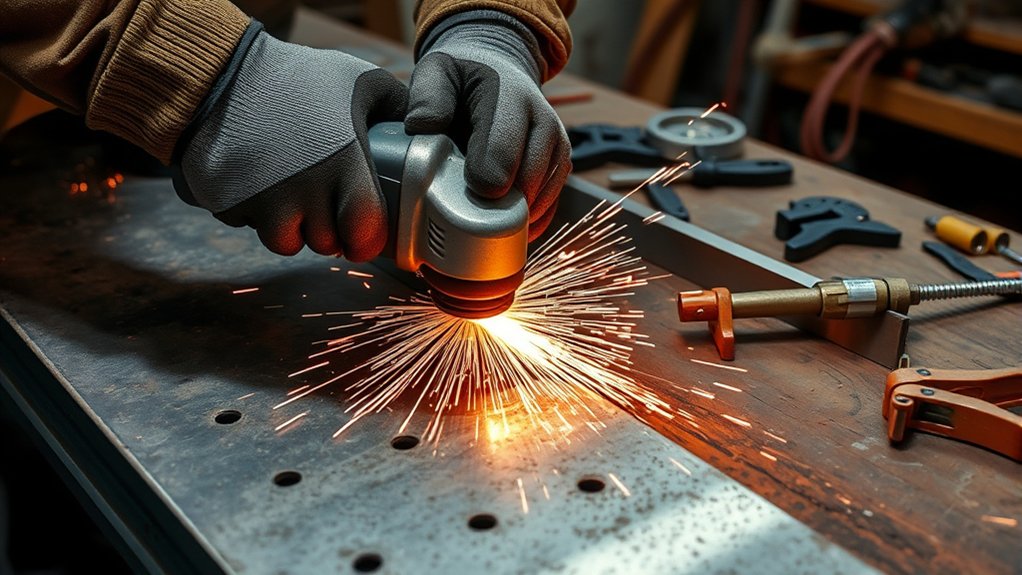
When you’re gearing up to bevel cut metal, gathering the right tools is vital for a successful outcome. Start with a 4 and 1/2 inch angle grinder equipped with a flap disc, which allows for fine adjustments and smooth finishes. You’ll also need a marker to clearly mark your desired bevel angle of 22.5 degrees on the plate. Use a straight edge for accuracy, and fill in the line for better visibility. An angle finder is important to guarantee you’ve set the included angle at 68.5 degrees—90 degrees minus your bevel angle—before you begin. To maintain stability during grinding, secure the plate with clamps or vice grips. This prevents movement and enhances safety. Finally, practice your flap disc technique to achieve a high-polish finish, smoothing out imperfections for a professional result. With these tools, you’ll overcome bevel cutting struggles effectively.
Measure and Mark Your Bevel Angle Accurately
To measure and mark your bevel angle accurately, start by using an angle finder tool to set the desired 22.5-degree angle. Once you’ve established the angle, use a straight edge and a marker to draw a clear cutting line across the plate. This line should be dark and filled in to enhance visibility, ensuring you grind precisely to the mark without exceeding it.
Use Angle Finder Tool
An angle finder is essential for measuring and marking your bevel angle accurately, guaranteeing precision in your cuts. Start by placing the angle finder on the metal surface to set your desired bevel angle. For instance, if you need a 22.5-degree bevel, adjust the angle finder to 68.5 degrees, which is its complementary angle. Once set, mark the angle on the metal plate with a dark line for better visibility. To enhance accuracy, use a straight edge to draw a clear cutting line across the plate. This line will guide your grinding process, helping you maintain a consistent bevel. Regularly check your angle during grinding to guarantee precision and make adjustments as necessary for any deviations.
Mark Clear Cutting Line
Marking a clear cutting line is essential for achieving an accurate bevel on your metal workpiece. Use a marker, like a Sharpie, to draw a visible line across the plate where you’ll grind. To set your bevel angle, employ an angle finder and measure 22.5 degrees, ensuring you understand the included angle of 68.5 degrees. Next, utilize a straight edge, such as a speed square, to create a precise reference line. Fill in the marked line to enhance visibility, ensuring you grind until no black remains. This careful attention to detail not only aids in achieving a clean edge but also helps maintain the integrity of the back edge of the plate, preserving its strength and structure.
Secure Your Plate to Grind Safely
Securing your plate is essential for safe and effective beveling with an angle grinder. Use clamps or vice grips to securely hold the 3/8 inch or 1/2 inch plate in place, preventing any movement during the grinding process. Position the plate on a stable workbench or surface to minimize vibrations. This guarantees safety while you work.
Before you start, pay attention to your surroundings; make sure the grinding area is clear of obstacles and flammable materials. Check that your angle grinder is in good working condition and that the flap disc is properly attached.
Always wear appropriate personal protective equipment (PPE), such as safety goggles, gloves, and a dust mask, to protect yourself during the grinding process. By taking these precautions, you’ll secure your plate to grind safely, allowing you to focus on achieving clean, precise bevels.
Bevel Cutting: Master the Grinding Technique for Consistency
To achieve a consistent bevel, use long, even strokes with your angle grinder, applying uniform pressure throughout the process. Keep an eye on high spots or angle deviations, adjusting as needed to maintain precision. Finish the bevel with a flap disc for fine adjustments, ensuring a polished edge that meets your specifications.
Consistent Grinding Strokes
Achieving consistent grinding strokes is crucial for mastering bevel cutting with an angle grinder. Use long, even strokes to maintain a uniform bevel angle and prevent high spots or uneven surfaces. Continuously monitor your grinding process, adjusting your technique if you notice angle deviations. Apply steady pressure on the grinder; let the flap disc do the work. Forcing it can lead to inaccuracies and overheating. Focus on a slow, methodical approach to accurately shape the bevel—rushing compromises edges and leads to uneven cuts. Regular practice with the flap disc technique is essential for honing your skill in consistent grinding strokes, allowing you to achieve a professional finish with confidence and precision.
Flap Disc Finishing Techniques
Flap disc finishing techniques are essential for achieving smooth and consistent bevels in your metalworking projects. Using a flap disc instead of traditional grinding stones allows for finer adjustments and a superior surface finish. To master the technique, practice maintaining long, even strokes while grinding. This guarantees a flat bevel and uniformity. Keep an eye on your progress, and grind until any black marker line is gone, indicating complete material removal. Your skills will improve with hands-on experience, enhancing your confidence in bevel cutting. Remember, the effectiveness of flap disc finishing increases as you refine your technique. Invest time in practice to elevate the quality of your bevel finishes consistently.
Polish Your Bevel With a Flap Disc
Polish your bevel with a flap disc for a superior finish that outperforms traditional grinding stones. This tool allows for smooth adjustments and an exceptional surface quality. To achieve the best results, follow these steps:
- Use Long, Even Strokes: Maintain consistent pressure to avoid high spots or uneven areas.
- Monitor Progress: Continuously check that no black marker remains visible on the marked line.
- Adjust Technique: Don’t hesitate to modify your approach based on the surface condition.
- Final Touch: Once the desired bevel angle is achieved, apply a flap disc for that high polish finish.
Mastering the flap disc technique takes practice, but even basic tools can yield impressive results when used correctly. With patience and precision, you’ll elevate your metalworking skills and achieve professional-quality bevels.
Safety Precautions to Follow While Grinding
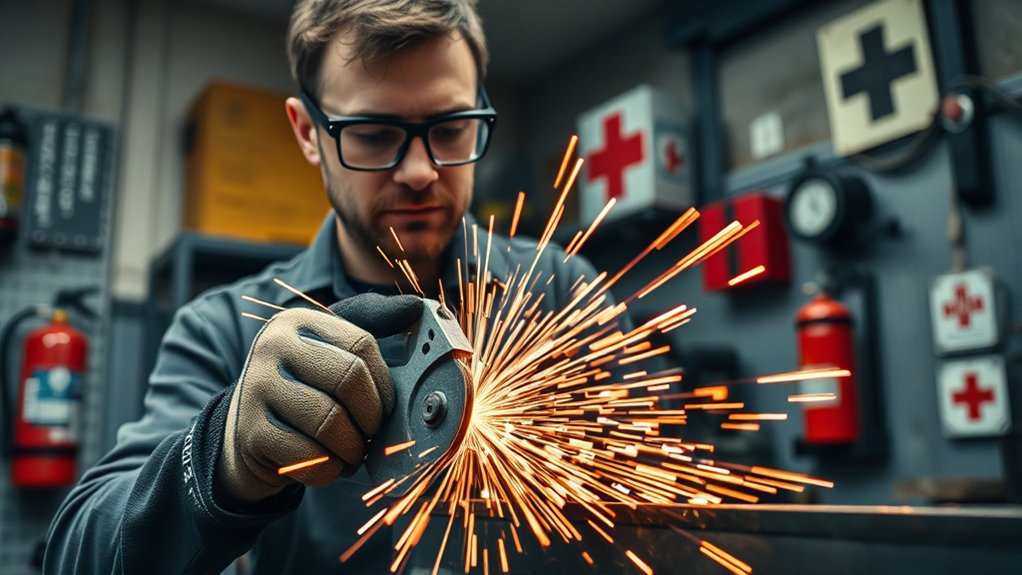
When grinding metal, it’s essential to prioritize safety to prevent accidents and injuries. Always wear appropriate personal protective equipment (PPE) including safety goggles, gloves, and a face shield to protect yourself from flying debris and sparks.
| Safety Precautions | Description |
|---|---|
| Wear Safety Goggles | Shield your eyes from sparks and debris. |
| Confirm Ventilation | Avoid inhaling harmful fumes and dust. |
| Inspect Equipment | Check for cracks or defects in the grinder. |
Secure the metal plate with clamps or vice grips to prevent movement, which could lead to uneven bevels or injury. Maintain a safe distance from others; make sure bystanders know you’re grinding. By following these precautions, you’ll create a safer workspace and enhance your grinding experience.
Practice Tips to Improve Your Bevel Cutting Skills
Improving your bevel cutting skills with an angle grinder requires consistent practice and attention to detail. To enhance your technique, follow these tips:
- Long, Even Strokes: Use your angle grinder with a grinding wheel to make long, even strokes. This helps create a flat bevel and a polished finish with the flap disc.
- Measure and Mark: Accurately measure and mark your desired bevel angle, aiming for 22.5 degrees, to guarantee precise cuts.
- Utilize a Straight Edge: Employ a straight edge and marker to draw a clear line across the metal plate. Grind until no black remains visible for accuracy.
- Assess and Adjust: Regularly check your grinding technique for high spots or deviations. Emphasize a slow, methodical approach to maintain consistency.
Engage in hands-on practice to build familiarity and confidence, and refine your bevel cutting skills over time.
Frequently Asked Questions
Should the Bevel Be up or Down?
The bevel orientation should be down. This positioning enhances control, directs shavings away, and maintains the back edge’s integrity. Practicing this technique will improve your precision and confidence, leading to professional-quality bevels.
What Are 10 Safety Precautions Before Using a Grinding Machine?
Before using a grinding machine, make certain you wear PPE, check the machine’s condition, secure the workpiece, clear flammable materials, and review the manual. Prioritizing grinding safety keeps you protected and enhances your efficiency.
How to Make a Beveled Edge?
To make a beveled edge, mark your desired angle, secure the metal, and grind along the line using consistent strokes. Focus on bevel techniques to achieve a smooth finish, ensuring no marker remains visible.
How to Use Angle Grinder Step by Step?
To use an angle grinder, secure your metal piece, mark your desired angle, and employ smooth, consistent strokes. Mastering grinding techniques demands practice, so embrace the journey while prioritizing safety with protective gear.
Conclusion
By following these steps, you can confidently bevel metal with an angle grinder. Remember, practice makes perfect; as the saying goes, “Rome wasn’t built in a day.” With time and experience, your skills will sharpen, resulting in cleaner, more precise bevels. Always prioritize safety and stay diligent in your technique. Each cut brings you closer to mastering this essential skill, transforming your projects from mere ideas into beautifully crafted realities.