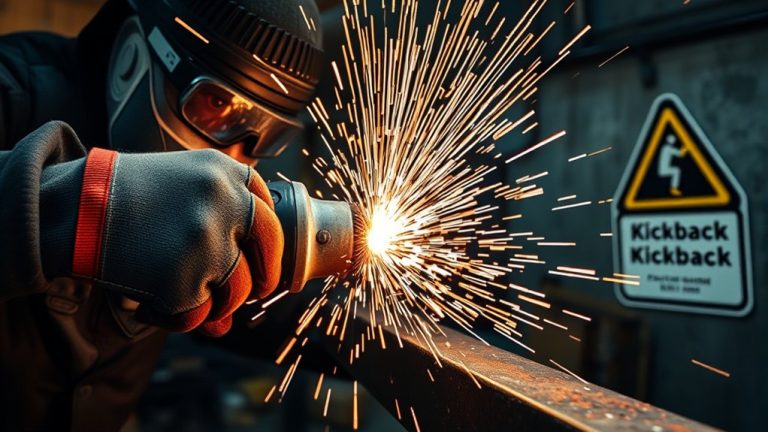
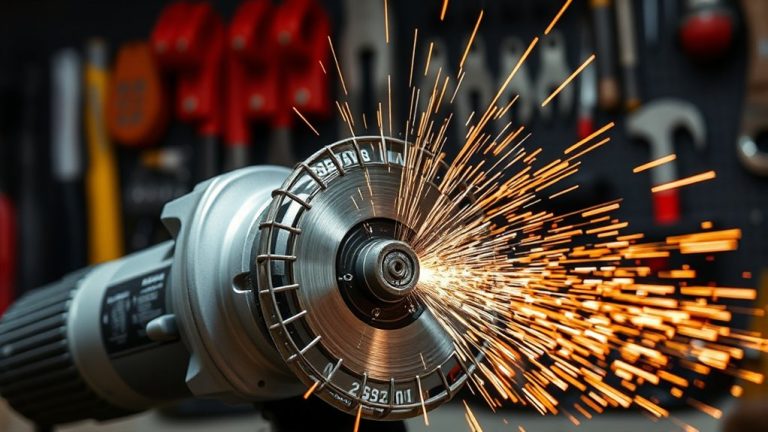
To deburr metal with an angle grinder, start by securing your workspace and wearing safety gear like goggles and gloves. Attach a flap disc to the grinder, set it at a 15°-30° angle, and maintain light pressure while moving continuously over the edges. Regularly check for remaining sharp spots and clean the surface afterward. You’ll also want to know how to maintain your equipment and adapt techniques for different metal types. Let’s explore more tips to enhance your skills.
Understanding Deburring: Why It Matters
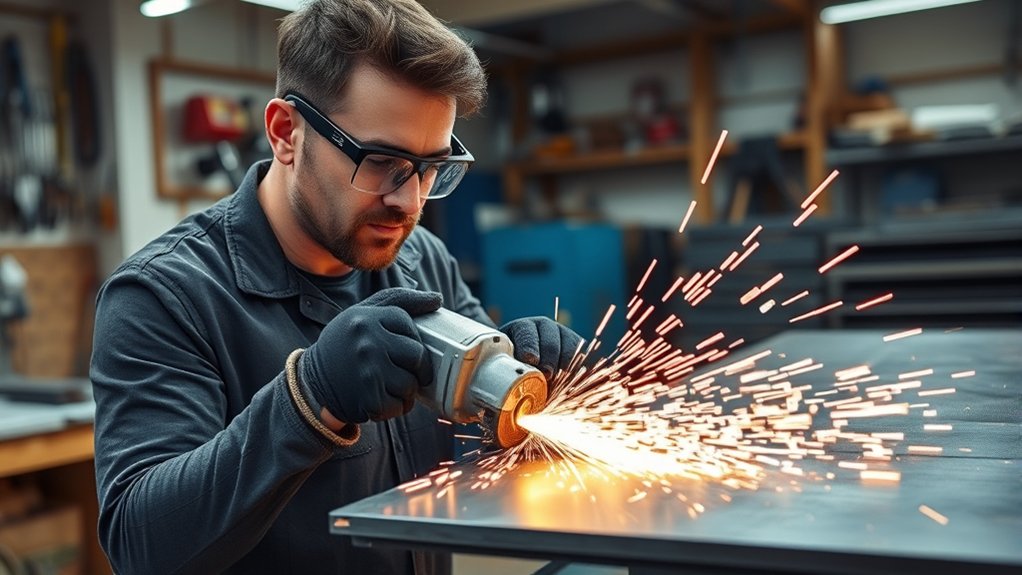
Deburring is essential for safety and functionality in metalworking. This significant process involves removing sharp edges and imperfections from metal surfaces, which enhances usability. When you deburr, you’re not just improving the aesthetic quality; you’re also preventing potentially harmful injuries during handling or assembly. Sharp edges can lead to cuts or other accidents, compromising safety in your work environment.
Using an angle grinder for deburring allows for efficient removal of excess metal, guaranteeing a smooth surface that’s critical for proper fit and alignment, especially before welding. This step reduces the risk of weld defects, promoting higher-quality metal assemblies. Employing the right tools—like rotary burrs or abrasive discs—tailored to your specific project requirements guarantees effective deburring. By prioritizing this process, you liberate your work from the dangers associated with sharp edges, fostering both safety and precision in your metalworking endeavors.
What Tools Do You Need for Safe Deburring?
To guarantee safe and effective deburring with an angle grinder, having the right tools is key. Start by equipping yourself with the essential gear to secure both safety and efficiency during the process:
- Safety goggles or a face shield to protect against flying debris and sparks.
- Sturdy leather gloves to safeguard your hands from sharp edges and cuts.
- An angle grinder fitted with a suitable attachment, such as a flap disc, for removing burrs from metal surfaces.
- A sturdy work surface along with clamps or a vise to securely hold the metal piece in place.
Additionally, keep a wire brush or abrasive pad on hand for cleaning any remaining burrs post-grinding. These tools not only enhance your safety but also secure a smooth finish on your workpiece.
Prep Your Workspace and Safety Gear
Before you begin the deburring process, it is crucial to prepare your workspace and safety gear properly. Clear your workspace of any flammable materials and clutter to create a safe and organized environment for your project. Gather your safety gear, including safety goggles or a face shield, leather gloves, and hearing protection, to guard against sparks and debris.
Next, use sturdy clamps or a vise to secure the metal piece you’ll be working on. This prevents any movement during the deburring process, ensuring precision and safety. Additionally, verify that your angle grinder is equipped with the appropriate attachment, such as a flap disc, for effective burr removal. Keep a clean cloth or rag nearby to wipe away metal shavings and debris, which promotes a safer working area and clearer visibility. With everything prepared, you’re now ready to proceed confidently with the deburring process.
Setting Up Your Angle Grinder for Deburring
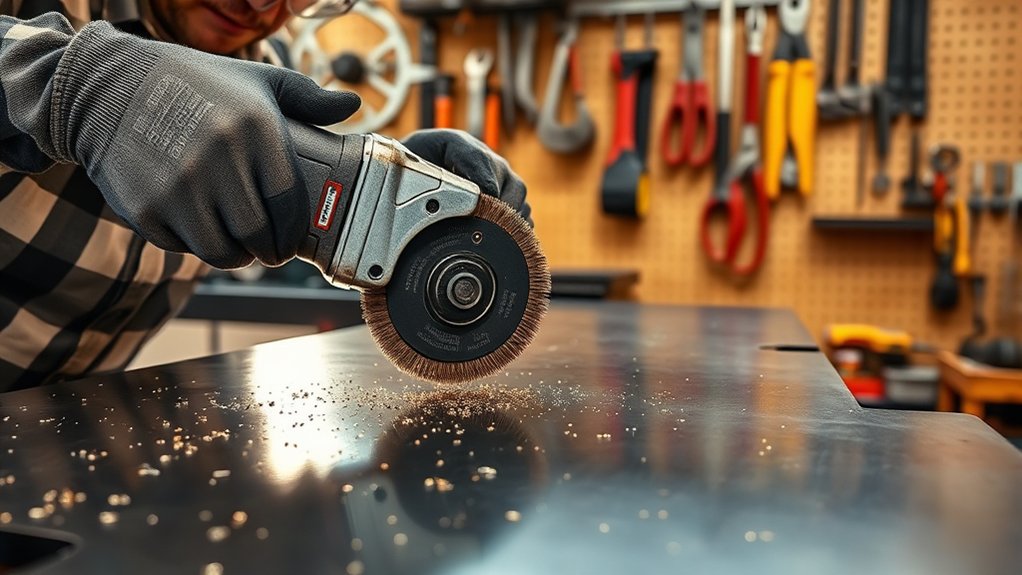
Once you’ve gathered your safety gear and prepared your workspace, it’s time to set up your angle grinder for effective deburring. Follow these precise steps to guarantee a safe and efficient setup:
- Power Off: Guarantee the grinder is powered off and, if applicable, remove the battery for safety.
- Select Deburring Disc: Choose a compatible deburring disc, guaranteeing its RPM rating matches your angle grinder to prevent accidents.
- Securely Attach: Attach the deburring disc to the grinder’s spindle, hand-tightening the nut and using a spanner wrench for additional security without overtightening.
- Adjust Grinder Guard: Position the grinder guard to cover the disc, protecting yourself from sparks and debris during operation.
Always check the grinder’s functionality and the condition of the disc before starting. This setup minimizes risks and maximizes your control, allowing you to focus on achieving a smooth, clean finish.
Effective Techniques for Deburring With an Angle Grinder
When you’re ready to start deburring with your angle grinder, employing effective techniques is crucial for achieving a smooth finish. First, attach a flap disc to your angle grinder; its larger surface area and flexibility help you smooth out edges without excessive material removal. Maintain a consistent angle of 15°-30° against the metal surface to avoid gouging and guarantee an even finish. Apply light pressure during the process; this prevents overheating the disc and prolongs its lifespan. Keep the grinder moving in a continuous motion to avoid creating uneven surfaces or burns on the metal from prolonged contact. Don’t forget to wear appropriate safety gear, including goggles and gloves, to protect yourself from debris and sharp edges. By following these techniques, you’ll achieve a professional-quality deburr while safeguarding your safety and the longevity of your tools.
Step-By-Step Guide: Deburring Metal With an Angle Grinder
To effectively deburr metal with an angle grinder, start by gathering essential safety gear, including goggles, gloves, and ear protection. Follow these steps for a precise process:
- Select a suitable flap disc or grinding wheel for your metal type.
- Mark your cut clearly on the metal surface for accuracy.
- Secure the metal piece firmly using clamps or a vise.
- Operate the grinder at a consistent speed, applying light pressure.
Once you’ve prepared, mount the chosen attachment on the grinder and check its security. Position the metal piece to guarantee stability, then begin grinding along the marked areas. Maintain a steady motion across the edges, allowing the grinder to do the work without overheating the metal. By adhering to these steps, you’ll achieve a smooth finish and enhanced safety throughout the deburring process.
Avoiding Common Deburring Mistakes for Better Results
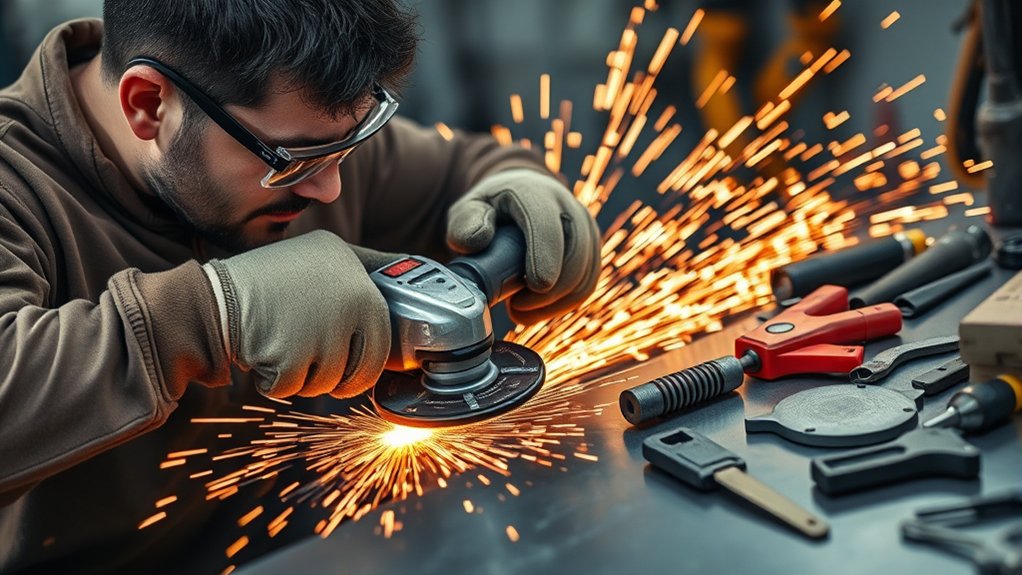
Achieving a smooth finish while deburring metal requires awareness of common mistakes that can compromise your results. First, verify your angle grinder’s speed is set correctly and that you’ve picked the right attachment—whether it’s a cutting disc, grinding wheel, or flap disc to smooth. Using the wrong tool can lead to overheating and damage.
Maintain consistent, light pressure during the deburring process; applying too much force can create uneven surfaces and wear out your grinding disc prematurely. Avoid lingering in one spot, as this can gouge the metal. Instead, keep the grinder in motion for an even finish.
Lastly, never compromise on safety—always wear appropriate safety gear, including goggles and gloves, to shield yourself from flying metal shavings and debris. By steering clear of these pitfalls, you’ll attain the results you desire while safely enjoying the liberation of effective metalworking.
How to Maintain Your Angle Grinder for Optimal Performance
Maintaining your angle grinder is essential for guaranteeing ideal performance and extending its lifespan. To keep your tool in top shape, follow these key maintenance tips:
- Inspect the angle grinder regularly for wear. Check that the cutting discs and attachments are free from cracks or damage.
- Clean the grinder and its attachments after each use to eliminate metal shavings and debris that could hinder performance.
- Lubricate moving parts according to the manufacturer’s guidelines to guarantee smooth operation and prolong the tool’s life.
- Store the angle grinder in a dry, clean place, keeping it wheel-side up to protect the disc and prevent accidental activation.
Deburring Different Metal Types: Techniques and Tips
When deburring different types of metal, it is crucial to select the right technique and tools to achieve a smooth finish without compromising the material’s integrity. For mild steel, use a flap disc with a grit of 60-80; this effectively removes burrs while providing a fine finish. When working with stainless steel, opt for a non-ferrous flap disc or ceramic disc to minimize contamination and guarantee a clean surface. Aluminum demands special attention; utilize a disc designed for soft metals to prevent clogging during the deburring process. For hardened metals, a carbide burr or heavy-duty grinding wheel is ideal, but apply light pressure to avoid overheating. After deburring, always clean the metal surface thoroughly to remove residual particles, especially when prepping for welding or painting. Following these techniques guarantees the best results and maintains the integrity of your materials.
Final Tips for a Safe and Effective Deburring Process
To guarantee a safe and effective deburring process, it’s essential to prioritize safety gear and proper technique. Here are some final tips to enhance your experience:
- Always wear appropriate safety gear, including safety goggles, gloves, and ear protection.
- Use a flap disc designed for deburring to effectively smooth sharp edges without excessive material removal.
- Maintain a steady hand and consistent pressure while working to achieve an even finish.
- Regularly check the condition of your flap disc; replace the tool when it becomes worn to guarantee peak performance.
Additionally, don’t forget to clean your work area after deburring to prevent slips and maintain a safe workspace. By implementing these practices, you’ll not only enhance your deburring results but also foster a safer, more efficient environment for your metalworking projects.
Frequently Asked Questions
How Do You Deburr Metal?
To deburr metal, use an angle grinder with appropriate accessories, applying light pressure for burr removal. Compare various deburring tools and follow surface preparation tips to achieve a smooth finish and enhance your metal finishing techniques.
How to Use Angle Grinder Step by Step?
To use an angle grinder effectively, select the right grinding wheel, secure the metal piece, and apply precise angle grinder techniques. Regularly maintain your tool for peak performance while exploring various metal finishing methods and deburring tools comparison.
What Are 10 Safety Precautions Before Using a Grinding Machine?
Better safe than sorry! Before using a grinding machine, make certain you’ve got proper personal protective equipment, maintain your tools, check guards, keep your workspace tidy, and be aware of different angle grinder types for safety.
What Is the Best File for Deburring?
For effective deburring, you’ll want to use the E 100 file for steel, the E 200 for brass, and the E 350 for precision finishing. Proper tool maintenance guarantees peak performance and excellent surface preparation.
Conclusion
To sum up, while deburring metal with an angle grinder may seem like a reckless endeavor, it’s a precision craft when done correctly. You’d think it’s just about grinding away the sharp edges, but it’s really about mastering technique and safety. Just like baking a cake, one wrong move can lead to disaster. So, gear up, follow the steps, and embrace the irony of turning rough metal into a smooth finish—after all, that’s the art of deburring!