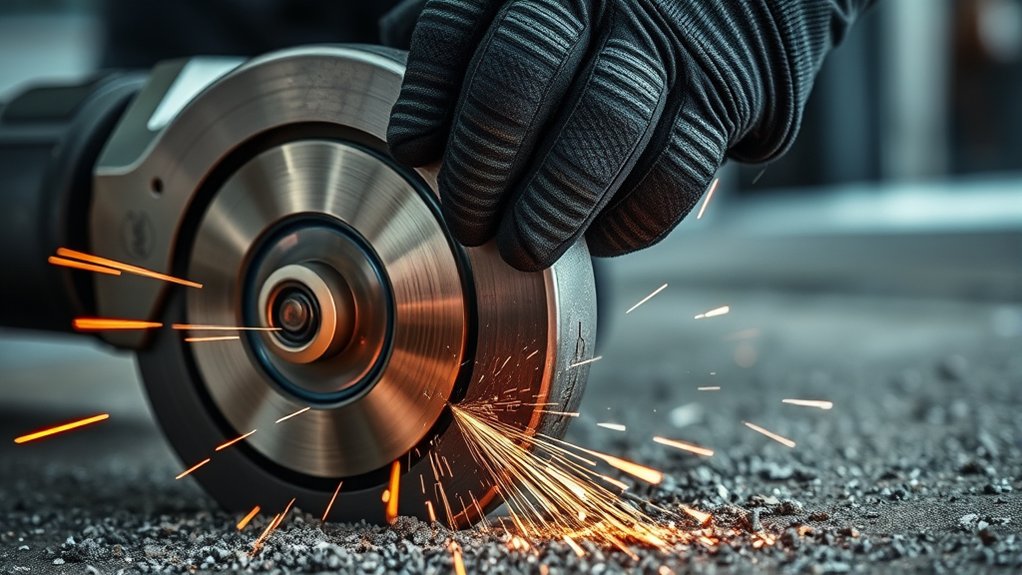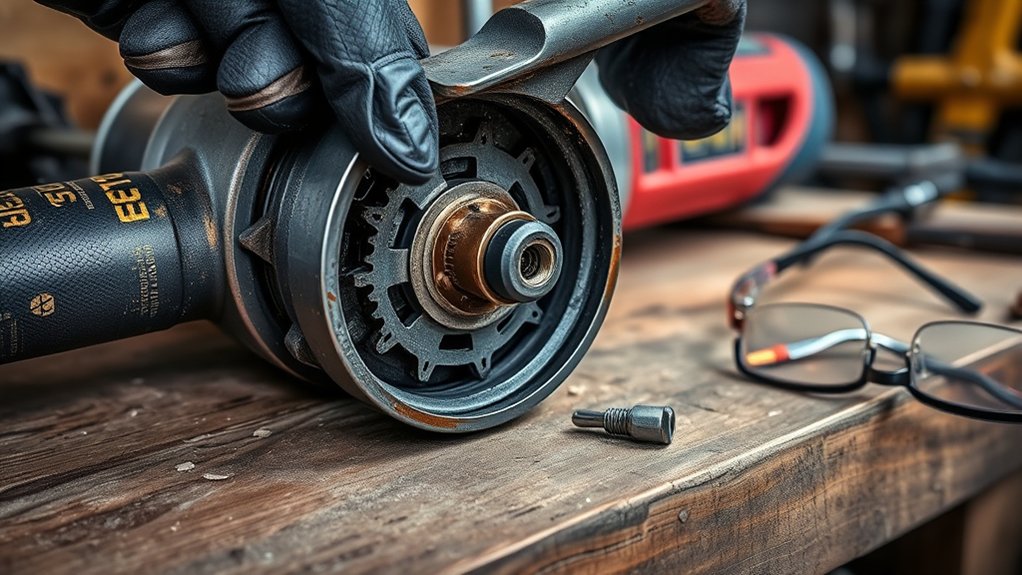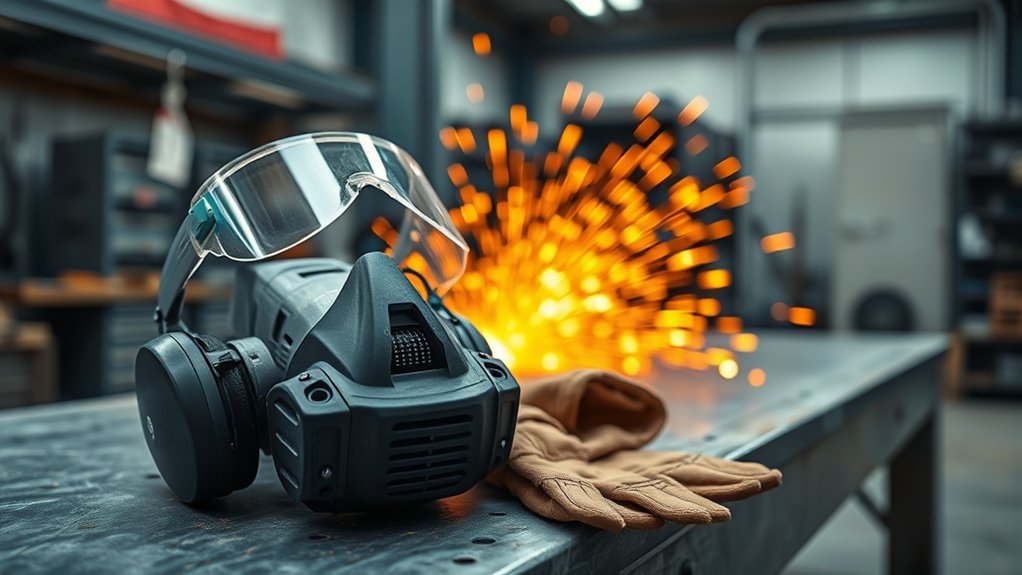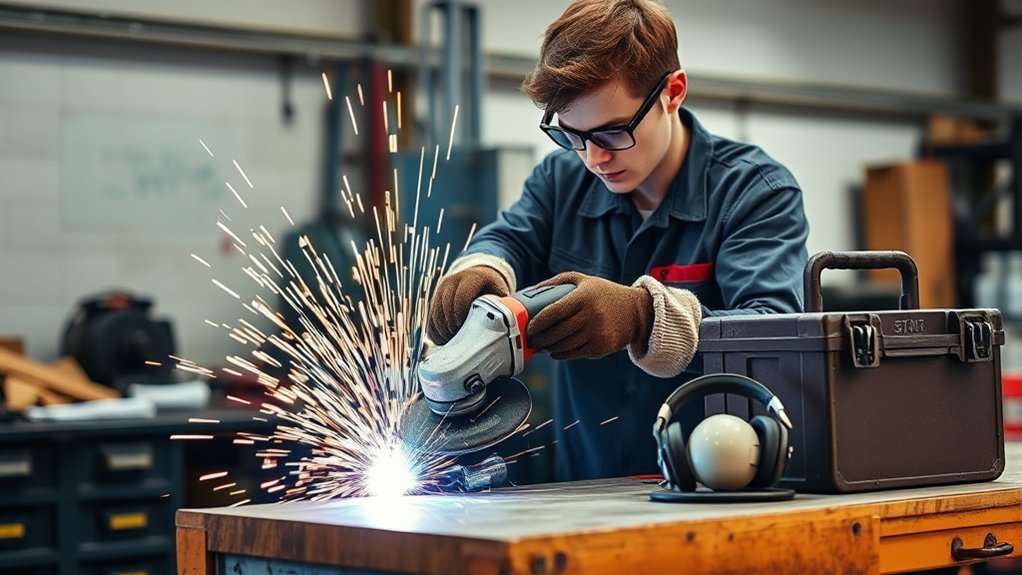
Grinding a weld can remove sharp edges, level a raised bead, and prepare metal for paint or finishing. It can also weaken a joint or gouge thin base metal when you use the wrong disc, too much pressure, or an unsafe setup. The safest approach is to inspect the weld first, confirm that grinding is allowed, and remove only the metal the job requires.
Quick Answer
Clamp the work, inspect the weld, and fit a guarded, metal-rated disc whose maximum RPM meets or exceeds the grinder’s speed. Wear safety glasses beneath a face shield, hearing protection, and suitable clothing. Use both hands, light pressure, and the disc maker’s working angle. Stop before you thin the base metal.
Key Takeaways
- Do not grind a structural or inspected weld flush unless the drawing, welding procedure, inspector, or engineer allows it.
- Keep the correct guard and side handle installed, and match the disc size, arbor, material rating, and maximum RPM to the grinder.
- Wear impact-rated safety glasses beneath a face shield, plus hearing protection, snug gloves, protective clothing, and hazard-appropriate respiratory protection.
- Use a grinding wheel for rapid stock removal and a flap, fibre, or finishing disc for controlled blending.
- Remove the high portion of the weld first, use light moving passes, and inspect the surface often so you do not dish or thin the parent metal.
- Use dedicated or correctly labeled abrasives for stainless steel and aluminum to reduce contamination, heat, and disc loading.
At a Glance
| Time Required | About 10 to 30 minutes for one small weld; longer for multiple seams, hard alloys, corners, or cosmetic finishing |
| Difficulty | Moderate; practice on scrap before grinding thin, visible, structural, or expensive parts |
| Tools Needed | Guarded angle grinder, side handle, suitable grinding or flap disc, clamps, inspection light, brush, and required PPE |
| Cost | Low to moderate if you already own the grinder and PPE; abrasive and protection costs vary by material and job requirements |
What’s in This Article
Should You Grind the Weld Flat?
Before you fit a disc, decide whether the weld should be ground at all. A cosmetic butt weld on sheet metal may need blending before paint. A load-bearing fillet weld may depend on its full bead size to provide the required throat and strength.
Warning: Do not grind a structural, code-regulated, safety-critical, or inspected weld flush unless the approved drawing, welding procedure, inspector, or engineer permits it. Grinding can reduce weld size, remove required reinforcement, hide defects, and thin the surrounding metal.
Clean the weld enough to inspect it before removing significant material. Look for cracks, deep undercut, visible porosity, incomplete tie-in, missed areas, or a bead that is smaller than the required weld. Grinding does not repair these defects. The joint may need to be evaluated, prepared, and welded again before finishing.
Also identify the joint type:
- Butt weld: It may be blended close to flush when the design and required penetration allow it.
- Fillet weld: Do not erase the triangular weld profile unless the design specifically permits a smooth transition.
- Plug or rosette weld: Blend only after confirming that the weld has fused correctly around the hole.
- Visible cosmetic seam: Use gradual grit changes and inspect the panel from several angles.
- Thin sheet metal: Remove material slowly because a hard wheel can dish, warp, or cut through the panel quickly.
Essential Safety Gear and Precautions for Angle Grinding
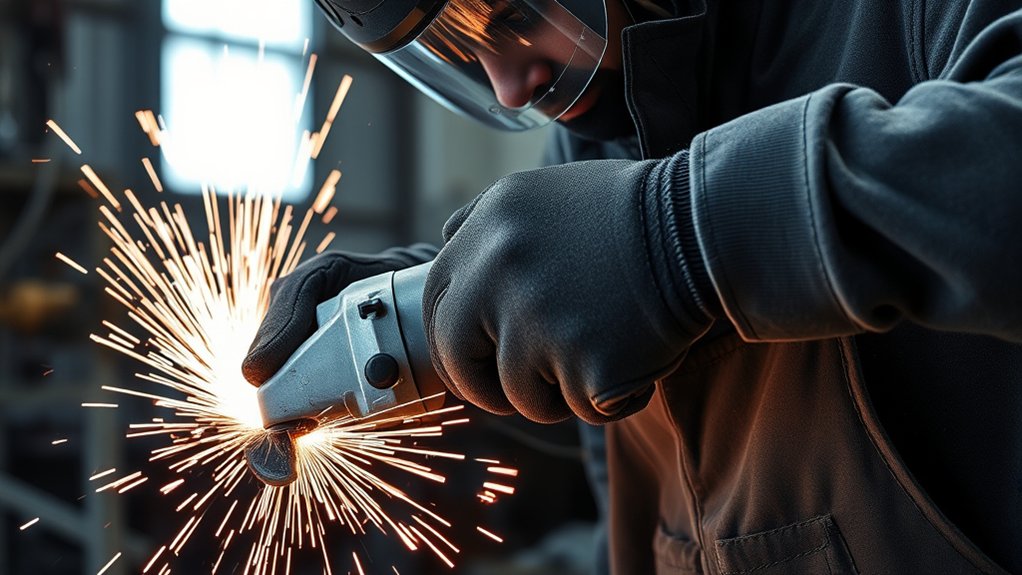
Angle grinders produce high-speed debris, sparks, noise, heat, and airborne dust. Keep the manufacturer-supplied guard and side handle installed. OSHA requires suitable guarding on portable abrasive-wheel tools, and the guard should sit between you and the wheel during use. Review the applicable OSHA portable-tool guarding requirements and your grinder manual before starting.
Products Worth Considering

Included: (1) DeWalt N441218 Angle Grinder Guard Replacement for Angle Grinder DCG414B

SUPERIOR PROTECTION — Experience all-around face protection thanks to the curved design of this faceshield. The visor of this face guard is ANSI Z87+ certified, and up to 2x thicker for increased durability. Plus, you can comfortably wear your grinding face shield over prescription glasses.

HIGH IMPACT FACE SHIELD - Sellstrom's Advantage Face Shield is ideal for various types of machinery, welding, cutting, grinding, woodworking, and other types of work that present potential hazards to the face
Safety Gear Requirements
- Eye and face protection: Wear impact-rated safety glasses with side protection beneath a full face shield. A face shield alone does not provide complete eye protection.
- Hearing protection: Wear correctly fitted earplugs or earmuffs. Grinding can create hazardous noise, and NIOSH recommends controlling noise exposure and using hearing protection when required.
- Hand protection: Wear snug, damage-free gloves that protect against sharp metal and sparks without loose cuffs that could contact the wheel.
- Clothing: Wear long sleeves, long pants, and non-melting work clothing. Keep drawstrings, jewelry, long hair, and loose fabric away from the rotating accessory.
- Foot protection: Wear sturdy, closed-toe work boots suitable for hot fragments and dropped metal.
- Respiratory protection: Identify the metal, coating, and abrasive before selecting protection. Use local exhaust or dust collection where practical. A properly selected and fitted respirator may be required for hazardous metals, coatings, or enclosed work.
Do not grind unknown paint, plating, galvanizing, or residue until you identify the hazard. Lead paint, cadmium plating, stainless alloys, and other materials can create harmful dust. OSHA’s surface-preparation PPE guidance explains why the base material and coating affect ventilation and respiratory-protection requirements.
Warning: Never use a cracked, loose, damaged, expired, incorrectly mounted, or under-rated disc. Do not use the grinder without its correct guard or side handle.
Fire and Work-Area Safety
Grinding is a spark-producing operation. Remove combustible material, protect anything that cannot be moved, and inspect the opposite side of the workpiece for insulation, wiring, fuel, paint, paper, wood, or hidden debris. Keep suitable fire-extinguishing equipment available and follow workplace hot-work permits or fire-watch rules when they apply. OSHA includes grinding among potential ignition sources in its hot-work safety guidance.
Warning: Do not grind, cut, weld, or heat a drum, tank, pipe, cylinder, or closed container that held fuel, solvent, gas, oil, or another hazardous substance unless qualified personnel have cleaned, ventilated, tested, and approved it for hot work.
Choosing the Right Disc for Your Angle Grinder
The best disc depends on how much weld you must remove, the base metal, the required finish, and the grinder’s approved accessories. A hard grinding wheel removes metal quickly. A flap disc usually gives you more control and a finer finish. A surface-conditioning disc refines the surface but is not designed for heavy stock removal.
| Disc or Accessory | Best Use | Main Caution |
|---|---|---|
| Depressed-center grinding wheel | Rapid removal of a high weld on thicker steel | Aggressive and easier to gouge thin or visible metal |
| Flap disc | Weld leveling, blending, deburring, and paint preparation | Too much pressure or the wrong angle can dish the surface |
| Fibre disc with approved backing pad | Controlled stock removal and blending on broad, flatter areas | Requires the correct backing pad, guard, speed rating, and tool approval |
| Surface-conditioning or finishing disc | Refining scratches, cleaning discoloration, and preparing a uniform finish | Not suitable for removing a large weld bead |
| Cut-off wheel | Cutting or separating metal only | Never use its side for surface grinding |
| Diamond cutting disc | Only the material and operation stated by its manufacturer | Not a normal choice for blending a metal weld |
Official 3M flap-disc guidance describes flap discs as suitable for weld removal, blending, deburring, and finishing while generally leaving a finer finish than a hard grinding wheel.
Products Worth Considering
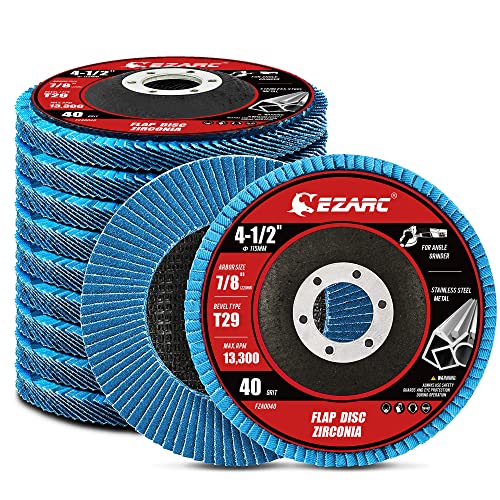
【Great Performance】EZARC flap sanding discs are made of hard zirconia material which lasts longer than standard aluminum oxide abrasive material, built for a more robust and economical grinding wheel

Package Include 24 pcs grinding wheels 4 1/2 inch grit 40 60 80 120,6 of each

STRONGEST FIBER BACKING THAN OTHER PRODUCTS:4 1/2 grinding wheels made for TOP-LEVEL Hard zirconia.Good material for griding wheel. This Flap Disc is constructed of industrial grade high density premium zirconia material, increased durability than standard flap discs, built for a more robust and economical grinding wheel
Disc Type and Grit Selection
A practical starting sequence is:
- 36- or 40-grit: Heavy leveling and removal of a raised weld on material thick enough to tolerate an aggressive abrasive
- 60-grit: Controlled leveling and removal of scratches from the first stage
- 80-grit: Blending before many painted or general-fabrication finishes
- 120-grit or a suitable conditioning disc: Finer cosmetic preparation when the required finish calls for it
This sequence is not universal. Start with the least aggressive disc that can complete the job efficiently. Thin sheet, visible stainless, and soft aluminum often need a less aggressive first step than thick carbon steel.
Choose an Abrasive for the Metal
- Carbon steel: Use a disc labeled for ferrous steel. Grinding wheels and zirconia or ceramic flap discs are common choices.
- Stainless steel: Use an abrasive approved for stainless and keep it dedicated to stainless work. A disc previously used on carbon steel can embed iron particles that later create surface rust.
- Aluminum: Use an abrasive labeled for aluminum or non-ferrous metal. Ordinary discs can load with soft aluminum, create excess heat, and stop cutting effectively.
- Painted, galvanized, or plated steel: Identify the coating and control the dust before grinding. Do not assume ordinary shop ventilation or a disposable mask is sufficient.
RPM, Size, Arbor, and Guard Compatibility
Read both labels before mounting a disc. Confirm all of the following:
- The disc diameter is approved for your grinder.
- The arbor hole or threaded hub matches the spindle and flange system.
- The accessory’s maximum RPM equals or exceeds the grinder’s maximum no-load RPM.
- The guard type matches the wheel and operation.
- The backing pad, flange, and locknut are the correct parts for that accessory.
- The disc has no cracks, chips, water damage, distortion, missing flaps, contamination, or excessive wear.
Never force a disc onto the spindle, enlarge its arbor hole, stack improvised washers, or remove the guard to fit a larger wheel. Follow the wheel manufacturer’s inspection or ring-test procedure where applicable.
Note: After fitting a new accessory, position the guard correctly, clear people from the area, stand out of the accessory’s direct plane, and run the grinder without touching the work for the period stated in the tool or wheel instructions. Stop immediately if you notice wobble, unusual noise, vibration, or poor tracking.
Before You Begin Weld Grinding
Set up the work so you can guide the grinder without reaching, twisting, or trying to hold the metal with one hand. Clamp the workpiece firmly and arrange it so the disc will not strike the bench, clamp, cord, battery, or another object.
What You’ll Need
- Angle grinder with the correct guard and side handle
- Grinding wheel, flap disc, fibre disc, or finishing disc approved for the tool and metal
- Impact-rated safety glasses and a face shield
- Snug gloves, hearing protection, protective clothing, and work boots
- Ventilation, extraction, or correctly selected respiratory protection when the hazard requires it
- Clamps or a vise suitable for the workpiece
- Inspection light, straightedge, brush, and clean cloth
- Suitable fire extinguisher or workplace fire-protection equipment
Prepare and Inspect the Weld
- Let the weld and workpiece cool to a safe handling temperature.
- Remove loose slag, spatter, dirt, oil, and debris with an appropriate hand tool or brush.
- Identify any paint, plating, galvanizing, sealant, or unknown coating.
- Inspect the weld for cracks, porosity, undercut, missed edges, and insufficient size.
- Confirm how much reinforcement may be removed.
- Mark the final surface level if a clear reference will help you avoid over-grinding.
- Check the back and surrounding area for fire, electrical, pressure, and hidden-space hazards.
Pro Tip: Practice the complete disc sequence on scrap of the same metal and thickness. You will learn how quickly each abrasive cuts before you touch the finished part.
Step-by-Step Guide to Weld Grinding
Estimated total time: A small, accessible weld may take about 10 to 30 minutes. Multiple passes, hard alloys, thin cosmetic panels, corners, and fine finishing take longer.
- Confirm that grinding is allowed. Check the joint design, weld size, inspection requirement, and finish goal before removing reinforcement.
- Prepare the work area. Remove combustibles, protect nearby surfaces, inspect the opposite side, and arrange ventilation or extraction.
- Put on all required PPE. Wear safety glasses beneath a face shield, hearing protection, gloves, protective clothing, boots, and any required respiratory protection.
- Secure the workpiece. Clamp the metal so it cannot vibrate, turn, drop, or close onto the disc.
- Select and mount the correct disc. Match the operation, metal, diameter, arbor, guard, and RPM rating.
- Test the grinder at no load. Hold it firmly, keep the wheel clear of people and objects, and stop if it vibrates or sounds abnormal.
- Remove the highest part of the weld first. Let the grinder reach full speed before contact, then use light pressure on the raised bead rather than grinding the entire surrounding area.
- Use the specified working angle. Follow the disc and tool instructions. Certain surface-grinding operations use about a 20- to 30-degree angle, but the correct angle varies by accessory.
- Move in controlled passes. Keep the disc moving across the weld, overlap each pass slightly, and avoid dwelling in one spot.
- Stop and inspect often. Check the weld height, base-metal thickness, heat, scratches, and surface shape before continuing.
- Blend with a finer abrasive. Change to a suitable flap, fibre, or finishing disc when the weld is nearly level. Lift the grinder from the work before switching it off, and wait for the disc to stop before setting it down.
Grinding Techniques Overview
Hold the main grip and side handle firmly with both hands. Use a balanced stance and keep your body out of the most likely wheel-fragment and kickback path. Arrange the guard and your position so sparks and debris travel away from you, other people, hoses, cords, batteries, glass, vehicles, and combustible material.
There is no universal rule that says you must always push or always pull the grinder. Use the direction permitted by the tool and accessory instructions that gives you stable contact, keeps the guard effective, and prevents the wheel from climbing or catching an edge.
A DeWalt surface-finishing procedure instructs users to let the tool reach full speed, apply minimal pressure, hold approximately a 20- to 30-degree angle, keep the disc moving, lift it before shutdown, and wait for the wheel to stop. Review the manufacturer’s angle-grinder instructions for your own model and accessory.
The goal is not to make the most sparks. It is to remove the necessary weld metal while preserving the joint and the surrounding base material.
Technique for Different Joints
- Flat butt weld: Work along the bead and reduce the highest points first. Use a straightedge or reflected light to detect low areas.
- Outside corner: Support the work and approach carefully because the disc can catch or roll around the edge.
- Inside corner: A full-size angle grinder may not reach the root safely. Use a smaller approved abrasive tool rather than forcing the edge of a large disc into the corner.
- Fillet weld: Preserve the required throat and leg size. Blend only the transition allowed by the design.
- Thin sheet: Favor brief, light passes with a controllable abrasive. Pause before heat builds or the panel begins to distort.
Finishing Touches Essentials
- Remove dust before changing to a finer disc so loose coarse grit does not create new scratches.
- Use a fresh disc when a worn one begins to glaze, load, vibrate, shed flaps, or require extra pressure.
- Change grit gradually enough to remove the previous scratch pattern.
- Do not chase one low spot by grinding the entire panel thinner.
- Let hot metal cool before touching or measuring it.
- Use an inspection light and view the surface from more than one direction.
How to Get a Smooth Finish on Your Welds
A smooth finish starts with controlled stock removal. Level only the raised weld until it sits close to the surrounding surface. Then widen your passes slightly with a finer abrasive to feather the remaining transition.
Do not hold the disc in one place. Continuous movement limits gouging, heat marks, and low spots. Use reflected light, a straightedge, or a gloved hand after the metal cools to find ridges that are difficult to see.
Example Grit Progression
| Stage | Typical Abrasive | Goal |
|---|---|---|
| Heavy removal | Grinding wheel or 36-/40-grit flap disc | Reduce a high bead without grinding deeply into the parent metal |
| Leveling | 60-grit flap or fibre disc | Remove coarse scratches and bring the weld close to flush |
| Blending | 80-grit abrasive | Feather the transition for many general fabrication or paint-preparation jobs |
| Fine preparation | 120-grit or an appropriate surface-conditioning disc | Refine the scratch pattern for the specified coating or cosmetic finish |
These grits are starting points, not rigid rules. Follow the coating manufacturer’s surface-preparation requirements when the part will be painted, powder coated, plated, polished, or inspected.
Finish by Material
- Carbon steel: Remove grinding dust and loose abrasive before primer. Do not leave deep scratches that the coating system cannot cover.
- Stainless steel: Follow the original grain direction during the final passes and use stainless-dedicated abrasives. A cosmetic stainless finish may need additional conditioning or polishing beyond ordinary weld leveling.
- Aluminum: Use a clean non-ferrous abrasive, keep pressure light, and replace a disc that loads with metal instead of cutting.
Pro Tip: Stop the coarse-grit stage while the weld is still slightly proud. Use the next grit to reach the final level. This gives you a larger margin before you cut into the base metal.
Troubleshooting Common Grinding Issues
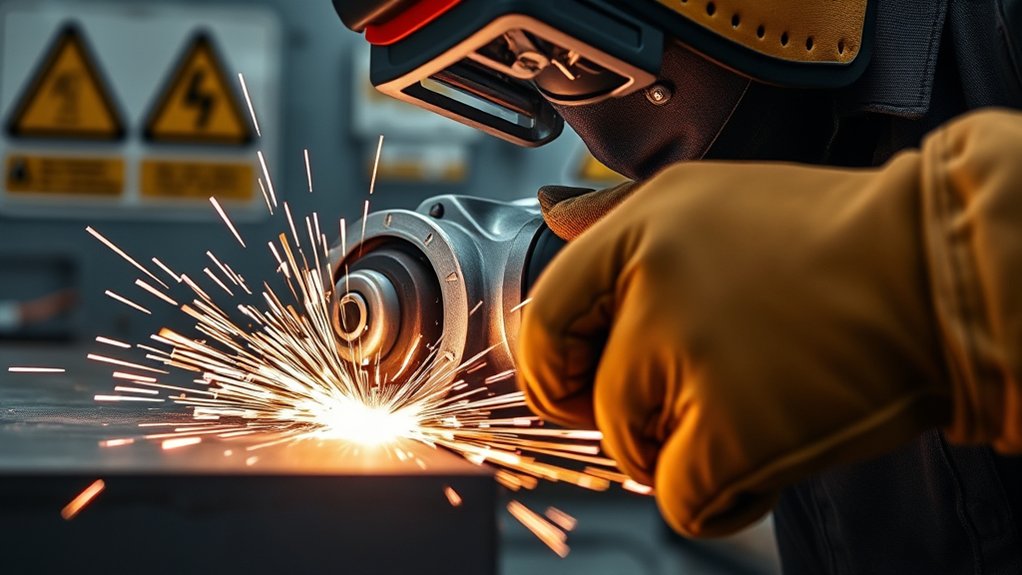
Stop immediately when the grinder begins to vibrate, chatter, bind, wobble, or sound different. Do not try to correct a mounting or accessory problem by pressing harder.
| Problem | Likely Causes | Correction |
|---|---|---|
| Heavy vibration or wobble | Damaged disc, debris on a flange, incorrect mounting, wrong arbor, or worn grinder parts | Disconnect power, remove the accessory, inspect every mounting surface, and replace damaged or incompatible parts |
| Chatter or bouncing | Workpiece vibration, too much pressure, poor angle, edge contact, or a worn disc | Improve clamping, reduce pressure, correct the working angle, and replace the disc if needed |
| Slow cutting | Glazed, loaded, worn, too-fine, or incorrect abrasive | Fit a fresh disc designed for the metal and removal rate instead of forcing the tool |
| Gouges or low spots | Dwelling, excessive pressure, steep angle, or grinding beyond the bead | Use moving passes, reduce pressure, switch to a more controllable abrasive, and practice on scrap |
| Blue or dark heat marks | Excess pressure, dull abrasive, long dwell time, or unsuitable disc | Use a sharper disc, lighten pressure, shorten passes, and let the work cool |
| Disc wears unusually fast | Too much force, wrong working angle, edge grinding with the wrong profile, or unsuitable abrasive | Correct the setup and let the abrasive cut at its intended speed and angle |
| Unusual amount or direction of sparks | Changed contact area, coating, alloy, pressure, angle, or abrasive condition | Stop and inspect the material, disc, guard, and technique; do not use spark volume as a quality test |
Common Mistakes to Avoid
- Grinding a load-bearing fillet weld flat without approval
- Using a cut-off wheel for side grinding
- Removing the guard or side handle
- Installing a wheel with a lower RPM rating than the grinder
- Using a larger disc than the grinder accepts
- Holding an unsecured workpiece by hand
- Using safety glasses or a face shield instead of wearing both
- Grinding unknown coatings without hazard controls
- Starting the grinder while the disc touches the metal
- Setting the grinder down before the accessory stops
- Pressing harder when a worn or loaded disc stops cutting
- Continuing after vibration, cracking, flap loss, or abnormal noise appears
- Grinding so far that the base metal becomes visibly thin or dished
Maintenance Tips for Your Angle Grinder After Use
Disconnect the plug or remove the battery before cleaning, inspecting, adjusting, or storing the grinder. Brush dust from the guard, housing, handle, and vents without pushing debris farther into the tool.
Inspect the cord, plug, battery interface, switch, guard, side handle, spindle, flanges, and locknut. Stop using the grinder if any safety part is cracked, loose, modified, overheated, or difficult to operate.
If the manufacturer permits compressed-air cleaning, wear eye protection and follow its pressure and cleaning instructions. Do not direct compressed air toward your skin or other people. Do not add oil or open the housing unless the owner’s manual includes that maintenance procedure.
Remove or protect the abrasive during storage as the tool and accessory manufacturers direct. Store the grinder and unused discs in a dry place where they will not be dropped, bent, exposed to moisture, contaminated, or damaged by heavy objects.
Frequently Asked Questions
How do you use an angle grinder to grind a weld step by step?
Confirm that grinding is allowed, remove fire hazards, wear complete PPE, clamp the work, and install a compatible guarded disc. Test the grinder at no load, remove the highest part of the weld with light moving passes, inspect often, and finish with a finer abrasive without thinning the base metal.
What is the golden rule in welding?
There is no single official rule universally called the golden rule. A dependable principle is to protect yourself, prepare clean and correctly fitted metal, follow the approved welding procedure, and never trade joint integrity for appearance.
What is the safe procedure for using a grinding machine?
Inspect the grinder and accessory, verify the size and RPM rating, install the correct guard and handle, secure the work, and wear eye, face, hearing, hand, body, and hazard-appropriate respiratory protection. Test the grinder clear of the work, use light controlled passes, and wait for the wheel to stop before setting the tool down.
Should you push or pull an angle grinder?
Do not follow a universal push-or-pull rule. Use the direction allowed by the grinder and accessory instructions that gives stable contact, keeps the guard between you and the wheel, directs sparks safely, and reduces the chance that the disc will catch or climb an edge.
Can you grind welds flat with a flap disc?
Yes. A flap disc can level and blend many welds while leaving a finer finish than a hard grinding wheel. Start with a grit suitable for the weld height and metal, use light moving passes, and do not grind a structural weld below its required size.
What grit flap disc should you use for welds?
A 36- or 40-grit disc is a common starting point for heavy leveling, followed by 60 and 80 grit for blending. Thin sheet, aluminum, stainless steel, or a fine cosmetic finish may need a less aggressive starting grit. Always match the abrasive to the metal and required finish.
Does grinding a weld weaken it?
It can. Grinding may reduce a fillet weld’s effective size, remove required reinforcement, expose defects, or thin the parent metal. Do not grind structural or inspected welds flush unless the approved design or responsible qualified person permits it.
Can you grind painted, galvanized, or stainless steel welds?
Only after identifying the metal and coating and applying the required dust controls, ventilation, PPE, and disposal practices. Use stainless-dedicated abrasives for stainless steel. Do not grind unknown paint, plating, or residue until its hazards are known.
Safety Disclaimer: This article is for general informational purposes and does not replace hands-on training, the grinder and abrasive manufacturers’ instructions, an approved welding procedure, workplace safety rules, exposure assessment, inspection requirements, or professional engineering guidance. Always wear suitable protective gear and stop if the grinder, disc, weld, or workpiece feels unsafe.
Sources
- OSHA Standard 1910.243: Guarding of Portable Powered Tools — abrasive-wheel guards, wheel inspection, fit, and rated speed
- OSHA Surface-Preparation PPE Guidance — eye, face, respiratory, metal, and coating hazards
- OSHA Hot-Work Safety Guidance — sparks, ignition sources, isolation, shielding, and fire protection
- NIOSH Noise and Hearing-Loss Guidance — occupational noise risk and hearing protection
- DeWalt DCG432X Instruction Manual — surface-grinding angle, pressure, movement, startup, and shutdown practices
- 3M Flap Discs for Metalworking — weld removal, blending, deburring, finishing, and abrasive selection
Conclusion
Clean weld grinding depends on judgment before it depends on speed. First confirm that the weld may be blended, inspect it for defects, identify the metal and coatings, secure the work, and fit a compatible guarded disc. Then remove only the raised weld metal with light, controlled passes.
Switch to a finer abrasive before reaching the final level, and stop often to inspect the joint and base-metal thickness. After the job, clean the area, check for hot material or fire hazards, inspect the finished weld, and store the grinder and abrasives as their manufacturers direct.