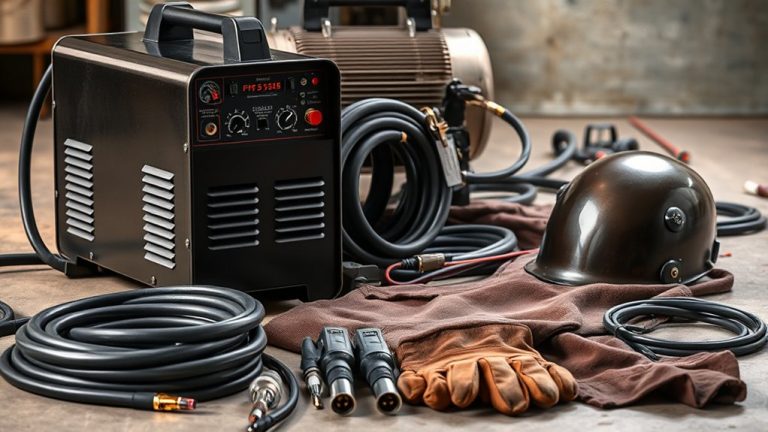
When you’re ready to tackle the setup of a plasma cutter with an air compressor, it’s important to verify everything is up to par. Proper hose selection is critical; choose materials like rubber or PVC that withstand at least 90 PSI and match the cutter’s air inlet diameter. Secure connections are crucial to avoid leaks. Installing a moisture filter near the cutter maintains clean air. With these steps, you’re well on your way to achieving efficient cuts.
Selecting the Right Hoses for Your Plasma Cutter
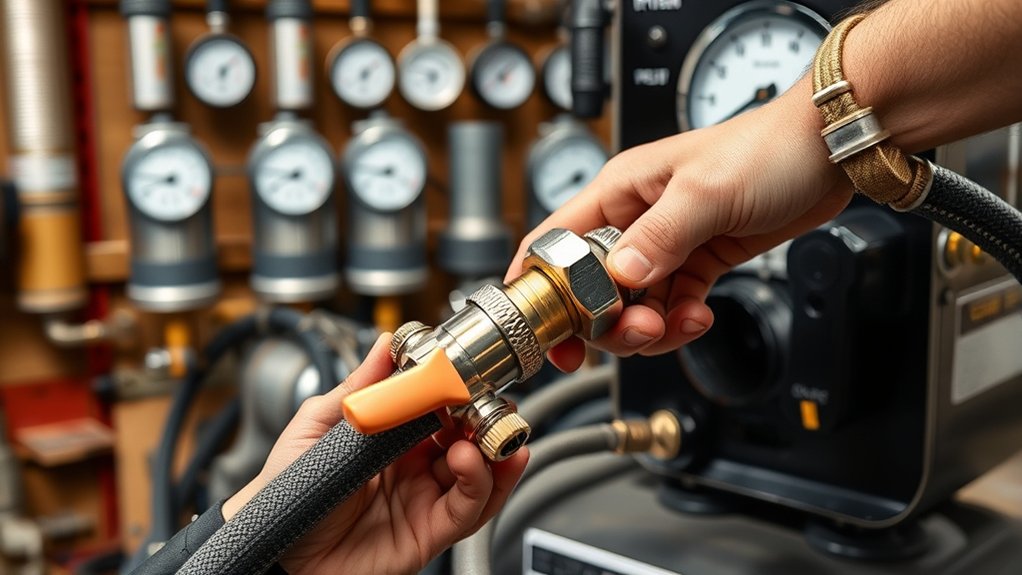
When you’re selecting hoses for your plasma cutter, it’s important to focus on a few key specifications to guarantee peak performance.
First, verify the hose materials. Durable options like rubber and PVC are excellent choices as they resist heat and abrasion, essential for plasma cutting.
Opt for rubber or PVC hoses for their heat and abrasion resistance, crucial for effective plasma cutting.
Next, check the pressure ratings. Your hose should handle at least 90 PSI (6 bar) to make sure it accommodates the necessary air pressure for ideal cutting.
Additionally, confirm the hose diameter matches your plasma cutter’s air inlet, typically 1/4 inch or 3/8 inch, to maintain proper airflow and minimize pressure drops.
It’s also wise to choose hoses that resist kinking and twisting; these features prevent airflow obstruction and maintain cutting efficiency.
Finally, confirm compatibility with your air compressor’s fittings and pressure ratings. This step is crucial for both safe and effective operation, ensuring seamless integration into your cutting system.
Connecting the Air Compressor to the Plasma Cutter
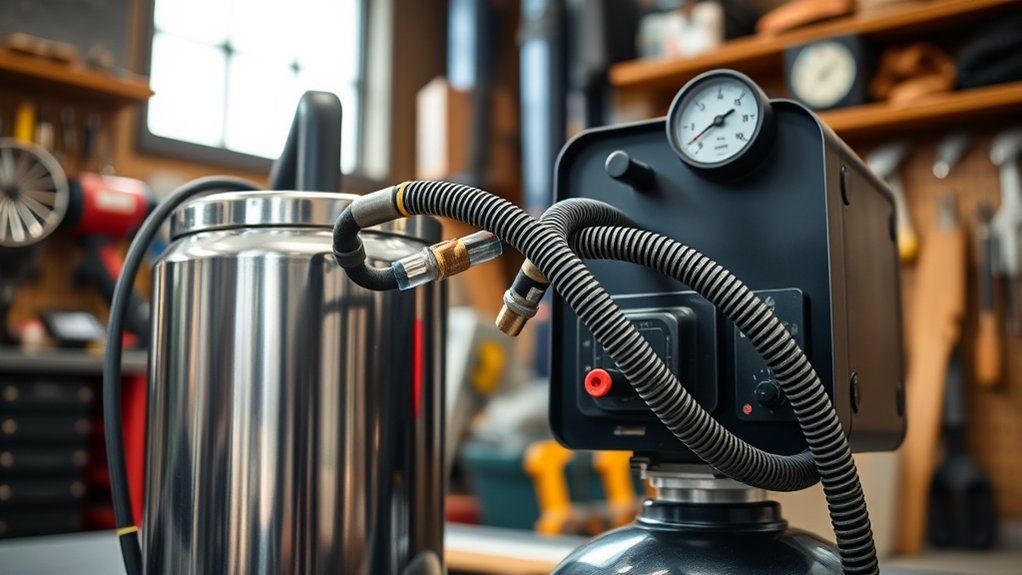
Once you’ve selected the right hoses for your plasma cutter, it’s time to focus on connecting the air compressor. First, verify that your compressor’s output fitting is compatible with your plasma cutter’s air inlet. This typically involves a quick-connect or threaded connection.
Consider the compressor types at your disposal, making sure they deliver the necessary pressure, usually around 90 PSI, for effective cutting.
Next, attach high-quality hoses rated for your compressor’s pressure output. This prevents leaks and maintains peak performance. Carefully align the fittings and secure them tightly to avoid air leaks, which can degrade cutting quality.
Set the air pressure regulator on your compressor to the recommended operating range, typically between 70 to 90 PSI, tailored to your plasma cutter’s specifications.
Before initiating any cutting, inspect all connections and hoses for wear or leaks. This guarantees safe and efficient operation, preventing interruptions during your cutting tasks.
Installing a Moisture Filter or Regulator
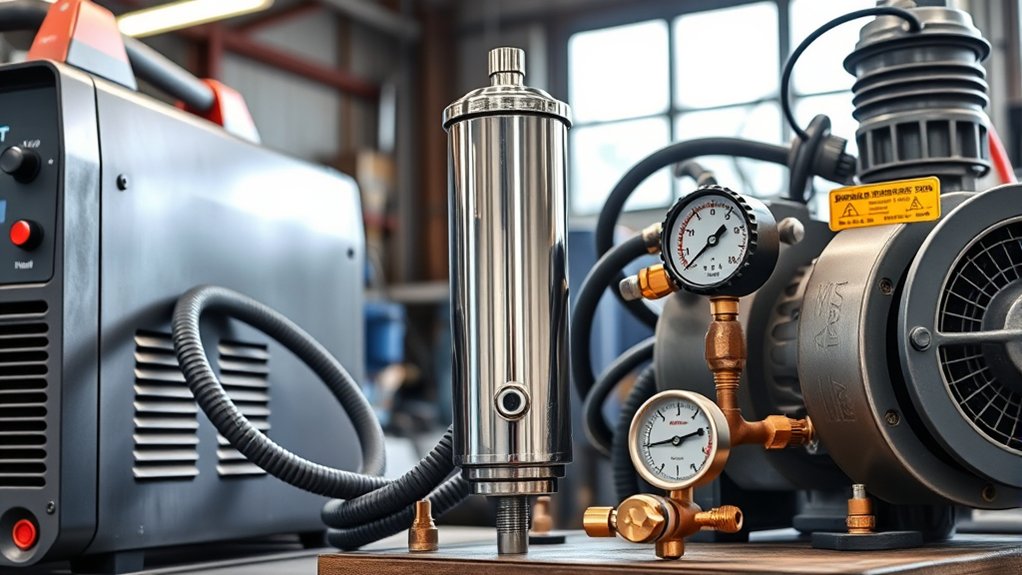
Installing a moisture filter or regulator is an important step to guarantee the quality and longevity of your plasma cutting setup. Place the moisture filter as close to the plasma cutter as possible. This limits moisture accumulation and makes sure dry, clean air reaches the torch, enhancing both performance and cut quality.
Select a filter and regulator that match your plasma cutter’s specifications to maximize functionality and extend equipment lifespan.
Choose a filter and regulator tailored to your plasma cutter to optimize performance and durability.
Regular filter maintenance is vital. Check and drain the moisture filter frequently to maintain efficiency and prevent water buildup, which can impair cutting performance and damage consumables.
Regulators enable you to adjust air pressure, but verify the setting aligns with the manufacturer’s recommended PSI, typically between 70 to 90 PSI for best results.
Setting the Air Compressor to the Recommended PSI
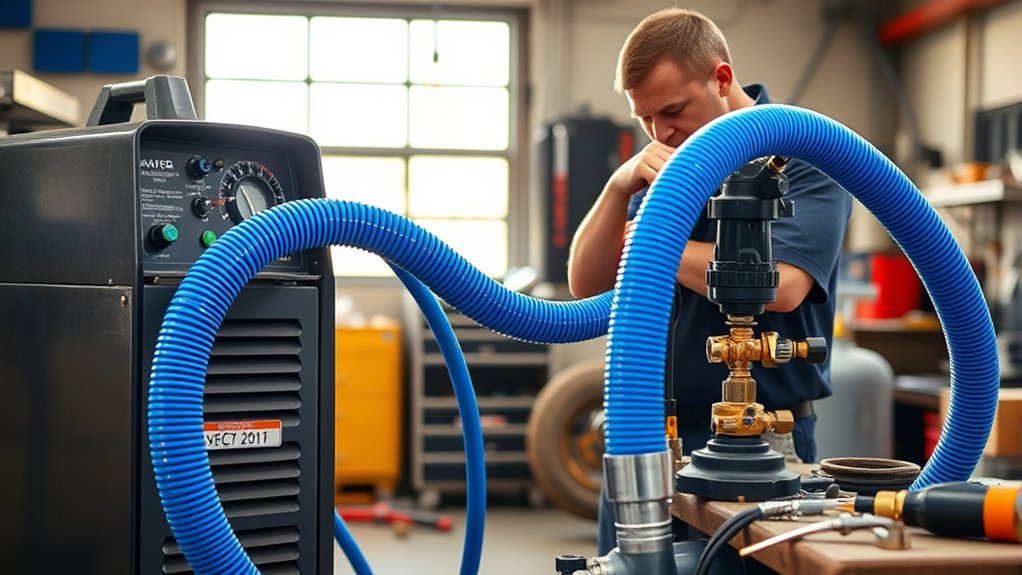
To achieve ideal cutting performance, set your air compressor to a pressure between 70 and 90 PSI.
Begin by adjusting the pressure regulator until the desired PSI is displayed on the gauge.
Ensuring the correct PSI not only enhances cutting efficiency but also protects your equipment from potential damage.
Optimal PSI Range
Achieving the ideal air pressure is vital for effective plasma cutting, with the recommended PSI range typically set between 70 and 90 PSI.
This ideal setting greatly influences pressure impact and cutting efficiency, guaranteeing high-quality results.
Here’s how different PSI levels perform:
- 30 PSI – This results in poor quality cuts, especially on thicker materials like quarter-inch steel.
- 60 PSI – Offers improved performance, enabling cleaner cuts on half-inch steel.
- 90 PSI – Considerably enhances cut quality, facilitating easier cutting through thick materials with minimal consumable damage.
- 70-90 PSI – Maintaining this range is essential for optimal cutting efficiency and prolonging the life of your plasma cutter’s consumables.
Staying within these parameters guarantees both effective performance and tool longevity.
Adjusting Pressure Settings
Begin by setting your air compressor to the recommended pressure range of 70 to 90 PSI, essential for ideal plasma cutting performance.
This pressure calibration guarantees effective cutting through materials like quarter-inch and half-inch steel. Avoid setting the pressure too low, as 30 PSI can result in poor cutting quality and potential damage to the cutting tip due to inadequate airflow management.
Increasing to 60 PSI considerably enhances cut cleanliness and enables cutting through thicker materials more effectively.
Always adhere to the manufacturer’s guidelines for air pressure settings, as incorrect adjustments can compromise both performance and safety.
Regularly inspect consumables, such as cutting tips and electrodes, to maintain the benefits of optimal pressure settings and guarantee continued high-quality cuts.
Ensuring Optimal Cutting Performance
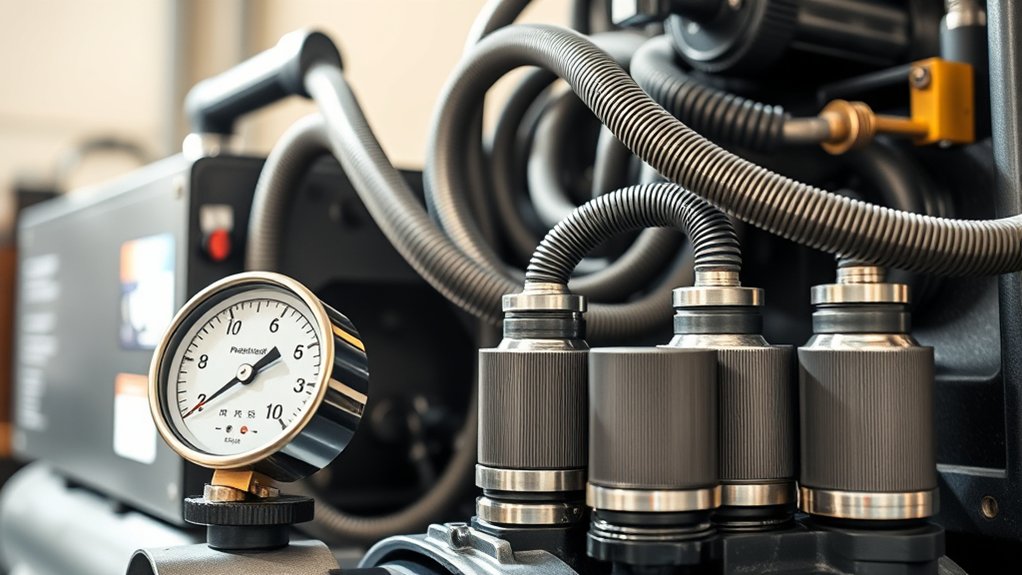
Maintaining ideal cutting performance with your plasma cutter hinges on several essential factors. Start by mastering cutting techniques and guaranteeing material compatibility to achieve superior results. Here’s a detailed approach to optimize your plasma cutter’s performance:
- Air Pressure: Keep the air pressure between 70 to 90 PSI. Experiments have shown that higher pressures considerably enhance cut quality.
- Consumables: Invest in high-quality consumables, like cutting tips and electrodes, as they’re vital for the plasma cutter’s efficacy and the overall cut.
- Air Filters: Regularly inspect and replace air filters in your compressor. This prevents contaminants from interfering with the cutter’s performance.
- Hoses and Fittings: Properly size hoses and fittings to minimize pressure drops. This guarantees a steady and consistent air supply to the plasma cutter.
Experiment with different air pressures during initial setups to tailor the settings for your specific material needs, guaranteeing cleaner, more precise cuts.
Safety Precautions and Best Practices
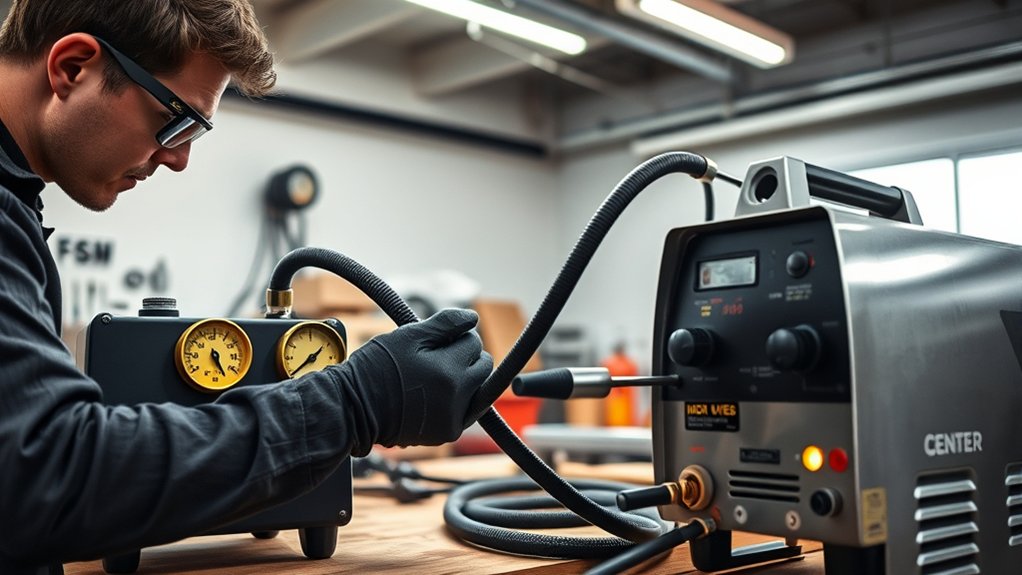
When hooking up a plasma cutter, prioritize safety by wearing the right personal protective equipment, including safety glasses, gloves, and a welding helmet, to shield yourself from sparks and ultraviolet light.
Maintain a safe work environment by ensuring proper ventilation to disperse any harmful fumes and regularly inspecting hoses and fittings for leaks.
Always verify that your plasma cutter operates within the specified air pressure range and adhere strictly to the manufacturer’s guidelines for safe and effective equipment handling.
Protective Gear Essentials
Although plasma cutting is an efficient and versatile technique, it’s crucial to prioritize safety by wearing the right personal protective equipment (PPE).
Complying with safety standards guarantees effective protection against the risks associated with plasma cutting. Here’s a precise checklist you should follow:
- Welding Helmet: Opt for a helmet with the correct shade lens to shield your eyes from harmful UV and IR radiation.
- Flame-Resistant Clothing and Gloves: Wear these to guard against sparks and intense light.
- Ventilation: Confirm your workspace has proper airflow to prevent inhalation of toxic fumes.
- Fire Extinguisher: Keep one nearby, rated for flammable materials, to quickly address any accidental fires.
Regularly inspect your protective gear to maintain its effectiveness, replacing damaged items promptly.
Proper Equipment Handling
To guarantee safe and efficient plasma cutting operations, you must meticulously handle your equipment with precision and care. Always wear PPE such as safety goggles, gloves, and a welding helmet to shield against sparks and UV rays. Check that all connections are secure and leak-free to maintain ideal air pressure. Implement a quality air filter and moisture separator to protect your plasma cutter from contaminants. Regularly inspect and replace consumable parts like tips and electrodes to guarantee cutting efficiency.
| Task | Equipment Maintenance | Cutting Techniques |
|---|---|---|
| Wear PPE | Safety goggles, gloves | Protect against sparks |
| Secure connections | Leak-free hoses, fittings | Maintain air pressure |
| Use air filter | Quality filter, separator | Prevent contaminants |
| Replace consumables | Tips, electrodes | Maintain efficiency |
| Check air pressure | 70-90 PSI | Ideal cutting quality |
Follow the manufacturer’s air pressure specifications for improved performance.
Safe Work Environment
A safe work environment is essential for plasma cutting operations, and several key practices guarantee safety and efficiency.
Prioritize work area organization and confirm ventilation importance to safeguard against hazards. Follow these steps:
- Personal Protective Equipment (PPE): Wear gloves, goggles, and a welding helmet to protect against sparks and UV radiation.
- Ventilation: Confirm the work area is well-ventilated to prevent harmful fume accumulation.
- Fire Safety: Keep a fire extinguisher nearby and be mindful of flammable materials.
- Inspection and Maintenance: Regularly check hoses and connections for leaks or damage to maintain a safe air supply.
Adhering to these practices, along with maintaining proper air pressure (70 to 90 PSI), confirms a secure and efficient plasma cutting experience.
Frequently Asked Questions
Can I Use a Plasma Cutter Without an Air Compressor?
You can’t use a plasma cutter without an air compressor, as it’s essential for plasma cutter operation. However, consider alternative cutting methods like oxy-fuel cutting, which doesn’t require compressed air but has different capabilities and limitations.
What Is the Lifespan of a Plasma Cutter Nozzle?
A plasma cutter nozzle typically lasts 100-200 hours, depending on usage and maintenance. Regular nozzle replacement guarantees peak cutting quality. Monitor for signs of wear, like irregular arcs or inconsistent cuts, to maintain efficiency and precision.
How Do I Maintain My Plasma Cutter for Longevity?
To maintain your plasma cutter for longevity, regularly clean the unit, inspect and replace consumables, and check connections. Guarantee proper plasma cutter maintenance by monitoring air supply and pressure. Don’t forget to lubricate moving parts as needed.
Are There Portable Options for Plasma Cutters?
Imagine holding the power to slice through metal effortlessly. Yes, you can get portable plasma cutters. They boast a compact design, making them easy to transport while maintaining precise cutting capabilities. They’re perfect for on-site projects.
What Materials Can a Plasma Cutter Cut Through?
You can cut through various material types like steel, aluminum, and copper with a plasma cutter. It effortlessly handles metal thickness up to an inch, offering precise and clean cuts suitable for many industrial applications.
Conclusion
By mastering the art of connecting your plasma cutter to an air compressor, you’re channeling the ingenuity of Da Vinci himself. Select durable hoses, secure connections, and install a moisture filter to guarantee clean air flow. Set the compressor’s PSI just right, between 70 and 90, to release peak cutting prowess. Regular maintenance is your Excalibur, slicing through inefficiency. Remember, safety isn’t a myth—it’s your guiding compass in this technical odyssey.