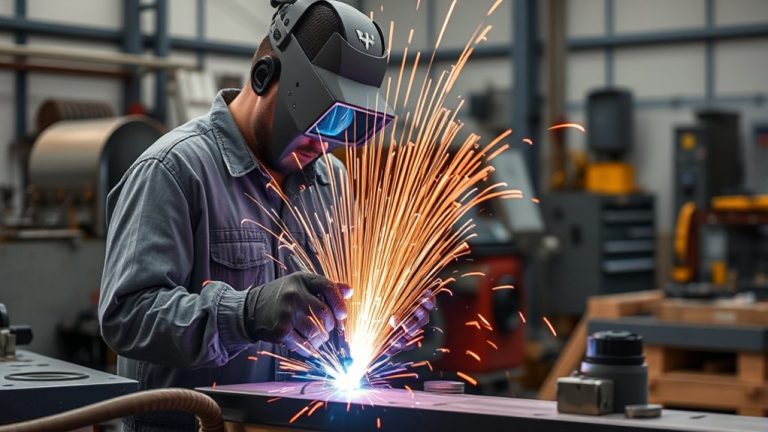
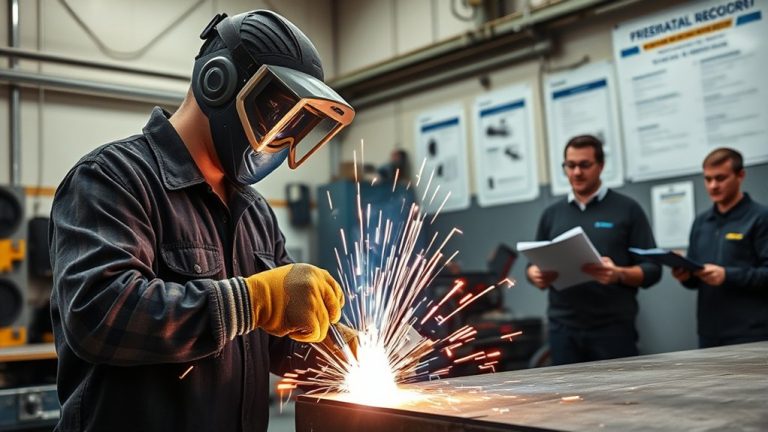
Starting your journey in plasma cutting involves mastering the basics and prioritizing safety. Begin with understanding the functionality of plasma cutting torches and the common applications you’ll encounter. It’s vital to familiarize yourself with essential safety practices and the appropriate personal protective equipment. As you explore different cutting methods and techniques, you’ll need to select and maintain the right equipment for your projects. Dive deeper to discover how consistent practice will elevate your skills.
Understanding Plasma Cutting Torches
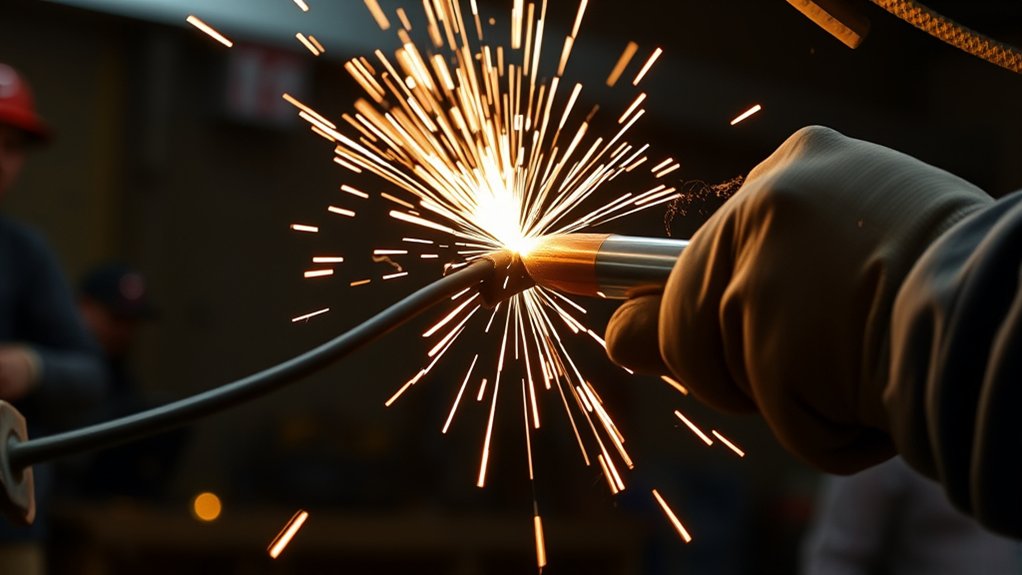
When you’re learning about plasma cutting torches, it’s important to understand that these tools use a high-velocity jet of ionized gas to slice through conductive metals efficiently.
The effectiveness of a plasma cutting torch lies in its ability to generate a powerful electrical arc that melts materials like steel, stainless steel, aluminum, and copper. You’ll encounter different plasma types based on the gas used, such as air, nitrogen, or argon-hydrogen mixtures, each suited for specific metals.
Focusing on torch components is vital for peak performance. Regularly inspect and maintain parts like contact tips, nozzles, and insulators.
Verify air pressure settings remain between 35 to 75 PSI to achieve precise cuts. Start your cuts at a 15° angle, then shift to a square cut for clean edges.
Regularly replacing wear components won’t only maintain cutting efficiency but also extend your torch’s lifespan. Prioritize safety and precision in every step.
Common Applications of Plasma Cutting
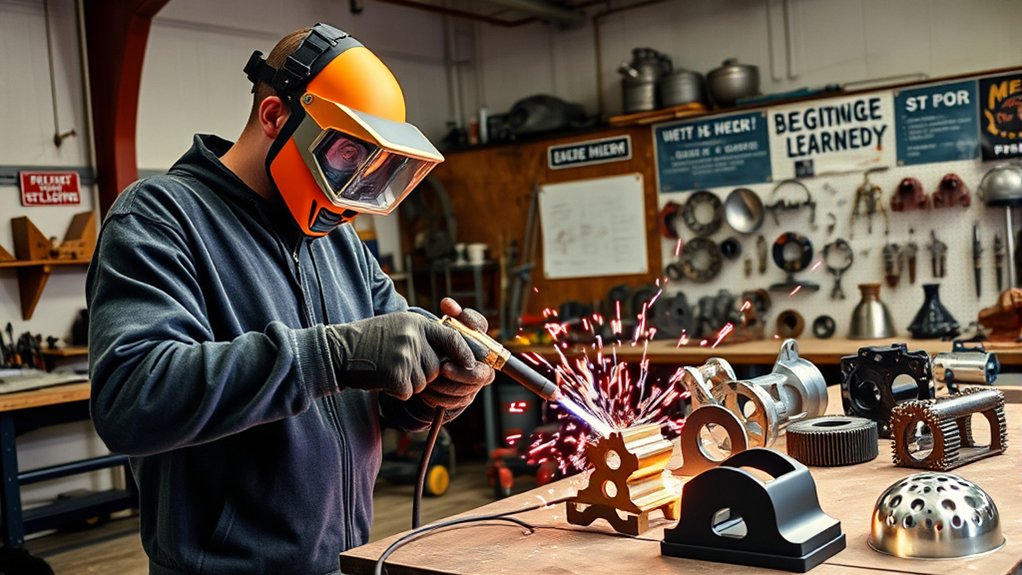
Plasma cutting excels in various industrial sectors thanks to its precision and adaptability. In construction and manufacturing, you’ll find it indispensable for pipe applications. Here, securing the material is essential to prevent movement and guarantee accurate cuts.
Whether you’re crafting complex piping systems or repairing automotive exhausts, plasma cutting provides the precision you need.
Tank applications require an extra layer of safety due to the potential presence of flammable gases. Always adhere to stringent safety protocols, such as proper ventilation and grounding, to mitigate risks. Your attention to safety guarantees that tank cutting is both effective and secure.
Additionally, plasma cutting is critical for shaping metal plates, foundational in many manufacturing processes. The ability to cut intricate shapes from flat sheets allows for versatile design and fabrication.
Different Methods of Plasma Cutting
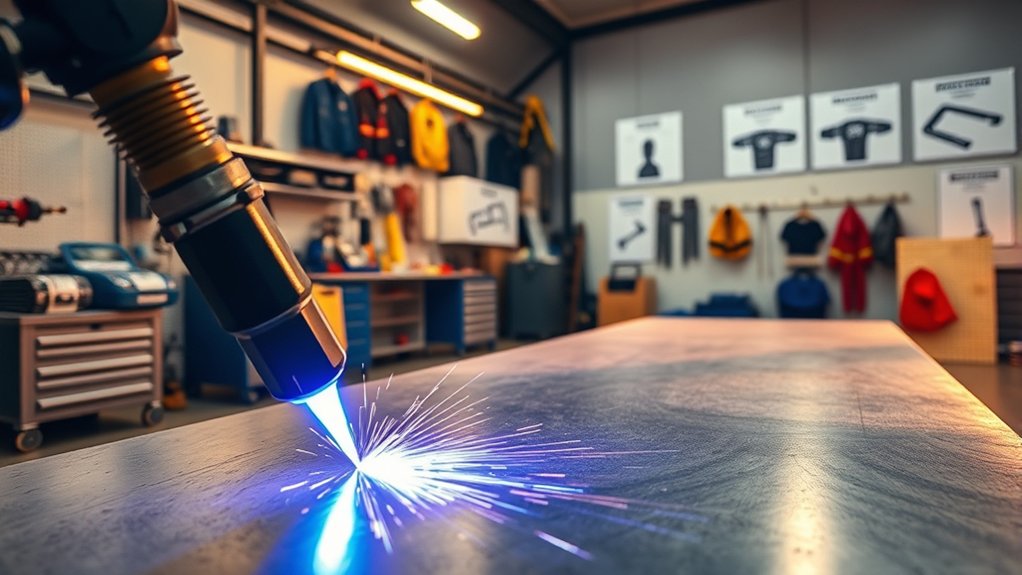
When you start learning plasma cutting, understanding the different methods is vital for mastering the craft.
Hand-guided cutting requires you to maintain a steady speed and skill, making practice essential for developing control and technique.
In contrast, CNC plasma cutting offers precise, repeatable shapes, allowing you to achieve consistent results with minimal error.
Hand-Guided Cutting Techniques
In mastering hand-guided plasma cutting techniques, you’ll need a steady hand and consistent speed to create clean, precise cuts in conductive metals. Achieving this requires maintaining steady hand control and keeping an ideal distance from the workpiece. This guarantees better control and minimizes the risk of overheating or excessive slag formation.
Start your cuts at a 15° angle to penetrate the material, then shift to a square cut for best results. Understanding amperage settings is essential; for example, use 70 amps for heavy materials and 20 amps for 16 gauge steel.
Regular practice and familiarity with your torch settings will enhance efficiency, allowing you to produce quality cuts with minimal finishing. Prioritize safety and accuracy as you refine your skills.
CNC Plasma Cutting Benefits
While hand-guided plasma cutting offers you hands-on control and flexibility, CNC plasma cutting elevates precision and consistency to an industrial scale. This method excels in precision applications, allowing you to produce intricate designs with high repeatability.
The automation benefits of CNC plasma cutting greatly reduce human error, enhancing efficiency in large production runs. You can easily handle diverse materials like steel, aluminum, and copper, with capabilities to cut anything from thin sheets to thicker plates, depending on your machine’s specifications.
Using CAD software, you can create and modify designs effortlessly, translating them directly into cutting instructions. Unlike manual methods, CNC plasma cutting minimizes material wastage, producing complex shapes and patterns with cost-effectiveness, making it indispensable for modern manufacturing.
Essential Safety Practices for Plasma Cutting
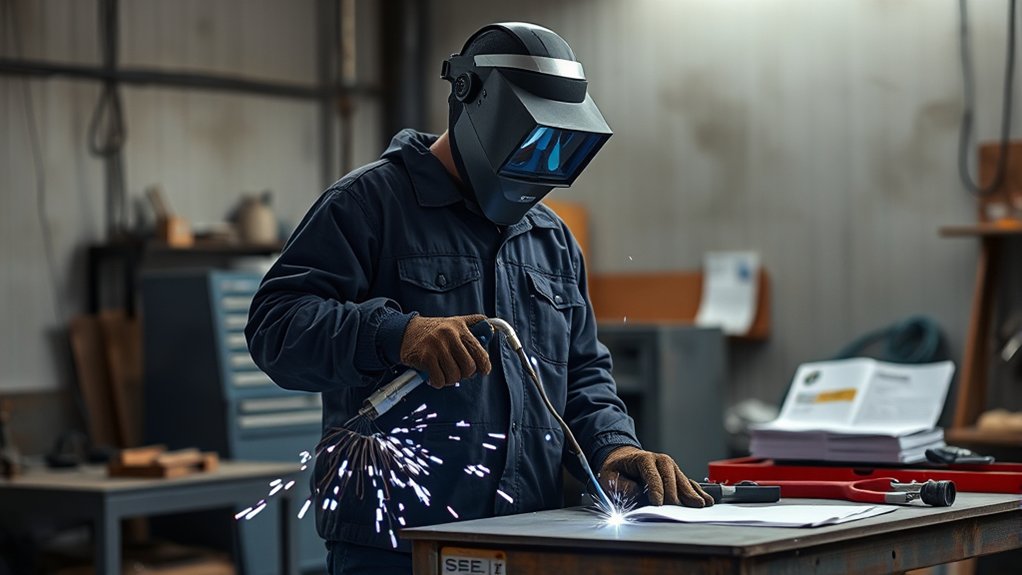
To guarantee a safe plasma cutting experience, prioritize wearing safety glasses or a welding helmet to protect your eyes from the intense light and sparks generated during the process.
Ensure eye protection with safety glasses or a welding helmet during plasma cutting to shield against intense light and sparks.
Safety gear is essential, but don’t forget about hazard awareness. You’ll need to take thorough measures to shield yourself from potential dangers:
- Flame-resistant gloves and clothing: These protect your hands and body from heat and molten metal splatter.
- Proper ventilation or a respirator: This safeguards you from harmful fumes produced during cutting.
- Regular inspection of plasma torch components: Check the contact tip and insulator to ascertain safe operation.
- Familiarize with machine safety devices: Confirm they’re engaged before triggering the arc to prevent accidents.
Key Techniques for Effective Plasma Cutting
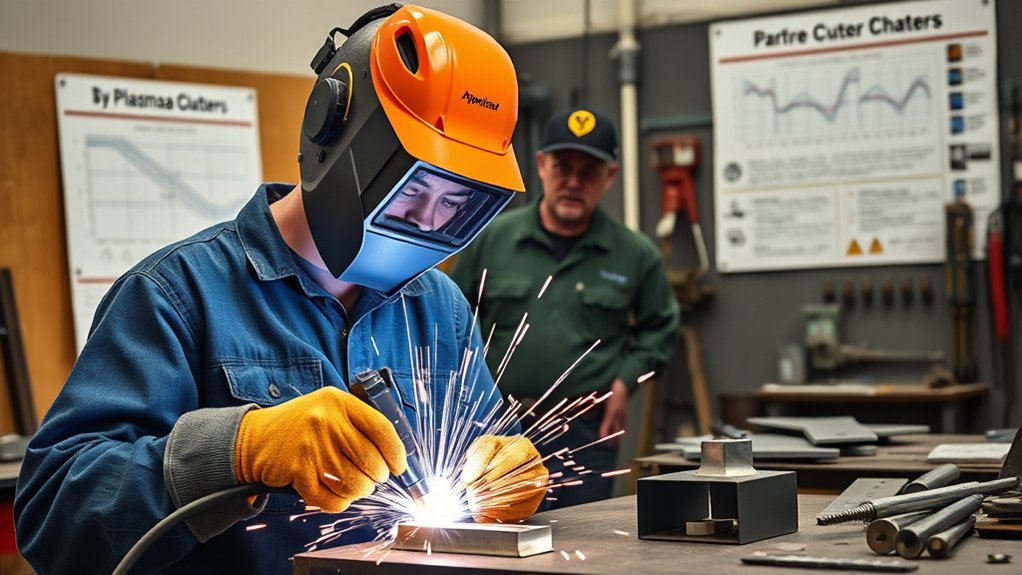
Achieving precision in plasma cutting demands mastering key techniques that guarantee clean and efficient results.
Begin by maintaining a consistent cutting speed; this is essential for preventing jagged edges. Start with a 15° angle for initial penetration, then adjust to a square cut for maximum precision. Familiarize yourself with machine settings—keep air pressure between 35 to 75 PSI. Adjust the amperage to match material thickness; for instance, use 70 amps for heavy materials and 20 amps for 16-gauge steel.
Practice hand-guided cutting to hone your skill in achieving smooth, straight cuts. This requires steady control and precision. Alternatively, use a track-guided system for straight cuts, minimizing human error.
Don’t overlook the recast layer, especially on metals like aluminum. Proper finishing is essential to guarantee quality welds and prevent assembly issues.
Selecting the Right Plasma Cutting Equipment
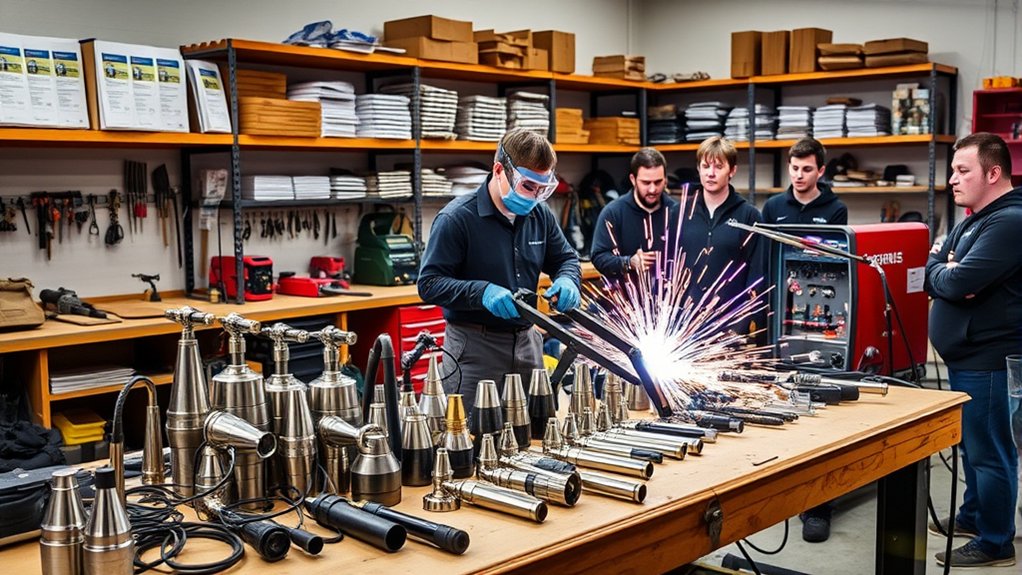
When you’re selecting plasma cutting equipment, make certain the machine’s amperage aligns with the material thickness you’ll be working with, such as 70 amps for heavy materials or 20 amps for 16 gauge steel.
Opt for a plasma cutter with user-friendly software that supports common file formats like DXF and DWG, streamlining your design and operation processes.
Always prioritize machines with robust safety features to minimize the risk of accidental injuries during operation.
Matching Machine to Material
Selecting the right plasma cutting equipment is essential to achieving clean and precise cuts. To guarantee machine compatibility with your projects, consider the material thickness you’ll work with regularly. For instance, a 70-amp machine handles heavier materials, while 20 amps suffice for 16 gauge steel.
Evaluate the cutting capacity to match your needs; a 220-volt unit can cut through sheet metal and steel up to 1.25 inches thick.
For ideal results, keep these factors in mind:
- Cutting area size: Ensure it fits your project dimensions for maneuverability.
- Material compatibility: Effective on conductive metals like steel, stainless steel, aluminum, and copper.
- Air pressure requirements: Typically between 35 to 75 PSI for optimal performance.
- Amperage settings: Match to your material’s thickness for best results.
User-Friendly Software Features
For those venturing into plasma cutting, prioritizing user-friendly software features is vital to enhance your overall experience and efficiency.
Start by confirming software compatibility with various file formats like DXF and DWG, allowing seamless integration with your design software. A user interface that offers intuitive controls helps you master the machine quickly, reducing the learning curve.
Look for features that enable easy adjustment of cutting parameters, so you can effortlessly change amperage and speed according to material thickness. Real-time monitoring and diagnostics are essential for troubleshooting and maintaining peak performance.
Equipment with built-in design templates and nesting capabilities will maximize material usage, minimizing waste. Selecting the right software features guarantees efficient, safe, and effective plasma cutting operations.
Operating and Maintaining Plasma Cutting Machines
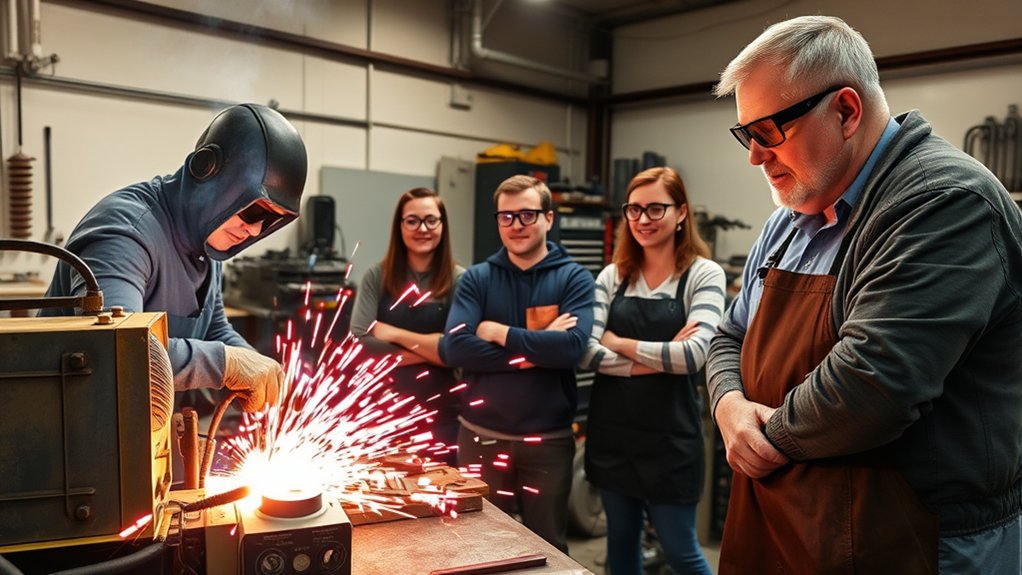
Though plasma cutting machines can seem complex, mastering their operation and maintenance is essential for both efficiency and safety. Start by ensuring your machine functions effectively by understanding its air pressure requirements; keep it between 35 to 75 PSI.
Regularly troubleshoot issues and calibrate your machine for precise cutting, adjusting the amperage settings based on material thickness. For example, use 70 amps for heavy materials and 20 amps for 16-gauge steel.
To maintain your machine’s performance, follow these steps:
- Inspect and replace the contact tip and insulator regularly to prevent efficiency loss.
- Conduct airflow tests before each session to verify functionality and safety.
- Engage safety devices before triggering the arc to prevent accidents.
- Clean and finish cuts to remove recast layers for quality welds.
Enhancing Skills With Practice and Resources
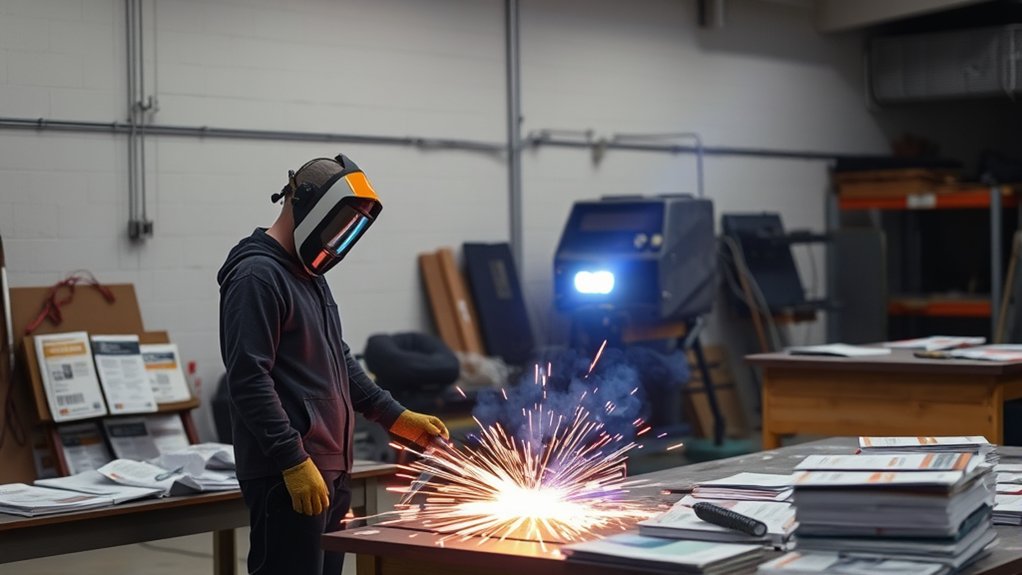
To elevate your plasma cutting skills, immerse yourself in consistent practice and leverage diverse resources. Regularly work with materials like steel, aluminum, and copper to understand different cutting behaviors and techniques. This varied practice is vital for skill development, allowing you to adapt your approach to each material’s unique properties.
Online tutorials, manuals, and videos are invaluable for learning plasma cutting settings, safety protocols, and effective cutting strategies. They provide a thorough foundation you can build upon.
Additionally, joining local workshops or classes offers hands-on experience and expert advice, helping you refine your skills and troubleshoot common issues.
Experiment with cutting angles and speeds; mastering torch control is essential for clean, precise cuts. Engage with online forums and communities to exchange experiences, ask questions, and learn from seasoned professionals.
These practice strategies will enhance your proficiency and safety, ensuring you become a skilled plasma cutter.
Frequently Asked Questions
What Materials Can Be Cut Using a Plasma Cutter?
You can cut materials like aluminum and stainless steel using a plasma cutter. Make certain you’re wearing appropriate safety gear. Remember, plasma cutting is efficient for conductive metals, so always follow safety protocols to prevent accidents.
How Do I Troubleshoot Common Plasma Cutter Issues?
Think of your plasma cutter as a lighthouse guiding your project. If it flickers, check the electrode replacement first. Confirm gas flow is steady. Always prioritize safety by wearing proper gear and maintaining clear communication with your team.
Can a Plasma Cutter Be Used for Artistic Projects?
Absolutely, you can use a plasma cutter for artistic projects. It allows you to create intricate plasma art and creative designs. Remember, always prioritize safety by wearing protective gear and ensuring proper ventilation during your work.
How Does Plasma Cutting Compare to Other Cutting Methods?
Imagine slicing through metal like a hot knife through butter. Plasma cutting offers this magic with its superior cutting efficiency and precision. Unlike other methods, its advantages include cleaner cuts and less material waste, enhancing safety and productivity.
What Are the Environmental Impacts of Plasma Cutting?
Plasma cutting affects air quality due to fumes and particulates. You should guarantee proper ventilation and use protective gear. For waste management, recycle metal scraps responsibly and dispose of consumables according to local regulations to minimize impact.
Conclusion
You’ve now got the roadmap to mastering plasma cutting, where sparks fly and metal obeys your command. Remember, safety is your steadfast companion—never let it waver. Keep your torch skills sharp with constant practice and let curiosity guide you through online tutorials and workshops. Immerse yourself in forums like a seasoned explorer, sharing and gathering wisdom. With diligence and care, you’ll transform raw materials into polished art, wielding your plasma cutter like an artist with a brush.