To prevent concrete dust from damaging your angle grinder, use safety gear like glasses, dust masks, and gloves. Choose a grinder with built-in dust extraction systems and compliant motors. Prepare your workspace with effective ventilation and dust collection methods, like HEPA filters or wet grinding. Regularly clean your grinder, inspecting vents and parts for dust buildup. Establish a maintenance schedule to extend the tool’s life and guarantee efficient operation. You’ll uncover more detailed strategies to enhance your workflow.
Why Concrete Dust Is Dangerous for Your Grinder
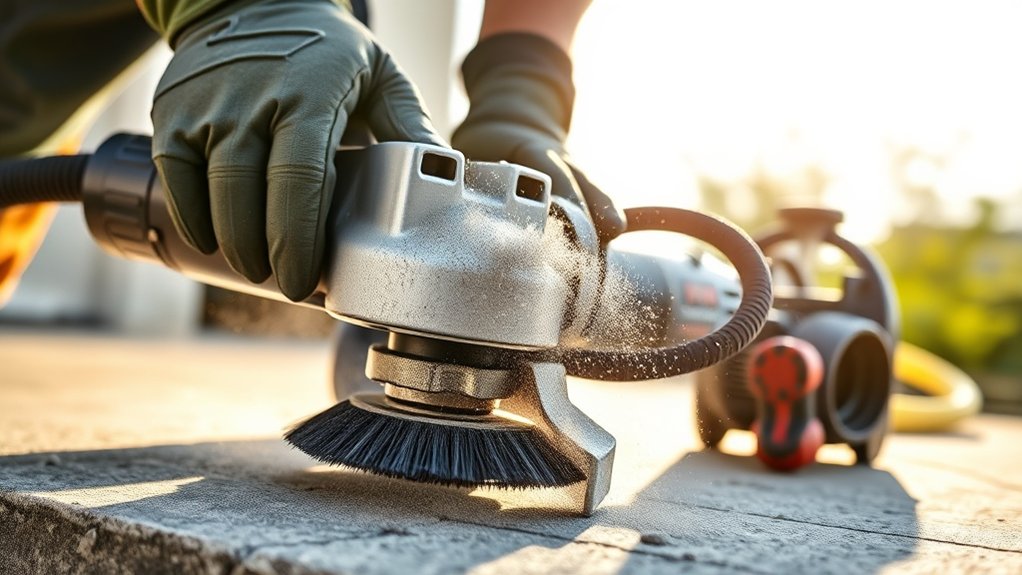
Concrete dust poses considerable risks to your angle grinder, primarily by infiltrating its motor and bearings. This accumulation can lead to overheating, diminishing performance and efficiency over time. The fine particles wear on moving parts, increasing the likelihood of premature failure, which translates to costly repairs or replacements. Regular exposure not only jeopardizes your tool’s longevity but also poses severe health risks, including respiratory issues and silicosis.
Moreover, dust buildup obstructs air vents, restricting airflow vital for cooling and increasing the risk of electrical malfunctions or even fires. Effective dust control measures are necessary to maintain peak performance and protect both you and your equipment. By prioritizing proper maintenance and implementing dust management strategies, you can greatly extend the life of your angle grinder while safeguarding your health. Embrace these practices to guarantee your tools remain reliable and safe for your projects.
What Gear Do You Need to Stay Safe While Grinding?
When grinding, having the right gear is essential for your safety and effectiveness. Start with Personal Protective Equipment (PPE); always wear safety glasses to shield your eyes from concrete dust and debris. A dust mask or respirator is imperative to prevent inhalation of harmful particles, especially in high-silica environments.
Next, don reinforced gloves to protect your hands from sharp edges and hot surfaces while ensuring a good grip on the grinder. Hearing protection is also essential; use earplugs or earmuffs rated for at least 25 dB noise reduction, as angle grinders can exceed 100 decibels, risking hearing damage.
To further minimize the risk of airborne dust, utilize a dust extraction system or vacuum attachment designed for grinders. For extended use, consider a full-face respirator with P3 filters to optimize your respiratory protection. Prioritize these safety tips to work effectively and protect yourself.
Choosing a Grinder With Effective Dust Control Features
Selecting an angle grinder with effective dust control features is vital for maintaining a safe and efficient workspace. Look for models equipped with built-in dust extraction systems that capture up to 99% of concrete dust, greatly enhancing tool longevity and user safety. Adjustable dust shrouds are also important; they allow you to tailor dust control to specific applications, guaranteeing peak performance during various grinding tasks.
Consider grinders compatible with external vacuum systems for superior dust collection, which helps maintain a cleaner environment. Additionally, choose grinders with dust-sealed motors and bearings to prevent dust ingress, reducing the risk of overheating and performance issues. Confirm the grinder complies with safety and dust control standards, such as M-Class or H-Class ratings, for effective protection against harmful silica exposure. This thoughtful selection will not only safeguard your health but also prolong the life of your tools.
Preparing Your Workspace to Minimize Dust Exposure
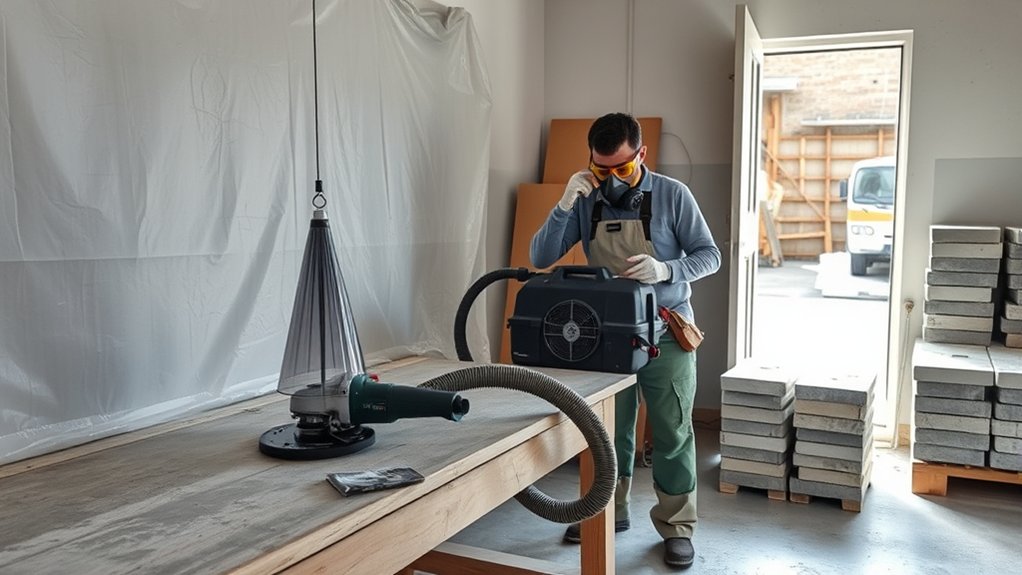
To minimize dust exposure when using angle grinders, start by ensuring effective ventilation in your workspace; this helps dissipate airborne particles. Implement dust extraction systems to capture dust at the source and maintain a cleaner environment. Regularly clear your workspace of debris to enhance visibility and reduce dust accumulation during grinding operations.
Effective Ventilation Strategies
Creating an effective ventilation strategy is essential for minimizing dust exposure while using angle grinders on concrete. Guarantee adequate airflow by opening windows and doors or employing exhaust fans to establish cross-ventilation, dispersing concrete dust throughout your workspace. Position your grinder near a dedicated dust extraction unit to capture airborne particles, reducing dust accumulation. Incorporate high-efficiency particulate air (HEPA) filters in your ventilation systems to effectively trap fine dust, preventing it from settling on your grinder and surrounding surfaces. Utilize dust suppression techniques, such as wet grinding or misting systems, to considerably lower dust generation. Finally, maintain a clean workspace by regularly removing settled dust, ensuring good lighting to enhance visibility and safety during your grinding operations.
Use Dust Extraction Systems
While using angle grinders on concrete, integrating dust extraction systems is crucial for minimizing dust exposure. These systems, especially those equipped with HEPA filters, capture 99.97% of particles, guaranteeing a cleaner work area. Position the dust extractor close to the grinding area for ideal suction and reduced dust dispersion. Regularly inspect and maintain your dust extraction systems to keep filters clean and unobstructed, enhancing airflow.
| Action | Purpose | Frequency |
|---|---|---|
| Inspect filters | Guarantee ideal airflow | Weekly |
| Clean equipment | Reduce safety hazards | After each use |
| Train personnel | Improve dust extraction techniques | Quarterly |
Utilize water suppression methods for further dust reduction, especially in poorly ventilated spaces.
Clear Workspace Regularly
Integrating dust extraction systems greatly reduces airborne particles, but maintaining a clean workspace is equally essential for minimizing dust exposure. Regularly clear your workspace of debris to prevent dust accumulation, which can impair your grinder’s performance and lead to overheating. Make sure you remove any flammable materials within a 30-foot radius to prevent fire hazards while grinding concrete. A well-lit area enhances visibility, helping you manage dust more effectively and reducing accident risks. Additionally, perform routine checks for dust buildup on the grinder itself; excessive dust can result in motor burnout and decreased operational efficiency. By following these steps, you’ll not only protect your equipment but also create a safer, more efficient working environment.
How to Clean Your Grinder to Prevent Dust Damage
To keep your angle grinder in peak condition, it’s vital to establish a regular maintenance schedule that incorporates essential cleaning tools. You’ll need to implement proper dust extraction methods to minimize debris buildup and guarantee efficient performance. By following these steps, you can greatly reduce the risk of concrete dust damage to your equipment.
Essential Cleaning Tools
Cleaning your angle grinder regularly is essential for preventing dust damage and maintaining its efficiency. Use the following tools for effective cleaning:
| Tool | Purpose | Tips |
|---|---|---|
| Brush | Remove dust from vents | Clean after each use |
| Compressed Air | Clear air intake and exhaust | Guarantee proper airflow |
| Damp Cloth | Wipe down surfaces | Collect fine dust particles |
| Inspection Tool | Inspect grinding disc | Check for cracks and wear |
Regular Maintenance Schedule
While maintaining your angle grinder might seem like a minor task, establishing a regular maintenance schedule is crucial for preventing dust damage. Start by unplugging and disassembling the tool to access dust-collecting areas. Use compressed air to blow out dust and debris from the motor vents, preventing overheating. Regularly wipe down surfaces with a damp cloth to keep controls functional. Don’t forget to inspect filters in any dust extraction system; clean or replace them as per the manufacturer’s guidelines to maintain good airflow. Finally, after cleaning, store the grinder properly in a dry, dust-free environment. This proactive approach will guarantee your angle grinder remains in good condition and extends its lifespan.
Proper Dust Extraction Methods
Maintaining ideal performance in your angle grinder hinges on effective dust extraction methods that prevent concrete dust buildup. To protect your tool, clean your angle grinder regularly using a brush or compressed air. This removes concrete dust that can impair functionality or cause overheating. Verify the dust extraction system operates at minimum airflow specifications to capture airborne particles efficiently. Consider using a wet/dry vacuum attachment while grinding to minimize dust generation and maintain a cleaner work environment. Additionally, perform a visual inspection of the grinder’s air vents and cooling slots; clogged vents can lead to overheating and motor burnout. Finally, store your grinder in a dust-free environment and remove any grinding discs to prevent dust accumulation on sensitive components.
Best Practices for Dust Collection During Grinding
Implementing effective dust collection practices during grinding operations is vital for both equipment longevity and operator safety. Start by utilizing a dust extraction system that meets minimum airflow specifications to effectively capture concrete dust, protecting both your angle grinder and your health. Consider integrating continuous water delivery systems while grinding; this will considerably suppress dust generation and reduce airborne particulate levels.
Regularly inspect and maintain your dust collection filters to guarantee peak performance, preventing blockages that could increase dust exposure. Using vacuum attachments specifically designed for angle grinders enhances dust collection efficiency and minimizes dust accumulation on the tool. Finally, adhere to proper dust control practices—avoid dry sweeping and opt for wet vacuums during cleanup—to maintain a clean work environment. By following these best practices, you’re taking vital steps to safeguard your equipment and promote a healthier workspace.
How to Maintain Dust Control for Your Grinder
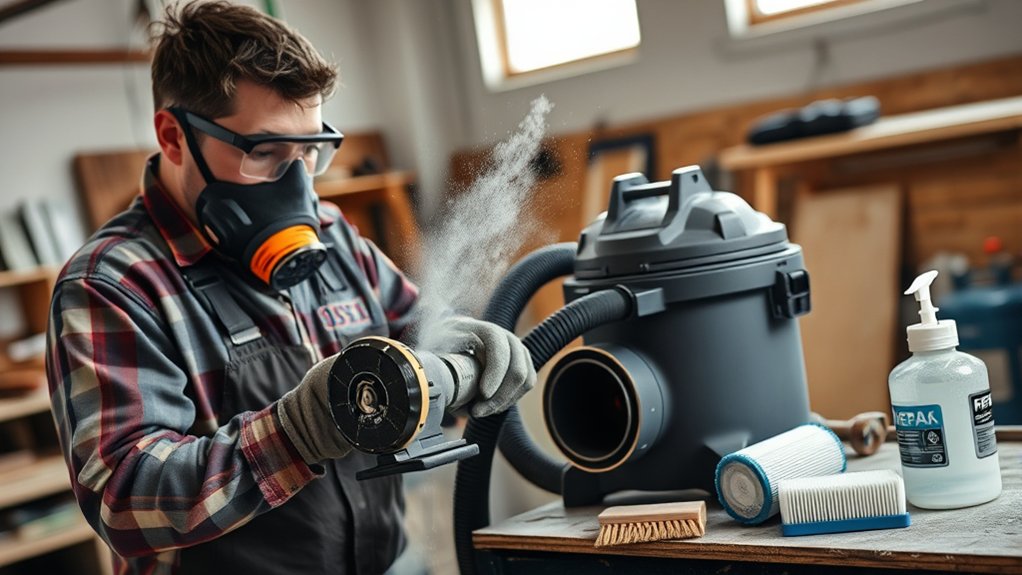
Effective dust collection practices set the stage for ongoing dust control with your angle grinder. Start by using a high-quality dust extraction system that meets minimum airflow specifications to capture concrete dust effectively. This prevents dust from entering the grinder’s motor, maintaining longevity. Implement continuous water delivery during grinding to suppress dust generation, boost grinding efficiency, and cool the tool.
Regularly inspect and clean the dust collection filters to guarantee peak performance and avoid blockages that can lead to overheating. After each use, remove any dust accumulation from the grinder and store it in a dust-free environment. Training operators on proper dust control techniques and the use of PPE is essential to minimize exposure and guarantee safe working conditions. By adhering to these practices, you’ll not only enhance safety but also prolong the life of your angle grinder, ensuring it remains a reliable tool in your arsenal.
Frequently Asked Questions
How to Reduce Dust When Cutting Concrete With an Angle Grinder?
To reduce dust when cutting concrete, use effective concrete cutting techniques like wet cutting. Incorporate dust extraction methods, angle grinder accessories, and guarantee proper work area preparation with ventilation systems and safety gear. Regular maintenance is essential.
How to Stop Dust When Using an Angle Grinder?
To stop dust when using an angle grinder, embrace dust collection systems, apply grinder attachments, opt for wet cutting, guarantee proper ventilation, and always wear dust masks while maintaining a clean work area for personal protection.
How to Control Dust When Grinding Concrete?
To control dust when grinding concrete, use effective dust collection systems, prepare your work area, and prioritize angle grinder maintenance. Always wear protective gear to mitigate health risks and consider the environmental impact of dust.
What Are 10 Safety Precautions Before Using a Grinding Machine?
Before using a grinding machine, make certain you wear safety gear, maintain your grinder, organize your work area, implement dust collection, and use eye and hearing protection alongside a proper ventilation system for maximum safety.
Conclusion
In the battle against concrete dust, your angle grinder can either thrive or suffer. By implementing effective dust control measures, you protect your tool and guarantee a cleaner workspace. Remember, a well-maintained grinder operates efficiently, while a neglected one invites costly repairs. Choose the right gear, prepare your area, and practice diligent cleaning. This simple commitment to dust management not only prolongs your grinder’s lifespan but also enhances your overall grinding experience. Stay proactive, and your tools will thank you.