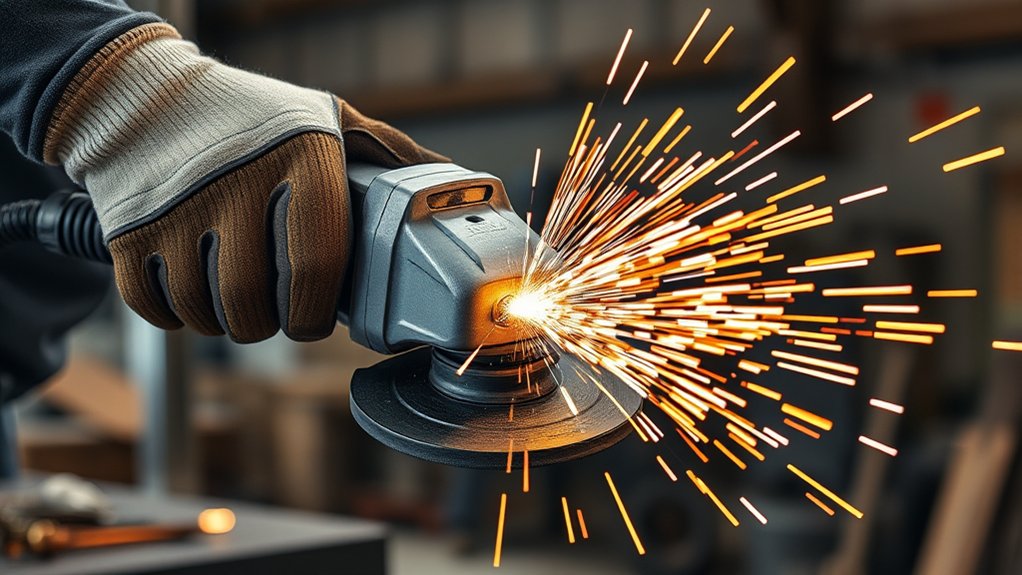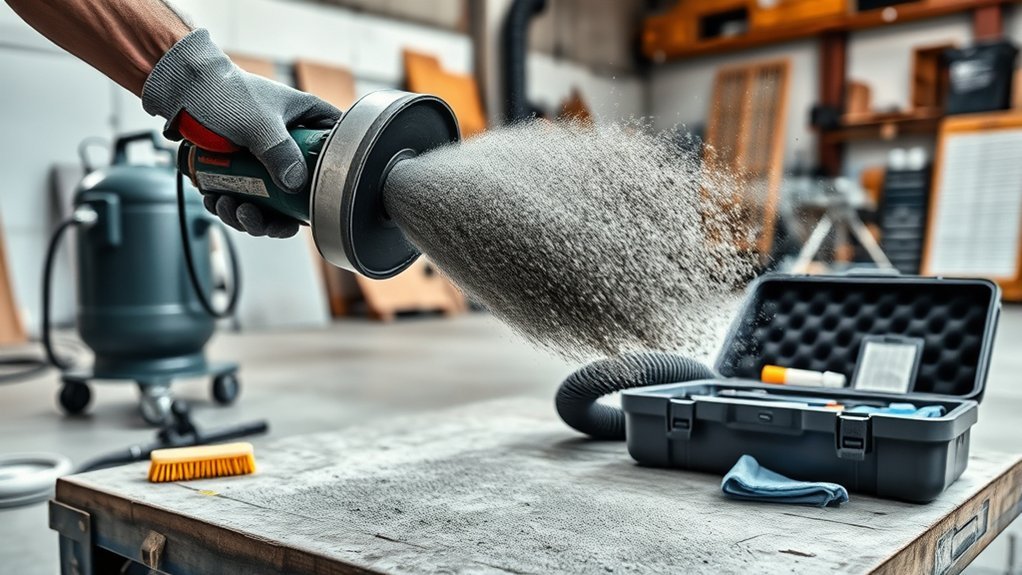
To prevent concrete dust from damaging your angle grinder, use safety gear like glasses, dust masks, and gloves. Choose a grinder with built-in dust extraction systems and compliant motors. Prepare your workspace with effective ventilation and dust collection methods, like HEPA filters or wet grinding. Regularly clean your grinder, inspecting vents and parts for dust buildup. Establish a maintenance schedule to extend the tool’s life and keep it running efficiently. Below, you’ll find detailed strategies to improve your workflow and protect your equipment.
Quick Answer
- Concrete dust clogs motor vents and wears down bearings, causing overheating and premature failure.
- Always wear safety glasses, a dust mask or respirator, reinforced gloves, and hearing protection.
- Pick a grinder with a dust-sealed motor, adjustable dust shroud, and compatibility with vacuum attachments.
- Use HEPA-filtered dust extraction systems or wet grinding to capture dust at the source.
- Clean your grinder with compressed air and a damp cloth after every use, and store it in a dust-free spot.
Why Concrete Dust Is Dangerous for Your Grinder
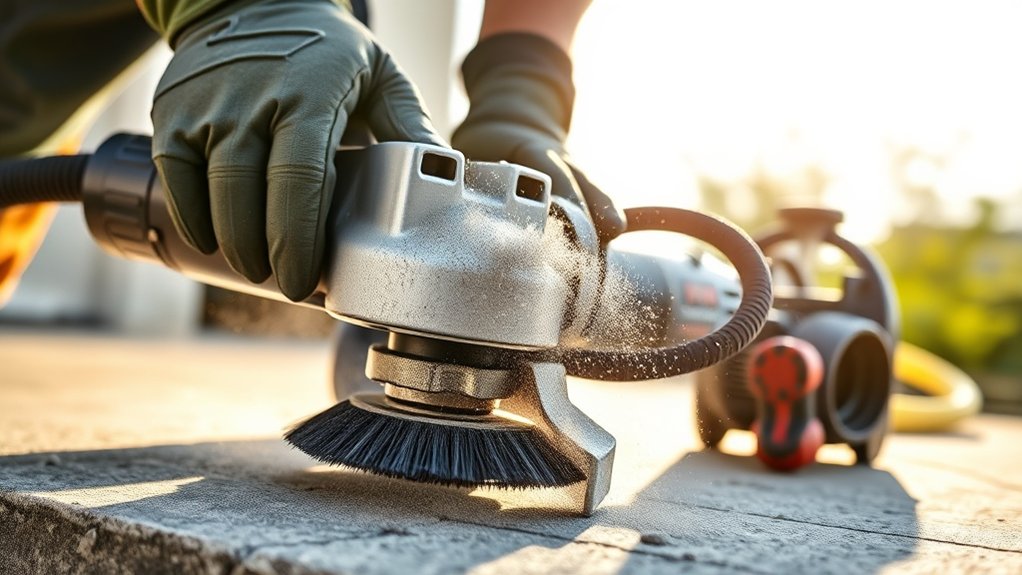
Concrete dust is one of the biggest threats to your angle grinder. The fine particles work their way into the motor and bearings, where they cause friction and heat buildup. Over time, this leads to overheating, reduced performance, and eventually premature failure. That means expensive repairs or a full replacement.
Beyond tool damage, regular exposure to concrete dust creates serious health risks. Inhaling silica-containing dust can cause respiratory problems and a chronic lung disease called silicosis.
Dust buildup also blocks air vents, choking off the airflow your grinder needs to stay cool. This raises the chance of electrical faults or even fires. Proper dust control isn’t optional. It protects both your equipment and your lungs. By staying on top of maintenance and using smart dust management, you can get much more life out of your angle grinder while keeping yourself safe.
What Gear Do You Need to Stay Safe While Grinding?
Having the right gear makes a big difference when grinding concrete. Start with proper Personal Protective Equipment (PPE). Always wear safety glasses to shield your eyes from dust and flying debris. A dust mask or respirator is a must for filtering out harmful particles, especially in high-silica environments.
Wear reinforced gloves to guard your hands against sharp edges and hot surfaces while keeping a solid grip on the tool. Hearing protection matters too. Angle grinders can exceed 100 decibels, so use earplugs or earmuffs rated for at least 25 dB noise reduction.
To cut down on airborne dust even further, attach a dust extraction system or vacuum designed for grinders. For longer jobs, a full-face respirator with P3 filters gives you the best respiratory protection available.
Products Worth Considering

REUSABLE RESPIRATOR MASK WITH FILTERS: A half face respirator built for repeat use, not a throwaway paper mask. Pop in a fresh filter, rinse the silicone face piece, and it is ready for tomorrow. Ships with 10 replacement filters so one purchase covers months of projects.
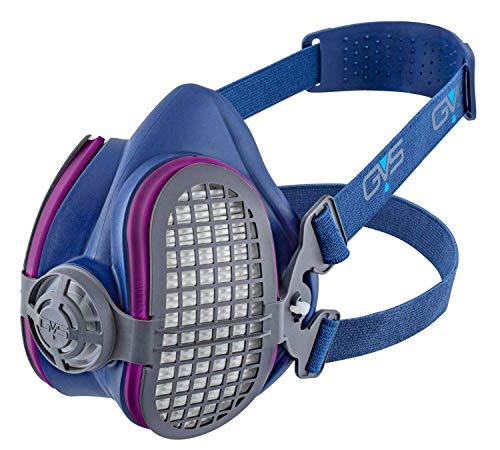
This mask is recommended for dust and fumes containing substances such as micro-organisms, marble, gypsum, titanium oxide, soapstone, rock wool, wood, detergents, textile fibres, spices, salt, animal feeds, etc.. Protects against dust that can cause lung disease. In particular, protects against coal, silica, cotton, iron ore, graphite, kaolin, zinc, aluminium dusts. Protects against harmful dusts such as asbestos, bauxite, coal, silica, iron, and against toxic dusts.

NIOSH P100 RATED PROTECTION: The P100 Half-Mask respirator with replaceable filters offers reliable protection against dust, metal fumes, and oil mist
Choosing a Grinder With Effective Dust Control Features
Picking an angle grinder with solid dust control features goes a long way toward keeping your workspace safe and your tool in good shape. Look for models with built-in dust extraction systems that capture up to 99% of concrete dust. This dramatically improves both tool life and user safety.
Adjustable dust shrouds are another key feature. They let you fine-tune dust collection for different grinding tasks. Also check that the grinder works with external vacuum systems for even better dust capture.
Choose grinders with dust-sealed motors and bearings. These prevent dust from getting inside, reducing the risk of overheating and mechanical issues. Finally, confirm the grinder meets dust control standards like M-Class or H-Class ratings. These ratings ensure effective protection against harmful silica exposure and give you confidence the tool is built for dusty work.
Products Worth Considering

Angle grinder dust extraction suitable for the front cover of most 48-51mm angle grinders. Can be installed on most 5"/4.5" angle grinders.The thickness of Diamond Grinding Disc should not more than 25mm or less than 15mm.
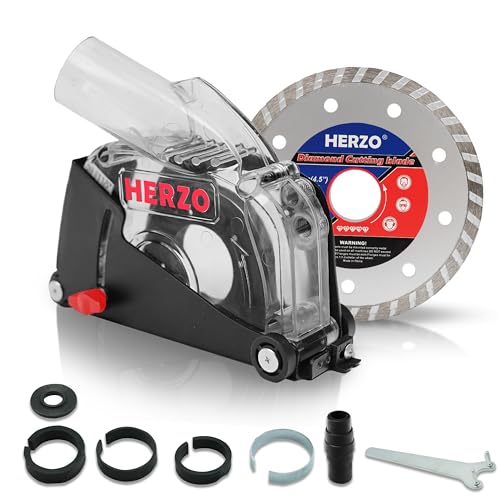
Widely Adapt:Suitable for 80% Main Brand 4-1/2 and 5 inch Angle Grinder

High Compatibility:Suitable for Angle Grinder under main brand 4-1/2''/5",adapt to 48-51mm Angle grinder front cap and easy to install.Allows collection of harmful dust suface grinding application.
Preparing Your Workspace to Minimize Dust Exposure
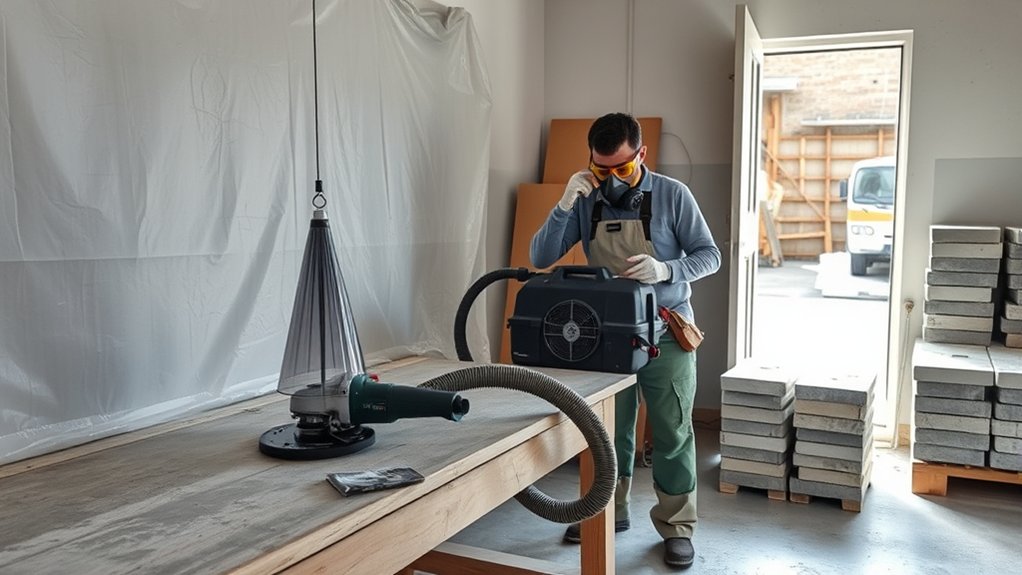
Good workspace preparation is half the battle against concrete dust. Start by making sure there’s proper ventilation to move airborne particles out. Set up dust extraction systems to catch dust right at the source, keeping the air cleaner. And clear the area of loose debris before you start grinding to improve visibility and reduce dust buildup.
Effective Ventilation Strategies
Setting up effective ventilation is critical for reducing dust exposure during concrete grinding. Open windows and doors, or use exhaust fans, to create cross-ventilation that pushes concrete dust out of your workspace.
Position your grinder near a dedicated dust extraction unit so airborne particles get captured before they spread. Add high-efficiency particulate air (HEPA) filters to your ventilation setup. These trap fine dust and keep it from settling on your grinder and nearby surfaces.
Wet grinding or misting systems work well as dust suppression tools, cutting dust generation significantly. Keep your workspace clean by wiping up settled dust regularly. Good lighting also helps you spot dust clouds and stay aware of conditions as you work.
Use Dust Extraction Systems
Pairing your angle grinder with a dust extraction system is one of the most effective ways to control concrete dust. Systems with HEPA filters capture 99.97% of particles, keeping your work area much cleaner. Place the dust extractor close to the grinding spot for the best suction and least dust spread. Check and maintain these systems regularly so filters stay clear and airflow stays strong.
| Action | Purpose | Frequency |
|---|---|---|
| Inspect filters | Guarantee ideal airflow | Weekly |
| Clean equipment | Reduce safety hazards | After each use |
| Train personnel | Improve dust extraction techniques | Quarterly |
Water suppression methods are also worth using, especially in spaces with poor ventilation.
Clear Workspace Regularly
Dust extraction helps a lot, but keeping your workspace clean matters just as much. Remove debris regularly to prevent dust buildup that can hurt your grinder’s performance and lead to overheating.
Clear away any flammable materials within a 30-foot radius to reduce fire hazards during grinding. Good lighting makes it easier to spot dust and avoid accidents. Run routine checks for dust on the grinder itself, since clogged vents can cause motor burnout and lower efficiency. A clean workspace protects your equipment and keeps you safer overall.
How to Clean Your Grinder to Prevent Dust Damage
Keeping your angle grinder clean is one of the simplest ways to prevent concrete dust damage. Build a regular maintenance routine using the right cleaning tools, and pair it with proper dust extraction methods to cut down on debris buildup.
Essential Cleaning Tools
A few basic tools are all you need to keep your grinder dust-free:
| Tool | Purpose | Tips |
|---|---|---|
| Brush | Remove dust from vents | Clean after each use |
| Compressed Air | Clear air intake and exhaust | Guarantee proper airflow |
| Damp Cloth | Wipe down surfaces | Collect fine dust particles |
| Inspection Tool | Inspect grinding disc | Check for cracks and wear |
Regular Maintenance Schedule
A regular maintenance schedule keeps your grinder performing well and prevents long-term dust damage. Start by unplugging the tool and disassembling it to reach areas where dust collects.
Use compressed air to blow dust and debris out of the motor vents. This prevents overheating. Wipe surfaces with a damp cloth to keep controls and switches working smoothly. Check the filters on any dust extraction system you use, and clean or replace them based on the manufacturer’s guidelines.
After cleaning, store the grinder in a dry, dust-free spot. This simple routine will keep your angle grinder in solid working condition for years.
Proper Dust Extraction Methods
Good dust extraction is key to preventing concrete dust buildup on your grinder. Clean your angle grinder after every use with a brush or compressed air to remove dust that could cause overheating or mechanical problems.
Make sure your dust extraction system meets minimum airflow specifications so it captures particles efficiently. A wet/dry vacuum attachment during grinding cuts dust at the source and keeps your workspace cleaner.
Do a visual inspection of the air vents and cooling slots often. Clogged openings lead to overheating and motor burnout. When you’re done for the day, store your grinder in a dust-free area and remove any grinding discs to prevent dust from collecting on sensitive parts.
Best Practices for Dust Collection During Grinding
Strong dust collection habits during grinding protect both your equipment and your health. Start with a dust extraction system that meets minimum airflow specs. This captures concrete dust before it reaches the grinder’s internals or your lungs.
Adding a continuous water delivery system while grinding suppresses dust generation and lowers airborne particle levels significantly. Keep your dust collection filters in good shape by inspecting them regularly. Blocked filters let dust slip through and increase your exposure.
Use vacuum attachments made for angle grinders to boost dust collection and keep the tool cleaner. During cleanup, skip dry sweeping. Use wet vacuums instead to avoid kicking dust back into the air. These practices add up to a healthier workspace and longer-lasting equipment.
Common Mistakes That Shorten Your Grinder’s Life
Even with good intentions, a few common mistakes can undo your dust control efforts. Skipping post-use cleaning is the most frequent one. Dust left sitting on the grinder hardens over time and becomes much harder to remove.
Another mistake is using the grinder without any dust shroud or vacuum attachment. Running the tool “bare” lets dust flood the motor and bearings with every use. Some users also forget to check their grinding discs. A worn or cracked disc creates more dust and vibration, which speeds up wear on the grinder itself.
Storing the grinder in a dusty garage or shed without a cover is another issue. Even when the tool isn’t running, ambient dust settles into vents and gaps. Finally, ignoring the manufacturer’s maintenance intervals leads to problems that could have been caught early. Following the recommended schedule from OSHA’s silica dust guidelines also helps you stay compliant and safe on the job.
How to Maintain Dust Control for Your Grinder
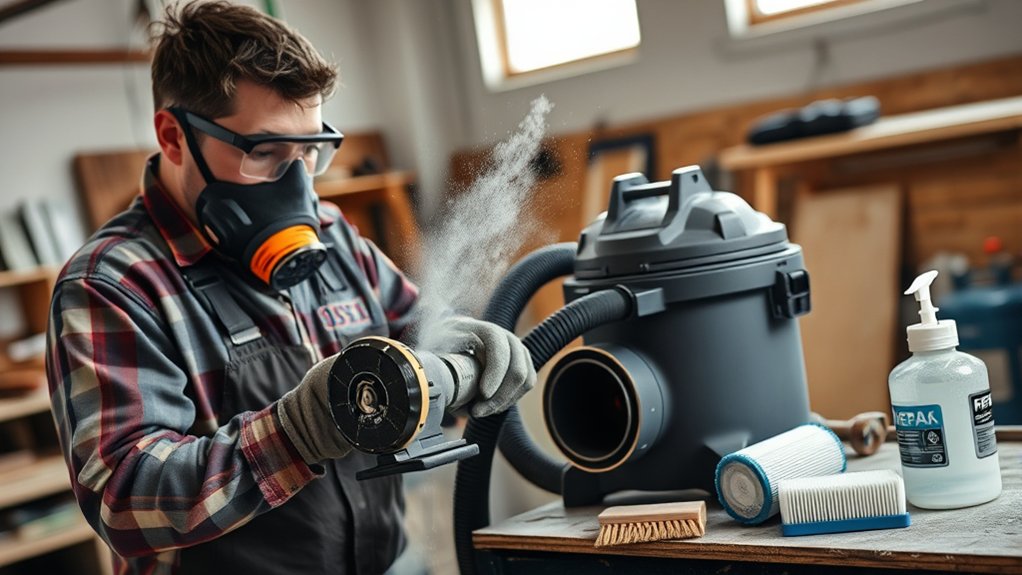
Good dust collection habits set the foundation, but ongoing dust control is what keeps your angle grinder reliable over time. Use a high-quality dust extraction system that meets minimum airflow requirements to capture concrete dust before it reaches the motor.
Running a continuous water supply during grinding suppresses dust, improves cutting efficiency, and keeps the tool cooler. Inspect and clean your dust collection filters regularly. Blocked filters cause poor suction, which leads to overheating.
After every session, remove dust buildup from the grinder and store it in a dust-free environment. Training anyone who uses the tool on proper dust control techniques and PPE use is also important. These habits protect both the operator and the equipment, keeping your angle grinder dependable for years to come.
Frequently Asked Questions
How to Reduce Dust When Cutting Concrete With an Angle Grinder?
Use wet cutting techniques whenever possible. Pair your grinder with a dust extraction attachment and make sure the work area has good ventilation. Wearing proper safety gear and keeping up with grinder maintenance also helps keep dust levels down.
How to Stop Dust When Using an Angle Grinder?
Attach a dust collection system or vacuum to your grinder. Use wet cutting methods, keep the area well-ventilated, and always wear a dust mask. Cleaning your workspace before and after grinding reduces leftover dust too.
How to Control Dust When Grinding Concrete?
Effective dust control starts with a good dust collection system and a clean, prepared work area. Maintain your angle grinder regularly, wear protective gear, and be aware of both the health risks and environmental impact of airborne concrete dust.
What Are 10 Safety Precautions Before Using a Grinding Machine?
Before starting, wear all required safety gear, inspect and maintain the grinder, organize your workspace, set up dust collection, and use proper eye and hearing protection. A ventilation system should be in place for maximum safety.
Conclusion
Concrete dust and angle grinders don’t mix well. With the right dust control measures, you can protect your tool and keep your workspace clean. A well-maintained grinder runs better and lasts longer, while a neglected one leads to costly repairs. Choose the right gear, prepare your area, and commit to regular cleaning. This straightforward approach to dust management extends your grinder’s lifespan and makes every project smoother. Stay proactive, and your tools will reward you.