To reduce dust ingestion while using an angle grinder, make sure you wear appropriate PPE like dust masks, safety glasses, and hearing protection. Set up your workspace with a task-specific shroud and effective dust extraction systems, using HEPA filters for peak air quality. Choose grinders and discs that minimize fine dust generation. Regularly maintain your equipment and clean up with industrial vacuums instead of sweeping. Follow these guidelines for a safer grinding experience, and discover additional strategies for effective dust control.
Understanding the Risks of Dust Ingestion While Grinding
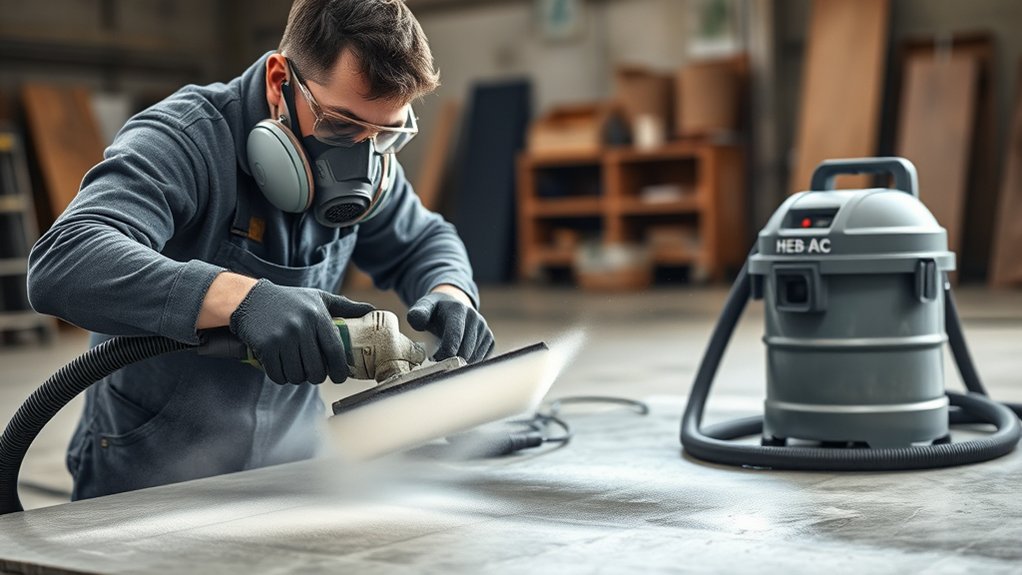
When you’re grinding, it’s vital to understand the risks associated with dust ingestion, as fine particulate matter can pose serious health threats. Dust generated during grinding includes respirable A-dust, which can penetrate deep into your lungs, increasing the risk of respiratory diseases. E-dust, or inhalable dust, presents acute health risks, with established limits of 10 mg/m³, highlighting the need for strict control measures. Long-term exposure to fine dust particles (0.1-1.0 µm) has been linked to chronic conditions like lung cancer and COPD. Additionally, grinding can produce temperatures over 800 degrees Celsius, releasing harmful vapors and compounding inhalation risks. To mitigate these dangers, wearing appropriate personal protective equipment, such as a dust mask or respirator, is essential. Without these safeguards, you expose yourself to serious injury from harmful dust particles, emphasizing the importance of proactive measures in your grinding activities.
Essential Personal Protective Equipment for Safe Grinding
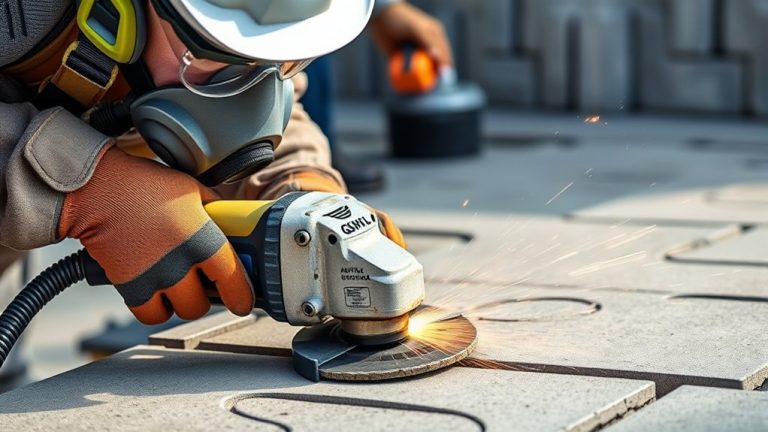
To guarantee your safety while grinding, wearing the right personal protective equipment (PPE) is non-negotiable. Start with safety glasses or a face shield to shield your eyes from flying sparks and debris—these can cause serious injuries. Next, don a dust mask or respirator, such as FFP3, to filter out fine particles generated during grinding, greatly reducing respiratory risks.
Hearing protection is essential, as angle grinders can exceed 100 decibels, leading to potential hearing loss with extended use. Additionally, use cut-resistant gloves to guarantee a firm grip and protect against sharp edges and heat, enhancing your control over the grinder and materials. Finally, consider flame-retardant clothing to minimize skin exposure to hot sparks, preventing burns during grinding tasks. Prioritizing these PPE items not only safeguards your health but also empowers you to work confidently and efficiently.
How to Set Up Your Workspace for Dust Control
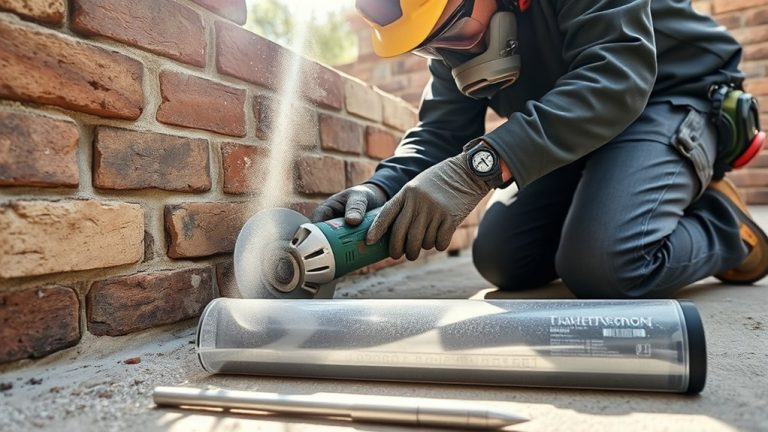
To effectively control dust in your workspace, start by installing a task-specific shroud that fully encapsulates the grinding area. Guarantee proper airflow management by using an air scrubber or negative air machine, which captures airborne particles. Regularly monitor dust levels to maintain compliance with safety regulations and optimize your setup.
Proper Shroud Installation
Installing the right shroud is essential for effective dust control while using an angle grinder. A properly fitted shroud fully encloses the cutting zone, capturing dust at the source. Here’s a quick checklist to guarantee proper installation:
| Task | Description |
|---|---|
| Select the right shroud | Confirm it fully encloses the grinding area. |
| Connect the anti-static hose | Securely attach it to the shroud and industrial vacuum. |
| Use an appropriate vacuum | Choose one with M or H class filters and HEPA filtration. |
| Start extractor first | Activate the vacuum before you begin grinding. |
| Inspect regularly | Maintain shroud and vacuum to comply with safety regulations. |
Following these steps enhances dust capture and promotes a safer workspace, keeping both you and your environment protected.
Effective Airflow Management
Proper shroud installation is just the first step in effective dust control. Implement a three-layer approach: capture dust at the source, manage it in the air, and guarantee vacuum-based housekeeping. Use a sealed shroud to fully encapsulate the grinding zone, minimizing dust escape. Position an air scrubber or negative air machine in small spaces to direct airflow away from you, effectively reducing airborne dust levels. Confirm all vacuum hoses are anti-static, securely connected, and minimized in length to prevent leaks during extraction. Regularly monitor airborne dust levels with a particulate monitor, adjusting equipment settings or extraction capacity as necessary. This proactive approach integrates safety technology, guaranteeing a cleaner, safer workspace while you work.
Selecting Grinders and Discs to Reduce Dust Ingestion
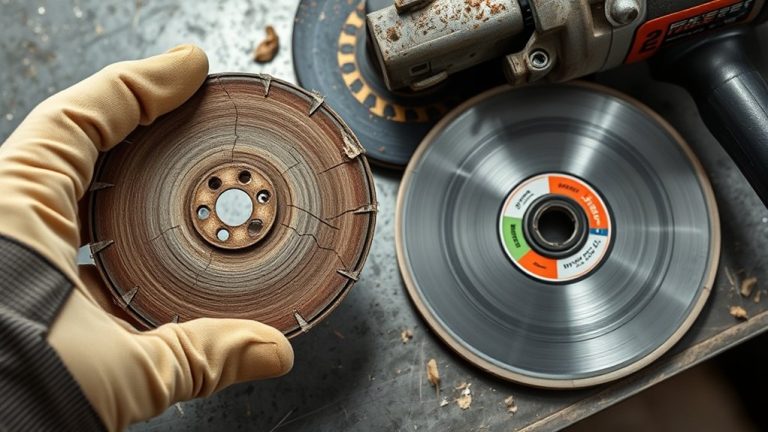
When selecting an angle grinder and discs, ensuring compatibility with dust extraction features is essential for minimizing airborne particles. Opt for grinders equipped with built-in dust extraction or compatible shrouds. This setup effectively captures dust during operation. Choose grinding discs tailored for the material at hand; the right abrasives will reduce fine dust generation and enhance performance.
Check that the maximum operating speed (MOS) of the grinding disc meets or exceeds that of the grinder to prevent breakage, which can lead to increased dust creation. Self-sharpening abrasives are also a great choice, as they produce larger chips instead of fine dust, lowering airborne particulates. Finally, regularly inspect and replace worn or damaged discs; compromised discs can generate excessive dust and hazardous particles. By selecting the right tools, you’ll create a safer, cleaner working environment.
Effective Use of Dust Extraction Systems and Shrouds
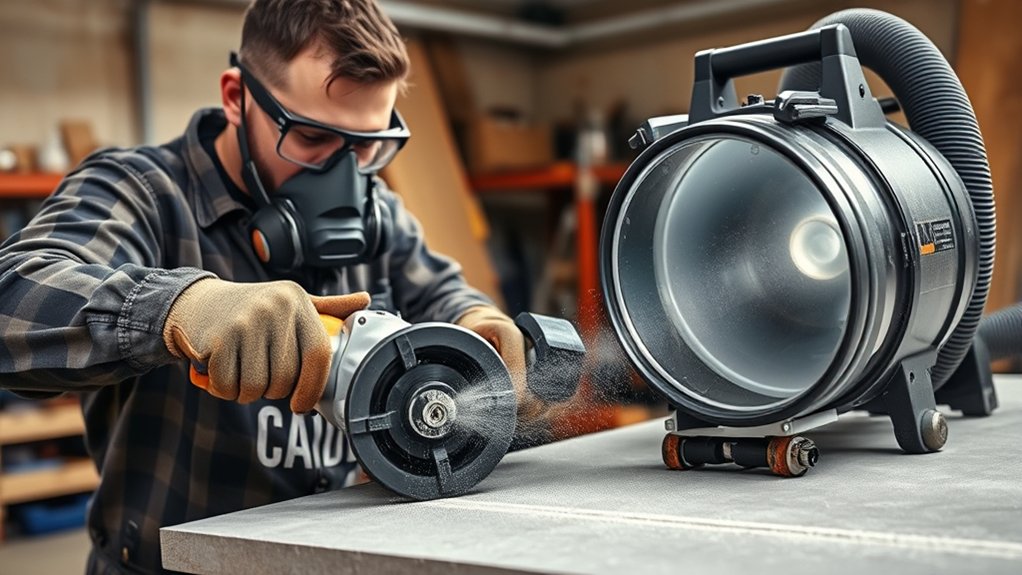
To effectively reduce dust during grinding operations, utilizing a well-fitted shroud around the grinding area is vital. This shroud captures airborne particles at the source, considerably minimizing dust escape. Connect an anti-static hose to the shroud to enhance dust extraction, guaranteeing minimal bends and leaks for ideal airflow.
Incorporating a high-efficiency particulate air (HEPA) filter within your dust extraction systems is essential, as it captures 99.97% of particles down to 0.3 microns, preventing harmful dust inhalation. Always start the extractor before activating the grinder; this way, dust is captured immediately as grinding begins, improving air quality in your workspace.
Don’t forget to regularly inspect and maintain your dust extraction systems. Consistent upkeep guarantees they operate at peak efficiency, effectively preventing any dust escape during your grinding tasks. Taking these steps empowers you to work safely and efficiently.
Implementing Room Control Measures for Air Quality
Implementing effective room control measures is essential for maintaining air quality during grinding operations. Start by installing an air scrubber or negative air machine in enclosed work areas to capture airborne dust particles. This drastically improves air quality, reducing the risk of inhalation. Direct airflow away from occupied areas, which minimizes dust spread and protects workers.
Utilize an industrial vacuum fitted with HEPA filters to effectively capture fine dust, ensuring harmful particles aren’t reintroduced. Regularly clean the workspace using vacuum-only methods to prevent dust accumulation, further safeguarding against airborne particles.
Monitor air quality with particulate monitors to identify peaks in dust levels. This allows you to make immediate adjustments to equipment or work practices, ensuring a safe environment. By following these measures, you’ll create a healthier work area, empowering you to focus on your grinding tasks with greater peace of mind.
Safe Grinding Techniques to Minimize Dust Exposure
Utilizing safe grinding techniques is crucial for minimizing dust exposure during operations. Start by using a properly fitted shroud around the grinding area. This captures dust at the source and connects to a high-efficiency vacuum with HEPA filtration to reduce airborne particles. In enclosed spaces, employ an air scrubber or negative air unit to further minimize dust concentration and redirect airflow away from your work area.
Maintain a clean workspace by using an industrial vacuum for cleanup instead of sweeping or compressed air, which can disperse dust back into the air. Regularly monitor dust levels with a particulate monitor during grinding; adjust cutting depth or speed if readings exceed safe limits. Finally, verify all operators wear appropriate respiratory protective equipment (RPE), such as FFP3 masks, when grinding materials that generate harmful dust. These practices will greatly enhance safety and reduce health risks associated with dust exposure.
Recommended Dust Extraction Systems and Tools
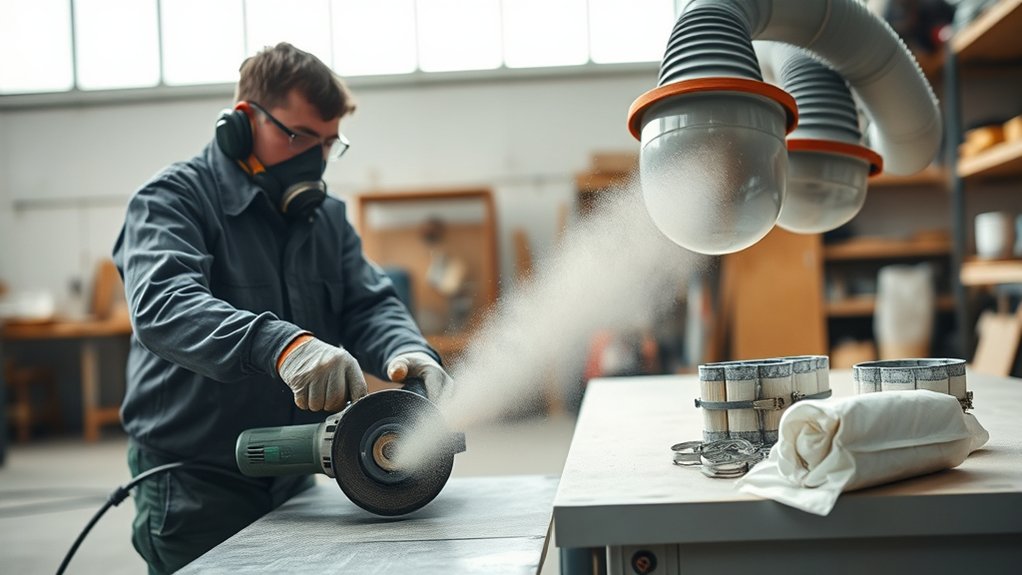
Selecting the right dust extraction systems and tools greatly enhances your ability to control dust ingestion during grinding operations. First, opt for a vacuum-based dust extraction system that includes an industrial vacuum cleaner rated at least M-class or H-class. This guarantees compliance with safety regulations while effectively minimizing airborne dust levels.
Incorporate a high-efficiency particulate air (HEPA) filter with a minimum H13 rating to capture fine and carcinogenic dust effectively. Additionally, use a shroud that fully encapsulates the grinding zone, connecting securely to an anti-static hose to prevent dust escape.
For enclosed or occupied spaces, consider employing an air scrubber or negative air unit to continuously filter the air. Finally, regularly inspect and maintain your dust extraction systems to ensure peak performance and adherence to established dust exposure limits of 10 mg/m³ for inhalable dust and 1.25 mg/m³ for respirable dust.
Maintain a Clean and Safe Work Environment Post-Grinding
After grinding, it’s essential to implement effective cleanup techniques to minimize dust exposure. Use industrial vacuums with HEPA filters rather than sweeping or using compressed air, which can stir up particles. Regularly monitor air quality and maintain equipment to guarantee a clean and safe workspace for everyone.
Effective Cleanup Techniques
To maintain a clean and safe work environment after grinding, employing effective cleanup techniques is crucial. Start by using an industrial vacuum equipped with HEPA filters to capture fine dust particles, greatly reducing dust exposure. Avoid traditional sweeping methods as they can resuspend dust into the air. Instead, implement air scrubbers or negative air machines in enclosed areas to continuously filter airborne dust. Establish a routine cleanup schedule immediately after grinding to prevent dust accumulation. Regularly inspect your vacuum systems to guarantee they operate efficiently, as clogged filters can increase dust exposure.
| Technique | Equipment Needed | Benefits |
|---|---|---|
| Industrial Vacuum | HEPA Filter Vacuum | Captures fine dust effectively |
| Air Scrubbers | Negative Air Machines | Continuous airborne dust filtration |
| Routine Cleanup Schedule | None | Prevents dust accumulation |
Regular Equipment Maintenance
Regular maintenance of your angle grinder is essential for ensuring both performance and safety. Start by cleaning the grinder after each use to remove dust buildup, which can hinder efficiency and longevity. Inspect the power cords, switches, and attachments for any signs of wear or damage to maintain functionality and prevent accidents. Use a brush or compressed air to clear dust from internal parts, especially around the motor and vents. It’s also important to lubricate moving parts as specified in the user manual to reduce friction. Finally, store the grinder in a dry, dust-free environment to protect against corrosion and keep all components in prime condition. Regular equipment maintenance is key to a reliable and safe grinding experience.
Air Quality Monitoring
Air quality monitoring is essential for maintaining a clean and safe work environment after grinding operations. Implement a dust monitor to regularly check particulate levels, allowing you to promptly adjust ventilation and extraction methods. Proper ventilation is vital; it reduces the accumulation of fine dust particles that can linger long after grinding. Consider using air scrubbers or negative air machines to considerably lower airborne dust levels during and after work. Additionally, utilizing HEPA filtration systems in your vacuums and air scrubbers captures 99.97% of particles as small as 0.3 microns, minimizing health risks. Finally, conduct routine clean-ups with industrial vacuums instead of sweeping, as this prevents the resuspension of settled dust, ensuring sustained air quality.
Frequently Asked Questions
How to Reduce Dust When Using an Angle Grinder?
To reduce dust when using an angle grinder, implement effective dust control methods, utilize appropriate grinder accessories, organize your workspace, and always wear respiratory protection to safeguard your health during operation.
What Are the Safety Precautions for an Angle Grinder?
Wear protective gear like safety glasses and masks. Organize your workspace to minimize hazards. Regularly maintain your grinder for safety. Implement dust extraction systems to reduce airborne particles during operation and protect your health.
What Can Be Done to Control Grinding Dust?
To control grinding dust, implement effective dust extraction systems, maintain organized workspaces, guarantee regular tool maintenance, and choose appropriate materials. These steps create a clear path to a safer, healthier work environment.
How to Use Angle Grinder Step by Step?
To use an angle grinder, select appropriate materials, wear safety gear, apply proper grinder techniques, and perform regular tool maintenance. Always maintain control, ensuring peak performance while minimizing dust and enhancing your safety.
Conclusion
By following these steps, you can greatly reduce dust ingestion while using an angle grinder, protecting your health and enhancing your work quality. Remember, a clean workspace mirrors a clear mind; it’s the key to both safety and productivity. Prioritize your personal protective equipment, maintain effective dust control measures, and always choose the right tools. With these practices, you’re not just grinding; you’re crafting a safer environment for yourself and those around you.