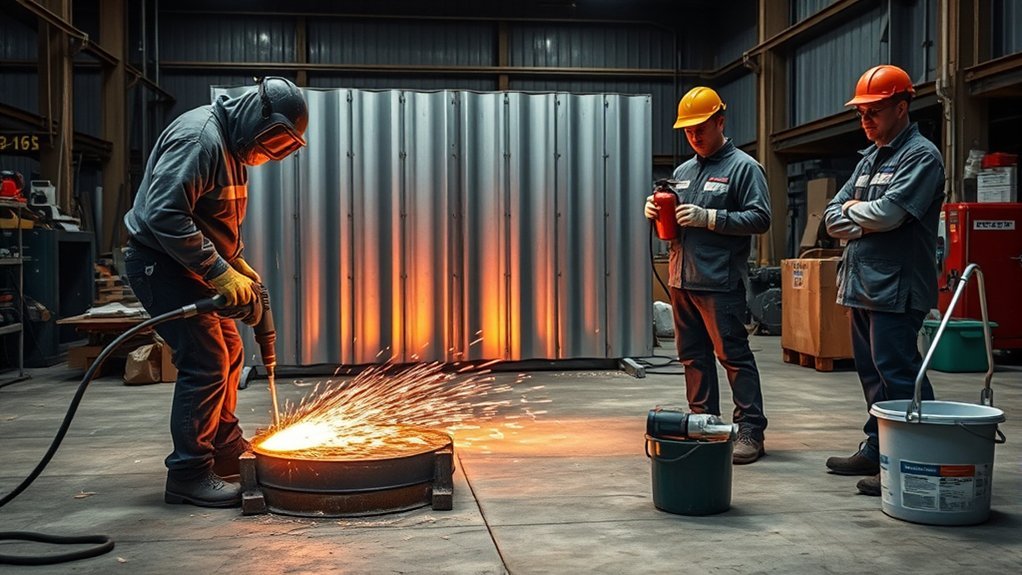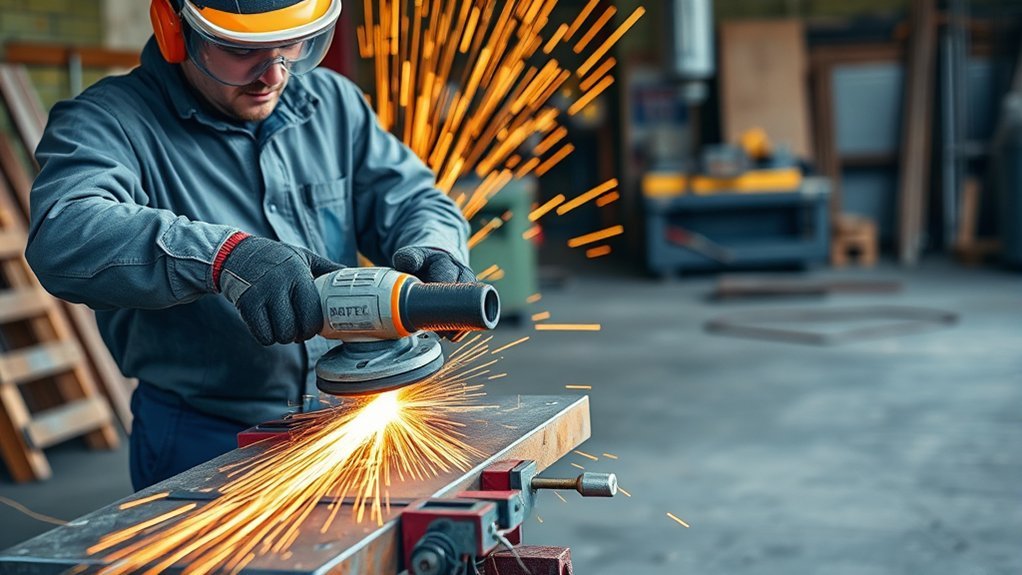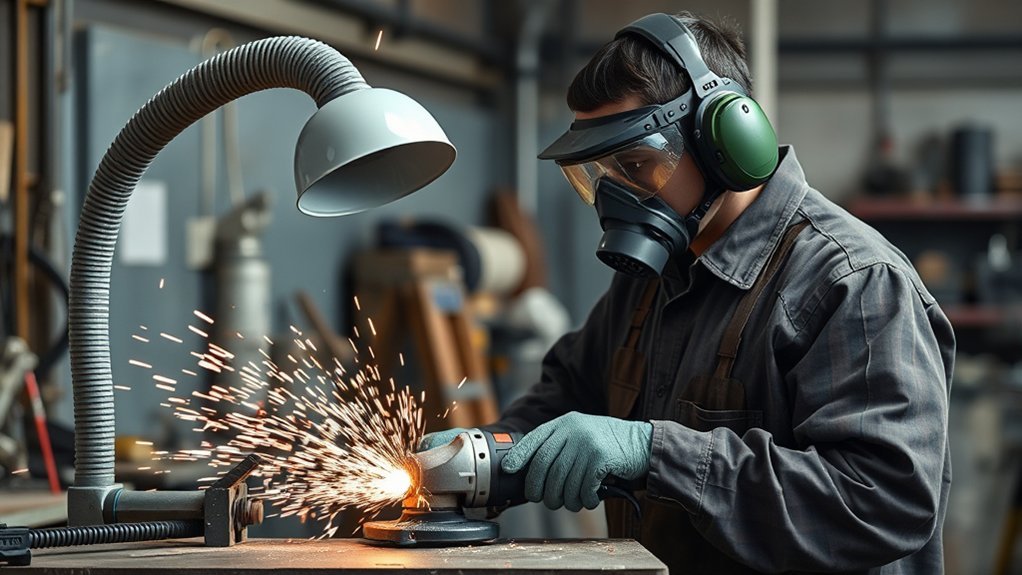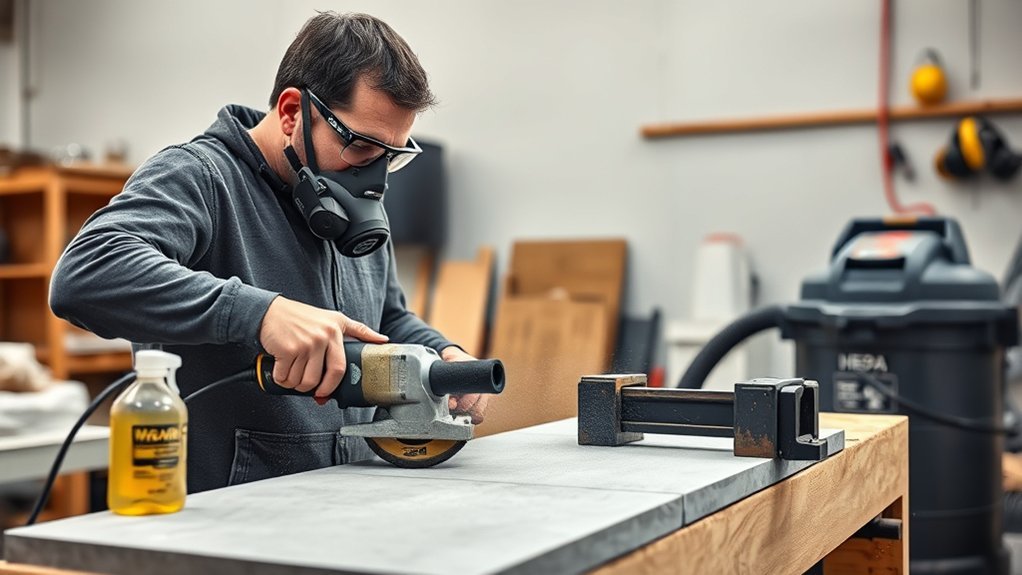
Angle grinding can put fine dust into your breathing zone within seconds. Dust from concrete, stone, metal coatings, paint, or treated materials can irritate your airway and may harm your lungs. This guide shows you how to lower dust exposure with the right personal protective equipment, dust extraction, airflow, cleanup, and tool setup.
Quick Answer
To reduce dust ingestion while using an angle grinder, wear a fitted respirator, use a grinder shroud, and connect it to a suitable dust extractor. Start the extractor before you grind, keep airflow moving away from your face, and clean with a HEPA-filter vacuum instead of sweeping.
Key Takeaways
- Wear eye, hearing, hand, clothing, and respiratory protection before you start grinding.
- Use a grinder shroud connected to a suitable dust extractor to capture dust at the source.
- Choose discs that match the material, and replace worn or damaged discs before use.
- Keep dust out of your breathing zone with good airflow and air filtration when needed.
- Clean dust with an industrial vacuum, not a broom or compressed air.
What’s in This Article
- Understanding the Risks of Dust Ingestion While Grinding
- What You’ll Need Before Grinding
- Essential Personal Protective Equipment for Safe Grinding
- How to Set Up Your Workspace for Dust Control
- Selecting Grinders and Discs to Reduce Dust Ingestion
- Effective Use of Dust Extraction Systems and Shrouds
- Implementing Room Control Measures for Air Quality
- Safe Grinding Techniques to Minimize Dust Exposure
- Recommended Dust Extraction Systems and Tools
- Maintain a Clean and Safe Work Environment Post-Grinding
- Common Mistakes That Increase Grinding Dust
- Frequently Asked Questions
- Safety Disclaimer
- Conclusion
Understanding the Risks of Dust Ingestion While Grinding
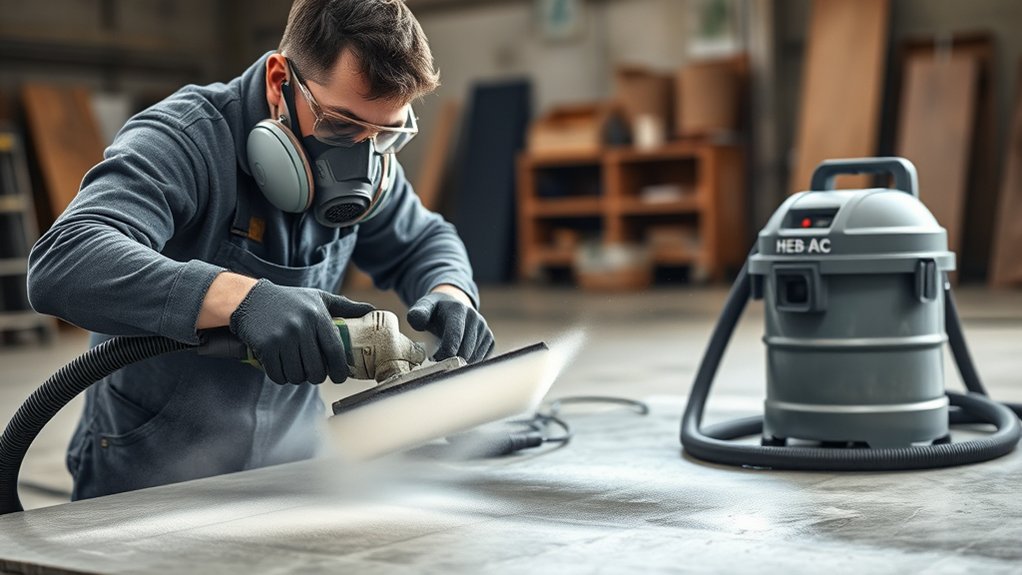
When you grind, fine particles can spread through the air and reach your lungs. Dust from concrete, masonry, stone, paint, coatings, and some metals can create higher risks than plain nuisance dust.
Respirable dust can travel deep into your lungs because the particles are small. Inhalable dust can affect your nose, throat, and upper airway. Long exposure may raise your risk of serious lung problems, especially when the dust contains silica, toxic metals, or old coatings.
Grinding can also create heat, sparks, and fumes. These hazards make respiratory protection and dust capture essential parts of safe grinding.
Warning: Stop work and identify the material before you grind painted, coated, masonry, or unknown surfaces.
What You’ll Need Before Grinding
Gather your safety gear and dust-control tools before you plug in the grinder. A basic setup helps you capture dust early instead of chasing it after it spreads.
- Angle grinder rated for the disc and job.
- Correct grinding, cutting, or surface-prep disc for the material.
- Task-specific grinder shroud that fits your tool.
- Dust extractor or industrial vacuum with suitable filters.
- Anti-static hose that fits the shroud and extractor.
- Safety glasses or face shield.
- Fitted dust mask or respirator rated for the dust hazard.
- Hearing protection, cut-resistant gloves, and flame-resistant clothing.
Estimated total setup time: Plan about 10 to 20 minutes to inspect the grinder, fit the shroud, connect extraction, and put on protective gear.
Essential Personal Protective Equipment for Safe Grinding
Wear the right personal protective equipment (PPE) before you start grinding. Safety glasses or a face shield protect your eyes from sparks, chips, and grit.
Use a dust mask or respirator that matches the dust hazard. For high-risk dust, such as silica-containing masonry dust, choose respiratory protective equipment (RPE) that fits well and meets the job requirements.
Use hearing protection because angle grinders can produce loud noise. Cut-resistant gloves help you grip the tool and protect your hands from sharp edges and heat. Flame-resistant clothing reduces skin exposure to sparks.
How to Set Up Your Workspace for Dust Control
Set up dust control before you make the first cut or pass. Focus on source capture, airflow, and cleanup tools.
- Clear the work area. Remove clutter, flammable materials, and items that can collect dust.
- Fit the correct shroud. Use a shroud that covers the grinding area and matches the grinder size.
- Connect the extractor. Attach an anti-static hose to the shroud and dust extractor.
- Check airflow. Keep the hose short, straight, and sealed to reduce suction loss.
- Start extraction first. Turn on the dust extractor before you start the grinder.
- Position yourself safely. Keep dust, sparks, and airflow moving away from your face.
Proper Shroud Installation
A fitted shroud helps capture dust at the source. The shroud should sit close to the work surface without blocking your control of the grinder.
| Task | Description |
|---|---|
| Select the right shroud | Confirm that it covers the grinding area. |
| Connect the anti-static hose | Attach it firmly to the shroud and industrial vacuum. |
| Use an appropriate vacuum | Choose a unit with filters suited to the dust hazard. |
| Start extractor first | Turn on the vacuum before you begin grinding. |
| Inspect regularly | Check the shroud, hose, filter, and seals before use. |
Effective Airflow Management
Dust control works best when you capture dust at the source, filter the air, and clean surfaces without stirring dust back up. Use a sealed shroud when possible and keep the hose connection tight.
In small or enclosed spaces, use an air scrubber or negative air machine when the job calls for extra control. Place airflow so it moves dust away from your breathing zone and occupied areas.
Selecting Grinders and Discs to Reduce Dust Ingestion
Choose a grinder that works with dust extraction accessories. Built-in dust ports or compatible shrouds help capture dust during operation.
Match the disc to the material. The right abrasive cuts or grinds more cleanly and can reduce excess dust, heat, and vibration.
Check that the disc’s maximum operating speed (MOS) meets or exceeds the grinder speed. Replace worn, cracked, or damaged discs because they can break, cut poorly, and create more dust.
Products Worth Considering

Angle grinder dust extraction suitable for the front cover of most 48-51mm angle grinders. Can be installed on most 5"/4.5" angle grinders.The thickness of Diamond Grinding Disc should not more than 25mm or less than 15mm.

POWERFUL 11.5-AMP / 1400W PURE-COPPER MOTOR: Drives the 5-inch wheel to 8,500 RPM for fast, even cutting and grinding on the most demanding jobs. The pure-copper windings run cooler and more efficiently for sustained heavy use on metal, concrete, brick and stone
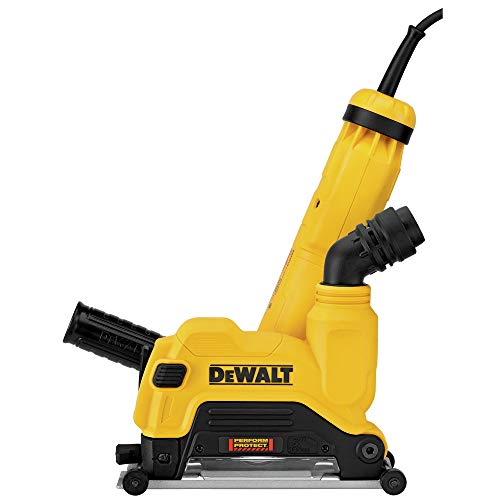
DWV9000 Quick Connector provides a secure connection between the shroud and vacuum
Effective Use of Dust Extraction Systems and Shrouds
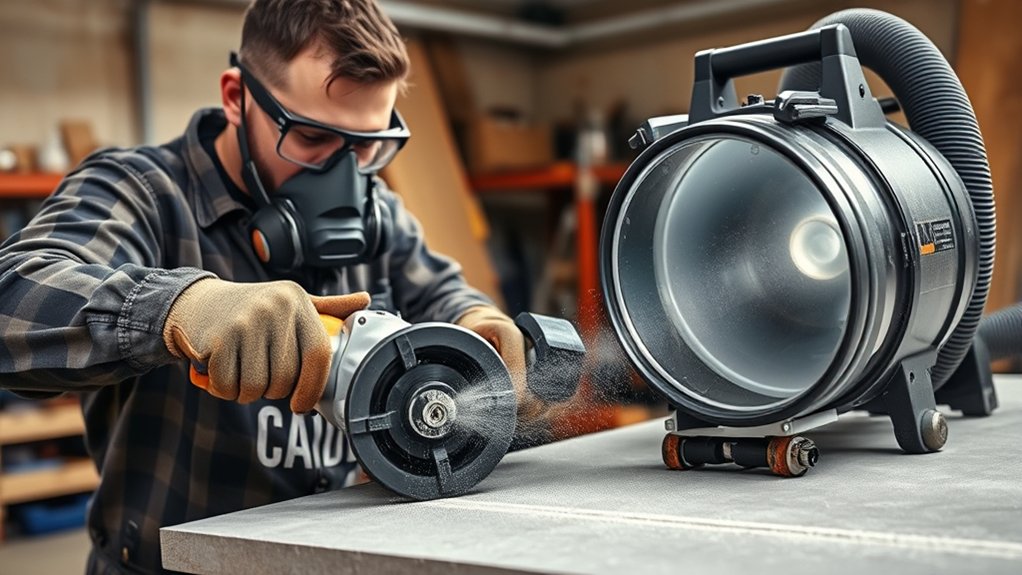
A shroud only works well when you connect it to strong dust extraction. Use a hose that fits tightly, and avoid sharp bends that reduce airflow.
Use a dust extractor with filtration suited to the material. High-efficiency particulate air (HEPA) filtration can capture very small particles when the system seals and runs correctly.
Start the extractor before you start the grinder. Keep it running during short pauses so loose dust does not drift back into the work area.
Pro tip: Check suction at the shroud before grinding because a clogged filter or loose hose can defeat the whole setup.
Products Worth Considering

POWER: With strong airflow and suction power, the BOSCH VAC090AH dust collector delivers a maximum 150 cubic feet of air per minute rate (CFM), with a sustainable maximum 97 in. static water lift
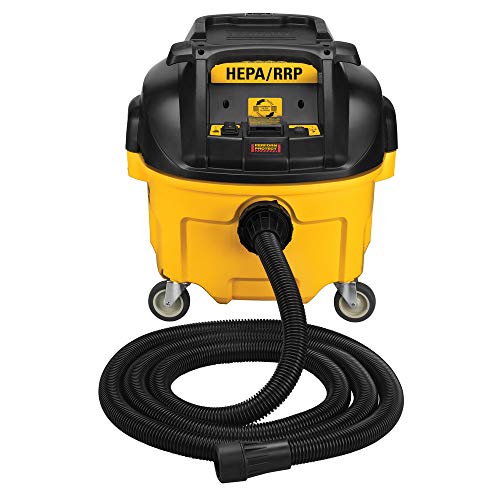
Automatic Filter Clean of the dust extractor pulses every 30 seconds for continuous operation without stopping to clean filter
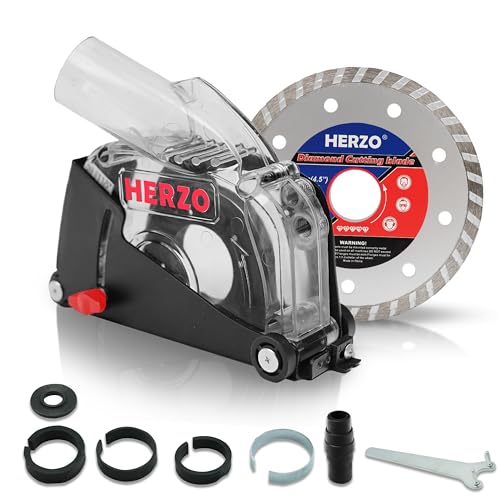
Widely Adapt:Suitable for 80% Main Brand 4-1/2 and 5 inch Angle Grinder
Implementing Room Control Measures for Air Quality
Room control measures help when source capture does not remove all dust. Use air filtration in enclosed or shared spaces to lower airborne dust levels.
Direct airflow away from occupied areas. Keep doors, openings, and barriers arranged so dust does not move into clean zones.
Use a particulate monitor when the job has high dust potential or strict exposure limits. If readings rise, pause work and improve extraction, airflow, or work technique before continuing.
Safe Grinding Techniques to Minimize Dust Exposure
Use steady pressure and let the disc do the work. Heavy pressure can overheat the disc, wear it faster, and create more dust.
- Inspect the grinder. Check guards, switches, cords, discs, and accessories before use.
- Secure the workpiece. Clamp or brace the material so it can’t shift.
- Start the extractor. Confirm suction before the disc touches the surface.
- Hold the grinder firmly. Keep both hands on the tool and stand out of the spark path.
- Grind in controlled passes. Use light, steady movement instead of forcing the disc.
- Pause when dust rises. Adjust the shroud, hose, airflow, or work speed before you continue.
- Clean with a vacuum. Remove dust with an industrial vacuum after the task and during longer jobs.
Recommended Dust Extraction Systems and Tools
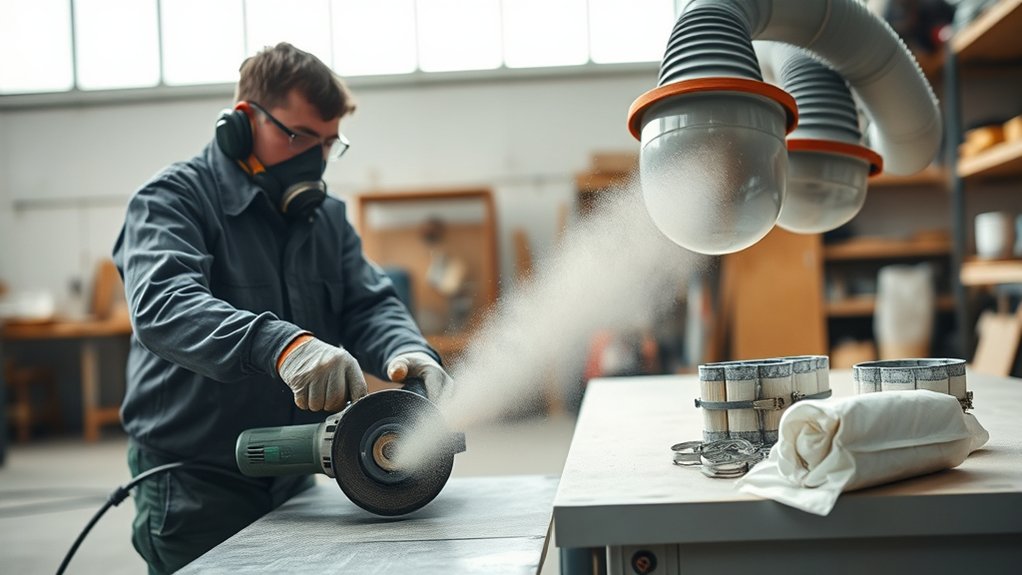
A good dust-control setup uses source capture and filtration together. For many grinding jobs, that means a grinder shroud, anti-static hose, and dust extractor.
Use filters that match the dust hazard. For fine or hazardous dust, choose equipment designed for that type of dust and follow the maker’s filter, bag, and cleaning instructions.
For enclosed or occupied spaces, add an air scrubber or negative air unit when needed. Inspect filters, seals, hoses, and collection bags often because poor maintenance reduces capture performance.
Maintain a Clean and Safe Work Environment Post-Grinding
Dust control continues after the grinder stops. Fine dust can settle on benches, floors, clothing, and tools, then return to the air when disturbed.
Effective Cleanup Techniques
Use an industrial vacuum with suitable filtration to collect fine dust. Avoid sweeping because it can lift dust back into the air.
Do not use compressed air to blow dust off surfaces or clothing. It spreads particles and can push dust into your breathing zone.
| Technique | Equipment Needed | Benefits |
|---|---|---|
| Industrial Vacuum | HEPA Filter Vacuum | Captures fine dust effectively |
| Air Scrubbers | Negative Air Machines | Helps filter airborne dust |
| Routine Cleanup Schedule | Vacuum and disposal supplies | Reduces dust buildup |
Regular Equipment Maintenance
Clean the grinder after use to remove dust buildup from vents and surfaces. Follow the tool manual, and keep dust away from the motor and switch area.
Inspect cords, guards, wheels, switches, shrouds, hoses, and filters before each job. Replace damaged parts before you grind again.
Store the grinder in a dry, dust-free area. Good storage helps protect the tool from corrosion and debris.
Air Quality Monitoring
Use air quality monitoring when dust exposure could be high. A particulate monitor can show when dust levels rise during grinding or cleanup.
Use the readings to adjust extraction, ventilation, and work methods. If dust levels remain high, stop and reassess the job setup.
Common Mistakes That Increase Grinding Dust
Small setup errors can raise dust exposure fast. Fix these issues before you start work.
- Grinding without a shroud when the job creates visible dust.
- Using a loose, cracked, or poorly fitted vacuum hose.
- Starting the grinder before the dust extractor runs.
- Forcing the disc instead of using light, steady pressure.
- Sweeping dry dust after grinding.
- Reusing clogged filters or full collection bags.
Note: Visible dust means your controls need attention, but invisible fine dust can still remain in the air.
Frequently Asked Questions
How do you reduce dust when using an angle grinder?
Use a grinder shroud connected to a suitable dust extractor, and start the extractor before grinding. Wear a fitted respirator and keep airflow moving dust away from your face.
What safety precautions should you take with an angle grinder?
Wear eye protection, hearing protection, gloves, protective clothing, and respiratory protection when the material creates dust. Inspect the grinder, guard, disc, cord, and dust-control setup before each use.
What can you do to control grinding dust?
Capture dust at the source with a shroud and extractor. Improve room airflow when needed, then clean with a suitable vacuum instead of sweeping.
How do you use an angle grinder step by step?
Inspect the tool, fit the correct disc, secure the workpiece, put on PPE, and start dust extraction. Hold the grinder with both hands, make controlled passes, then clean dust with a vacuum after the tool stops.
Can you use a household vacuum for grinding dust?
A household vacuum usually does not suit grinding dust. Fine dust can pass through weak filters, clog the motor, or spread particles back into the room.
Safety Disclaimer
Safety Disclaimer: This article is for informational purposes only and does not replace professional safety advice, workplace rules, tool manuals, or legal requirements. Check the material, follow the grinder and disc maker’s instructions, and consult a qualified safety professional when dust exposure may be hazardous.
Conclusion
The best way to reduce dust ingestion while using an angle grinder is to capture dust at the source and protect your breathing zone. Set up the right shroud, extractor, respirator, airflow, and cleanup process before you begin.
Check your equipment each time you grind, and stop if dust escapes your controls. A cleaner work area helps you work safer, see better, and protect your lungs over the long term.