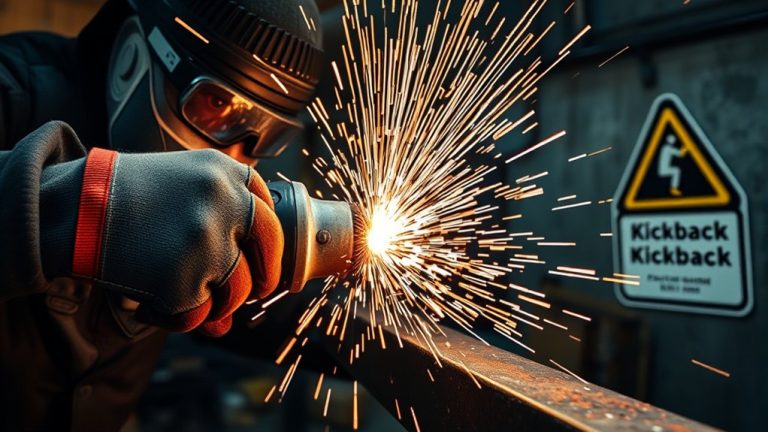
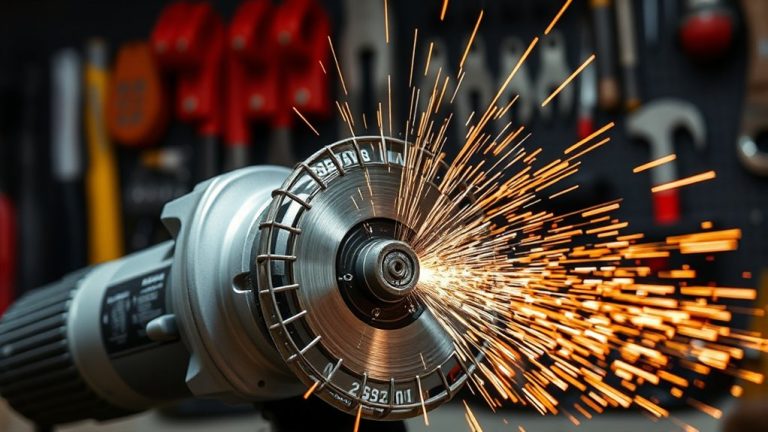
To smooth sharp edges with an angle grinder, start by wearing essential safety gear, including safety glasses and gloves. Secure your workpiece and choose the right grinding disc. Hold the grinder at a 20° to 30° angle and apply light pressure, moving continuously to prevent overheating. Use a coarse grit for initial smoothing, then switch to finer grit for a polished finish. Regularly inspect your edges and stay tuned for more tips on precision grinding techniques.
Essential Safety Gear for Using an Angle Grinder

When using an angle grinder, having the right safety gear is essential for protecting yourself from potential hazards. Start with safety glasses or a full face shield to shield your eyes and face from flying debris and sparks. Wear a dust mask or respirator to prevent inhaling harmful particles, especially when grinding materials that generate dust.
Don’t forget about hearing protection; angle grinders can exceed 100 decibels, so earplugs or noise-canceling earmuffs are significant. For your hands, choose leather or cut-resistant gloves to guard against sharp edges and heat when handling metal workpieces.
Long sleeves protect your skin from hot metal shavings, while sturdy footwear provides stability and shields your feet from potential injuries. By equipping yourself with the right protective gear, you’re taking essential steps toward ensuring your safety and enhancing your work experience.
Step-By-Step Angle Grinder Process for Smoothing Sharp Edges
To start smoothing sharp edges with your angle grinder, prepare your workspace by securing the workpiece firmly to prevent any movement. Next, select a grinding disc that matches the material type and meets safety requirements. Finally, execute the smoothing technique with care, ensuring you’re applying the right angle and pressure for ideal results.
Prepare Your Workspace Properly
A well-prepared workspace is essential for safely and effectively smoothing sharp edges with an angle grinder. Start by ensuring your area is clean and organized, free of flammable materials within a 30-foot radius. Use a sturdy workbench and securely clamp the metal piece, preventing movement during grinding. Gather all necessary personal protective equipment (PPE), including safety glasses, gloves, and hearing protection to shield against sparks. Before starting, inspect the angle grinder and its disc for damage. Position the grinder so sparks fly away from your body and stand to the side to minimize injury risk.
| Task | Importance | Safety Tip |
|---|---|---|
| Clean workspace | Prevents hazards | Remove flammable items |
| Secure metal piece | Stability | Use clamps or a vise |
| Wear PPE | Protection | Always use safety glasses |
Select Appropriate Grinding Disc
Selecting the right grinding disc is essential for achieving ideal results when smoothing sharp edges with an angle grinder. Choose a grinding disc that matches the material of the edges you want to smooth; for metal, a grinding wheel or flap disc works best, while a sanding pad suits softer materials. Verify the disc’s RPM rating meets or exceeds your angle grinder’s speed to prevent breakage. Start with a coarse grit disc for initial smoothing and switch to a finer grit for a polished finish. Before use, attach the grinding disc securely while the grinder is unplugged, confirming it’s properly tightened. Maintain a 20° to 30° angle to the edge, applying light pressure for effective smoothing of sharp edges.
Execute Smoothing Technique Safely
After securing the appropriate grinding disc, it’s time to execute the smoothing technique safely. First, don your safety gear, including safety glasses, gloves, and a dust mask, to shield against sparks and metal particles. Hold the angle grinder at a 5° to 10° angle to the work surface. Apply light pressure while moving the grinder back and forth along the sharp edge, letting the tool do the work. Make shallow passes to gradually smooth sharp edges, which helps avoid overheating that can warp or discolor the metal. Regularly inspect the edges for smoothness, using finer grit sandpaper for any finishing touches needed to achieve the desired safety and aesthetics.
How to Keep Control and Precision When Smoothing Edges
To achieve control and precision when smoothing edges, you need to master proper grip techniques and steady pressure application. Position the tool at the correct angle and maintain consistent motion, letting the grinder do the work. Regularly check your progress to verify you’re not over-sanding and risking uneven surfaces.
Proper Grip Techniques
A firm grip on the angle grinder is essential for maintaining control and precision when smoothing edges. Always use both hands—one on the rear handle and the other on the side handle—for maximum stability and control. Maintain a relaxed grip to avoid fatigue, allowing for precise movements while the tool does the work. Position the grinder at a 15°-30° angle to the work surface to promote effective contact and prevent gouging. Avoid twisting your wrists; instead, move your entire arm to guide the tool smoothly along the edge. Keep the grinder moving continuously to prevent overheating and achieve smooth edges. Trust the operating speed of the grinder, and don’t force it into the material for best results.
Steady Pressure Application
Maintaining steady pressure on the angle grinder is essential for achieving smooth, even edges without risking damage to the workpiece. Hold the tool with a firm yet relaxed grip using both hands, engaging the side handle for improved leverage and control. Apply light, steady pressure on the grinder, allowing the grinding wheels to do the work. For precision work, position the grinder at a slight angle—between 5° to 10°—to effectively smooth edges without excessive material removal. Always keep the grinder moving across the edge to prevent overheating and guarantee a smooth finish. Follow all safety procedures to stay protected while you enhance your skills and liberate your creativity with this powerful tool.
Tool Positioning Strategies
While you work on smoothing sharp edges with an angle grinder, proper tool positioning is essential for maintaining control and achieving precision. Start by gripping the angle grinder firmly with both hands to enhance stability. Position the grinder at a 20°-30° angle to the work surface, guaranteeing the flat part of the wheel makes contact with the metal. Keep the tool in consistent motion, moving back and forth to avoid gouging and guarantee an even finish. Allow the grinder to reach full speed before applying it to the surface for best results. Always direct sparks away from your body and use the guard effectively to protect against debris during the smoothing process.
Cleaning and Maintaining Your Angle Grinder After Use
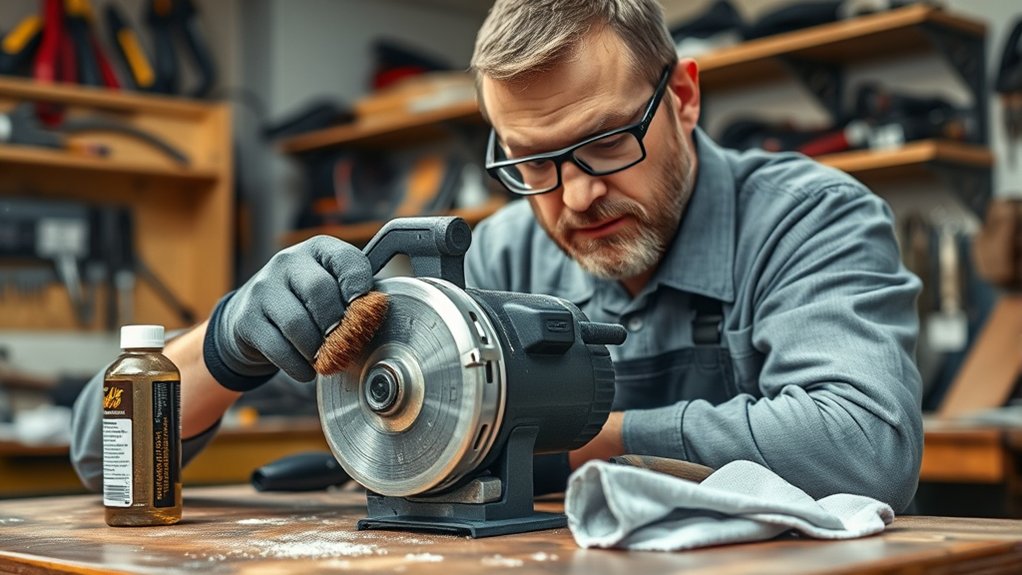
To guarantee your angle grinder operates efficiently and safely, cleaning and maintenance after each use is essential. Start by unplugging the grinder to assure safe operation before you begin. Use a brush or compressed air to remove dust and debris from the motor and vents, preventing potential overheating. Regularly inspect the power cord, switches, and attachments for any signs of wear or damage—this assures your safety and the longevity of your tool.
Next, lubricate the moving parts with a light machine oil to reduce friction and maintain peak performance. This simple step can greatly extend the life of your angle grinder. Finally, store the grinder in a dry, dust-free environment with the disc removed to avoid corrosion and warping. By following these maintenance practices, you’ll keep your angle grinder in prime condition, ready for your next project.
Rust Prevention for Metal Edges
Preventing rust on metal edges is vital for maintaining the longevity and functionality of your tools. Start by applying a light coat of vegetable oil to freshly smoothed metal edges. This creates a protective barrier against moisture and oxidation, considerably reducing rust formation. For enhanced rust-resistance, heat the metal in an oven after oil application to allow the oil to penetrate the surface effectively.
Regular maintenance is important; reapply oil or use a rust-inhibiting spray as needed to keep your tools in top shape. Make sure you keep metal surfaces clean and dry, free from food residues and moisture that can accelerate rust. When purchasing kitchen tools, consider opting for stainless steel or galvanized materials, as these are inherently more resistant to rust compared to untreated metals. By following these steps, you can enjoy the benefits of rust prevention and prolong the life of your metal edges.
Avoiding Common Mistakes in Edge Smoothing
One common mistake when smoothing edges with an angle grinder is using the wrong type of disc, which can lead to uneven results and safety hazards. Always choose the correct disc for edge smoothing; a grinding or flap disc is essential, while a cutting wheel isn’t suitable. Avoid pressing down excessively; let the angle grinder do the work to prevent overheating and extend the disc’s life. Ascertain your workpiece is securely clamped to avoid movement, which can cause inaccuracies and accidents. Maintain a consistent angle and smooth motion throughout the process to achieve even results without gouging the material. Before starting, regularly inspect the disc for wear or damage, as a worn disc can compromise efficiency and increase the risk of snapping. Finally, always wear protective gear to safeguard against debris and sparks while working. Following these guidelines will enhance your edge smoothing experience.
Selecting the Right Grinding Disc for Edge Smoothing
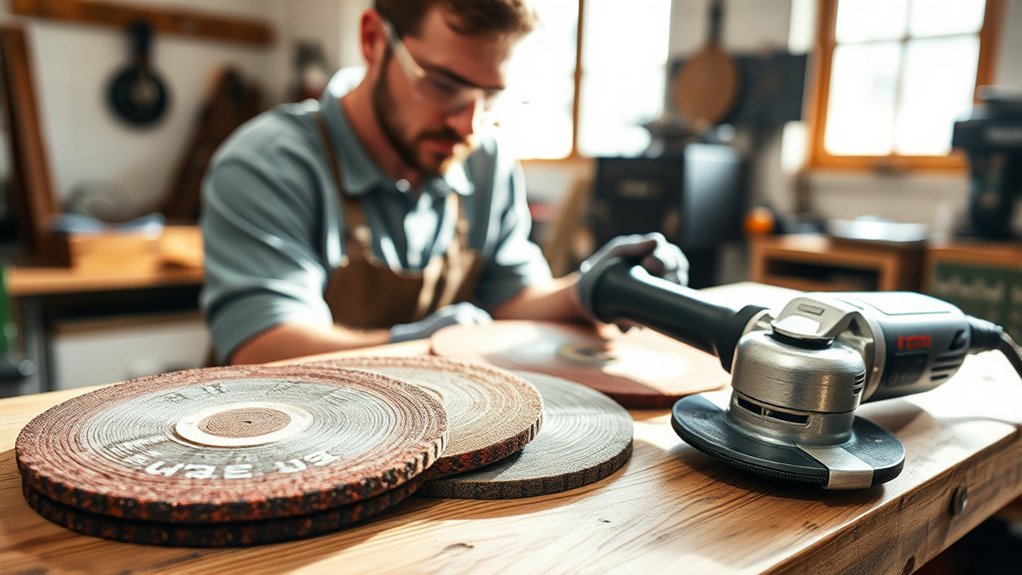
Selecting the right grinding disc for edge smoothing is essential for achieving a clean, professional finish. Start with a flap disc featuring a coarse grit of 40-60 for initial smoothing, then shift to a fine grit of 80-120 for the final touches. When working with metal materials, make sure you choose a grinding wheel specifically designed for this purpose to optimize results.
Check the maximum RPM rating of the grinding disc to guarantee it meets or exceeds your angle grinder’s speed, preventing breakage and ensuring safe operation. For softer materials or finer finishes, consider using a sanding pad attachment, as it allows for greater control and minimizes gouging risks.
Remember to always attach the disc while the grinder’s unplugged and verify a secure fitting before use. Following these safety steps will help you work confidently and effectively during your edge smoothing projects.
Tips for Ensuring Safe and Effective Grinding
To guarantee safe and effective grinding, always prioritize your personal protective equipment (PPE) before starting the task. This protects you from flying debris and sharp edges. Follow these essential tips:
- Inspect the angle grinder: Check for any damage or wear on the grinder and grinding disc, verifying the disc’s RPM rating meets or exceeds that of the grinder.
- Secure the workpiece: Use clamps or a vise to prevent movement and maintain stability while grinding.
- Maintain a firm grip: Hold the angle grinder with both hands, keeping it at a 5° to 10° angle to the surface for ideal control.
While grinding, use light pressure to allow the tool to work effectively. Avoid excessive force to prevent kickback or damage to the disc. With these practices, you can achieve smooth edges safely and efficiently.
Frequently Asked Questions
How to Use Angle Grinder Step by Step?
To use an angle grinder, set up your workspace, wear safety gear, choose the right disc, and apply grinding techniques. Avoid common mistakes, maintain the tool, and add finishing touches while troubleshooting issues as needed.
What Are 10 Safety Precautions Before Using a Grinding Machine?
Before using a grinding machine, make certain you’ve got personal protective equipment, maintain your tools, practice proper grip techniques, organize your workspace, control dust, reduce noise, stay aware of fire hazards, and know emergency procedures.
Should You Push or Pull a Grinder?
You should push the grinder for better control and stability, reducing muscle strain. This technique enhances operator comfort while ensuring precision grinding. Pulling increases kickback risk, compromising safety grip practices and overall efficiency.
What Is the Step by Step Procedure in Using a Grinding Machine?
Start by selecting the right wheel for your material. Secure your workpiece, adjust speed, and maintain proper posture. Use effective grinding techniques, manage dust, and apply finishing touches for best results and tool maintenance.
Conclusion
By following these steps and safety precautions, you can transform sharp edges into smooth surfaces, turning potentially dangerous tools into polished gems. Always prioritize safety gear, maintain control, and choose the right grinding disc to achieve the best results. Remember, practice makes perfect—each grind brings you closer to mastering your technique. With diligence and care, you’ll create a workpiece that not only looks great but also feels safe in your hands. Happy grinding!