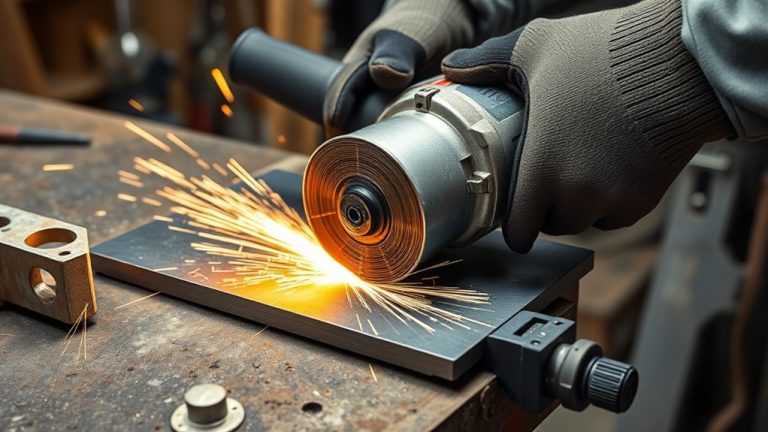
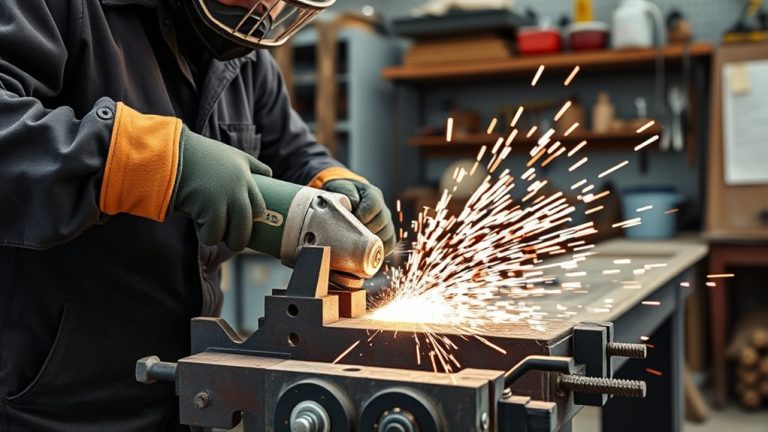
To use an angle grinder safely, start by wearing essential personal protective equipment like safety glasses, gloves, hearing protection, and a mask. Inspect your grinder and disc for damage, ensuring the safety guard is secure. Set up your workspace by clearing flammable materials and using clamps to secure your workpiece. Always hold the grinder with both hands, keeping the proper angle and avoiding kickback. By following these steps, you can enhance your safety and skill in using the tool effectively.
Essential Personal Protective Equipment for Angle Grinder Use
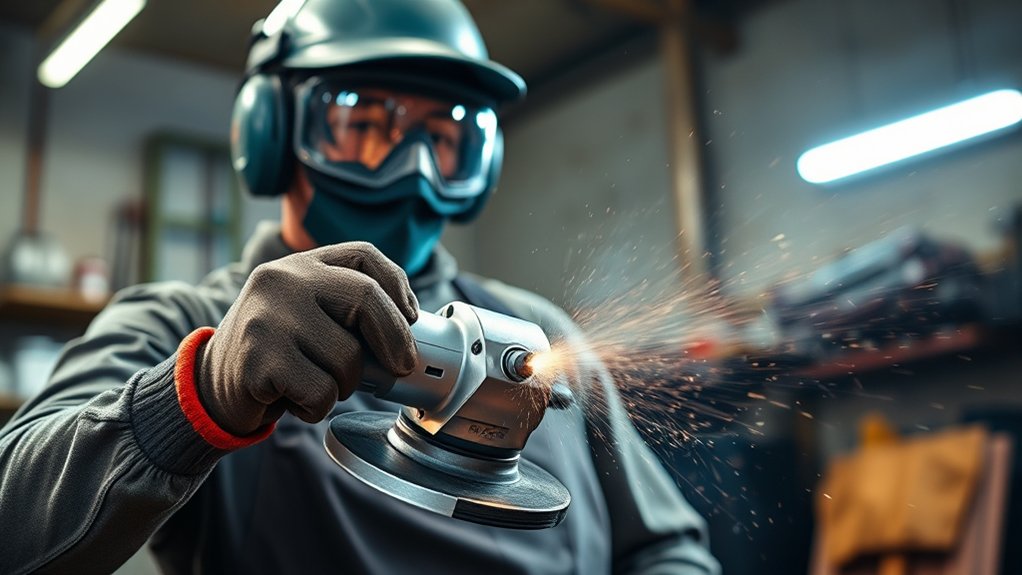
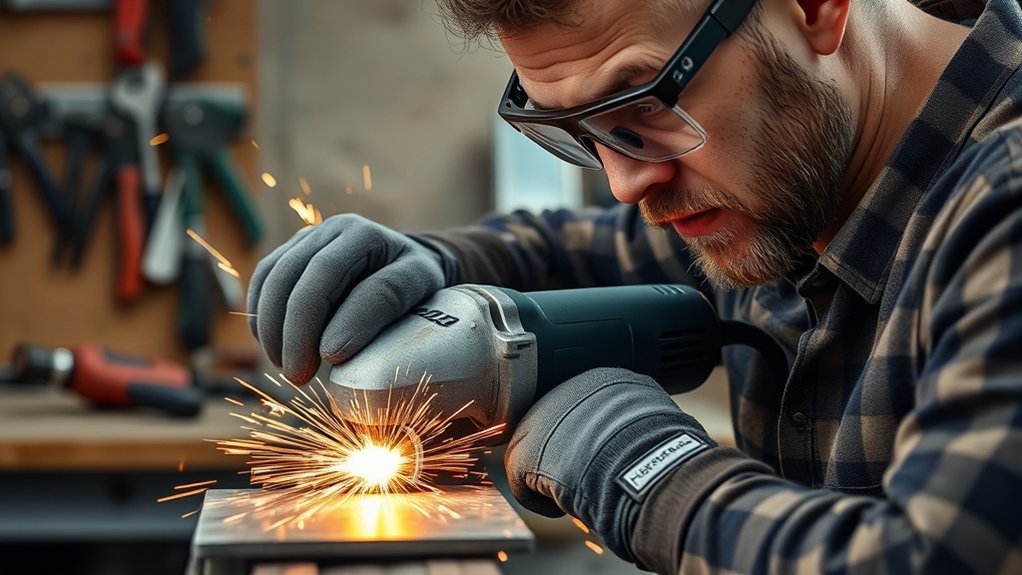
When you use an angle grinder, it’s vital to prioritize your safety by wearing the right personal protective equipment (PPE). Start with safety glasses or a full-face shield to guard your eyes against flying sparks and debris. Leather or cut-resistant gloves provide grip and protect your hands from sharp edges and heat. Don’t forget hearing protection, like earmuffs or earplugs, since angle grinders can exceed 100 decibels, risking your hearing health. An N-95 rated respiratory mask is essential to shield you from harmful dust and fumes produced during grinding. Make certain your clothing is fitted and free from loose or frayed parts, and tie back long hair to prevent entanglement with the grinder’s moving parts. By wearing proper PPE, you empower yourself to work safely and efficiently, allowing you to focus on your project without compromising your well-being.
Step-by-Step Guide for Safe Angle Grinder Use
Before you start using your angle grinder, it’s essential to prepare properly to confirm safety and efficiency. First, put on your personal protective equipment (PPE), including safety glasses, gloves, and hearing protection. Next, inspect the grinder and the cutting disc or grinding wheel for any damage. Ascertain the safety guard is securely in place and adjusted correctly.
Select the appropriate disc based on the material you’re working with, confirming its RPM rating meets or exceeds the grinder’s speed. Firmly grip the angle grinder with both hands, positioning it so sparks and debris fly away from your body.
Before changing discs, always unplug the grinder or remove the battery. Use the spindle lock to secure the disc and prevent accidental rotation during installation. With these steps, you’ll enhance safety and maintain effective operation in your work area.
How to Set Up a Safe Workspace for Angle Grinder Use
A well-organized workspace is essential for safely using an angle grinder. Start by ensuring proper safety steps: clear the area of flammable materials and clutter, maintaining a safe zone of at least 30 feet around your work surface. Set up a secure workspace by using clamps or vises to hold your material in place, preventing any movement during operation.
Position the angle grinder so that sparks and debris fly away from your body, minimizing the risk of injury. It’s vital to keep your personal protective equipment (PPE) within easy reach. Always wear safety glasses, gloves, and a dust mask before starting any work. A well-ventilated workspace helps reduce exposure to dust and hazardous fumes generated during grinding. By taking these precautions, you empower yourself to work safely and effectively with the angle grinder, ensuring a liberated and confident experience.
Choosing the Right Disc for Your Angle Grinder Project
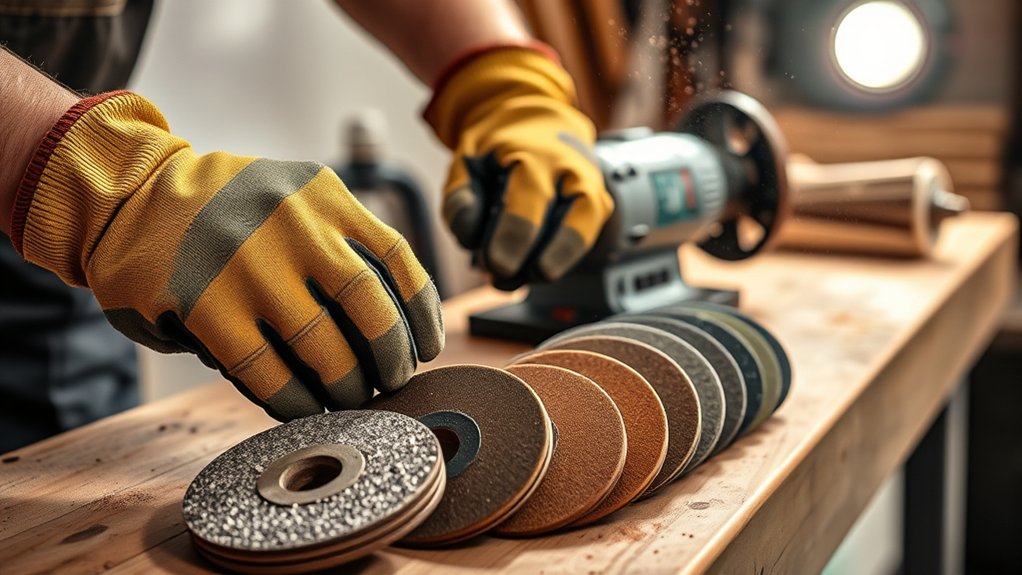
Choosing the right disc for your angle grinder project is essential for achieving ideal results and maintaining safety. Different types of discs serve specific purposes; for metal cutting, opt for a thin cut-off wheel, while a grinding wheel is best for material removal and shaping. If you’re working with masonry, diamond cutting discs are your best bet, as they handle stone and concrete efficiently.
Flap discs excel in finishing work, giving you a smoother surface on metal and wood due to their layered construction and varying grits. Always verify the disc’s RPM rating meets or exceeds your angle grinder’s maximum speed to prevent breakage and guarantee safety during operation.
When changing discs, remember to unplug the grinder or remove the battery, and use the spindle lock to secure the disc in place before tightening. This attention to detail will help you work safely and effectively.
Common Mistakes to Avoid When Using an Angle Grinder
When using an angle grinder, you’ll want to be aware of some common mistakes that can compromise safety and efficiency. Ignoring the importance of choosing the right disc, skipping safety gear, and using improper grip techniques can lead to serious accidents. Stay vigilant to guarantee a safer and more productive grinding experience.
Incorrect Disc Selection
Selecting the right disc for your angle grinder is essential for both safety and efficiency. Incorrect disc selection can lead to inefficient cutting, increased wear on your tool, or even serious hazards. To guarantee you’re using the right disc for the job, keep these points in mind:
- Always check the RPM rating; it should meet or exceed your grinder’s speed.
- Avoid using a thin cut-off wheel on masonry—it can shatter under pressure.
- Regularly inspect your discs for wear or damage; compromised discs can greatly increase risks.
Skipping Safety Gear
Incorrect disc selection can lead to serious risks, but neglecting safety gear is another common mistake that shouldn’t be overlooked. Always wear safety glasses or a full-face shield to shield your eyes from flying sparks and debris. Use ear protection, as angle grinders can exceed 100 decibels, risking your hearing. When grinding materials that create dust or hazardous fumes, don an N-95 rated respiratory mask to prevent inhalation of harmful particles. Avoid loose clothing and tie back long hair to keep them safe from being caught in the grinder. Finally, choose leather or cut-resistant gloves that fit snugly, ensuring grip and protection. By following these precautions, you can stay safe while releasing your creativity with an angle grinder.
Improper Grip Technique
Proper grip technique is essential for using an angle grinder safely and effectively. To achieve better control and prevent kickback, always use both hands to grasp the tool firmly yet relaxed. This balance helps you avoid fatigue and loss of control. Maintain the grinder at a proper angle—ideally between 15 to 30 degrees—to guarantee a steady cutting line while reducing the risk of binding.
- Move your entire arm to guide the tool, avoiding wrist twisting.
- Position the grinder to direct sparks away from your body.
- Keep your hands clear of the cutting area for added safety.
Tips for Maintaining Your Angle Grinder
Maintaining your angle grinder is essential for ensuring its longevity and peak performance. Here are some crucial tips to keep your tool in good condition:
| Task | Frequency | Action |
|---|---|---|
| Clean your angle grinder | After each use | Remove dust and debris from vents and parts |
| Inspect the power cord | Weekly | Check for wear or damage; replace if needed |
| Lubricate moving parts | Monthly | Apply light machine oil as per the manual |
| Store your angle grinder | After use | Keep in a dry, dust-free place, disc removed |
| Change disc safely | As needed | Unplug or remove battery; use spindle lock |
Troubleshooting Common Issues With Angle Grinders
When your angle grinder isn’t functioning as it should, it’s crucial to identify the problem quickly to prevent further damage or safety hazards. Here are some common issues to troubleshoot:
- If it won’t start, make sure the power supply is connected and the safety lock is disengaged.
- For excessive vibration, verify it is properly mounted and that you’re holding the grinder correctly.
- If sparks are flying or in the wrong direction, reassess the tool’s angle and use the correct disc for the material.
In cases of unusual noises, immediately stop using the tool and have it inspected. If you notice overheating, allow the grinder to cool down and check for debris buildup. Always keep the correct RPM-rated disc in use to prevent excessive friction. By addressing these issues promptly, you can maintain your angle grinder’s performance and guarantee your safety.
Frequently Asked Questions About Angle Grinders?
You might wonder what tasks an angle grinder can handle and which safety gear you’ll need. Understanding common uses, like cutting and grinding, helps you choose the right tool for the job. Additionally, wearing the essential safety gear protects you from potential hazards while you work.
Common Angle Grinder Uses
Angle grinders are versatile tools that can greatly enhance your DIY projects and professional tasks. They excel in handling a wide range of applications, making them essential for your toolkit. Here are some common uses:
- Cut metal and other different materials with precision.
- Remove rust and polish surfaces for finishing work.
- Strip paint without damaging the underlying surface.
With the right attachments, angle grinders can tackle tough jobs like masonry work or sharpening blades. When using them, remember to select the appropriate cutting disc for each task. This guarantees not only efficiency but also your safety. Embrace the freedom angle grinders offer, and elevate your craftsmanship with confidence.
Essential Safety Gear
Using an angle grinder effectively means prioritizing safety gear. Protecting yourself isn’t just smart—it’s essential. Here’s a quick reference for what you need:
| Gear | Purpose | Importance |
|---|---|---|
| Safety glasses | Shield your eyes from sparks and debris | Prevent serious injury |
| Ear protection | Guard against harmful noise levels | Protect your hearing |
| N-95 rated respiratory mask | Filter harmful dust and fumes | Breathe safely |
Don’t forget your gloves—they should fit well for grip and protection. Tying back long hair and wearing fitted clothing can prevent entanglement with the angle grinder. Gear up, stay safe, and enjoy your grinding experience!
Frequently Asked Questions
How to Use an Angle Grinder Step by Step?
To use an angle grinder, select the right type, choose a suitable grinding wheel, wear safety gear, maintain the tool, avoid common mistakes, and apply proper cutting and polishing techniques for ideal results.
How Do You Use an Angle Grinder Safely?
To use an angle grinder safely, wear safety gear, inspect grinder types, avoid common mistakes, apply proper cutting techniques, follow maintenance tips, reduce noise, and guarantee secure tool storage after each use. Stay vigilant!
What Are 10 Safety Precautions Before Using a Grinding Machine?
Before using a grinding machine, guarantee proper posture, conduct tool inspections, wear personal protective equipment, set up a clean work area, follow material handling techniques, and establish emergency procedures for maximum safety and efficiency.
What Is the Step by Step Procedure in Using a Grinding Machine?
To use a grinding machine, select the type, inspect components, wear safety gear, secure your workpiece, apply proper grinding techniques, and perform maintenance. Troubleshoot any issues promptly for safe, effective operation across common applications.
Conclusion
Using an angle grinder safely isn’t just about following steps; it’s about making a commitment to your safety and the quality of your work. By equipping yourself with the right protective gear, setting up a secure workspace, and maintaining your tool, you can avoid mishaps that could lead to serious injuries. Remember, every project demands respect for the equipment. When you prioritize safety, you not only protect yourself but also enhance your skills and confidence with each cut.