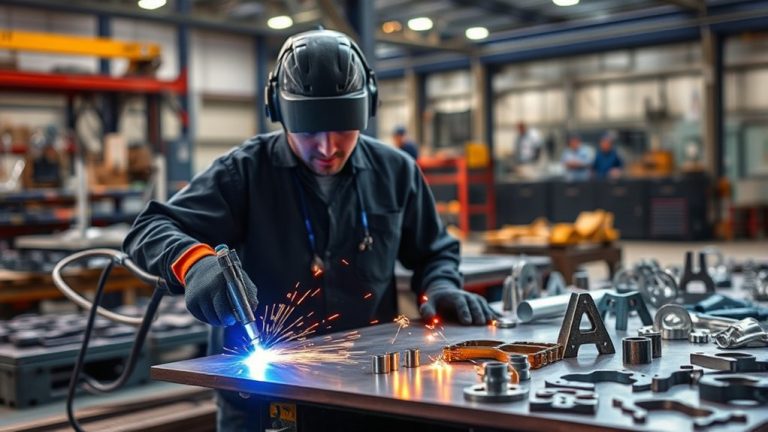
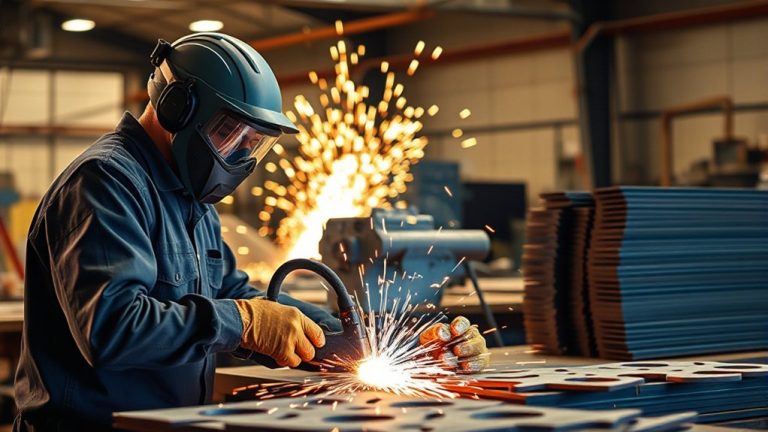
With a plasma cutter, you gain the ability to precisely cut through a variety of electrically conductive metals like mild steel, stainless steel, and aluminum. Handheld models manage up to 38 mm, while automated systems tackle materials as thick as 150 mm. This flexibility suits industries from metal fabrication to aerospace. Understanding how factors like material type and thickness affect cutting performance is essential. So, how do these dynamics shape your choice in plasma cutting applications?
Material Compatibility of Plasma Cutters
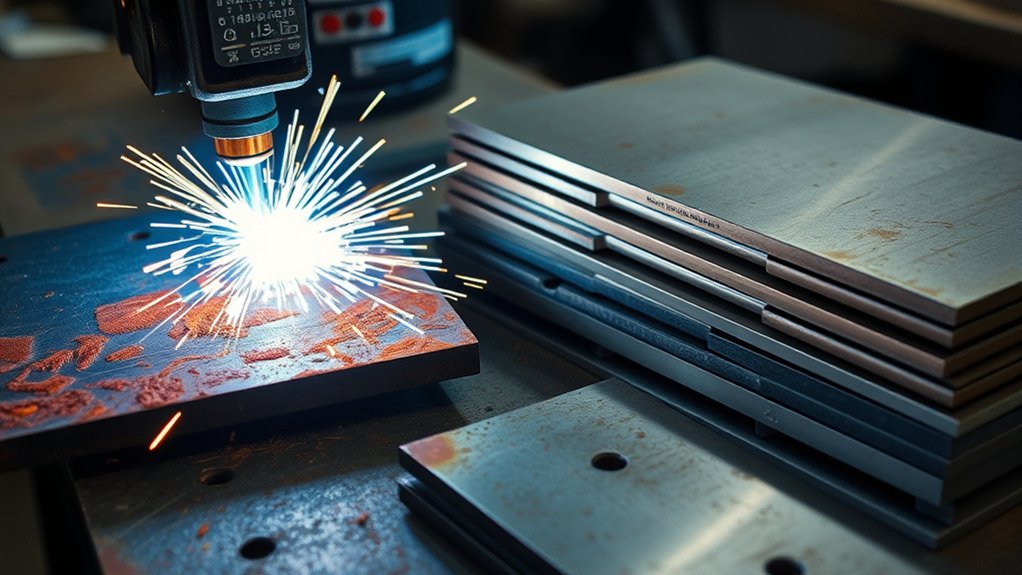
When it comes to material compatibility, plasma cutters stand out due to their ability to cut through any electrically conductive metal.
Whether you’re working with mild steel, stainless steel, aluminum, copper, or brass, the plasma cutter excels in delivering precise cuts. The various plasma cutter types cater to different needs, enabling you to choose between handheld torches for maneuverability or automated machines for high-volume production.
From mild steel to brass, plasma cutters deliver precision, whether handheld for maneuverability or automated for high-volume tasks.
Understanding metal conductivity is essential for optimizing your plasma cutting process. Metals like aluminum and copper, known for their excellent conductivity, respond well to plasma cutting, allowing for efficient energy transfer and clean cuts.
Plasma cutter types, such as inverter-based or transformer-based, affect the efficiency and precision with which these materials are processed. Regardless of surface conditions—be it rusted, painted, or expanded metals—plasma cutters maintain their efficacy, although rust might slightly impact the quality.
Embrace the versatility plasma cutters offer in handling diverse conductive metals.
Maximum Cutting Thickness Capabilities
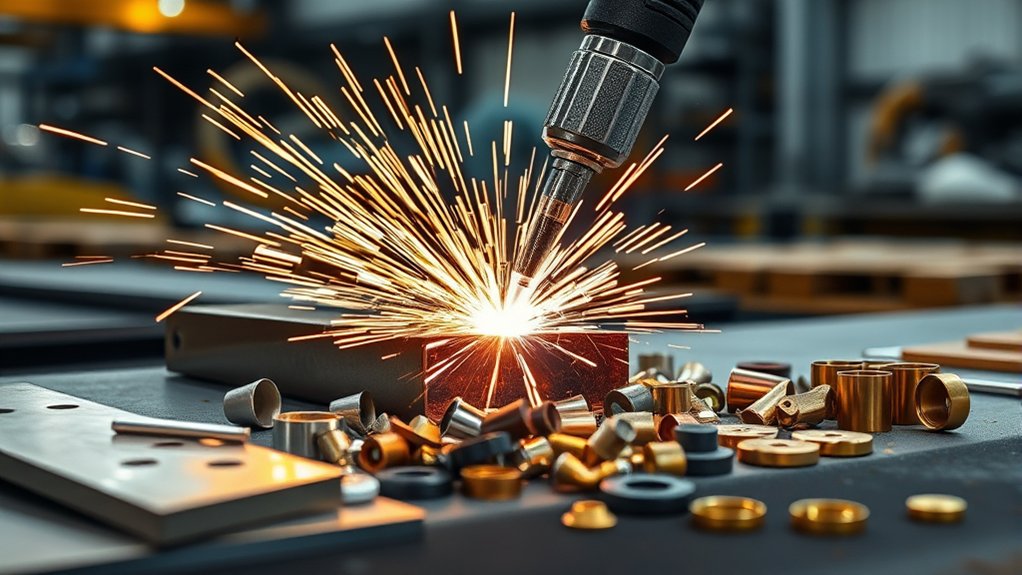
When determining the maximum cutting thickness capabilities of plasma cutters, consider both the material thickness range and the power of the machine.
Handheld units can efficiently cut steel up to 38 mm, but automated systems handle up to 150 mm to meet industrial needs.
Your choice of consumables and the material’s condition also play significant roles in optimizing cutting efficiency and precision.
Material Thickness Range
Plasma cutting prowess is defined by its material thickness range, a significant factor determined by the equipment’s power source and design specifications. Understanding these limitations is essential for optimizing cutting speed and maintaining quality.
Whether you’re using a handheld torch or an automated machine, knowing the maximum thickness your equipment can handle guarantees precision and efficiency.
- Handheld torches: Capable of cutting steel up to 38 mm thick, offering versatility for various applications.
- Automated machines: Designed to tackle materials up to 150 mm thick, ideal for industrial-scale operations.
- Amperage considerations: Higher-amperage units, such as 100 amps, efficiently cut materials up to 40 mm thick.
Selecting the right plasma cutter based on these specifications enhances your cutting capabilities and guarantees superior performance across different material thicknesses.
Machine Power Influence
Understanding the material thickness range sets the stage for exploring how machine power influences maximum cutting capabilities. Power ratings directly affect machine efficiency and cutting performance. A higher-amperage plasma cutter can tackle thicker materials. For instance, a 50 amp cutter manages up to 20 mm, while a 100 amp unit can handle 40 mm. Automated systems can cut materials as thick as 150 mm, contingent on the machine’s design and power source.
Here’s a quick reference for various power ratings:
| Amperage | Max Thickness (mm) | Application Type |
|---|---|---|
| 50 amps | 15-20 | Handheld |
| 100 amps | Up to 40 | Heavy-duty |
| 150+ amps | Up to 150 | Automated industrial use |
Consider factors like material type and consumable condition to optimize machine efficiency.
Optimal Cutting Conditions
Achieving ideal cutting conditions demands a keen understanding of maximum cutting thickness capabilities, influenced by various factors. You must consider the power source, as handheld torches cut up to 38 mm, while automated machines manage 150 mm. Higher-amperage units, like those at 100 amps, enhance cutting efficiency, allowing you to tackle materials up to 40 mm thick.
Optimal settings are essential for precision:
- Material Type: Different materials such as mild steel, stainless steel, and aluminum require specific adjustments for clean cuts with tolerances between +/- 0.38 mm and 0.5 mm.
- Consumable Condition: Verify consumables are in top condition to maintain cutting efficiency and quality.
- Plasma Gas Selection: The right gas improves cut quality and machine performance, especially on rusted or painted surfaces.
Understanding these parameters helps you achieve superior results.
Factors Influencing Cutting Effectiveness
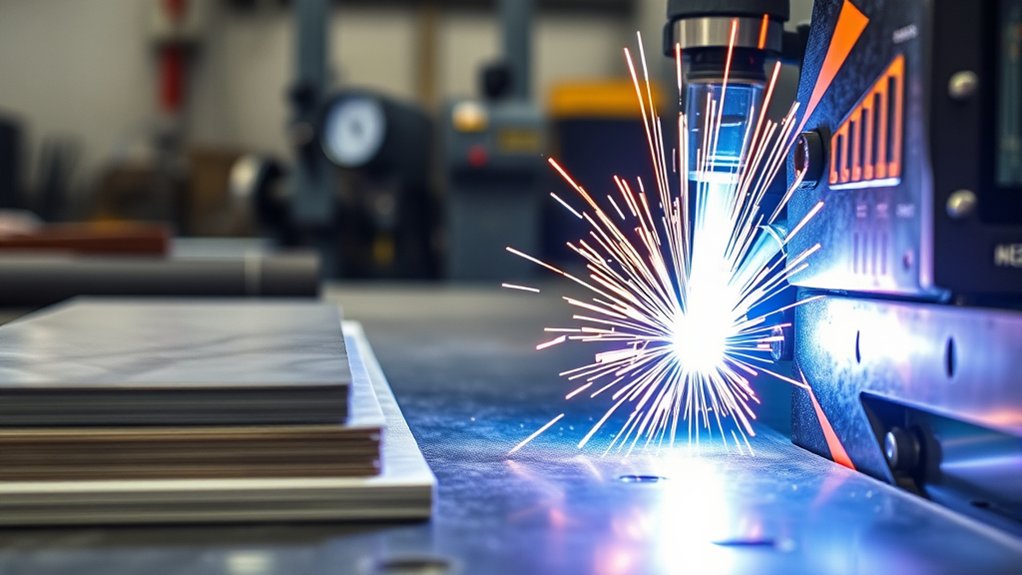
While evaluating plasma cutter performance, several factors greatly influence cutting effectiveness. To begin with, the power source is vital; higher amperage boosts cutting force and depth, enhancing your machine’s capacity to tackle thicker materials.
Material type is another important aspect, as plasma cutters are fine-tuned for electrically conductive materials like mild steel, stainless steel, and aluminum, guaranteeing superior cutting speed.
Consumable lifespan is directly tied to the condition of components such as nozzles and electrodes. Worn parts degrade performance, causing inefficient cuts and increased downtime. Regular maintenance is necessary to maximize consumable lifespan and maintain cutting precision.
Additionally, plasma gas selection is essential. The choice of gas affects the plasma arc’s quality, thereby impacting cutting speed and capability.
Finally, advanced machine design and technology, including inverter systems and automation features, can greatly enhance cutting effectiveness, offering operational versatility across various applications. These elements collectively guarantee the best plasma cutter performance.
Plasma Cutting Techniques and Mechanics
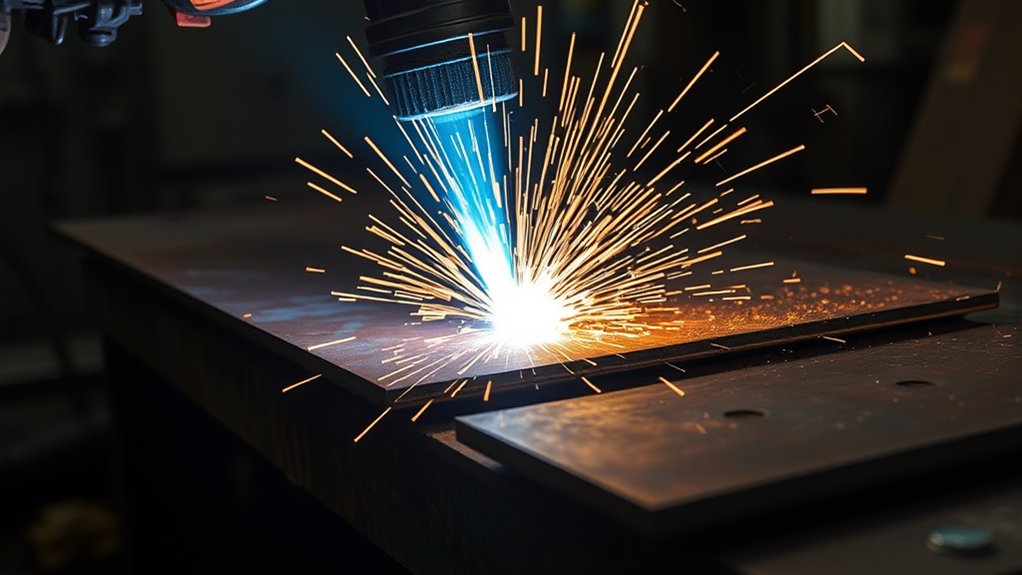
Having explored the elements that influence cutting effectiveness, let’s focus on the mechanics and techniques that define plasma cutting.
Plasma mechanics involve ionized gas jets to generate a plasma arc between the torch and the workpiece. This process efficiently melts through conductive metals. The cutting techniques vary, mainly dictated by the power source’s amperage, which determines the ability to cut through varying thicknesses.
The versatility of plasma cutting allows it to handle a wide range of metals, from mild steel to brass. The precision of the cuts is impressive, with tolerances in the +/- 0.38 mm to 0.5 mm range, thanks to advanced machine technology.
Handling metals from mild steel to brass, plasma cutting achieves impressive precision with tolerances of +/- 0.38 mm to 0.5 mm.
Guarantee high-quality results by considering:
- Consumable condition: Regularly inspect nozzles and electrodes.
- Plasma gas selection: Choose the appropriate gas for the metal type.
- Machine technology: Utilize modern systems for better speed and effectiveness.
These aspects guarantee efficient, precise plasma cutting for diverse applications.
Comparing Plasma Cutting With Other Methods
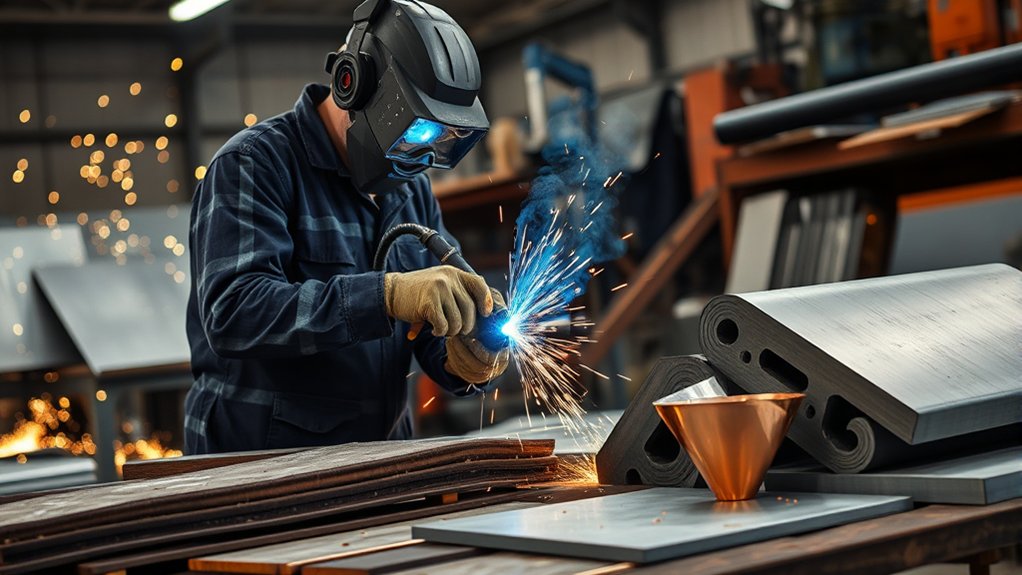
When comparing cutting methods, you’ll find that plasma cutting offers significant advantages in handling thicker materials, excelling where laser cutting is often limited to thinner sections.
Plasma cutters can efficiently process a diverse array of conductive metals, unlike laser systems that struggle with such versatility.
While laser cutting achieves higher precision with tighter tolerances, plasma cutting remains a cost-effective solution for thicker and varied materials, balancing precision with practicality.
Precision vs. Material Thickness
In the domain of material cutting, understanding the interplay between precision and material thickness is essential for selecting the right method.
Plasma cutting excels at handling thick materials, reaching up to 150 mm with automated systems. However, if your precision requirements are stringent, you’re likely to encounter design limitations.
Plasma cutting offers tolerances of +/- 0.38 mm to 0.5 mm, making it less suitable for intricate work compared to laser cutting, which achieves tolerances up to 0.002 inches.
- Thickness Capability: Plasma handles thicker materials, ideal for steel plates over 6 mm.
- Tolerance Levels: Laser cutting is superior for intricate designs with tighter tolerances.
- Cutting Speed: Plasma outpaces lasers in cutting speed for thicker materials.
Choose based on the specific balance between thickness and precision you need.
Versatility in Material Types
Understanding the balance between precision and thickness is key, but equally important is recognizing the versatility plasma cutters offer across different material types. Plasma cutting stands out for its material adaptability, effectively slicing through conductive metals like mild steel, stainless steel, aluminum, copper, and brass. This flexibility surpasses methods like laser cutting, which struggles with reflective metals. Plasma’s cutting speed excels on materials over 6 mm thick, surpassing oxyfuel in efficiency for heavy-duty tasks. Furthermore, it’s adept at handling rusted or painted surfaces, a proof of its real-world applicability.
| Material Type | Cutting Method | Advantage |
|---|---|---|
| Mild Steel | Plasma | Fast on thick metal |
| Stainless Steel | Plasma | Versatile adaptability |
| Aluminum | Plasma | Handles reflectivity |
| Copper | Plasma | Efficient on surfaces |
| Brass | Plasma | Superior speed |
This versatility enhances productivity across various industries.
Common Applications of Plasma Cutting
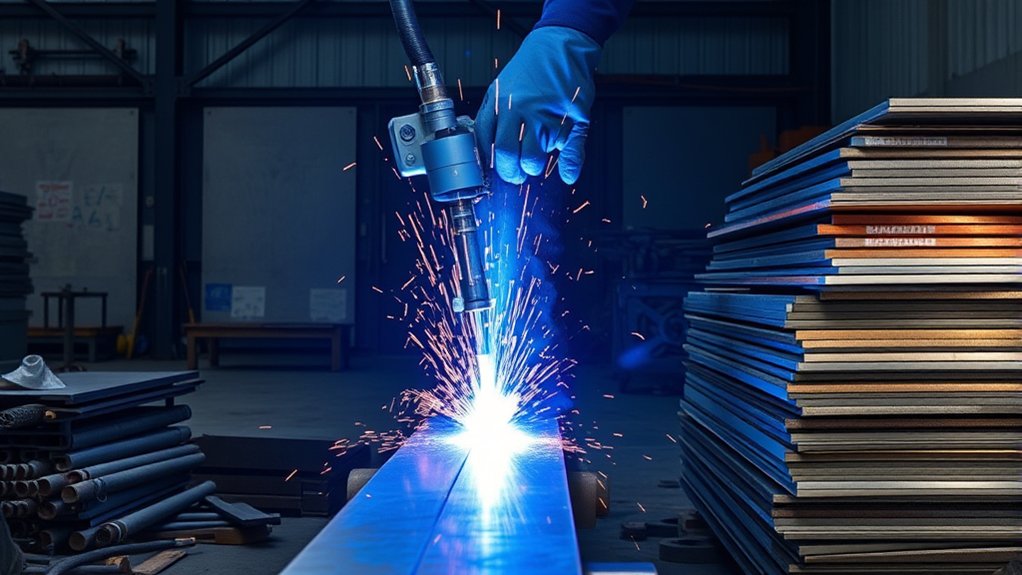
Consider these common applications:
- Fabrication Shops use CNC plasma cutting machines for high-quality cuts on stainless steel and aluminum, achieving tolerances of +/- 0.38 mm to 0.5 mm.
- Aerospace Industry leverages plasma cutting for lightweight, conductive materials, contributing to high-performance component production.
- Metal Fabrication tasks frequently involve cutting steel plates, pipes, and structural components, showcasing plasma cutting’s ability to handle various thicknesses and materials.
Plasma cutting’s precision and adaptability make it essential across multiple sectors.
Key Features of High-Quality Plasma Cutters
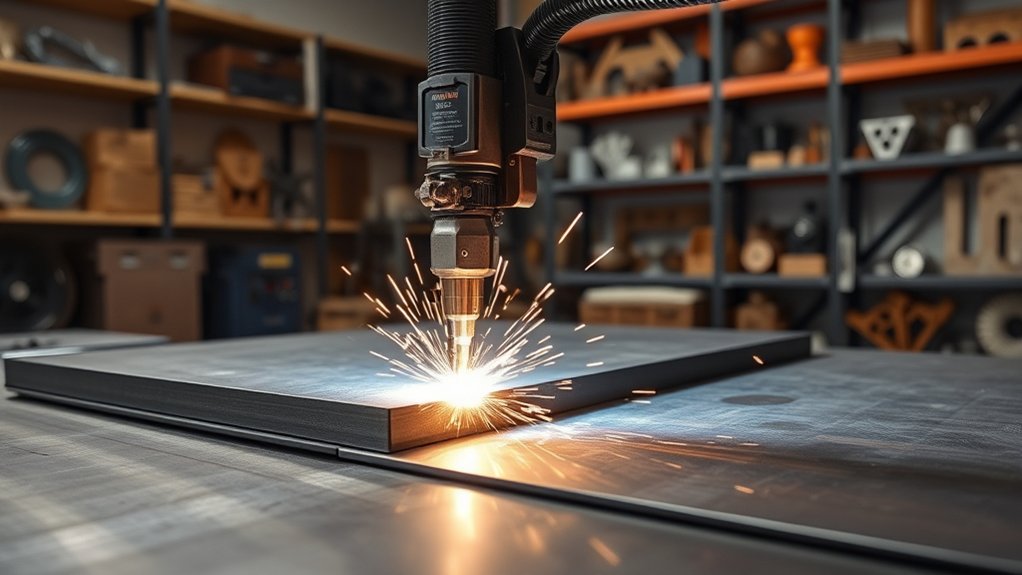
High-quality plasma cutters are renowned for their ability to slice through a wide range of conductive metals with ease. They manage thicknesses from 26 gauge to 50 mm in mild steel and even up to 182 mm in stainless steel and aluminum with secondary processing. Their precision is unmatched, maintaining tolerances of +/- 0.38 mm to 0.5 mm, ensuring high-quality cuts. These cutters shine with their safety features, including protective mechanisms against electrical hazards and overheating.
Portability options are another hallmark of high-quality plasma cutters. With lightweight designs and integrated air compressors, you can easily transport them to different job sites. Their low operating costs and speed efficiency, especially for materials over 6 mm thick, make them indispensable in heavy-duty applications.
| Feature | Details |
|---|---|
| Material Handling | Steel, stainless, aluminum, copper, brass |
| Thickness Range | 26 gauge to 182 mm (with secondary work) |
| Precision | +/- 0.38 mm to 0.5 mm |
| Portability | Lightweight, built-in air compressors |
Selecting the Right Plasma Cutter for Your Needs
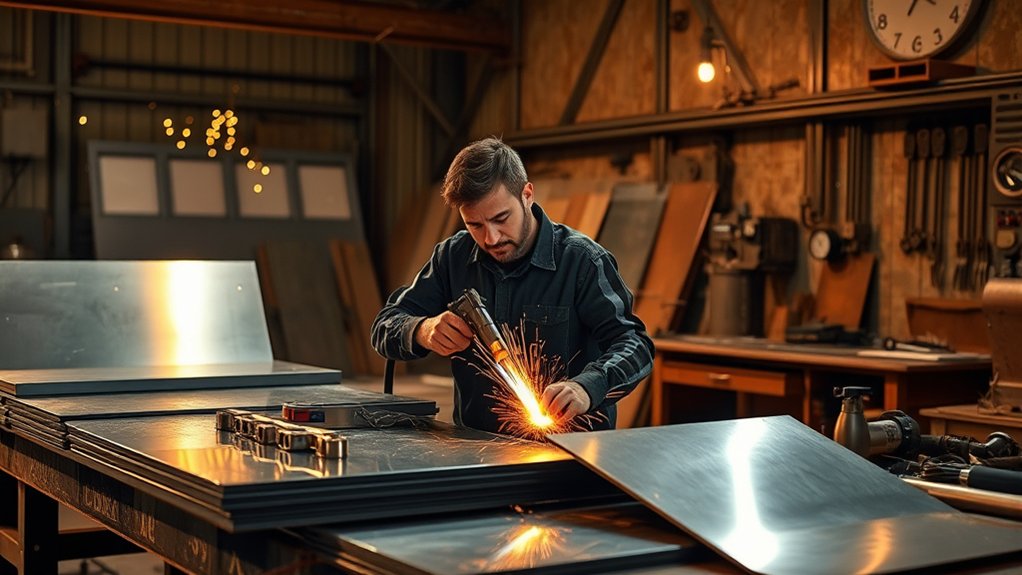
When selecting the right plasma cutter for your needs, start by evaluating the power source and amperage, as these factors directly affect the thickness and type of materials you can cut.
A higher-amperage machine can handle thicker materials; for instance, a 100 amp cutter can cut up to 40 mm thick steel. You’ll also want to guarantee compatibility with the conductive metals you plan to cut, such as mild steel, stainless steel, and aluminum.
Consider these key aspects:
- Cutting Thickness Capabilities: Entry-level models cut up to 12 mm, while advanced systems handle up to 60 mm.
- Cut Quality and Tolerances: Look for machines achieving tolerances in the +/- 0.38 mm to 0.5 mm range for precision.
- Plasma Cutter Brands and User Testimonials: Research trusted brands and read user testimonials to gauge reliability and performance.
Making an informed choice guarantees you invest in a plasma cutter that meets your specific project demands efficiently.
Operating Costs and Efficiency Considerations
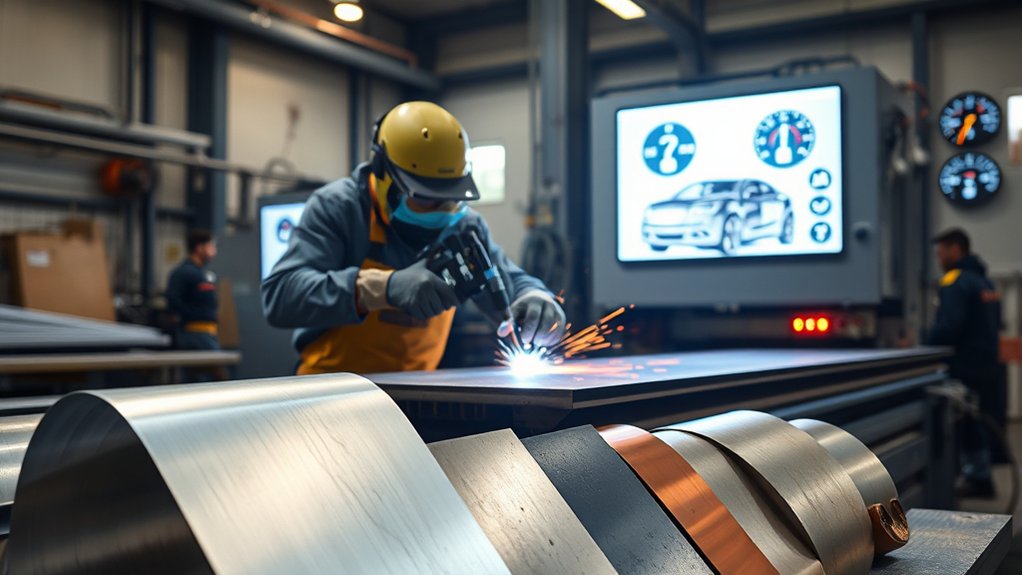
While evaluating the operational costs and efficiency considerations of plasma cutters, it’s crucial to understand their compelling cost-effectiveness in metal fabrication. Plasma cutting machines offer low operating costs per part, accommodating materials and thicknesses up to 50 mm. This translates into considerable cost savings, especially for businesses handling extensive metal fabrication tasks. Their operating efficiency is bolstered by low service and maintenance demands, greatly minimizing downtime.
Additionally, plasma cutters’ capital cost remains more economical than laser and waterjet systems, making them financially accessible. When dealing with materials 6 mm thick and above, plasma cutting surpasses laser cutting in speed, enhancing productivity.
| Factor | Plasma Cutter | Comparison Technology |
|---|---|---|
| Operating Cost | Low | Higher in laser/waterjet |
| Capital Cost | Medium | Higher in laser/waterjet |
| Cutting Speed | Faster (≥6 mm) | Slower in laser |
| Maintenance Needs | Low | Moderate to high |
Lightweight designs with built-in compressors further enhance their versatility on job sites, ensuring superior operating efficiency.
Innovation and Trends in Plasma Cutting Technology
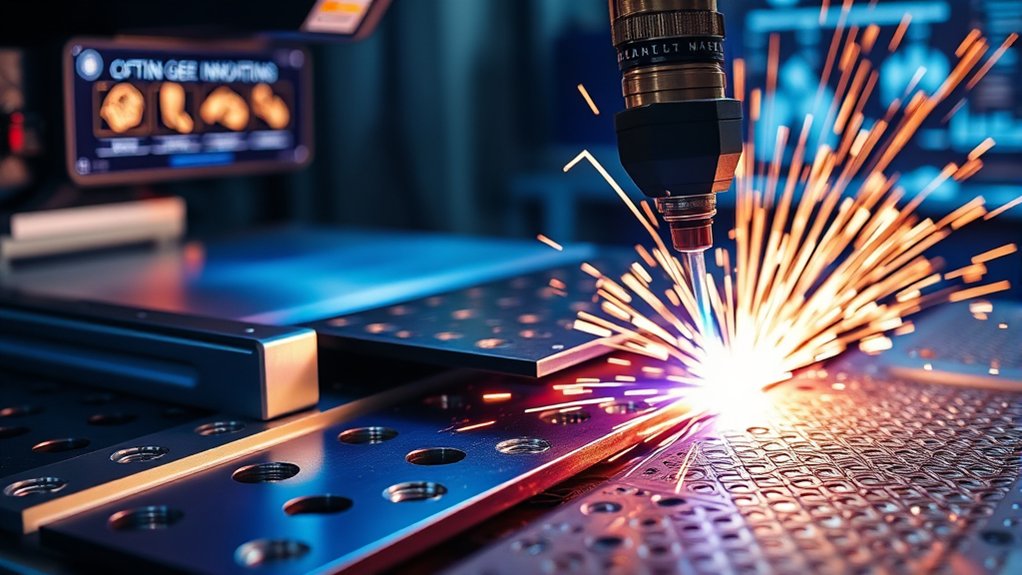
Advancements in plasma cutting technology are transforming the landscape of metal fabrication, building upon the operational efficiency and cost-effectiveness discussed earlier.
Cutting innovations have broadened the applicability of plasma systems, allowing you to work with diverse materials like mild steel, stainless steel, aluminum, and even copper. Precision improvements have achieved tolerances as tight as +/- 0.38 mm, with a heat-affected zone of less than 0.25 mm, ensuring superior edge quality.
Automation trends drive the integration of CNC systems, optimizing speed and accuracy. This leap in technology means faster production times, especially for thicker materials, outperforming traditional methods like oxyfuel and laser cutting.
Additionally, portable systems with built-in air compressors streamline operations, enhancing adaptability across varied work environments.
- Enhanced precision: Achieve tighter tolerances and minimal heat-affected zones.
- Increased cutting depth: Machines now cut materials up to 150 mm thick.
- Portable systems: Built-in compressors for versatile on-site applications.
Frequently Asked Questions
Can a Plasma Cutter Be Used Underwater?
Yes, you can use a plasma cutter underwater. It’s specifically designed for such applications, maintaining cutting efficiency. Confirm you utilize specialized equipment like an underwater plasma arc cutter to achieve precision and safety in these challenging environments.
How Does Plasma Cutting Affect Metal Fatigue?
How does plasma cutting affect metal fatigue? Ever considered how thermal effects impact structural integrity? Plasma cutting can induce metal fatigue by causing localized heat zones, leading to thermal stress and microstructural changes. You’ll need precise control to minimize these effects.
Are There Safety Concerns With Plasma Cutting Fumes?
Yes, you should be concerned about plasma cutting fumes. Implement fume extraction systems and wear proper respiratory protection to minimize inhalation risks. Follow industry guidelines to guarantee a safe working environment and protect your respiratory health.
Can Plasma Cutters Be Used for Artistic Metalwork?
Yes, you can use plasma cutters for metal art and creative projects. They provide precision cutting, allowing intricate designs and unique textures. Control kerf width and adjust amperage for detailed work, ensuring your artistic vision becomes a reality.
What Are the Noise Levels During Plasma Cutting?
During the cutting process, expect noise levels to reach approximately 90-120 decibels. Always wear hearing protection since plasma cutting’s arc and compressed air can generate significant sound, affecting workplace safety and compliance with OSHA standards.
Conclusion
In the world of metalwork, a plasma cutter is your versatile chisel, sculpting intricate designs with the precision of a master artisan. It effortlessly slices through metals, from mild steel to aluminum, like a hot knife through butter. With capabilities reaching 150 mm and beyond, it turns obstacles into opportunities. Embrace this technological marvel, where efficiency and precision dance together, ensuring your creations are not just crafted, but forged with excellence in every cut.