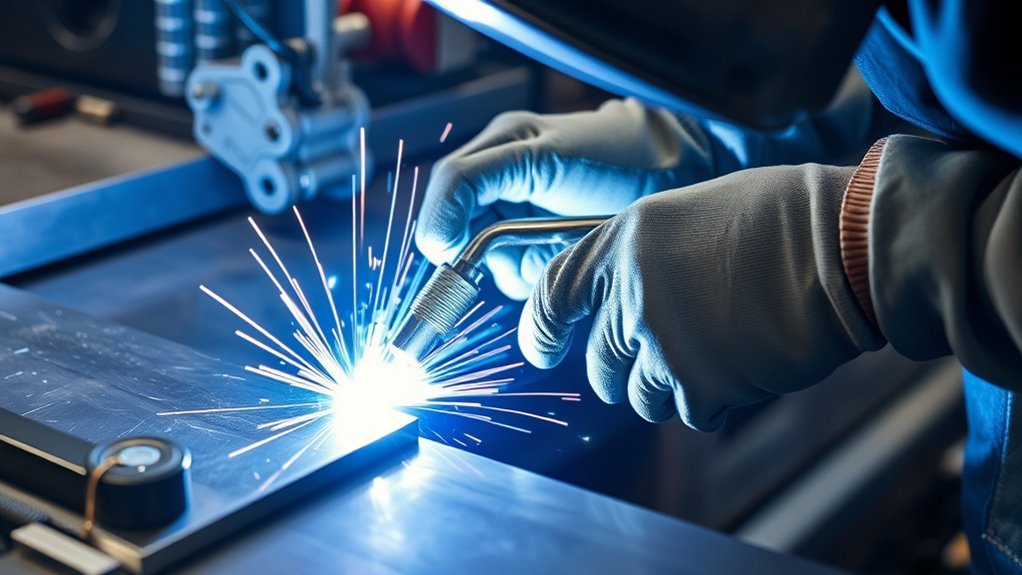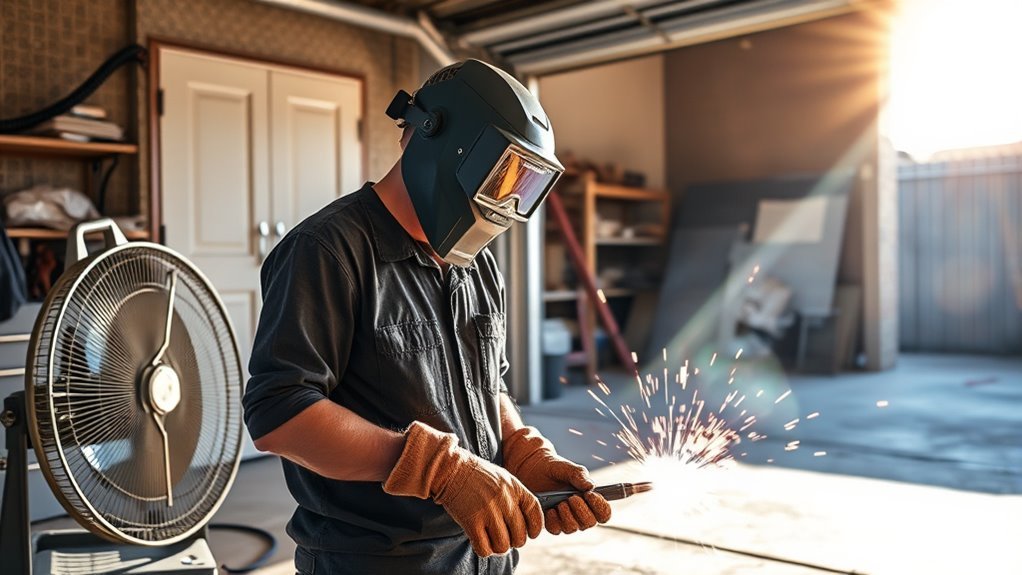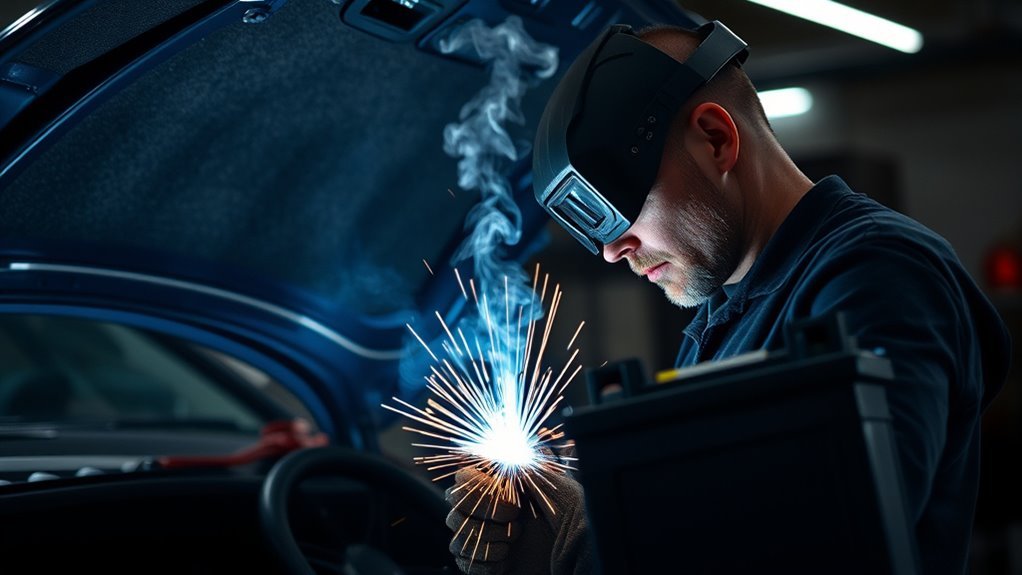
No, it is not safe to weld near a car battery while it is connected. Disconnect and isolate the 12-volt battery first, then keep the welding work clamp on clean bare metal as close to the weld as practical. That short return path helps limit stray current, while battery isolation, fire prep, and post-weld checks help protect the ECU, BCM, airbags, wiring, and sensors.
Quick Answer
Do not weld near a connected car battery. Turn the vehicle off, disconnect and isolate the 12-volt battery, remove the battery if heat or sparks are close, and place the work clamp near the weld on bare metal. After welding, inspect wiring, fuses, modules, and warning lights before returning the vehicle to service.
Key Takeaways
- Disconnect and isolate the 12-volt battery before welding whenever the OEM procedure allows it.
- Clamp the welder’s work lead to clean bare metal close to the weld, not to a distant frame point.
- Remove or shield flammables, battery gases, fuel vapors, trim, foams, sealers, and wiring before striking an arc.
- Do not use a memory saver or ignition-on trick unless the vehicle maker’s procedure specifically tells you to.
- After welding, reconnect carefully, scan for codes, check warning lights, and verify affected sensors or ADAS functions.
At a Glance
| Time Required | 10 to 20 minutes for battery isolation, clamp setup, fire prep, and post-weld electrical checks, plus actual welding time. |
| Difficulty | Moderate. The welding may be simple, but protecting vehicle electronics requires careful setup. |
| Tools Needed | Welder, work clamp, battery wrench, insulated terminal cover, grinder or wire brush, welding PPE, welding blanket, fire extinguisher, and scan tool when available. |
| Cost | Usually $0 to $40 if you already own welding PPE. Add more if you need fire blankets, terminal covers, or a diagnostic scan. |
Is It Safe to Weld Near a Car Battery?
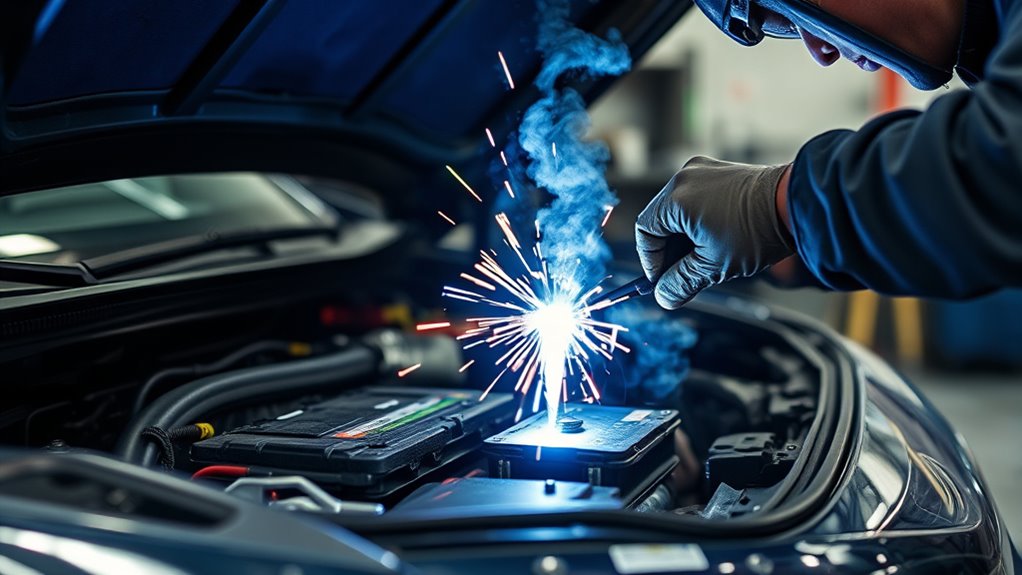
No, welding near a car battery is not considered safe while the battery is connected. Welding current wants the shortest return path back to the machine, but a poor clamp location, dirty metal, or connected electronics can create unwanted paths through the body, wiring, bearings, modules, or battery cables.
The battery itself is also a hazard. Sparks and hot spatter can damage the case, ignite nearby vapors, or contact exposed terminals. OSHA battery guidance calls for ventilation around gassing batteries and precautions to prevent open flames, sparks, and electric arcs in battery charging areas, which is a useful warning for any welding work near a battery compartment. OSHA battery safety rules also tell workers to keep metallic objects away from uncovered batteries.
A connected battery gives welding current more ways to reach sensitive vehicle electronics. Disconnecting and isolating the battery reduces that risk before you strike an arc.
Modern cars rely on many electronic modules, sensors, and software-controlled systems. NHTSA describes vehicles as cyber-physical systems and notes that vehicle electronic systems and software are safety-relevant, which is why welding prep should treat electronics as part of the repair, not an afterthought. NHTSA’s modern vehicle cybersecurity guidance supports that cautious approach.
Warning: If you are working on a hybrid or electric vehicle, disconnecting the 12-volt battery does not make the high-voltage system safe. Follow the OEM high-voltage disable procedure or leave the work to a trained technician.
Should You Disconnect the Battery Before Welding?
Yes, you should disconnect the battery before welding whenever the vehicle maker’s service procedure allows it. At minimum, turn the ignition off, remove the key or keep the fob away from the vehicle, disconnect the negative battery cable, and isolate the cable end so it cannot spring back against the terminal.
If the weld is close to the battery, battery tray, positive cable, fuse box, or battery vent path, remove the battery from the work area. This protects the case from spatter and keeps terminals away from hot metal.
Use this safe prep sequence before welding:
- Check the OEM repair information for battery, SRS, ADAS, and module precautions.
- Save radio codes or settings if needed, but do not use a memory saver unless the OEM procedure specifically approves it for welding.
- Turn the vehicle off and wait for modules to go to sleep.
- Disconnect the negative battery cable first, then isolate it with an insulated cover or tape.
- Remove the battery if heat, sparks, or grinding dust will be near it.
- Place the welder’s work clamp on clean bare metal close to the weld.
- Weld in short, controlled passes, then inspect the electrical system afterward.
Note: Many vehicles need window, steering-angle, battery-management, radio, or idle relearns after battery disconnection. That inconvenience is still better than welding with live modules exposed to stray current.
Products Worth Considering

Heavy duty designed for battery terminal quick disconnect and release, fast and easy instal or uninstal.

Designed for battery terminal quick disconnect and release, fast and easy instal or uninstal.

Includes 1 pairs (Red and Black) flexible top post battery terminal covers and 1 pairs (Red and Black) washers for military spec battery terminals (NOT standard battery terminals).
Where Should You Place the Welding Ground?
Most welders call it a welding ground clamp, but the more accurate term is the work clamp or work lead. Place it on clean bare metal as close to the weld as practical. OSHA’s arc welding standard says the work lead must be firmly attached to the work and that ground connections must be mechanically strong and electrically adequate for the current. OSHA 1910.254 also warns against using unsuitable items as welding-current paths.
A close clamp gives current a short, low-resistance return path. That improves arc stability and reduces the chance of current traveling through hinges, bearings, latch cables, suspension parts, wiring, or control modules.
Before clamping, grind or brush away paint, rust, primer, undercoat, seam sealer, and grease. Clamp directly to the part being welded when possible. If you are welding a removable panel or bracket, clamp that part instead of a distant frame rail.
Pro Tip: If the arc acts erratic, stop and recheck the clamp. A weak work-clamp connection can create heat, unstable welds, and unwanted current paths.
Products Worth Considering

High Quality Material: This product is crafted from copper. Copper offers good electrical conductivity and is resistant to deformation and fracture, ensuring the product maintains its structural integrity. Even after prolonged use, copper retains its inherent properties, providing a reliable material foundation for the product and making it suitable for a wide range of automotive grounding applications.

300A/500A/800A Earth Ground Cable Clip Clamp Manual Welder Electrode Holder Welding Processing Ground Clamp

Strong and Durable: Made of premium brass with good conductivity, oxidation resistance and long service life.
What Can Welding Damage in a Car?
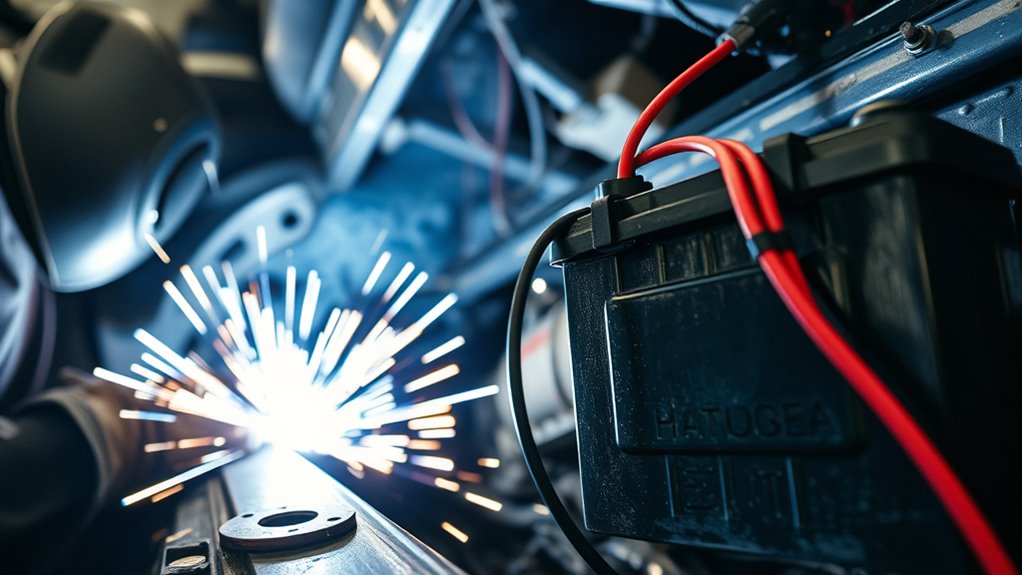
Welding can damage a car’s electronics, wiring, battery, trim, and nearby safety systems if heat, sparks, electromagnetic noise, or stray current reach the wrong area. The risk is higher on modern vehicles because many functions depend on modules, sensors, and networked wiring.
Vehicle Electronics
The ECU, BCM, ABS module, airbag module, body-control circuits, infotainment unit, alternator electronics, and sensor networks can all be sensitive to electrical transients. Disconnecting the battery does not make careless welding safe, but it removes one major connected power path.
Keep welding leads away from wiring looms when possible. Do not drape welding cable across the engine bay, over modules, or around sensor harnesses. Route cables cleanly and keep the work clamp close to the weld.
Battery And ECU
With the battery connected, the ECU and other modules may still have a route into the welding circuit through grounds, harnesses, or shared metal structure. That is why the safest general practice is to disconnect and isolate the battery before welding, then control the return path with proper clamp placement.
Do not rely on a surge protector, battery maintainer, memory saver, or ignition-on workaround as your main protection. Those devices can leave parts of the vehicle powered. Use them only when the OEM repair procedure specifically says they are acceptable.
Fire And Wiring
Welding creates hot spatter, sparks, and conducted heat. Those hazards can melt insulation, burn loom tape, ignite seam sealer, damage plastic clips, or start a hidden fire behind trim. Fuel vapor, brake-cleaner residue, oily rags, sound insulation, and foam are also serious risks.
Before welding, inspect both sides of the panel. Heat can transfer through sheet metal and ignite material on the opposite side. OSHA’s welding and cutting rules call for moving fire hazards, using guards when hazards cannot be moved, keeping extinguishing equipment ready, and avoiding welding if basic fire precautions cannot be followed. OSHA 1910.252 is the key hot-work reference.
Which Car Electronics Need Extra Protection?
You should protect the battery, ECU, BCM, SRS components, sensors, wiring harnesses, alternator, fuse boxes, and ADAS components first. These systems can be expensive to replace and may affect safety if they fail after the repair.
Battery And ECU Protection
Start with the battery and main control modules. Disconnect the 12-volt battery, isolate the cable end, and keep welding current local with the work clamp. If the ECU, BCM, fuse box, or battery is close to the weld area, shield it or remove nearby components when the service procedure allows it.
Be careful with main grounds. A rusty or loose body ground can force current through smaller circuits. After welding, inspect ground straps, ground bolts, and nearby harnesses for heat damage or looseness.
Sensors, Airbags, And Modules
Airbag and seat-belt pretensioner circuits require extra caution. Do not probe SRS wiring, cut near inflators, or disconnect airbag components casually. Follow the OEM SRS disable procedure and wait the specified time before working near airbag wiring or sensors.
ADAS sensors can also be affected by repair work. Radar brackets, camera mounts, bumper reinforcements, blind-spot sensors, and wheel-alignment changes may require calibration after welding or panel repair. If a sensor mount was heated, moved, removed, or replaced, check the OEM procedure before the vehicle goes back on the road.
What Fire Hazards Should You Remove First?
Before you strike an arc, remove every flammable material you can reach. That includes rags, paper, cardboard, fuel-soaked absorbent pads, loose interior trim, plastics, undercoating, NVH foam, seam sealer, adhesives, carpet, and insulation.
Do not weld until the area is fire safe. Move combustibles, shield what cannot be moved, and keep extinguishing equipment ready.
Use this vehicle hot-work checklist:
- Pull out loose rags, paper, plastic bags, and debris first.
- Move or shield carpet, insulation, weatherstrip, wiring, hoses, and interior panels.
- Inspect the back side of the weld area before welding.
- Keep fuel lines, fuel tanks, brake lines, and vent lines away from sparks and heat.
- Use a welding blanket or spark-resistant cover over nearby surfaces.
- Keep a suitable fire extinguisher nearby and know how to use it.
- Use a fire watch when hidden combustibles or nearby trim could smolder after welding.
OSHA uses a 35-foot combustible-material reference in many hot-work situations. Vehicle work spaces are tighter, so the practical rule is stricter: remove or shield anything that sparks, slag, heat, or grinding dust can reach.
How Do You Weld Without Hurting the ECU?
You protect the ECU by controlling the welding circuit, reducing powered paths, and keeping heat away from electronics. The goal is simple: the welding current should travel from the electrode, through the weld area, into the nearby work clamp, and back to the welder. It should not travel through the battery, ECU, harnesses, bearings, or body grounds across the vehicle.
Use these steps:
- Read the OEM repair procedure for the vehicle and repair area.
- Turn the ignition off and keep the key or fob away from the vehicle.
- Disconnect and isolate the 12-volt battery cable.
- Remove or shield nearby modules, sensors, and harnesses when the weld is close.
- Attach the work clamp to clean bare metal close to the weld.
- Keep welding cables away from ECU connectors and wiring looms.
- Use short welds and manage heat input, especially near brackets and sensor mounts.
- After welding, inspect, reconnect, scan, and test the vehicle before calling the job complete.
Warning: Do not turn the ignition on to “absorb” welding spikes. Unless the OEM procedure tells you otherwise, keeping modules powered during welding can increase the chance of electronic faults.
What Should You Check After Welding on a Vehicle?
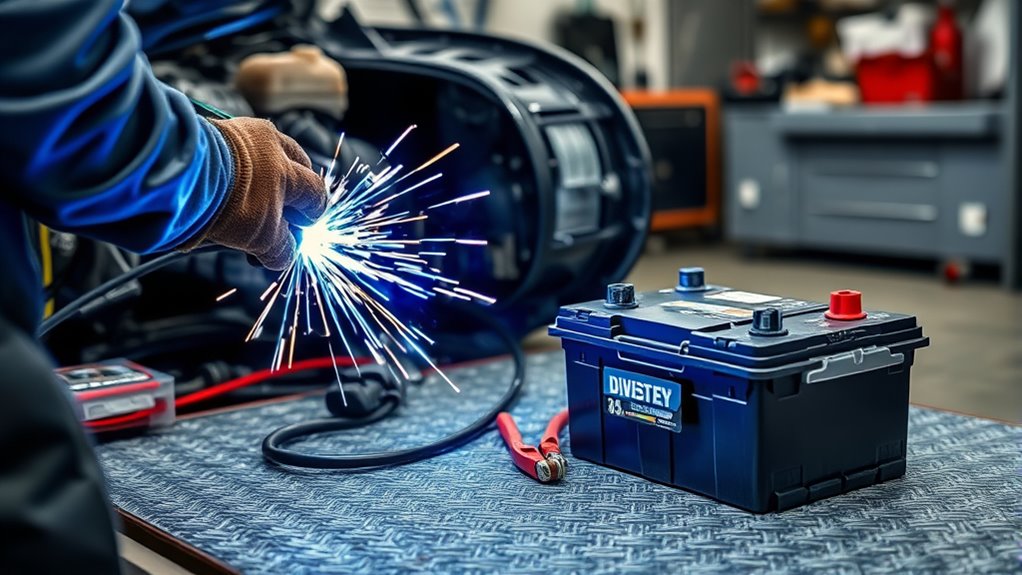
After welding, check the vehicle before you return it to service. Let the area cool, inspect for smoldering material, and verify that no wiring, hoses, trim, or terminals were damaged by heat or spatter.
- Inspect battery cables, terminals, and ground straps for tightness and heat damage.
- Check nearby wiring harnesses for melted insulation, stiff spots, or burned tape.
- Look for blown fuses in circuits near the repair area.
- Reconnect the battery carefully, usually positive first if it was removed, then negative.
- Start the vehicle and check for warning lights.
- Scan modules for diagnostic trouble codes when a scan tool is available.
- Test lights, locks, windows, wipers, horn, radio, charging system, and affected accessories.
- Verify SRS, ABS, stability control, and ADAS functions if the work was near those systems.
- Perform any required window, steering-angle, idle, battery-management, or sensor relearn.
If you see a warning light, smell burnt insulation, find a blown fuse, or notice strange module behavior, stop and diagnose the issue before driving. A hidden electrical fault can become a safety problem later.
Frequently Asked Questions
Do you need to disconnect a car battery before welding?
Yes. Disconnect and isolate the 12-volt battery before welding whenever the vehicle maker’s service information allows it. This reduces powered paths through the vehicle and helps protect control modules, wiring, and the battery.
Can welding damage a car battery?
Yes. Welding can damage a battery through heat, sparks, terminal shorts, case damage, or stray current. If the weld is close to the battery, remove the battery from the vehicle before welding.
Which battery terminal should you disconnect before welding?
On most modern negative-ground vehicles, disconnect the negative battery cable first and isolate it. If the battery must be removed, disconnect the negative cable first, then the positive cable. Reconnect in the reverse order unless the OEM procedure says otherwise.
Can I use a memory saver while welding on a car?
Do not use a memory saver as a general welding shortcut. A memory saver can keep vehicle circuits powered, which works against the goal of isolation. Use one only if the OEM welding procedure specifically approves it.
Is it okay if a battery connector touches other metal?
No. Isolate disconnected cable ends so they cannot touch the battery post, body metal, tools, or brackets. A loose positive cable is especially dangerous because it can short to grounded metal and create sparks or melted wiring.
Why do welders face long-term health risks?
Welders can face long-term health risks from fumes, ultraviolet radiation, heat, noise, and fire hazards when safety controls are weak. Use proper ventilation, eye protection, gloves, flame-resistant clothing, respiratory protection when needed, and safe hot-work practices.
Conclusion
So, is it safe to weld near a car battery? Not while the battery is connected. Disconnect and isolate the 12-volt battery, remove it if the weld is close, place the work clamp on clean bare metal near the weld, and clear flammables before you start. Afterward, inspect the wiring, fuses, battery connections, warning lights, and affected modules. That careful setup lowers the risk of battery damage, ECU faults, fire, and hidden electrical problems.
Sources
- OSHA 1910.252, General Welding, Cutting, and Brazing Requirements — fire prevention, combustible-material control, guards, extinguishing equipment, and fire watch guidance.
- OSHA 1910.254, Arc Welding and Cutting — work lead attachment, grounding checks, cable condition, and safe arc welding setup.
- OSHA 1910.178, Battery Charging and Storage Battery Precautions — ventilation for gassing batteries, prevention of sparks and arcs, and keeping metallic objects away from uncovered batteries.
- NHTSA Cybersecurity Best Practices for the Safety of Modern Vehicles, Updated 2022 — modern vehicle electronic systems, safety-critical software, and the importance of maintenance practices around vehicle electronics.