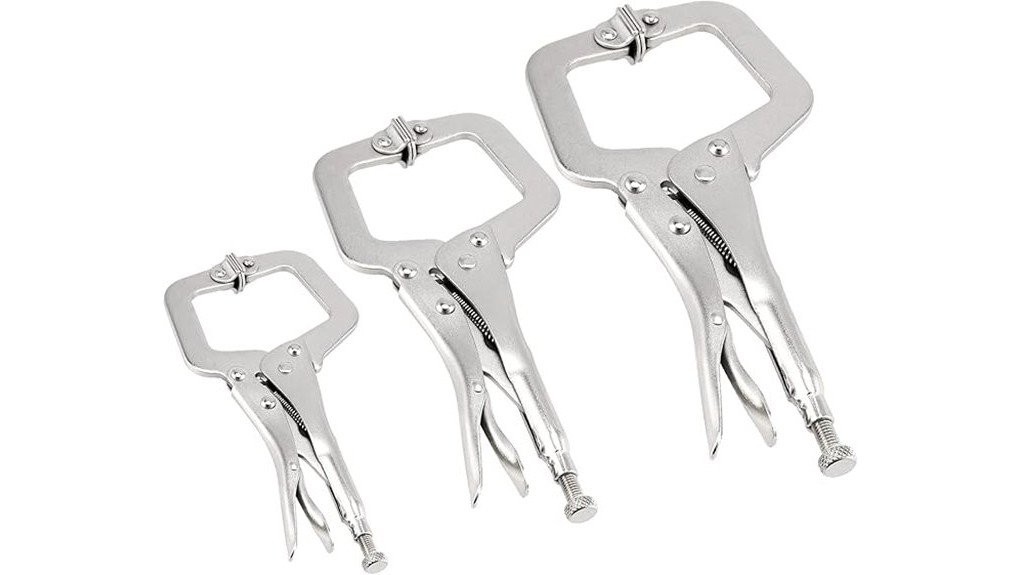
The JAPCHET C clamp locking pliers set is a three-piece kit with 6, 9 and 11 inch pliers, which the Amazon listing describes as high-carbon steel with swivel pads and a quick-release trigger. It is a good value pick for fabricators who want several sizes of locking C clamps in one purchase, and a weaker one if you need maximum clamping capacity or only need a single tool. The listing mentions a maximum opening of about 3.5 inches, which likely applies to the largest pair, so check each size.
JAPCHET Locking Pliers Set at a Glance
| Item | Per the listing |
|---|---|
| Type | Locking C clamp pliers, 3-piece set |
| Sizes | 6 in, 9 in, 11 in |
| Material | High-carbon steel (seller description) |
| Features | Swivel pads, quick-release trigger, adjustable screw |
| Maximum opening | About 3.5 in (check by size) |
| Set weight | About 2.94 lb |
Check Current Price on Amazon →
What the Set Is and Who It Suits
Locking C clamps work like locking pliers with C-shaped jaws that wrap around a workpiece. The adjusting screw sets the jaw width and the lever snaps shut to hold the clamp. Swivel pads at the jaw tips pivot so they sit flat on non-parallel surfaces.
The three sizes cover different jobs. The small clamp suits sheet metal tabs and brackets. The mid-size clamp handles most flat bar, angle and plate tacking. The long pliers add reach for holding parts back from the edge of a bench or reaching across a joint.
The set suits home fabricators and woodworkers who want to hold work without carrying a rack of screw clamps. It is less suitable for heavy structural clamping, where bar clamps or welding table clamps generate more force.
How to Check the Set Fits Your Work
- Check jaw openings. Size names refer to tool length. Look up the opening of each clamp in the listing.
- Think about throat depth. If you need to reach far from the edge, the deeper throat of the longer clamp is key.
- Check pad movement. Swivel pads should turn freely without wobbling. If they stick, spatter or burrs may be the cause.
- Test the lock. Close each clamp on a piece of scrap and make sure it holds without creeping.
- Know the return window. The listing mentions a short refund period, so check the terms soon after delivery.
Pros and Limitations
Pros
- Three sizes cover small to medium fabrication
- Swivel pads help on angled or uneven surfaces
- Trigger release speeds up repeated clamping
- One set doubles as a woodworking and auto body tool kit
Limitations
- Locking pliers give less holding force than a heavy bar clamp
- Pads and jaws can collect spatter
- High-carbon steel can rust if stored damp
- Not intended to carry welding current
Using Locking C Clamps for Welding
- Pick the shortest clamp that reaches the work; it will be more rigid.
- Adjust the screw for each new thickness so the lever closes with firm effort.
- Clamp parts square, tack them in two or three spots and then release the clamp so the part can move as it heats.
- Keep spatter off the screw and pivot. A quick coat of anti-spatter spray or a wipe after use helps.
- Keep hands clear of the pinch zone when closing the lever.
- Store dry and apply a light film of oil to the pivots.
Alternatives and Related Guides
- Looking for a single clamp? See the Biugaaufai 6 inch locking C clamp review.
- For a brand-name locking pliers option, check the Olympia Tools 9 inch locking pliers review.
- For long jobs, read the heavy-duty C clamps review.
- Fitting up corners? See the V-type magnetic welding clamps review.
Frequently Asked Questions
Which size locking C clamp should I use first?
Use the 6 inch for small brackets and tabs, the 9 inch for general fabrication on flat bar and angle, and the 11 inch when you need more reach or leverage. Measure your stock against the jaw opening listed for each size.
What are swivel pads for on locking pliers?
Swivel pads pivot to sit flat against angled or uneven surfaces, which spreads the clamping force and reduces marks. They also help hold tapered or slightly warped parts. Spatter can stick to the pads, so keep them away from the weld.
Is high-carbon steel better for clamps?
High-carbon steel is hard and strong, which helps the jaws and linkage resist wear. It can rust if left wet, so wipe the set dry and add a light oil film. The seller’s steel description is not a certified grade.
Can locking pliers be used as a welding ground?
They are not designed for it. A small contact area can overheat or arc and damage the jaws. Use a rated ground clamp for the work lead and keep the pliers to holding parts in position.
Final Thoughts
This set gives you three useful clamp sizes for tacking and general shop use at a single purchase. Confirm the opening of each size against your typical stock before ordering.
View Current Listing on Amazon →
See Latest Price and Details →