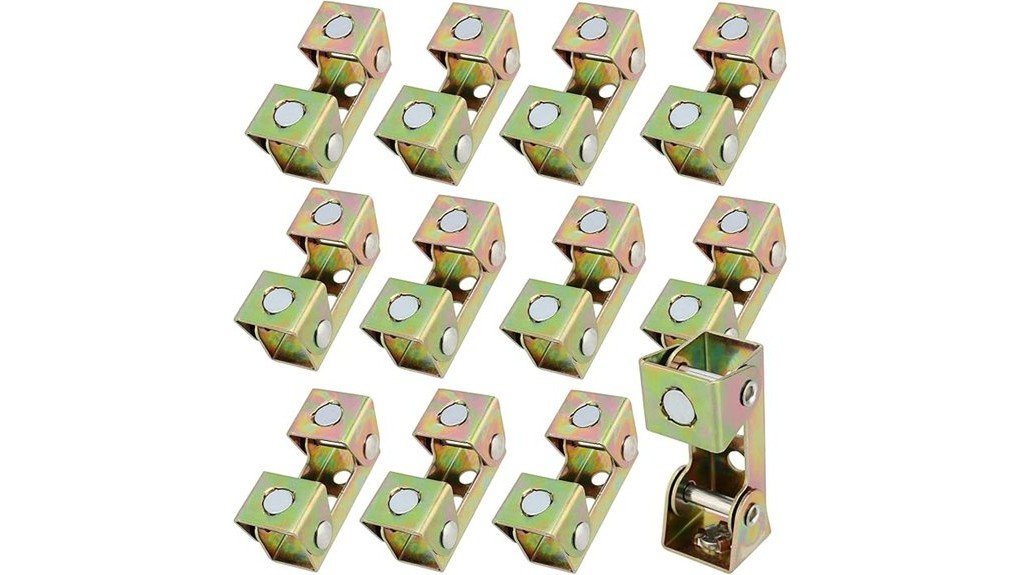
The 12 PCS V-type magnetic welding clamps are small zinc-plated magnetic holders with a V-shaped pad, listed with a maximum pull force of about 18 lb each. They are a handy way to hold tabs, gussets and corners for tack welding on mild steel, and a weak choice for heavy parts, round stock held far from the pad, or any application that needs clamping force rather than magnetic positioning. Because the pull force is modest, check how heavy your parts are before you buy.
12 PCS V-Type Magnetic Welding Clamps at a Glance
| Item | Per the listing |
|---|---|
| Type | V-type magnetic positioning clamps |
| Count | 12 pieces |
| Pull force | About 18 lb (8 kg) maximum, per clamp |
| Finish | Zinc plated, listed as rust resistant |
| Size | About 2.2 x 1 x 1 in |
| Weight | About 0.62 kg for the set |
What They Are and Who They Suit
A V-type magnetic clamp has a magnet in a steel body with a V-shaped notch. Place it against two edges, and it pulls flat bar, plate or tube into alignment. Some designs have a rubber or cushion surface; the listing mentions cushioned pads.
With 12 pieces, this set gives you enough clamps to hold small frames, doors, toolboxes or furniture parts while you tack. A set this size is more useful than two or three heavier magnets for light fabrication.
It suits hobbyists and light-duty fabricators. It is not for holding structural parts, where gravity and weld shrinkage can overcome 18 lb easily.
How to Check They Fit Your Work
- Weigh the parts. The pull force is a maximum on clean, flat, thick steel. Thin or rusty steel reduces it.
- Check the metals. Magnets only grip ferrous steel. They do nothing on aluminum, copper or most stainless grades (austenitic stainless is generally non-magnetic).
- Consider your process. DC welding near magnets can cause arc blow. Keep the clamps back from the joint.
- Look at the V angle. The jaw should fit the angle of your joint. Many V clamps hold 90 degrees, 45 degrees and 135 degrees positions, but confirm what this set offers.
- Check the listing reviews. Magnet strength on a budget set can vary, so read recent comments on the listing page about holding power.
Pros and Limitations
Pros
- 12 pieces for multiple tack points
- Hands-free positioning of flat, angled and some round parts
- Compact and lightweight
- Zinc-plated finish helps resist rust
Limitations
- Holding force is modest, so heavier parts need stronger magnets or mechanical clamps
- No effect on non-magnetic metals
- Can contribute to arc blow
- Magnets weaken when heated
- Not a ground clamp
How to Use Magnetic Clamps Safely
- Clean the contact surface so the magnet touches bare steel.
- Place the clamps a few inches from the joint so heat and spatter do not reach the magnet.
- Tack in several places, then remove the clamps and finish welding.
- Keep magnets away from pacemakers, medical implants, credit cards and electronics.
- Keep fingers clear when magnets snap onto steel.
- Wipe off spatter and store the clamps in a dry place.
Alternatives and Related Guides
- If you need a magnetic ground, see the magnetic welding ground clamp review.
- For stronger mechanical holding, read the heavy-duty C clamps review.
- For quick clamping with pliers, see the JAPCHET locking pliers set.
- Practice tack welding with a welding practice kit.
Frequently Asked Questions
How much weight can magnetic welding clamps hold?
This listing gives a maximum pull force of about 18 lb (8 kg) per clamp. Real holding force depends on metal thickness, surface cleanliness and how well the pads sit flat. Treat the rating as a maximum, and do not use magnets to hold heavy parts alone.
What is arc blow and do magnets cause it?
Arc blow is when magnetic fields push the arc off course, causing wandering, spatter and poor fusion. It is most common with DC welding. Magnetic clamps can worsen it, so move them away from the joint or use non-magnetic clamps if the arc wanders.
Are magnetic welding clamps safe at high heat?
Magnets lose strength as they heat, and some lose it permanently. Keep them away from the weld zone and remove them before the metal gets hot. If they warm up, let them cool down and test the pull again before reuse.
Can I use these as a ground clamp?
Not unless the seller rates them for welding current. These are positioning clamps with small magnetic contact areas, which can overheat or arc. Use a ground clamp designed for the amperage of your machine to carry the work lead.
Final Thoughts
These magnetic clamps work for light fabrication and tack welding when you need many cheap positioning points. For heavy parts or high heat, use mechanical clamps instead.