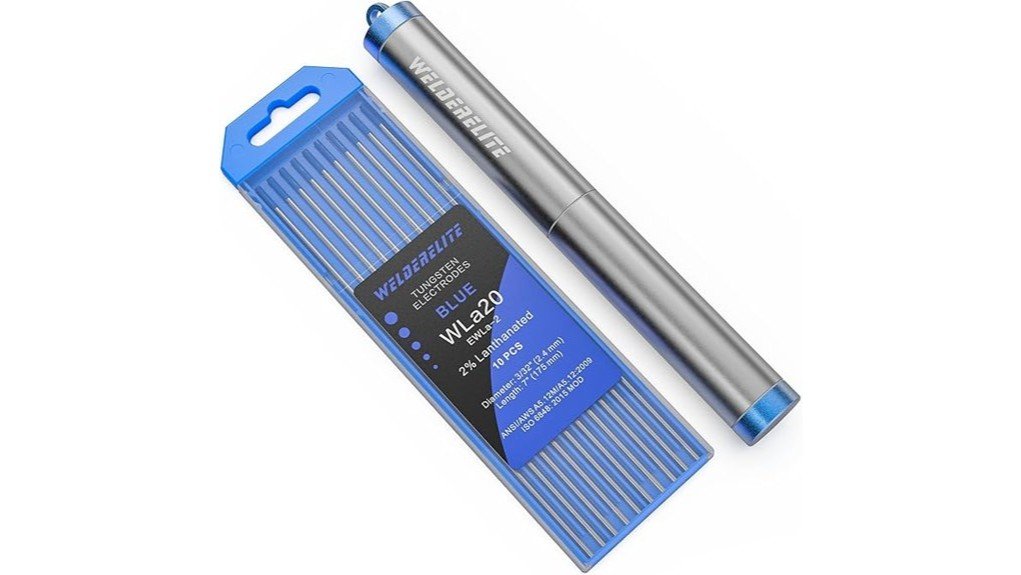
This blue tungsten electrode 3/32 inch (2.4 mm) review covers a general-purpose TIG electrode that the listing says works on both AC and DC and comes in a storage bucket. Blue is the standard color band for 2% lanthanated tungsten (WL20), a popular all-rounder for steel, stainless and aluminum. It is a good fit for welders who want one electrode type for most jobs, but verify the alloy and count on the listing before you order. This blue 3/32 tungsten electrode is a lanthanated tungsten for general TIG work.
Blue tungsten electrode 3/32 at a glance
| Item | What to know |
|---|---|
| Diameter | 3/32 in (2.4 mm) |
| Color band | Blue, normally 2% lanthanated (WL20); confirm on the listing |
| Polarity | Listing says AC and DC |
| Packaging | Storage bucket per the listing; check the quantity and length |
| Metals | Steel, stainless, aluminum, and other TIG-welded metals |
Specs come from the seller’s Amazon listing. Check the current listing for the electrode length, pack count and any alloy marking.
What blue (lanthanated) tungsten is and who it suits
Lanthanated tungsten has lanthanum oxide added to improve arc starting, stability and electrode life compared with pure tungsten. Many welders choose 2% lanthanated as an all-purpose electrode because it handles both AC and DC and does not contain radioactive thorium.
It suits:
- Shops that weld several metals and want to stock a single electrode type.
- Welders moving away from thoriated tungsten (red) for health and handling reasons.
- Inverter TIG users who switch between AC and DC.
How to choose the right size and check the listing
- Diameter versus current: 3/32 in (2.4 mm) suits mid-range work. Use the electrode maker’s current chart to choose the diameter for your amperage, since too small an electrode melts and too large an electrode is hard to start at low current.
- Collet and cup fit: The torch needs a 3/32 collet and matching collet body. Standard and gas lens bodies are different parts, so check what you have.
- Length: Most TIG electrodes are 7 in long. Short sticks may not suit all torches or back caps, so confirm the length.
- Alloy marking: A blue band should mean lanthanated, but some sellers use blue for other mixes. Confirm the alloy in the listing or on the package.
- Pack size: Count the electrodes in the bucket so you can compare cost per electrode against others.
Pros and limitations
Pros
- One electrode type for steel, stainless and aluminum.
- Works on AC and DC machines.
- Non-thoriated, so grinding dust is less of a concern than with red tungsten.
- Storage bucket keeps tips from getting damaged.
Limitations
- A single 3/32 size will not cover every job. Thin sheet at low amps may need smaller electrodes.
- Quality varies between sellers, so check the alloy and tolerance claims.
- Some welders prefer ceriated or rare-earth blends for very low-amp DC work.
How to prepare and use the electrode
- Grind lengthwise on a clean wheel dedicated to tungsten, so contamination from steel does not reach the tip.
- For DC, a pointed taper is common. For AC, many welders use a slightly blunted or balled tip, and some use a point with a tiny flat. Follow your machine’s guidance.
- Seat the electrode in the collet and tighten the back cap, leaving a short stick-out beyond the cup. Extend it further only with a gas lens.
- Use argon shielding gas and check for leaks with soapy water.
- If the tip touches the puddle or filler, stop and re-grind it.
- Wear a TIG-rated auto-darkening helmet and protective gloves. Wipe up grinding dust rather than blowing it.
Alternatives and related guides
- If you want electrodes ready to use, see the pre-ground TIG tungsten electrodes.
- To grind your own, compare the cordless tungsten sharpener and the Sonnler tungsten sharpener.
- For holders and cups, see the Nexon tungsten electrode holder and the ceramic TIG welding cup.
Frequently Asked Questions
What does a blue tungsten electrode mean?
Under the common color code, a blue band marks 2% lanthanated tungsten (WL20). It is a popular all-round choice for AC and DC. Some sellers use other blends, so confirm the alloy on the listing or on the electrode packaging.
What amperage suits a 3/32 inch tungsten?
The right range depends on the alloy, polarity and torch. Check the current chart from the electrode maker or your welder manual. Too little current on a large electrode gives an unstable arc, while too much overheats a small one.
Can I use blue tungsten on aluminum?
Yes, 2% lanthanated tungsten is commonly used on AC for aluminum, as well as on DC for steel and stainless. You still need an AC-capable machine, argon gas and suitable filler for aluminum.
Is blue tungsten safer than red thoriated tungsten?
Lanthanated tungsten does not contain thorium, so its grinding dust is not radioactive like thoriated tungsten. Dust control is still sensible: use extraction or a respirator when grinding and wipe up the dust.
Verdict
A blue 3/32 inch tungsten electrode is a sensible general-purpose choice for AC and DC TIG if the alloy and pack count match the listing. Buy the diameter that suits your amperage, and keep a few other sizes on hand.