Disclosure: As an Amazon Associate, we earn from qualifying purchases. If you click a link on this page and make a purchase, we may receive a small commission at no extra cost to you.
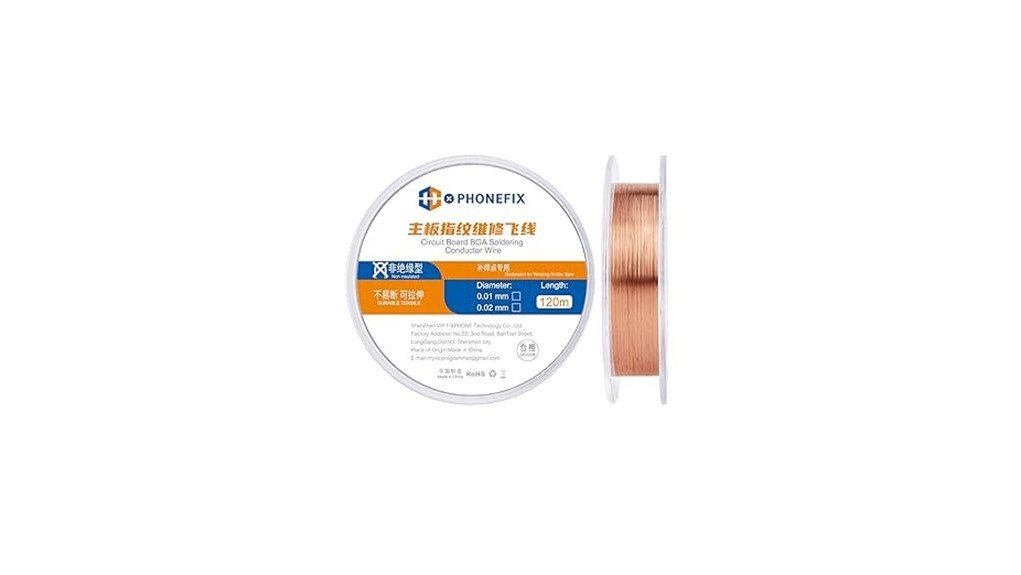
Micro soldering work can fail fast when the wire is too thick, too stiff, or hard to place between tiny pads. The 0.02mm soldering jump wire is made for delicate board-level repairs where you need a very fine copper bridge instead of a bulky jumper. This review helps you decide whether its ultra-thin, non-insulated design fits your phone, tablet, PCB, or motherboard repair work. Its biggest strength is precision, but the same fine size also means you need careful handling and good soldering control.
Quick Verdict
Rating: Recommended with caveats, 8/10
Best For: skilled technicians, phone repair shops, and electronics hobbyists working on tiny PCB solder points.
Bottom Line: This 0.02mm pure copper jump wire is a strong choice for precision bridge work on crowded boards. It is not ideal for beginners, outdoor wiring, high-current repairs, or any project that needs insulated wire.
| Specification | Detail |
|---|---|
| Product type | Soldering jump wire for micro electronics repair |
| Amazon ASIN in article URL | B077VDS67H |
| Wire diameter | 0.02mm |
| Length | 120 meters |
| Material | Pure copper |
| Insulation | Non-insulated |
| Supported use cases | iPhone and tablet motherboard chip welding, PCB/BGA solder points, small electronics repairs |
| Compatibility note | Best suited to delicate low-current jumper work, not general wiring |
| Safety note | Because the wire is non-insulated, placement must be precise to avoid accidental contact with nearby pads or components. |
Key Takeaways
- The 0.02mm diameter gives you a very fine bridge wire for dense PCB and mobile motherboard work.
- The article-supported material is pure copper, which is useful when you need conductive repair bridges in small electronics.
- The 120-meter length gives you plenty of wire for repeated practice, repairs, and trimming mistakes.
- The non-insulated design can help with precise placement, but it also raises the risk of accidental shorts if the wire touches nearby contacts.
- It makes the most sense for experienced soldering users, not for high-current wiring or rough repair work.
What Is the 0.02mm Soldering Jump Wire?
This product is an ultra-fine pure copper soldering jump wire used to create small electrical bridges on circuit boards. The source article identifies the wire by its 0.02mm diameter and 120-meter length, but it does not provide a verified brand or model name beyond the Amazon product link.
Its main role is to help you repair or reconnect tiny points on crowded boards, such as phone motherboards, tablet boards, computer motherboards, and PCB BGA solder points. Since it is non-insulated, it is best for controlled bench work where you can see the joint clearly and secure the wire exactly where it belongs.
Who Should Buy It?
Best For
- Phone and tablet repair technicians doing board-level jumper repairs.
- Electronics hobbyists who need a very fine wire for PCB pads and small solder points.
- Users who already have the tools and skill needed for micro soldering work.
Skip If
- You need insulated wire for safer routing across a board or chassis.
- You are repairing high-current circuits and do not have a verified ampacity rating.
- You want a beginner-friendly wire for large, easy solder joints.
Before You Buy: This is non-insulated micro jump wire. Do not use it where the wire can rub against nearby conductive parts, carry unknown current, or sit exposed outdoors without proper protection.
Design and Build Quality
The key design choice is the 0.02mm diameter. That tiny size helps when you need to bridge a small pad or trace without adding a thick wire that crowds nearby components. It can also be easier to shape for short, precise runs than a larger general-purpose wire.
The article describes the material as pure copper. Copper is a practical choice for electronics repair because it conducts well and solders cleanly when the surface is prepared properly. The tradeoff is that a very fine wire can bend, kink, or break if you pull it too hard during placement.
Precision and Soldering Performance
For intricate PCB work, the main benefit is control. A fine jump wire gives you a smaller footprint around tight solder joints, which matters when you work near small chips, pads, or BGA points. The original article notes that it is intended for closely spaced work around 0.1mm solder joints.
That level of precision also makes technique more important. You will get better results when you keep the wire path short, use only enough solder to anchor the ends, and inspect the repair before powering the device. Because the wire is non-insulated, extra solder or loose wire tails can create problems on dense boards.
Compatibility and Application
The supported applications in the article include iPhone and tablet motherboard chip welding, computer motherboard repairs, PCB BGA soldering points, and other small electronics tasks. That makes it a specialty repair item rather than a general household wire.
It is best used when a normal jumper wire is too large for the repair area. If your project has large terminals, moving parts, vibration, or open space where insulation would protect the run, a thicker or insulated wire may be the better choice.
How It Performs in Real Use
For Phone and Tablet Motherboard Repairs
This wire suits tight repair zones where a wider wire could overlap nearby parts. Its fine diameter helps you create small bridges on phone or tablet boards, but you still need magnification, steady hands, and careful solder control.
For PCB and BGA Solder Points
For BGA-related work and small PCB pads, the wire gives you a precise option for short jumpers. Keep the repair path clean and avoid leaving extra bare wire exposed, since the non-insulated design can touch adjacent contacts.
For Practice and Skill Building
The 120-meter length gives you enough material for practice, failed attempts, and repeated trimming. That makes it useful if you are building confidence with fine soldering, though beginners should start on scrap boards before trying valuable devices.
For General Electronics Repairs
It can work for small low-current repairs where space is limited. It is not the right choice for larger power runs, outdoor wiring, or rough areas where the wire could be pulled, scraped, or exposed to movement.
How to Use It Correctly
Cut a little more wire than you need, then trim the ends after placement. Keep the run as short and flat as possible so the wire does not lift or cross nearby components. For tiny pads, secure one end first, check the path, then solder the second end.
After the joint cools, inspect the repair under magnification and check for unintended bridges before powering the device. Follow safe soldering practices, use proper ventilation, and follow the instructions for your soldering tools and the device you are repairing.
Pro Tip: Store the wire in a labeled container and pull out only the amount you need. Very fine copper wire can tangle or kink easily if you leave loose lengths on the bench.
Material Safety and Handling
The article-supported material is pure copper, and the design is non-insulated. That combination works for precise board-level bridging, but it requires care because any exposed section can conduct if it touches another conductive point.
Do not treat this as weather-resistant outdoor wire. The original article also does not verify a high-temperature rating, a formal current rating, certifications, or warranty terms. For any repair involving heat exposure, battery circuits, or higher current, verify the electrical requirements before using it.
Pros and Cons
Pros
- Very fine 0.02mm size fits delicate PCB and motherboard repair work.
- Pure copper material supports clean conductive bridge repairs.
- 120-meter length gives you a large supply for repeated use.
- Flexible design helps with shaping short jumper paths on crowded boards.
- Useful for phone, tablet, computer motherboard, and BGA soldering tasks.
Cons
- Non-insulated wire can short nearby contacts if placement is sloppy.
- Not a good fit for high-current, outdoor, or rough mechanical use.
- Very fine wire can be difficult for beginners to handle without magnification.
Is It Worth the Price?
This wire is worth considering if you need a long supply of very fine jumper material for small electronics repair. The 120-meter length gives you room for practice, trimming, and repeat jobs, so the value is strongest for repair benches and frequent micro soldering work.
It is less compelling if you only need one or two simple repairs on larger components. In that case, a thicker insulated wire may be easier to handle and safer to route. For precision board repairs, though, the fine size gives this product a clear use case.
How It Compares to Alternatives
Compared with insulated wire, this non-insulated 0.02mm option is easier to place in very tight spots but requires more care around nearby contacts. Insulated wire is better when the jumper must cross other components or sit in an area where accidental contact is likely.
Compared with larger wire diameters, this product is better for tiny pads and crowded boards. A thicker copper wire may be better for general electronics work, larger terminals, or repairs where durability matters more than micro-level precision.
Frequently Asked Questions
Is this 0.02mm soldering jump wire insulated?
No. The article describes it as non-insulated pure copper wire. That makes careful placement essential because any exposed section can conduct if it touches another pad or component.
What is this wire best used for?
It is best for micro soldering tasks such as phone motherboard repair, tablet board repair, PCB jumpers, and BGA solder point work. It is not meant to replace general-purpose insulated wire.
Can beginners use this soldering jump wire?
Beginners can practice with it, but it is not the easiest wire to control. The very small diameter works best when you have a fine soldering tip, magnification, and steady hand control.
Can it be used outdoors?
No outdoor rating is provided in the article. Since the wire is non-insulated, it is better treated as bench repair wire for protected electronics work.
Is it safe for high-current applications?
Use caution. The article does not provide a verified ampacity rating, so you should treat this as low-current repair wire unless you confirm the electrical requirements for your specific circuit.
How do you prevent shorts when using non-insulated jump wire?
Keep the wire path short, trim excess material, and inspect the finished repair under magnification. Avoid routing the bare wire across nearby pads unless the repair design calls for it and you can secure it safely.
How should you store the wire?
Store it in a dry, labeled container and keep loose ends controlled. The fine wire can tangle, kink, or break if you leave it unprotected on a busy workbench.
Does it include a warranty?
The provided article does not include verified warranty terms. Check the Amazon listing and seller details before buying if warranty support matters to you.
The Bottom Line
The 0.02mm soldering jump wire is a smart buy for skilled users who need a very fine, flexible copper wire for micro soldering and small board repairs. You should skip it if you need insulation, verified high-current capacity, outdoor durability, or an easier wire for large solder joints. Its main strength is precision, and its main limitation is the extra care required by the non-insulated design.