OSHA Guard Requirements for Portable Grinders
What’s in This Article
- Why Portable Grinder Guards Matter
- Essential OSHA Guard Requirements for Grinding Machines
- Specific Guarding Requirements for Abrasive Wheels
- How to Maintain Guards and Equipment for Safety
- Why Adjustable Work Rests Matter for Safe Grinding
- Inspection Protocols for Portable Grinders
- Identifying and Avoiding Common Violations
- Effective Training Strategies for OSHA Safety Compliance
- Frequently Asked Questions
- Conclusion
A portable grinder can injure you fast when the guard sits wrong, the wheel cracks, or the work rest leaves too much space. OSHA guard requirements help you control those risks before the wheel starts. This guide explains the main guard rules, wheel exposure limits, inspections, work rests, and training steps you need for safer grinding.
Quick Answer
To follow OSHA guard requirements for portable grinders, keep the safety guard in place and make sure it covers the spindle end, nut, and flange projections. Limit wheel exposure based on the grinder type, keep work rests within 1/8 inch of the wheel, inspect wheels before use, and train each operator on safe use.
Key Takeaways
- Keep the grinder guard installed, aligned, and strong enough to cover key moving parts.
- Limit wheel exposure according to the grinder type and guard design.
- Keep work rests within 1/8 inch of the wheel on offhand grinding machines.
- Inspect wheels, flanges, guards, and work rests before you start grinding.
- Train each operator on guards, personal protective equipment, and safe maintenance habits.
To comply with OSHA guard requirements for portable grinders, make sure safety guards cover moving parts and limit wheel exposure based on grinder type. Keep work rests within 1/8 inch of the grinding wheel and inspect guards and wheels for damage before use. Safety guards should use rigid construction, and flanges must fit the wheel size correctly. Train employees on proper use and maintenance practices so safe grinding becomes a daily habit.
Why Portable Grinder Guards Matter
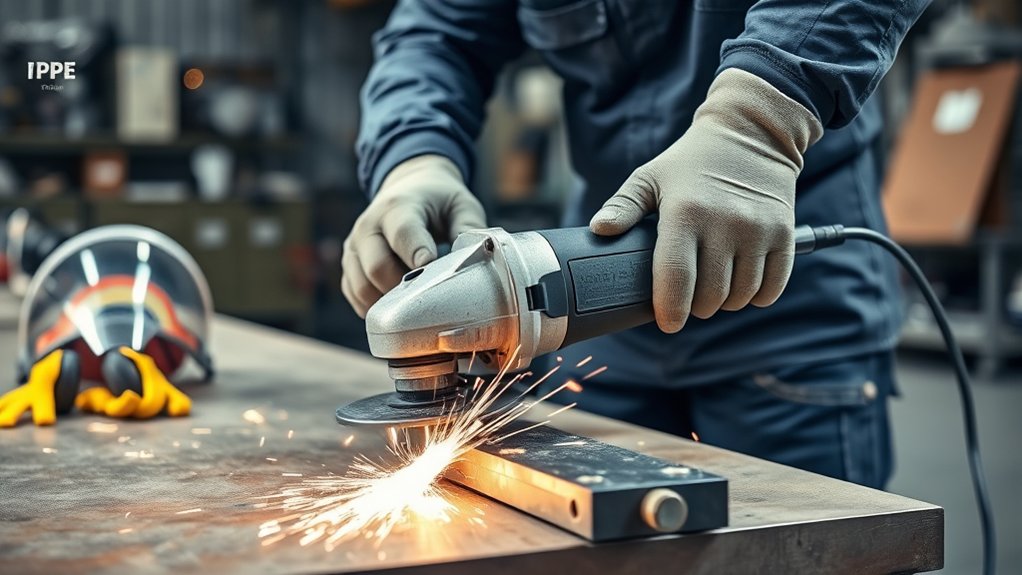
When you use a portable grinder, safety guards help protect you from the wheel, sparks, and flying debris. A guard blocks contact with moving parts and helps control the path of fragments if a wheel fails.
Guards must cover the spindle end, nut, and flange projections. The guard also needs to limit maximum angular exposure based on the grinder type and the wheel setup.
For many bench and floor stand grinders, the maximum exposure angle is 90°. Cylindrical grinders can allow up to 180° exposure, while some surface grinders and cutting-off machines allow up to 150°.
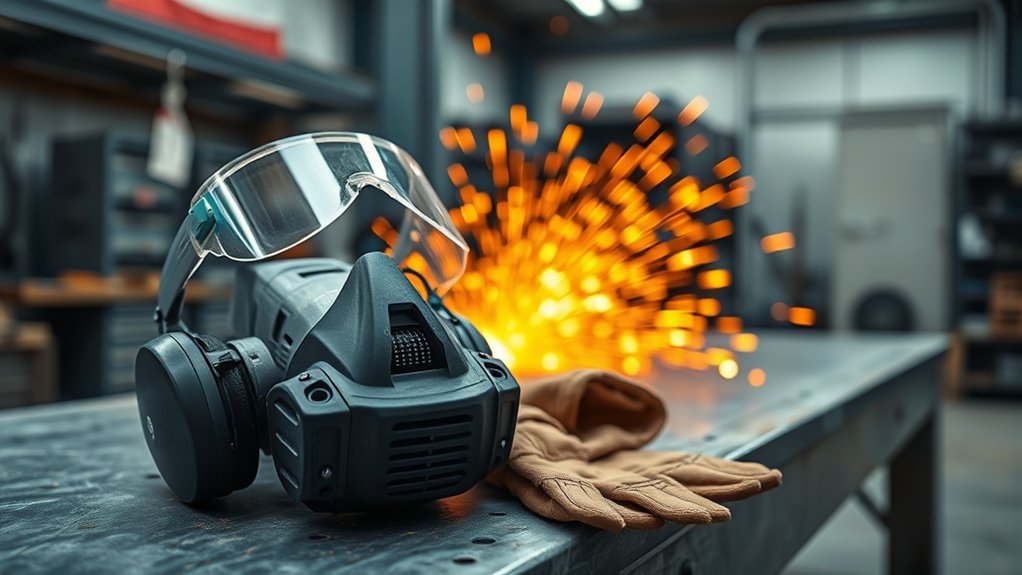
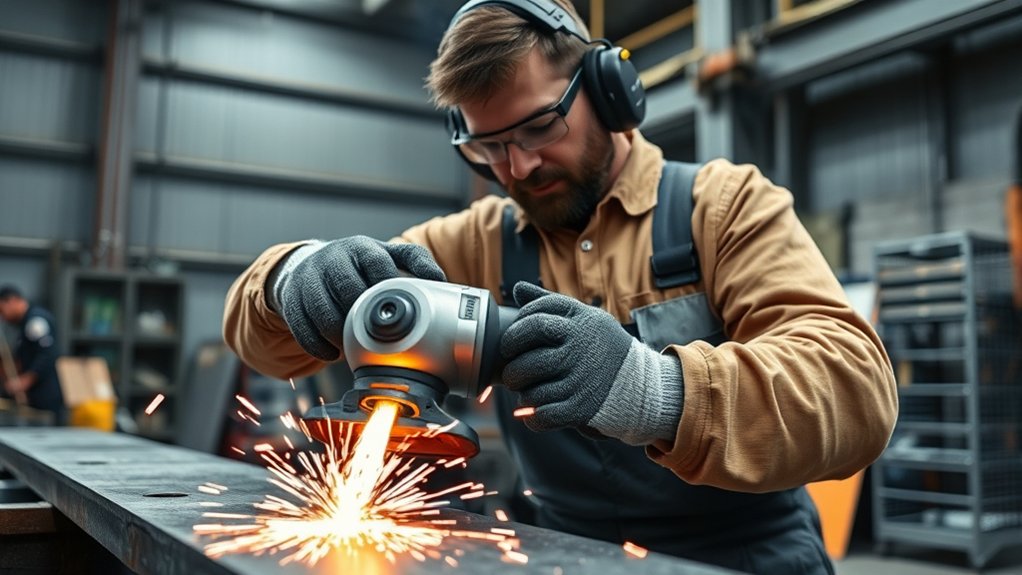
Regular guard checks help you catch loose fasteners, cracks, bent parts, and poor alignment. Always wear the right personal protective equipment, including eye and face protection, before you grind.
Products Worth Considering

Included: (1) DeWalt N441218 Angle Grinder Guard Replacement for Angle Grinder DCG414B

★This Safety Guard is repalce for 7 inch and 180mm Angle Grinder to DEWALT MAKTIA RYOBI METABO Wheel Guard.
Essential OSHA Guard Requirements for Grinding Machines
To improve safety while using grinding machines, you need to understand guard design, wheel exposure limits, and inspection steps. Each machine needs guards that fit the wheel and reduce your contact with the grinding area. You also need to inspect abrasive wheels before use and remove damaged wheels from service.
Safety Guard Specifications
Safety guards on grinding machines protect you from direct contact and wheel failure hazards. The guard must cover the spindle end, nut, and flange projections, and the fasteners should not weaken the guard.
Bench and floor stand grinder guards should limit exposure to 90°, or one-fourth of the wheel’s periphery. Work rests on offhand grinding machines should adjust and stay within 1/8 inch of the wheel to reduce the risk of trapping the workpiece.
Before mounting an abrasive wheel, perform a ring test when the wheel type allows it. Also check that the wheel stays clean, dry, and free from visible damage.
Wheel Exposure Limitations
Wheel exposure limits help you keep the grinding area controlled. The maximum angular exposure depends on the machine type and guard design.
| Grinder Type | Maximum Angular Exposure | Safety Requirement |
|---|---|---|
| Bench/Floor Stands | 90° | Cover spindle end, nut, and flanges |
| Cylindrical Grinders | 180° | Use a guard that meets the required design |
| Surface Grinders | 150° | Control exposure and keep work support stable |
Keep adjustable work rests close to the wheel as it wears. Never adjust a work rest while the wheel moves.
Regular Inspection Protocols
Inspect grinding machines before use so you can catch guard problems early. Confirm that guards cover spindle ends, nuts, and flange projections.
Check the power supply, switch condition, wheel rating, and spindle speed before you grind. The wheel speed rating must match or exceed the grinder speed.
Perform the ring test on suitable grinding wheels before mounting. Tap the wheel with a nonmetallic tool and listen for a clear tone that suggests the wheel has no hidden crack.
Check that work rests stay within 1/8 inch of the wheel. This small gap helps prevent the workpiece from catching between the rest and the wheel.
Specific Guarding Requirements for Abrasive Wheels
When you use abrasive wheels, proper guarding protects you from contact, sparks, and broken wheel pieces. You also need clean flanges, correct wheel mounting, and a guard that matches the smallest wheel size used on the machine.
Products Worth Considering

High performance aluminum oxide grain for long life and high material removal of the grinding wheel

Multiple Specifications Design: The flap wheel sander for drill set contains 5 sizes of flap wheel, each size includes 60 grit, 80 grit, 120 grit and 240 grit sufficient quantity to meet your various needs and replacement

These nylon flap discs are brand New,Low noise,Long service life
Guarding Types Overview
Effective guarding starts with a guard that covers the danger points on the grinder. Make sure the guard covers spindle ends, nuts, and flange projections.
- Keep maximum exposure at or below the allowed angle for the grinder type.
- Keep adjustable work rests within 1/8 inch of the wheel on offhand grinders.
- Use the ring test to check suitable grinding wheels before mounting.
- Remove any cracked, wet, warped, or contaminated wheel from service.
ANSI B7.1-1970 appears in OSHA abrasive wheel guarding rules, so you should treat it as part of your compliance review. Use the standard and OSHA rules together when you check guard construction.
Portable Grinder Guard Checklist
Use a short checklist before each grinding task. It helps you catch simple issues before they turn into injuries.
- Confirm the guard sits in the correct position.
- Check that the guard has no cracks, bends, or missing fasteners.
- Make sure the wheel matches the grinder speed and size.
- Confirm that the flanges fit cleanly and support the wheel evenly.
- Test the wheel and inspect it before mounting.
Warning: Do not use a grinder with a missing guard, cracked wheel, loose flange, or damaged power cord.
Guard Design and Fit
To stay safe while using portable grinders with abrasive wheels, follow the specific guard requirements for the tool and wheel. Safety guards must cover the spindle end, nut, and flange projections.
Movable safety guards should fit the wheel size and provide strong coverage during operation. For bench and floor stand grinders, the maximum angular exposure should not exceed 90°.
Cylindrical grinders can allow up to 180° exposure when the guard design supports that setup. Work rests on offhand grinding machines must stay within 1/8 inch of the wheel and must not move while the wheel runs.
Compliance With ANSI Standards
Compliance with ANSI standards supports the safe use of abrasive wheels in portable grinders. It also gives you a clearer way to inspect guard strength, wheel mounting, and exposure limits.
- Cover the spindle end, nut, and flange projections with the safety guard.
- Keep bench and floor stand grinder exposure at 90° or less.
- Keep the work rest gap at no more than 1/8 inch from the wheel.
- Use flanges that support the wheel evenly and fit the wheel diameter.
Always conduct a ring test on suitable wheels and keep wheels dry and free from debris before mounting. These steps protect you and help the grinder run with better control.
How to Maintain Guards and Equipment for Safety
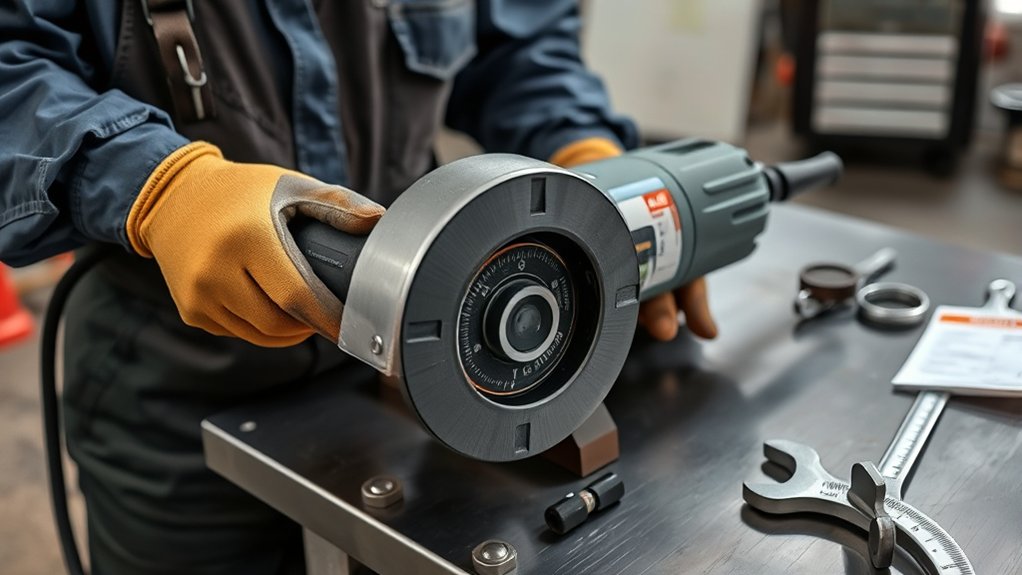
Good maintenance keeps guards, wheels, and work rests ready for safe use. First, make sure all safety guards sit in the correct position and align with the wheel.
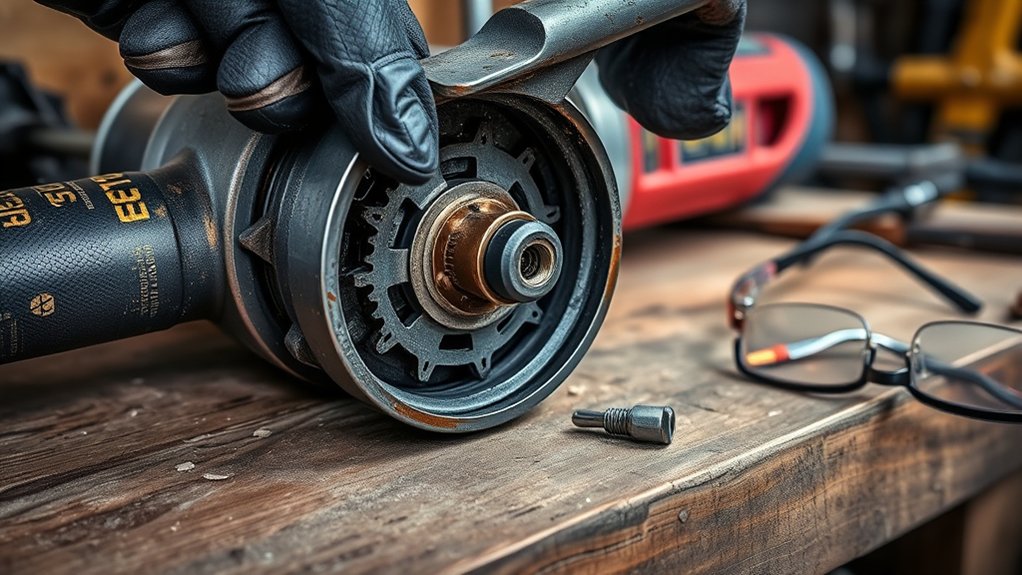
Inspect guards for cracks, missing fasteners, bent parts, or worn areas. Replace damaged guards or components before you use the grinder again.
Keep work rests adjusted within 1/8 inch of the grinding wheel. Clean wheel areas, flanges, blotters, and rests so debris does not affect the fit.
Document inspections and maintenance work when your workplace requires records. A simple log can show the date, grinder ID, issue found, action taken, and person who checked it.
Why Adjustable Work Rests Matter for Safe Grinding
Adjustable work rests support the workpiece during safe grinding operations. They also help you control the material and reduce the chance of sudden movement.
Keep the work rest within 1/8 inch of the grinding wheel. This gap matters because the wheel wears down during use, which can increase space between the rest and the wheel.
- Rigid construction improves stability during grinding.
- Regular adjustments help compensate for wheel wear.
- Close spacing reduces the risk of workpiece entrapment.
- Proper setup supports OSHA compliance and safer work habits.
Pro tip: Check the work rest gap before each use because wheel wear can change the gap during normal grinding.
Inspection Protocols for Portable Grinders
Before you start grinding, inspect your portable grinder from the cord to the wheel. Check guard alignment and function so the grinder meets safety compliance needs.
Perform a ring test on suitable grinding wheels before mounting them. Tap the wheel with a nonmetallic tool at 45° angles from the vertical centerline and listen for a clear tone.
Inspect the contact surfaces of wheels, flanges, and blotters. They should look clean, flat, and ready for a proper fit on the spindle.
Remove any cracked wheels from service right away. Also check that moving parts turn freely and do not rub against the guard.
Identifying and Avoiding Common Violations
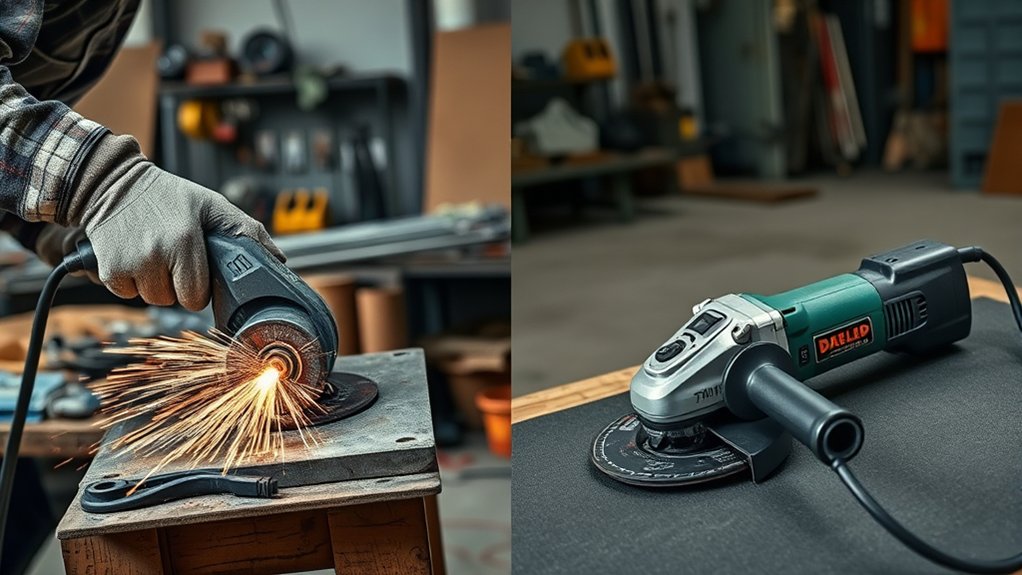
After you confirm your portable grinder works safely, check for common violations that can lead to serious injuries. OSHA rules and ANSI guidance both focus on guard coverage, wheel condition, and safe setup.
Safe grinder setup starts with a fitted guard, a sound wheel, a close work rest, and trained operators.
- Missing guards expose the spindle, nut, flange, or wheel edge.
- Cracked abrasive wheels can fail during use.
- Wide work rest gaps can trap the workpiece.
- Wrong flanges can place uneven pressure on the wheel.
- Loose or damaged guards can shift during grinding.
Adjust work rests on offhand grinding machines to within 1/8 inch of the wheel. Make sure flanges are correctly sized and stable before you start.
Small setup errors can create high risk when a wheel spins at speed. Treat every pre-use check as part of the job, not as an optional step.
Effective Training Strategies for OSHA Safety Compliance
Effective training strategies help each employee understand how to use portable grinders safely. Train workers on guard placement, wheel inspection, work rest spacing, wheel mounting, and shutdown steps.
Use hands-on demonstrations to show the correct use of safety guards and personal protective equipment (PPE). Visual aids, short checklists, and shop-floor posters can also help workers remember key steps.
Keep a documentation system for training completion and employee understanding. Schedule refresher training when you change equipment, update procedures, or notice unsafe habits.
Note: Training works best when workers practice inspections on the actual grinders they use each day.
Frequently Asked Questions
What are the OSHA requirements for portable grinder guards?
Portable grinder guards must cover dangerous moving parts, including the spindle end, nut, and flange projections. You also need to limit wheel exposure, inspect guards often, and keep damaged equipment out of service.
What is a key requirement of OSHA machine guarding?
A key machine guarding requirement is to protect you from points of operation, rotating parts, sparks, and flying debris. For grinders, that means you need the correct guard, close work rest spacing, safe wheel mounting, and routine inspection.
What PPE do you need when using a portable grinder?
You should wear eye protection, face protection, hearing protection, gloves suited to the task, and safety footwear. You may also need respiratory protection when dust, coatings, or metal particles create breathing hazards.
Can you use a portable grinder without a guard?
You should not use a portable grinder without the required guard. A missing guard exposes you to direct wheel contact, sparks, and broken wheel fragments.
How close should the work rest be to the grinding wheel?
Keep the work rest within 1/8 inch of the grinding wheel on offhand grinding machines. Check the gap often because the wheel becomes smaller as it wears.
Conclusion
OSHA guard requirements for portable grinders help you control one of the most serious risks in grinding work. Keep the guard in place, inspect the wheel, set the work rest correctly, and train each operator before use.
Your next step is simple: build a short pre-use checklist and make every grinder user follow it. Safe grinding starts before the wheel touches the work.