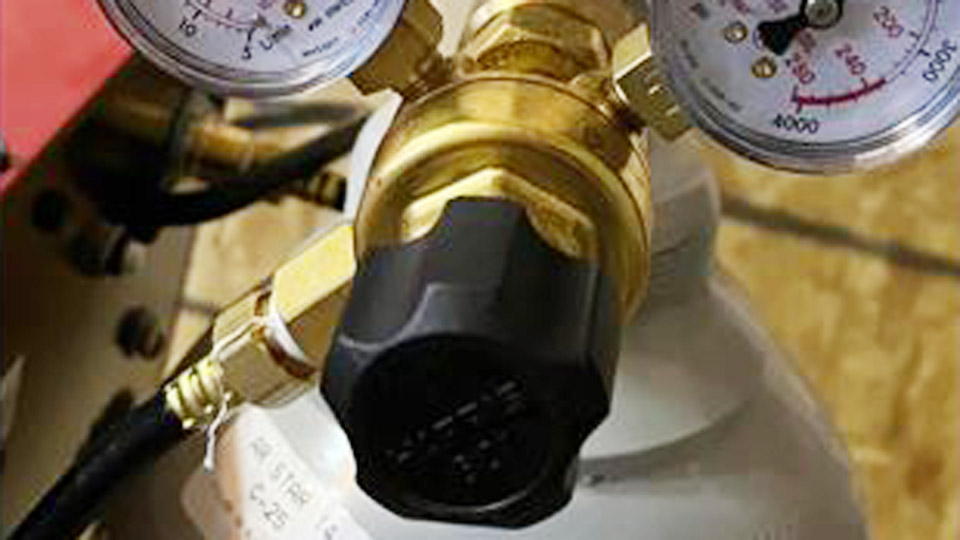
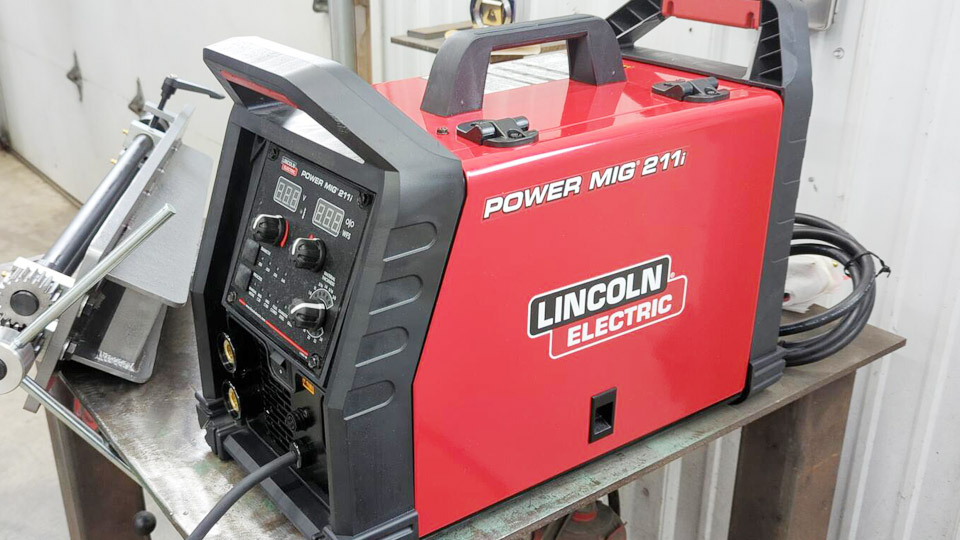
One of my early shop days took a sharp turn when I nearly tripped over a poorly stored oxygen cylinder while moving my MIG rig across the floor. I was focused on arc control, filler metal, joint preparation, and everything else that seemed more connected to the weld. That close call showed me that cylinder storage deserves the same attention as the welding process itself.
Compressed oxygen does not burn, but it can make combustible materials ignite more easily and burn much faster. A damaged valve can also release high-pressure gas without warning. Safe storage comes down to a few basic controls: secure the cylinder, protect the valve, separate oxygen from fuel gas and combustibles, use a dry and ventilated location, and keep every cylinder clearly identified.
Quick Answer
Store welding oxygen cylinders upright and securely restrained in a dry, protected, well-ventilated area. Keep valve caps installed when cylinders are not in use, identify the gas from its permanent label, and separate stored oxygen from fuel-gas cylinders and combustible materials by 20 feet or an approved fire-resistant barrier.
Key Takeaways
- Keep oxygen cylinders upright and secured in a purpose-built rack, stand, cabinet, or approved carrier.
- Separate stored oxygen from fuel gas and combustible materials by at least 20 feet, or use a noncombustible barrier at least 5 feet high with a 30-minute fire-resistance rating.
- Keep cylinders dry, ventilated, protected from impact, away from heat, and below the temperature limit in the supplier’s safety data sheet.
- Identify the gas from the permanent cylinder label. Never rely only on cylinder color or a shop-made color tag.
- Close the valve on an empty cylinder, install its cap or guard, mark it empty, and return it to the supplier. Do not intentionally vent it to zero.
At a Glance
| Time Required | About 30 to 90 minutes for a basic small-shop rack, labels, signs, and inspection. A rated barrier, cabinet, outdoor enclosure, or mechanical ventilation system requires additional planning. |
| Difficulty | Moderate. Basic organization is straightforward, but fire-rated construction and engineered ventilation need qualified help. |
| Tools Needed | Tape measure, purpose-built cylinder rack or stand, rated restraints, mounting hardware, permanent signs, status tags, inspection log, and a cylinder cart. |
| Cost | Varies widely. A basic restraint and signage setup costs far less than a tested fire-rated barrier, engineered gas cabinet, or secure outdoor enclosure. |
Note: This guide summarizes common United States federal OSHA requirements for welding oxygen cylinders. State OSHA plans, local fire codes, building codes, the cylinder supplier, your insurer, and the authority having jurisdiction may impose additional or stricter rules. Liquid oxygen, medical-gas storage, manifolds, and bulk oxygen systems need separate code review.
Essential Oxygen Cylinder Storage Requirements
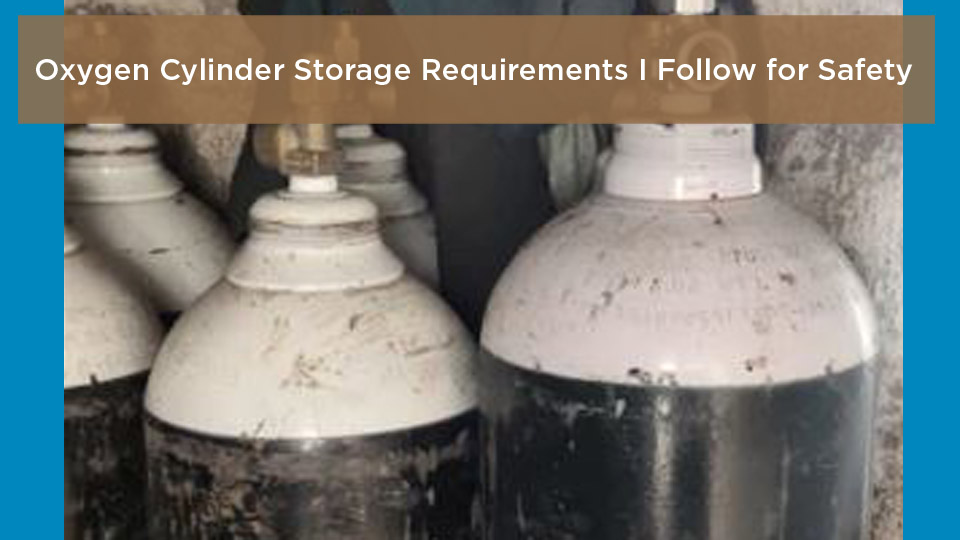
The safest storage area is simple, visible, and difficult to misuse. You should be able to look at the area and immediately confirm that every cylinder is upright, restrained, capped when required, properly labeled, protected from traffic, and separated from incompatible materials.
| Requirement | What to Do |
|---|---|
| Position | Keep cylinders upright in a purpose-built rack, stand, cabinet, or approved carrier. |
| Restraint | Use a chain, strap, bracket, or rack system rated and positioned according to its manufacturer’s instructions. |
| Valve protection | Install the hand-tight valve-protection cap or guard when the cylinder is not in use or connected for use and the cylinder is designed for one. |
| Location | Use a dry, well-protected, well-ventilated assigned area away from stairs, elevators, gangways, vehicle paths, falling objects, and unauthorized handling. |
| Separation | Separate stored oxygen from fuel-gas cylinders and combustible materials by 20 feet or an approved noncombustible barrier. |
| Identification | Read the durable chemical or trade-name label on the cylinder. Do not identify gas by color alone. |
| Heat control | Keep cylinders away from radiators, heaters, flames, hot work, and direct sunlight. Follow the temperature limit in the supplier’s safety data sheet. |
| Oil and grease | Keep oxygen cylinders, valves, regulators, fittings, tools, hands, and gloves free from oil and grease. |
These controls reflect the core cylinder-storage and oxygen-handling provisions in OSHA 29 CFR 1910.253 and the construction requirements in OSHA 29 CFR 1926.350.
Oxygen is not fuel, but it can make clothing, oil, grease, wood, paper, and other combustible materials burn much more intensely.
Know Which Storage Rules Apply to Your Shop
Federal OSHA has separate standards for general industry and construction. A fabrication shop, repair facility, school shop, or manufacturing plant will usually look first to the general-industry rules. A temporary construction site will normally use the construction rules.
The difference matters because OSHA does not always define “storage” the same way in both settings. Under general-industry interpretations, cylinders that are in use or connected for use may not be treated as stored cylinders for every provision. At a construction site, a cylinder may become subject to storage requirements when gas is not being drawn and use is not reasonably expected within the applicable period.
OSHA explains this distinction in its interpretation on oxygen and acetylene cylinder storage. That interpretation does not cancel the other rules for securing cylinders, closing valves, protecting equipment, controlling sparks, or keeping oxygen equipment free of oil and grease.
Pro Tip: Ask your local fire marshal or safety officer which code edition your area has adopted before building a barrier, cabinet, dedicated room, or outdoor enclosure. A compliant shop plan should name the standard, code edition, and authority that approved it.
Separate Oxygen from Fuel Gas and Combustible Materials
Stored oxygen cylinders must be separated from acetylene, propane, natural gas, and other fuel-gas cylinders. Under the federal OSHA welding rules, you can meet the basic requirement in either of two ways:
- Maintain at least 20 feet of clear separation between stored oxygen and fuel-gas cylinders or combustible materials.
- Install a noncombustible barrier at least 5 feet high with a fire-resistance rating of at least 30 minutes.
The barrier must be a real fire-resistant assembly, not plywood, cardboard, plastic sheet, ordinary shelving, or an untested piece of scrap metal. Its design must prevent fire from readily passing from the fuel-gas side to the oxygen side. Local codes may require additional dimensions, clearances, protection, or approval.
Keep oxygen away from oil, grease, fuel, solvent containers, oily rags, wood scraps, paper, paint supplies, and other materials that can burn. Do not use the oxygen-storage corner as general shop storage.
Warning: Never lubricate an oxygen valve, regulator, fitting, or connection with ordinary oil or grease. Do not handle oxygen equipment with oily gloves or hands. If a part is difficult to operate, stop and contact the gas supplier instead of applying lubricant.
Choose a Safe Indoor or Outdoor Storage Location
Both indoor and outdoor storage can work when the location meets the applicable rules. The better choice depends on your inventory, climate, building layout, security needs, and local fire code.
| Factor | Indoor Storage | Outdoor Storage |
|---|---|---|
| Ventilation | Use a well-ventilated assigned area. Do not place cylinders in an unventilated locker or cupboard. | Natural airflow can help, but the enclosure must not trap gas or block required openings. |
| Weather | Easier to keep dry and within the supplier’s temperature limit. | Needs protection from direct sun, standing water, severe weather, corrosion, and falling ice or debris. |
| Traffic | Must be away from stairs, elevators, gangways, forklifts, vehicles, and falling objects. | Must be protected from vehicles, loading operations, lawn equipment, and unauthorized access. |
| Security | A controlled shop area may limit tampering while keeping cylinders accessible. | Usually needs a lockable, ventilated, noncombustible enclosure or fenced area. |
| Best fit | Small working inventories with a suitable protected location. | Larger inventories or shops that cannot provide safe indoor separation. |
Do not assume that “outdoors” automatically means compliant. The cylinders still need secure upright support, valve protection, separation, weather protection, signs, access control, and a stable base. The enclosure must also avoid creating an unventilated compartment.
Control Ventilation, Heat, Sunlight, and Moisture
OSHA requires indoor cylinders to be kept in a dry, well-protected, well-ventilated location. It also prohibits storage in unventilated enclosures such as ordinary lockers and cupboards.
There is no single airflow formula in the federal welding-cylinder provisions that fits every shop. Mechanical exhaust may be required when a fire code, gas-cabinet design, room classification, inventory quantity, or authority having jurisdiction calls for it. Have that system designed and verified instead of choosing a fan from an unsupported cubic-feet-per-minute estimate.
The current Airgas safety data sheet for compressed oxygen directs users to store cylinders in a cool, dry, well-ventilated location, away from direct sunlight, oil, grease, combustible material, and incompatible substances. It states that cylinder temperatures should not exceed 125°F or 52°C.
Keep cylinders away from radiators, furnaces, space heaters, hot process equipment, cutting sparks, welding slag, and open flames. For outdoor storage, use suitable shade and weather protection without blocking ventilation. Correct roof leaks, standing water, salt buildup, and enclosure corrosion before they damage restraints, caps, labels, or valves.
Note: Normal cold weather does not justify an improvised heater beside the cylinders. Follow the gas supplier’s instructions for the cylinder, regulator, hose, and process. Never apply a flame, boiling water, heat gun, or unapproved heating device to a cylinder or valve.
Secure Oxygen Cylinders Correctly
A cylinder restraint must prevent the cylinder from tipping, rolling, or being knocked into nearby equipment. Use equipment built for compressed-gas cylinders rather than rope, zip ties, light-duty hooks, bungee cords, or makeshift clamps.
- Set the cylinder upright. Do not lean it against a wall or store it at an improvised angle.
- Use a stable base. Mount the rack to a sound wall, floor, frame, or foundation as required by the rack manufacturer.
- Place restraints correctly. Follow the rack or stand manufacturer’s instructions. A tall cylinder may benefit from more than one restraint, but the system must not crush the cylinder, interfere with the label, or bear on the valve.
- Protect the valve. Remove the regulator and install the hand-tight valve cap or guard when required for storage or movement.
- Keep access clear. Do not block the cylinder with scrap, welding leads, hoses, pallets, or material that delays valve access.
A purpose-built cart may hold cylinders securely while they are in use or being moved. Do not assume that every hand truck or welding cart is approved for long-term storage. Follow the cart manufacturer’s instructions and the rules that apply to your workplace.
Identify Oxygen Cylinders and Track Their Status
Always identify the contents from the permanent cylinder marking or supplier label. OSHA requires compressed-gas cylinders to be legibly marked with the chemical or trade name of the gas. Cylinder color may vary by supplier, country, service, or ownership system.
You can use shop tags to show status, but use written words rather than color alone:
- FULL: Ready for service, valve closed, cap or guard installed when required.
- IN SERVICE: Connected to approved equipment and controlled under the shop’s operating procedure.
- PARTIAL: Contains usable gas but is not full. Record the status without leaving a regulator attached solely for inventory purposes.
- EMPTY: Valve closed, cap or guard installed, clearly marked, and awaiting supplier return.
- DO NOT USE: Suspected damage, illegible label, contamination, leak, valve problem, or another condition requiring supplier review.
Keep full and empty cylinders in separate, clearly marked sections of the storage area. Rotate older stock first when practical, but never use a cylinder with an illegible label, damaged valve, severe corrosion, fire exposure, or another questionable condition just to clear inventory.
Handle Empty Oxygen Cylinders Safely
An empty cylinder is still a regulated pressure vessel and may contain residual oxygen. It must be handled with the same care as a full cylinder.
- Close the cylinder valve.
- Release pressure from connected downstream equipment according to the equipment shutdown procedure.
- Remove the regulator when required.
- Install the cylinder’s valve-protection cap or guard.
- Mark the cylinder “EMPTY” without covering its permanent label or stamped markings.
- Place it upright in the designated empty-cylinder rack.
- Arrange prompt return to the supplier.
Warning: Do not leave an empty cylinder valve open, intentionally vent the cylinder to zero, puncture it, burn it, refill it yourself, or attempt to remove or repair the valve. Follow the supplier’s return instructions.
Airgas’s compressed-gas storage and handling guide recommends storing empty cylinders separately, clearly identifying them, leaving some pressure to help prevent backflow, closing the valves, and securely installing caps or guards.
Move Oxygen Cylinders Without Damaging Them
Many storage incidents happen while a cylinder is being moved. A cylinder may be heavy even when it is empty, and the valve can be damaged by a fall or impact.
- Close the cylinder valve before movement.
- Remove the regulator and install the cap unless the cylinder is firmly secured on a special carrier intended for movement with the equipment attached.
- Use a purpose-built cylinder cart or hand truck.
- Secure the cylinder to the cart before moving it.
- Do not drag, slide, intentionally drop, or violently strike cylinders together.
- Do not lift a cylinder by its valve cap or guard.
- Do not use magnets, ordinary slings, or chains around the cylinder for overhead lifting.
- Keep the route clear of hoses, cables, scrap, steps, and slippery areas.
When a crane or hoist is required, use an approved cradle, pallet, or lifting platform designed for cylinders. Road transport has additional Department of Transportation requirements and should not be treated as ordinary movement within the shop.
Inspect Cylinders and the Storage Area
OSHA requires employers to determine that compressed-gas cylinders under their control are in a safe condition to the extent that visual inspection can establish it. The exact formal inspection schedule depends on your workplace, supplier program, risk assessment, local rules, and equipment manufacturer.
Check each cylinder before handling or connection, and use a documented routine inspection for the storage area. Look for:
- A readable gas-content label and unobstructed stamped markings.
- Severe rust, deep dents, gouges, bulges, heat damage, arc strikes, or other physical damage.
- A damaged, bent, contaminated, leaking, or difficult-to-operate valve.
- A missing, damaged, or incorrectly fitted valve cap or guard.
- Loose, corroded, cut, stretched, or incorrectly positioned restraints.
- An unstable rack, damaged anchors, cracked concrete, or an uneven base.
- Blocked ventilation openings or an unventilated enclosed space.
- Oil, grease, fuel, solvent, combustible waste, or oily rags in the oxygen area.
- Heat sources, direct sun, sparks, hot slag, or flame exposure.
- Blocked access, vehicle impact risk, tampering, or unsecured outdoor gates.
- Full, partial, empty, and rejected cylinders mixed together without clear status tags.
- Standing water, corrosion, roof damage, or weather exposure around outdoor storage.
Record the inspection date, the person completing it, problems found, corrective action, and supplier contact when a cylinder is rejected. Do not invent a “passed” status for a cylinder that needs supplier evaluation.
Respond to a Damaged, Leaking, or Fire-Exposed Cylinder
Do not use a cylinder that appears damaged, defective, contaminated, improperly labeled, or exposed to fire. Never attempt to repair a cylinder valve, pressure-relief device, cap thread, or cylinder body.
Warning: If you hear a leak, smell burning material, see frost or damage around a valve, or find a cylinder exposed to fire, keep people away and eliminate ignition sources only when it is safe to do so. Do not approach or move a fire-heated cylinder. Call emergency services and the gas supplier, then follow their instructions.
For a suspected leak that is not involved in fire:
- Stop work and warn nearby workers.
- Keep flames, sparks, smoking materials, oil, grease, and combustibles away.
- Close the valve only if trained personnel can do so without risk.
- Ventilate or evacuate the area according to the emergency plan.
- Tag the cylinder “DO NOT USE.”
- Contact the supplier for handling and return instructions.
Do not test an oxygen leak with a flame. Use only an approved leak-detection method specified by the equipment or gas supplier. Keep oils, soaps containing incompatible ingredients, and improvised chemicals away from oxygen-service fittings.
Step-by-Step Guide to Setting Up Oxygen Cylinder Storage
Products Worth Considering

Size: Oxygen tank holder measures 14.17 inches long, 9.45 inches wide and 10.25 inches high, and weighs as little as 3.68 pounds, making it a good choice for a variety of environments, whether for emergency medical use or daily health care, providing reliable support.

Size: Oxygen tank holder adopts a detachable design, 19 inches long, 9.45 inches wide, 10 inches high, and weighs only 5.29 pounds. Whether it is emergency medical use or daily health care, it is a good choice for various environments and provides reliable support. In addition, you can disassemble it for easy storage when you don't need it.
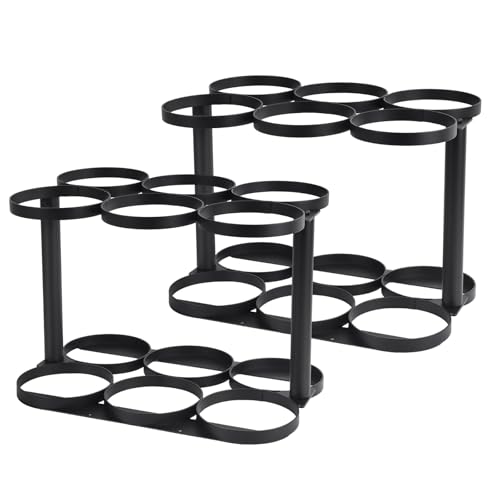
Size: Oxygen tank holder measures 18.9 inches long, 14.17 inches wide and 10.25 inches high, and weighs as little as 7.36 pounds, making it a good choice for a variety of environments, whether for emergency medical use or daily health care, providing reliable support.
1. Identify the Rules and Inventory
List the gases, cylinder sizes, maximum quantities, and whether the location falls under general industry, construction, another regulated occupancy, or a special system. Obtain the current cylinder SDS and contact the local authority having jurisdiction when the installation involves a barrier, cabinet, dedicated room, large inventory, manifold, medical gas, liquid oxygen, or bulk storage.
2. Select the Storage Area
Choose a dry, well-ventilated, protected location away from stairs, elevators, gangways, vehicle routes, falling objects, heaters, direct hot work, and unauthorized access. Do not choose an ordinary unventilated locker or cupboard.
3. Plan the Separation
Measure at least 20 feet between stored oxygen and fuel-gas cylinders or combustible materials. When the distance is not available, have a qualifying noncombustible barrier designed and installed. The basic federal OSHA barrier is at least 5 feet high with at least a 30-minute fire-resistance rating, but local code may require more.
4. Install a Purpose-Built Rack or Enclosure
Use a rack, stand, cabinet, fenced enclosure, or carrier designed for the cylinder size and quantity. Anchor it according to the manufacturer’s instructions. Make sure restraints can be fastened without touching the valve or hiding the label.
5. Add Signs and Status Zones
Mark the area for oxygen storage and prohibit smoking, open flames, oil, grease, and unauthorized handling. Create clearly labeled sections for FULL, PARTIAL, EMPTY, and DO NOT USE cylinders.
6. Place and Secure the Cylinders
Confirm the label, inspect the cylinder, set it upright, attach the restraint, close the valve, and install the cap or guard when required. Do not crowd cylinders so tightly that workers cannot read labels or reach restraints safely.
7. Provide Safe Handling Equipment
Keep a purpose-built cylinder cart nearby. Store it so it does not block aisles or become a trip hazard. Train workers to close valves, remove regulators when required, fit caps, secure cylinders to the cart, and move them over a clear route.
8. Train, Inspect, and Document
Train everyone who receives, stores, moves, connects, or returns cylinders. Use a documented checklist, correct problems promptly, and keep supplier and emergency contact information available.
Compare Racks, Cabinets, and Outdoor Enclosures
| Storage Type | Advantages | Limitations | Best Fit |
|---|---|---|---|
| Floor Rack | Simple access, multiple cylinder positions, easy status organization. | Needs suitable anchoring and protected floor space. | Small and medium indoor inventories. |
| Wall-Mounted Bracket | Uses little floor space and can work well for one or two cylinders. | Depends on a sound wall and correct anchors. It must not place cylinders in an aisle. | Compact indoor shops with a suitable structural wall. |
| Approved Cylinder Cabinet | Provides controlled access and organized cylinder positions. | Ventilation, fire rating, exhaust, and code requirements vary. An ordinary locker is not acceptable. | Facilities with a reviewed cabinet design and defined code requirement. |
| Purpose-Built Cylinder Cart | Supports safe movement and may secure cylinders during active use. | Not every cart is approved for long-term storage or for leaving regulators attached. | Active oxy-fuel equipment and controlled movement. |
| Outdoor Enclosure | Can improve separation from indoor work and provide room for larger inventories. | Needs weather protection, ventilation, security, vehicle protection, drainage, and local approval. | Shops without a suitable indoor area or with larger reviewed inventories. |
Choose equipment by verified capacity, cylinder dimensions, restraint design, anchoring instructions, ventilation needs, and code approval. Do not choose solely by price or appearance.
Products Worth Considering

Oxygen Cylinder Rack: Keeps multiple cylinders secure and upright for storage and transportation

𝗘𝗔𝗦𝗜𝗟𝗬 𝗔𝗦𝗦𝗘𝗠𝗕𝗟𝗘𝗗 & 𝗗𝗜𝗦𝗔𝗦𝗦𝗘𝗠𝗕𝗟𝗘𝗗: Experience the convenience of our oxygen tank holder, which has a detachable feature for effortless assembly and removal. This oxygen carrier rack is ideal for compact storage, making it an excellent choice for portable oxygen holder carriers. NOT designed for WALL MOUNTING.

SAFE: Keep your oxygen cylinders safe and organized with our heavy-duty oxygen tank holder, designed to securely hold up to 12 cylinders of sizes E, D, M9 and C. (TANKS NOT INCLUDED)
Common Oxygen Cylinder Storage Mistakes
Leaving the Valve Cap Off
A regulator or bare valve can be damaged by falling material, a cart, or another cylinder. Remove the regulator and install the hand-tight cap or guard whenever the applicable storage or movement procedure requires it.
Keeping Oxygen Beside Acetylene
Convenience does not replace the storage-separation rule. Move the reserve cylinders 20 feet apart or install a qualifying barrier. Cylinders actively connected for use may be treated differently under a specific standard or OSHA interpretation, but all other handling protections still apply.
Relying on Cylinder Color
Read the permanent label every time. A green body, painted shoulder, cap color, or shop tag is not enough to identify the contents.
Leaving Empty Valves Open
Close empty-cylinder valves, install the cap or guard, mark the status, and return the cylinder. Do not bleed it to zero for routine storage.
Using an Ordinary Locker
An unventilated cupboard, storage locker, or improvised wooden box can trap gas and expose the cylinder to combustible material. Use an approved, ventilated storage arrangement.
Storing Cylinders in an Aisle
Keep them away from stairs, elevators, gangways, doors, forklift routes, and places where passing or falling objects can cause damage.
Keeping Oily Materials Nearby
Move oily rags, lubricants, fuels, solvent containers, and grease away from oxygen storage. Keep oxygen-service equipment and handling gloves clean.
Inventing a Ventilation Rate
A small fan does not automatically make an enclosure compliant. When mechanical ventilation is required, use the adopted code and a qualified designer to determine airflow, discharge location, electrical classification, alarms, and inspection requirements.
Trying to Repair a Valve
Do not tighten, rebuild, lubricate, replace, or disassemble a cylinder valve or safety device. Tag the cylinder and contact its supplier.
Why Proper Storage Improves Shop Safety and Workflow
Good storage does not change the chemistry of the oxygen inside a sealed, serviceable cylinder, and it does not directly make a TIG, stick, or MIG weld stronger. Its real benefits are more practical:
- Cylinders are less likely to fall or suffer valve damage.
- Workers can identify the correct gas without guessing.
- Full, partial, empty, and rejected cylinders are easier to track.
- Fuel gas, oil, grease, sparks, and combustible waste stay out of the oxygen area.
- The cylinder cart and access route are ready when a change is needed.
- Inspection problems are found before the cylinder reaches the work area.
- Training and records are easier to maintain.
Those improvements reduce confusion and unnecessary handling while helping the shop meet its safety obligations. They also make it easier for a supervisor, insurer, fire inspector, or new employee to understand the storage system at a glance.
Conclusion
Safe oxygen-cylinder storage starts with a stable upright position, a proper restraint, valve protection, clear labeling, and a protected, dry, well-ventilated location. Stored oxygen must also be separated from fuel gas and combustible materials by 20 feet or a qualifying fire-resistant barrier.
Do not rely on cylinder color, leave empty valves open, vent cylinders to zero, improvise ventilation rates, or repair cylinder valves yourself. Build the storage area around the applicable OSHA standard, local fire code, supplier instructions, and the actual cylinders in your shop. One careful inspection today can uncover a loose restraint, blocked vent, missing cap, oily rag, or damaged label before it becomes an emergency.
Frequently Asked Questions
Can oxygen cylinders be stored with acetylene tanks?
Stored oxygen and acetylene cylinders must generally be separated by at least 20 feet or by a noncombustible barrier at least 5 feet high with a fire-resistance rating of at least 30 minutes. OSHA has specific interpretations for cylinders in use, connected for use, or secured with closed valves and caps, but local fire code may be stricter.
What is the maximum temperature for storing oxygen cylinders?
Follow the temperature limit in the cylinder supplier’s safety data sheet. Airgas’s current compressed-oxygen SDS states that cylinder temperatures should not exceed 125°F or 52°C. Keep cylinders away from heaters, radiators, flame, hot work, and direct sunlight.
Do empty oxygen cylinders need special storage?
Yes. Close the valve, remove the regulator when required, install the valve cap or guard, mark the cylinder empty, secure it upright, and keep it in a designated empty-cylinder area. Do not leave the valve open or intentionally vent the cylinder to zero. Return it to the supplier promptly.
How often should oxygen-cylinder storage be inspected?
Inspect a cylinder before handling or connection and use a documented periodic storage-area schedule based on your workplace risk assessment, supplier program, equipment instructions, and local requirements. The federal provisions discussed here do not create one universal monthly or quarterly interval for every shop.
Is outdoor storage acceptable for welding oxygen bottles?
Outdoor storage can be acceptable when local code permits it and the cylinders are upright, secured, ventilated, protected from direct sun and weather, separated from incompatible materials, guarded from vehicles, and protected from tampering. The enclosure must not trap gas or block required access.
Can oxygen be stored beside argon or carbon dioxide?
Argon and carbon dioxide are not fuel gases, so the oxygen-versus-fuel-gas separation rule does not apply to them in the same way. They still need secure upright storage, readable labels, valve protection, adequate access, and compliance with the facility’s adopted fire code. Do not crowd incompatible systems or allow mixed storage to hide labels and status tags.
Is oxygen flammable?
No. Oxygen is not a fuel and does not burn by itself. It is a strong oxidizer that can make other materials ignite more easily and burn faster or more intensely. That is why oxygen must be kept away from fuel gas, oil, grease, clothing, and combustible waste.
Can I leave the regulator attached while the cylinder is stored?
A cylinder that is truly in storage should normally have its valve closed, regulator removed, and valve-protection cap installed when the cylinder is designed for one. Limited exceptions may apply to cylinders in use, connected for use, or firmly secured on a special carrier. Follow the applicable OSHA rule, supplier instructions, and your shop procedure.
Sources
- OSHA 29 CFR 1910.253: Oxygen-Fuel Gas Welding and Cutting — cylinder marking, storage location, separation, caps, movement, oil and grease, and operating rules.
- OSHA 29 CFR 1926.350: Gas Welding and Cutting — construction-site cylinder securing, separation, movement, placement, and handling requirements.
- OSHA 29 CFR 1910.101: Compressed Gases — inspection and general compressed-gas handling requirements.
- OSHA Interpretation on Oxygen and Acetylene Cylinder Storage — differences between general-industry and construction interpretations of storage.
- Airgas Safety Data Sheet for Compressed Oxygen — oxidizer hazards, temperature limit, ventilation, sunlight, oil, grease, caps, and upright storage.
- Airgas Compressed Gas Safety: Storage and Handling — empty-cylinder status, residual pressure, caps, return, storage, and movement guidance.