
Disclosure: As an Amazon Associate, we earn from qualifying purchases. If you click a link on this page and make a purchase, we may receive a small commission at no extra cost to you.
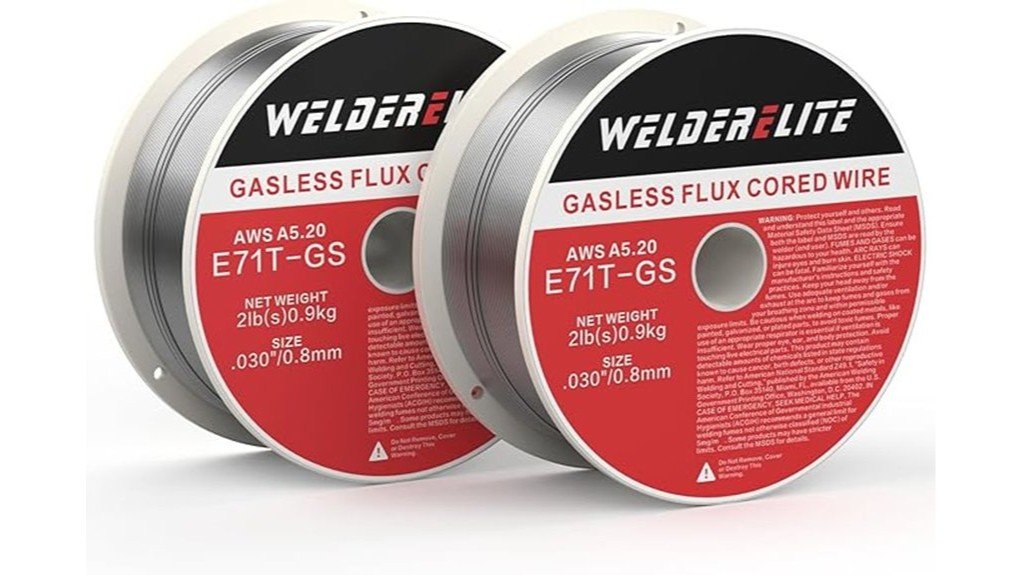
Gasless flux core wire is useful when you want to weld without hauling a shielding gas bottle, but the wire still needs to feed smoothly and match your material. The 2-Pack 0.030-inch Gasless Flux Core Wire is built around that simple goal: two 2-pound spools, 4 pounds total, ready for flux-core MIG welding. It is best suited for users who want a practical wire for mild steel, galvanized steel, and article-supported stainless steel applications, with the usual need for surface prep and safe ventilation. This review helps you decide where this wire makes sense, where it may fall short, and what to check before you buy.
Quick Verdict
Rating: 8/10, Recommended with caveats
Best For: DIY repairs, garage projects, beginner flux-core practice, and light fabrication where shielding gas is not convenient.
Bottom Line: This 2-pack gives you a useful amount of 0.030-inch gasless wire with smooth feeding, low-spatter intent, and all-position use. The main tradeoff is that stainless steel and galvanized work require extra care, correct settings, and safe fume control.
| Specification | Detail |
|---|---|
| Product type | Gasless flux core welding wire |
| Wire size | 0.030 inch |
| Count or quantity | 2 spools |
| Weight | 2 pounds per spool, 4 pounds total |
| Design | Self-shielded flux core wire, no separate shielding gas required |
| Supported welding style | Single-pass or multiple-pass welding, article-supported all-position use |
| Material compatibility | Mild steel, galvanized steel, and article-supported stainless steel use |
| Performance claims | Smooth feeding, stable arc, minimal spatter, neat welds when settings and prep are correct |
| Starting voltage note | Original article lists 18 to 22 volts as a starting range, but your welder chart should come first |
| Safety note | Use welding PPE, ventilation, and proper surface preparation, especially on galvanized or coated metal |
What Is the 2-Pack 0.030-inch Gasless Flux Core Wire?
The 2-Pack 0.030-inch Gasless Flux Core Wire is a self-shielded welding wire for flux-core MIG welders. Each spool weighs 2 pounds, so you get 4 pounds total for practice, repairs, and small fabrication jobs.
Because it is gasless wire, the flux inside the wire helps shield the weld puddle as you work. That makes it convenient for users who do not want to set up a gas cylinder, regulator, and hose for every job.
The article-supported strengths are smooth feeding, stable arc behavior, low-spatter performance, and neat welds. Those benefits depend on clean metal, proper polarity, correct voltage and wire speed, and a welder that accepts 0.030-inch flux-core wire.
Key Takeaways
- The pack includes two 2-pound spools, giving you 4 pounds total of 0.030-inch gasless flux core wire.
- The self-shielded design removes the need for separate shielding gas, which helps with quick repairs and outdoor-friendly work.
- The article supports use on mild steel, galvanized steel, and stainless steel, but stainless and coated metals need careful prep and setting checks.
- Smooth feeding and stable arc behavior are the main reasons to consider this wire for beginners and regular DIY users.
- It is not a one-size-fits-all wire. You still need the right welder, correct polarity, safe ventilation, and clean base metal.
Who Should Buy It?
Best For
- DIY welders who want gasless wire for garage repairs and small metal projects.
- Beginners practicing with 0.030-inch flux-core wire before moving to more demanding welds.
- Users who need a 2-spool pack instead of buying a single small spool.
Skip If
- Your welder does not accept 0.030-inch flux-core wire or the spool size used by this pack.
- You need verified stainless-specific wire classification for critical stainless work.
- You want the cleanest possible indoor welds and already have a solid-wire MIG setup with shielding gas.
Before You Buy: Confirm your welder supports 0.030-inch flux-core wire and check the polarity shown on your welder door chart. Many self-shielded flux-core wires run best on DCEN polarity, but your machine and wire label should guide the setup.
Welding Efficiency and Application
This wire is built for jobs where a gas bottle adds too much setup time. You can load the spool, set up the welder, and start work without handling shielding gas equipment.
The 2-pound spool size is useful for small shops, home garages, and mobile repair kits. It gives you enough wire for repeat practice and several light to medium projects without committing to a large spool.
The article also supports single-pass and multiple-pass welding in different positions. That matters when you are repairing brackets, frames, gates, or uneven pieces where flat bench welding is not always possible.
Quality and Performance Features
Arc Stability and Spatter Control
The article highlights stable arc behavior and minimal spatter as key performance points. For you, that means less fighting with the puddle and less time chipping or brushing after each pass.
Flux-core wire can still spatter if voltage, wire speed, stickout, travel angle, or base-metal prep are off. Start with your welder chart, run test beads on scrap metal, then adjust in small steps.
Smooth Feeding and Wire Handling
Smooth feeding is one of the most practical features in a wire like this. Poor feeding can cause burn-back, stuttering, bird-nesting, and uneven beads, especially for beginners.
Use the correct drive roller groove for 0.030-inch flux-core wire and avoid overtightening the tension. Flux-core wire is softer than solid wire, so too much pressure can deform it before it reaches the gun liner.
Neat Welds and Cleanup
The article describes the wire as producing neat, pore-free welds when used correctly. That is a useful goal, but weld appearance still depends on clean base metal, good fit-up, proper travel speed, and enough heat for the joint.
Expect slag after flux-core welding. Let the bead cool, chip the slag, then wire-brush the surface before adding another pass or judging the finished weld.
Material Compatibility and Usability
The article lists mild steel, galvanized steel, and stainless steel as compatible materials. Mild steel is the most natural fit for many gasless flux-core jobs, especially repairs, brackets, practice coupons, and general fabrication.
Galvanized steel needs extra caution because heated zinc coatings can create harmful fumes. Remove coatings from the weld area when appropriate, work with strong ventilation, and use respiratory protection that matches the job and local safety rules.
For stainless steel, check the wire classification and your project requirements before relying on this wire. Stainless work can require a specific filler match, and critical parts should be handled by a qualified welder or inspected by a professional.
How It Performs in Real Use
For Garage Repairs
For garage repairs, this 0.030-inch wire makes the most sense on clean mild steel where you need fast setup. It can help with small brackets, utility repairs, shop fixtures, and similar non-critical projects.
For Outdoor or Breezy Work
Gasless flux-core wire is often chosen for outdoor work because it does not rely on an external shielding gas cloud. Wind can still affect weld quality, so block strong gusts when possible and inspect each bead before moving on.
For Beginner Practice
Beginners can benefit from the ready-to-use design and the 2-spool pack. You can spend one spool on practice beads, travel speed, and settings, then keep the second spool for actual repairs.
For Multiple-Pass Jobs
The article supports multiple-pass welding, which can help when one pass is not enough for the joint. Clean the slag fully between passes, keep the joint free of trapped debris, and avoid using this wire beyond your welder’s rated capacity.
Setup Tips Before First Use
- Check wire size: Confirm your contact tip, drive roller, and welder settings are set for 0.030-inch wire.
- Check polarity: Follow your welder manual and the wire label. Many gasless flux-core setups use DCEN, but do not guess.
- Prep the surface: Remove rust, paint, oil, moisture, and heavy coatings from the weld area before striking an arc.
- Run a test bead: Use scrap metal close to your project thickness, then adjust voltage and wire speed before welding the real part.
- Control stickout: Keep a consistent stickout and travel angle so the arc does not surge or pile up.
Pro Tip: Keep the spare spool sealed and dry until you need it. Moisture, dust, and shop grime can hurt feeding and make weld quality harder to control.
Safety and Fume Control
Flux-core welding creates heat, sparks, slag, ultraviolet light, and fumes. Wear a proper welding helmet, gloves, flame-resistant clothing, safety footwear, and eye protection when chipping slag.
Ventilation matters even more when welding galvanized, coated, painted, or stainless materials. Do not weld unknown coatings in a closed space, and use professional guidance when a job involves structural, automotive, pressure, or load-bearing parts.
Pros and Cons
Pros
- Two 2-pound spools give you 4 pounds total for practice and repeat use.
- Gasless design reduces setup work because no shielding gas bottle is required.
- 0.030-inch size is a common choice for many compact flux-core MIG welders.
- Article-supported smooth feeding helps reduce frustrating wire-feed issues.
- Suitable for single-pass and multiple-pass work when your settings and prep are right.
Cons
- Brand and full wire classification were not verified during this review pass.
- Stainless and galvanized jobs need extra caution, prep, and safety controls.
- Not the best fit if your welder requires a different wire diameter or spool style.
Is It Worth the Price?
This wire looks like a strong value for the price if you need gasless flux-core wire for everyday garage use. The 2-pack format is useful because you can keep one spool active and one spool stored as backup.
You get the most value if you already own a compatible flux-core MIG welder and often work on mild steel projects. You may get less value if you mainly weld indoors with solid wire and shielding gas, or if your projects require verified stainless-specific filler.
How It Compares to Alternatives
Compared with solid ER70S-6 MIG wire, this gasless flux-core wire is easier to use without a gas bottle, but it usually leaves slag and can create more smoke. Solid wire with shielding gas can be cleaner for indoor shop work when wind is not a factor.
Compared with stick electrodes such as E6013 rods, this wire may feel easier for continuous beads on thin to medium material if your MIG welder is set up well. Stick welding can still be better for some rough outdoor repairs and heavier work, depending on the machine and material.
Frequently Asked Questions
Does this gasless flux core wire need shielding gas?
No. It is described as gasless flux core wire, so it is made for use without a separate shielding gas bottle. You still need the correct polarity, wire speed, voltage, and surface prep for clean results.
How much wire comes in the pack?
The article lists two spools at 2 pounds each, for 4 pounds total. That gives you enough wire for practice, setup testing, and several small welding projects.
Can beginners use 0.030-inch flux-core wire?
Yes, beginners can use it if their welder supports 0.030-inch flux-core wire. Practice on scrap metal first so you can learn travel speed, stickout, slag removal, and heat control before welding a real part.
Can this wire be used outdoors?
Gasless flux-core wire is often chosen for outdoor work because it does not depend on external shielding gas. Strong wind, dirty metal, and poor settings can still weaken the weld, so protect the work area and inspect the bead.
What voltage should you use with this wire?
The original article lists 18 to 22 volts as a recommended range for optimal results. Treat that as a starting point only, then follow your welder chart and adjust based on metal thickness, wire speed, and test welds.
Can it weld galvanized steel?
The article lists galvanized steel as a compatible material. Before welding galvanized metal, remove coating from the weld area when appropriate, use strong ventilation, and avoid breathing fumes from heated zinc coatings.
Is it suitable for stainless steel?
The article mentions stainless steel compatibility, but the wire classification was not verified in this pass. For stainless projects, confirm the filler type and project requirements before welding, especially on critical or visible parts.
Who should skip this wire?
Skip it if your welder does not support 0.030-inch flux-core wire or if you need fully verified brand, classification, or stainless-specific filler details before purchase. It is also not the cleanest choice for users who already prefer solid MIG wire with shielding gas.
The Bottom Line
The 2-Pack 0.030-inch Gasless Flux Core Wire is worth considering if you want a practical self-shielded wire for mild steel repairs, practice, and general garage welding. Its strengths are the 4-pound total pack size, smooth-feeding focus, and no-gas setup, while its biggest limitation is the need to verify welder fit, polarity, and material requirements before you start.
Buy it if you want convenient gasless wire for common jobs. Skip it if your work requires verified stainless filler, critical structural welding, or the cleaner finish of solid wire with shielding gas.


