Disclosure: As an Amazon Associate, we earn from qualifying purchases. If you click a link on this page and make a purchase, we may receive a small commission at no extra cost to you.
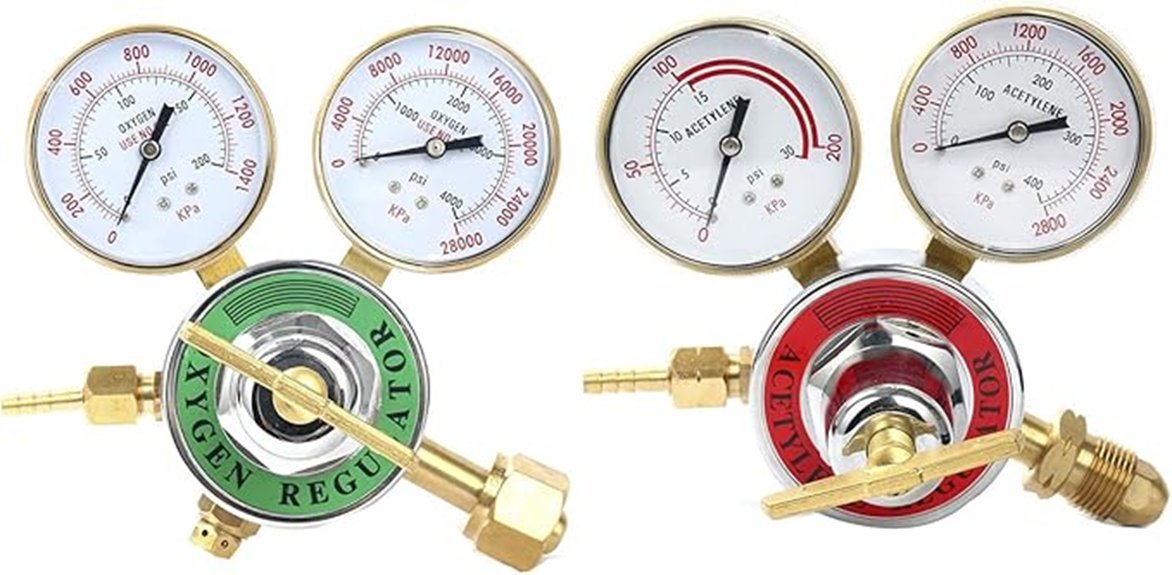
Stable gas control matters when you weld, braze, or cut with an oxy-acetylene setup. A poor regulator can make flame adjustment harder, waste gas, or create setup problems before the work even starts. The 2 Piece Dual Welding Gas Gauges set gives you separate oxygen and acetylene regulators, using CGA-540 and CGA-510 fittings for dedicated tank connections. This review helps you decide if the brass build, 0-200 PSI oxygen range, and 0-30 PSI acetylene range fit your shop, or if you should skip it for a different welding process.
Quick Verdict
Rating: 8.5/10, Recommended with caveats
Best For: Welders who need a dedicated oxygen and acetylene regulator pair for cutting, brazing, or repair work
Bottom Line: This set makes sense if you want separate control for oxygen and acetylene in a workshop or repair setup. Its main tradeoff is narrow compatibility, because it is not a regulator set for MIG, TIG, argon, CO2, or multi-gas systems.
| Specification | Detail |
|---|---|
| Product Name | 2 Piece Dual Welding Gas Gauges |
| Product Type | Dual welding gas regulator gauge set |
| Count | 2-piece regulator set |
| Gas Types | Oxygen and acetylene |
| Oxygen Fitting | CGA-540 |
| Acetylene Fitting | CGA-510 |
| Oxygen Pressure Range | 0-200 PSI |
| Acetylene Pressure Range | 0-30 PSI |
| Material | Solid brass construction |
| Dimensions | 11.85 x 6.42 x 5.55 inches |
| Weight | 5.48 lbs |
| Best Use | Oxy-acetylene welding, cutting, brazing, and repair work |
| Compatibility Note | Not for MIG or TIG shielding gas setups |
| Safety Note | Use only with matching oxygen and acetylene cylinders, fittings, and hoses |
What Is the 2 Piece Dual Welding Gas Gauges Set?
The 2 Piece Dual Welding Gas Gauges set is a dedicated regulator system for oxy-acetylene work. It includes one oxygen regulator with a CGA-540 fitting and one acetylene regulator with a CGA-510 fitting, so each gas line has its own pressure control.
This design suits cutting, brazing, and welding tasks where the flame depends on a steady fuel-gas and oxygen balance. The solid brass body also fits the way many shop tools get used, handled, and moved around near heat, dust, and metal debris.
The main point to understand is its narrow purpose. This is not a universal regulator kit for every welding process, and that makes compatibility checks more important before you buy.
Who Should Buy It?
Best For
- Workshop users running oxygen and acetylene cylinders with matching CGA fittings
- Metal fabrication, brazing, cutting, and repair jobs that need separate gas control
- Hobby welders who want a simple brass regulator pair instead of a multi-process setup
Skip If
- You need regulators for argon, CO2, MIG shielding gas, or TIG shielding gas
- You want one regulator that can move across several welding processes
- You are not comfortable checking fittings and leak points before use
Pro Tip: Match the CGA fitting, gas type, hose connection, and regulator range before setup. If any part does not match your cylinder or torch system, stop and check the product manual or ask a qualified welding supplier.
Fit and Compatibility
Compatibility is the biggest buying factor for this regulator set. The oxygen side uses a CGA-540 fitting, while the acetylene side uses a CGA-510 fitting. That means the set is built around a standard oxy-acetylene workflow, not a shielding-gas workflow.
You should check your cylinders, hose connections, torch handle, and required pressure range before ordering. A regulator can look correct online but still be wrong for your exact tank valve or shop setup.
The set is also limited to oxygen and acetylene. If your work includes MIG with CO2 or argon blends, or TIG with argon, you should compare regulators made for those gases instead.
Build Quality and Materials
The solid brass construction is the main strength of this set. Brass gives the regulators a more durable feel for shop use and helps them stand up to repeated tank changes, handling, and storage.
At 5.48 lbs, the set has enough weight to feel substantial without becoming awkward for a small repair shop or garage setup. The listed dimensions, 11.85 x 6.42 x 5.55 inches, also make it easier to store than larger industrial regulator assemblies.
The gauges still need care. Avoid dropping the regulators, striking the gauge faces, or storing them where they can be hit by tools or cylinders.
Pressure Control and Flame Adjustment
The oxygen regulator supports a 0-200 PSI range, while the acetylene regulator supports a 0-30 PSI range. Separate control helps you fine-tune the flame for cutting, brazing, and smaller welding work.
That separation is useful because oxygen and acetylene do different jobs in the flame. Oxygen changes heat intensity and cutting performance, while acetylene affects the fuel side of the flame balance.
Beginners should adjust pressure slowly and follow the torch, hose, and cylinder instructions. The regulator gives you control, but safe results still depend on correct setup and proper operating practice.
Installation and Setup
Installation should be straightforward if your cylinders use the matching fittings. The oxygen regulator connects to the oxygen cylinder side, and the acetylene regulator connects to the acetylene cylinder side.
Before use, inspect the regulator bodies, gauge faces, threads, and hose connections. Tighten fittings only as directed for your setup, and do not force a connection that does not thread correctly.
After everything is connected, check for leaks using a safe leak-check method recommended for welding gas equipment. Do not use the regulators if you see damaged gauges, stripped threads, or unstable pressure readings.
How It Performs in Real Use
Workshop Welding
In a fixed shop, the set works best as a dedicated oxy-acetylene regulator pair that stays with the same torch setup. The separate oxygen and acetylene controls help you repeat familiar settings once you understand your equipment.
Metal Cutting
For cutting tasks, the oxygen side matters most because oxygen flow affects cut quality and control. The 0-200 PSI range gives room for adjustment across different cutting needs, as long as your torch and material call for those settings.
Brazing and Repair Work
For brazing or small repair work, steady flame control can make the job easier to manage. The 0-30 PSI acetylene range supports controlled fuel-gas adjustment, which helps when you need heat without a harsh or unstable flame.
Garage and Mobile Repair Setups
The 5.48 lb weight and compact listed dimensions make the set practical for a garage cart or repair bench. It is still a regulator pair, so protect the gauges during transport and avoid leaving them loose in a toolbox or truck bed.
Setup Tips Before First Use
Start by confirming that you have oxygen and acetylene cylinders, not shielding gas cylinders. Then check that the regulator fittings match your cylinder valves before you remove caps or start connecting parts.
Keep the regulators clean and dry before installation. Dirt, metal dust, oil, or thread damage can create sealing problems and should be handled before the system is pressurized.
Open valves and adjust pressure gradually according to your torch and cylinder guidance. If the pressure does not stabilize, or if a gauge behaves strangely, shut the system down and inspect the setup before continuing.
Safety and Compatibility Notes
This set is only for oxygen and acetylene use. It should not be used with MIG or TIG shielding gases because the fittings, pressure needs, and gas applications are different.
Oxy-acetylene equipment also requires careful handling. Use compatible hoses, inspect connections, keep cylinders secured, and follow the instructions from your torch, cylinder supplier, and regulator documentation.
Do not modify fittings to make them fit another gas cylinder. A forced or adapted connection can create a dangerous leak, unstable pressure, or equipment failure.
Before You Buy: This regulator set is not universal. Buy it only if your setup uses oxygen and acetylene with compatible CGA-540 and CGA-510 tank connections.
Pros and Cons
Pros
- Separate oxygen and acetylene regulators give you clearer control over each gas line
- Solid brass construction supports regular workshop handling
- CGA-540 and CGA-510 fittings match common oxy-acetylene cylinder setups
- 0-200 PSI oxygen range supports cutting and welding adjustments
- 0-30 PSI acetylene range keeps the fuel-gas side focused on oxy-acetylene use
Cons
- Limited to oxygen and acetylene, so it will not cover MIG or TIG shielding gases
- Beginners still need to check fittings, hoses, leaks, and pressure settings carefully
- Brand and model details may be limited, so confirm the current Amazon listing before buying
Check Fit Before You Buy
Confirm your gas type, CGA fittings, and torch setup before placing an order.
Is It Worth the Price?
This regulator set is worth considering if you need a dedicated oxygen and acetylene setup for a garage, repair bench, or small fabrication space. The value comes from getting two separate regulators in one set, with brass construction and pressure ranges aimed at oxy-acetylene work.
It is a smart buy for everyday use only when your current tanks and torch setup match the fittings. If you need shielding gas control for MIG or TIG, the value drops quickly because this set will not solve that need.
The best buyer is someone who already knows they need CGA-540 for oxygen and CGA-510 for acetylene. If you are still unsure, compare your cylinder valves and torch documentation before ordering.
How It Compares to Alternatives
Compared with a single oxygen regulator or a single acetylene regulator, this 2-piece set is more convenient because it gives you both sides of an oxy-acetylene setup together. Compared with multi-gas regulators for argon, CO2, or TIG shielding gas, it is less flexible but more focused.
If you want broad welding-process coverage, a regulator made for your specific shielding gas is the better comparison. The 2 Piece Dual Welding Gas Gauges set makes the most sense when you want a dedicated oxygen and acetylene pair for flame-based work.
Frequently Asked Questions
Can this regulator set be used for MIG or TIG welding?
No. This set is designed for oxygen and acetylene systems, not MIG or TIG shielding gases. If you use argon, CO2, or an argon blend, choose a regulator made for that gas and cylinder fitting.
What fittings does this set use?
The oxygen regulator uses a CGA-540 fitting, and the acetylene regulator uses a CGA-510 fitting. Check your cylinder valves before buying because the fitting must match the tank connection.
What pressure ranges are listed for the regulators?
The oxygen side is listed at 0-200 PSI, and the acetylene side is listed at 0-30 PSI. Always set pressure according to your torch, tip, hose, and cylinder instructions.
Is it beginner-friendly?
It can be beginner-friendly if your fittings match and you already understand basic oxy-acetylene safety. New users should take extra time to check connections, perform leak checks, and follow equipment instructions before lighting a torch.
What is the regulator body made from?
The article-supported material is solid brass construction. That makes the set a better fit for workshop environments where regulators may see frequent handling and cylinder changes.
What size and weight are listed?
The listed dimensions are 11.85 x 6.42 x 5.55 inches, and the listed weight is 5.48 lbs. That size works well for a bench, cart, or garage setup, but the gauges should still be protected from impact.
What mistakes should you avoid during setup?
Do not force a fitting, use the set with the wrong gas, or ignore unstable pressure readings. You should also avoid using damaged threads, cracked gauges, or hoses that do not match your oxy-acetylene equipment.
Who should skip this regulator set?
Skip it if your main work is MIG, TIG, or any setup using argon, CO2, or mixed shielding gas. You should also skip it if you cannot confirm that your cylinder fittings match CGA-540 and CGA-510.
The Bottom Line
The 2 Piece Dual Welding Gas Gauges set is a strong fit for oxy-acetylene users who need separate oxygen and acetylene pressure control in a garage, workshop, or repair setting. Its brass construction, 2-piece layout, and listed pressure ranges make it practical for flame-based work, but its narrow gas compatibility is the key limitation.
Buy it if your cylinders, fittings, hoses, and torch setup match. Skip it if you need a regulator for MIG, TIG, argon, CO2, or any multi-gas welding system.