As an Amazon Associate, Garage Welding may earn from qualifying purchases. This does not change the price you pay.
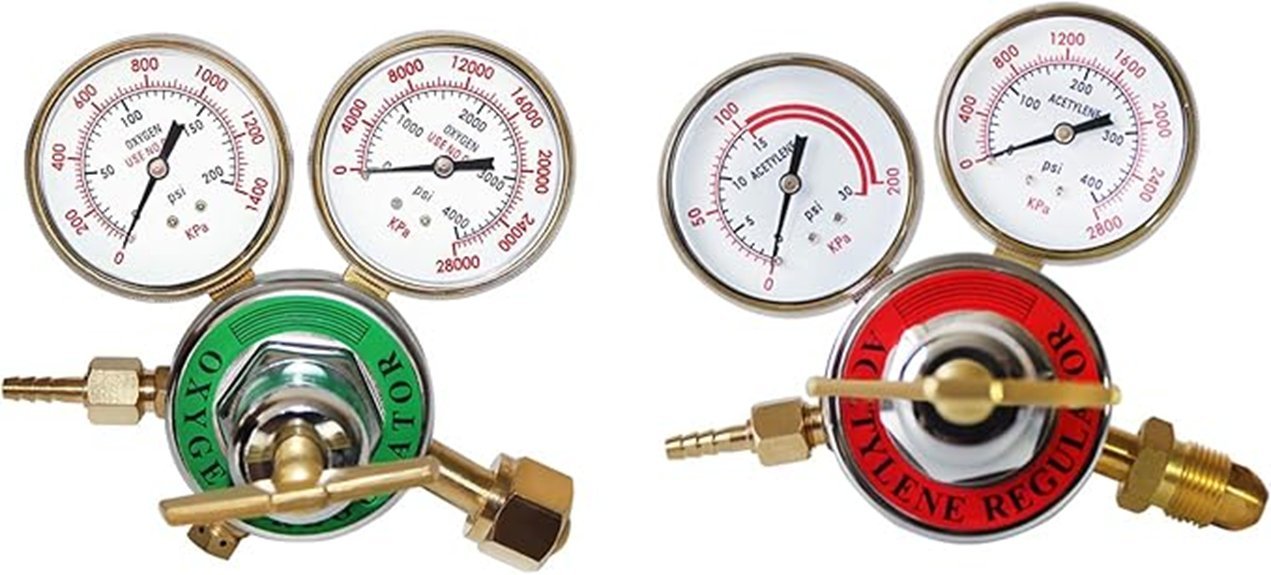
The dual welding gas gauges are a pair of brass oxygen and acetylene regulators for a standard oxy-fuel torch setup. They are worth considering if you need a matched replacement set and you have CGA-540 oxygen and CGA-510 acetylene cylinders, and they are the wrong buy if your cylinders use other fittings. This dual welding gas gauges review is based on the Amazon listing, not hands-on testing.
Dual welding gas gauges at a glance
| Item | What the listing says |
|---|---|
| Set | Oxygen regulator and acetylene regulator |
| Inlet fittings | CGA-540 (oxygen) and CGA-510 (acetylene) |
| Cylinder gauge scale | 0-4000 psi (oxygen), 0-400 psi (acetylene) |
| Delivery gauge scale | 0-200 psi (oxygen), 0-100 psi (acetylene) |
| Material | Solid brass |
These are gauge scales and listed ranges. Acetylene working pressure must never go above 15 psi, whatever the dial shows.
Check the current price on Amazon →
What it is and who it suits
A regulator pair reduces the high pressure from each cylinder to a steady working pressure for the torch. This set suits hobbyists and shop users who are rebuilding or replacing the regulators on a cutting and welding outfit.
If you want name-brand options, compare the Uniweld RO100 oxygen regulator and the WeldingStop gas regulator. For the torch side, see the Hobart 770502 kit.
How to check the set fits your equipment
- Check cylinder valves. Match CGA-540 and CGA-510 to your cylinders. Small acetylene cylinders can need a different fitting.
- Check hose connections. Oxygen uses a right-hand outlet thread and acetylene uses a left-hand thread. Confirm that your hose nuts fit.
- Check the dial scales. A 200 psi oxygen delivery scale is useful for big tips, but low-pressure work needs fine control.
- Read the red line. Make sure you understand the acetylene limit of 15 psi, regardless of the dial printing.
- Add safety devices. Fit flashback arrestors and check valves on both regulators or at the torch.
Pros and limitations
Pros
- A matched oxygen and acetylene pair saves buying two regulators separately.
- Brass body and fittings are the norm for gas regulators.
- Two-gauge design shows both cylinder contents and working pressure.
Limitations
- Fitting and gauge details need careful checking.
- Budget regulators may offer less precise control than premium ones.
- Warranty and instructions should be checked on the live listing.
- Not a complete outfit, since hoses, torch and arrestors are separate.
Install and safety tips
- Clean cylinder valve outlets by cracking each valve briefly, standing to one side and keeping away from sources of ignition.
- Fit each regulator to the correct cylinder. Never use oil or grease on oxygen parts.
- Back out the adjusting screws before opening cylinder valves slowly.
- Set oxygen and acetylene working pressure by the tip chart, keeping acetylene at or below 15 psi.
- Leak test with soapy water at every joint after fitting.
- Use only the cylinder wrench appropriate for the valves, and keep the wrench on an acetylene cylinder during use so you can shut it quickly.
- Close both cylinders and bleed lines when you finish.
Alternatives and related guides
- CDL LX45 oxygen regulator if you only need an oxygen regulator.
- Twin welding hose to connect to the regulators.
- Oxygen cylinder wrench for opening valves.
See this regulator set on Amazon →
Frequently Asked Questions
Are dual welding gas gauges one regulator or two?
The listing describes a pair of regulators for oxygen and acetylene, sold together. Each regulator is for its own gas and cannot be swapped. Check the listing photos and description to confirm that both are included and how they are labeled.
What cylinder fittings do these regulators use?
The listing mentions CGA-540 for oxygen and CGA-510 for acetylene. CGA-540 is the usual US oxygen cylinder fitting, while CGA-510 is common on larger acetylene cylinders. Smaller acetylene cylinders can use a different fitting, so check your cylinder valve before ordering.
Is it safe to set acetylene near the top of its gauge range?
No. Acetylene working pressure should never exceed 15 psi (1 bar). A higher gauge scale is just the range the dial can show, not a safe setting. Follow your torch and tip chart, and use flashback arrestors and check valves.
Do I need flashback arrestors with these regulators?
Yes, they are strongly recommended. Regulators control pressure but do not stop a flame traveling back toward the cylinder. Install arrestors and check valves on both lines, use them as the manufacturer directs, and replace them if they are damaged or after a flashback event.
Conclusion
The dual welding gas gauges look like a basic regulator pair for oxy-acetylene setups. Check the cylinder fittings and your torch chart, respect the 15 psi acetylene limit, and install flashback protection.
Check the latest price on Amazon →